

Victorian Howard Sons Chair
A victorian howard sons chair brings deep-sprung English country house comfort and quiet distinction to any room.
Victorian Howard Sons Chair
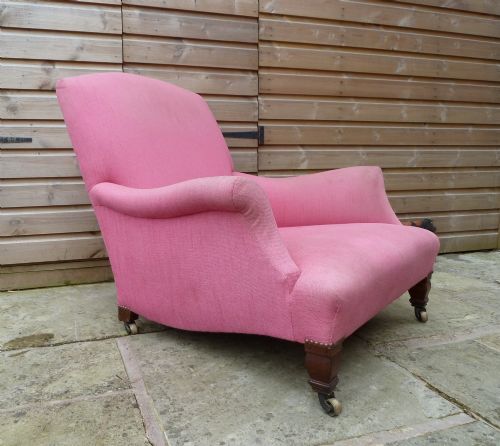
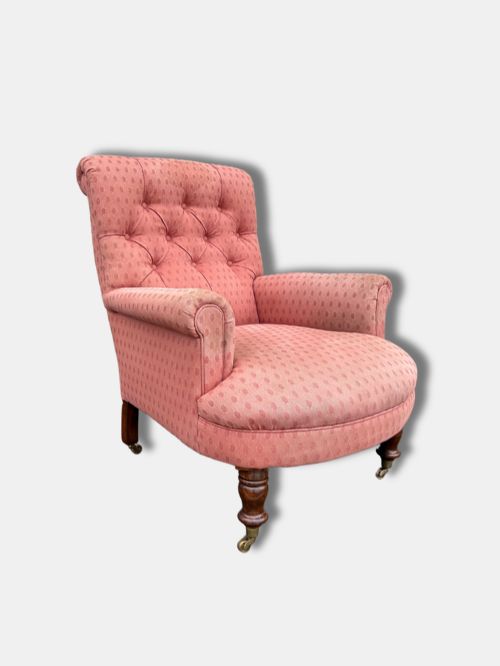
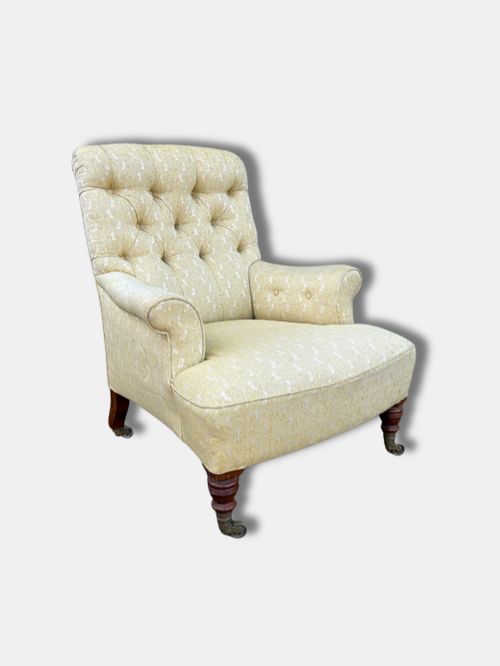
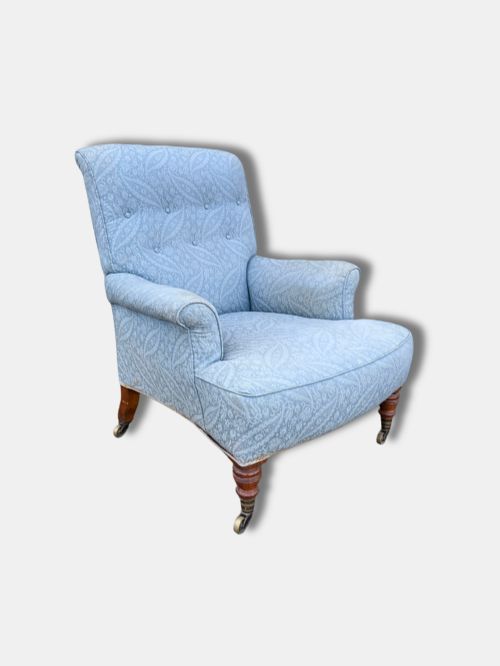
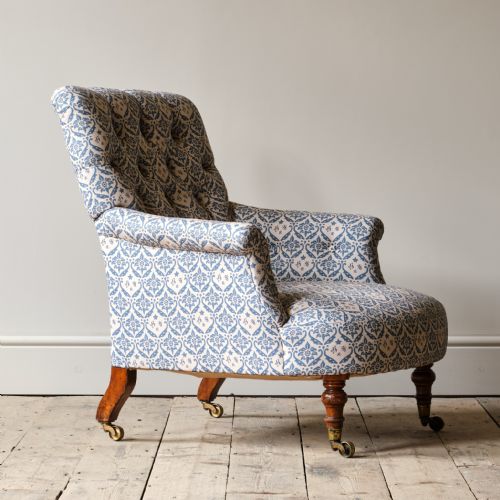
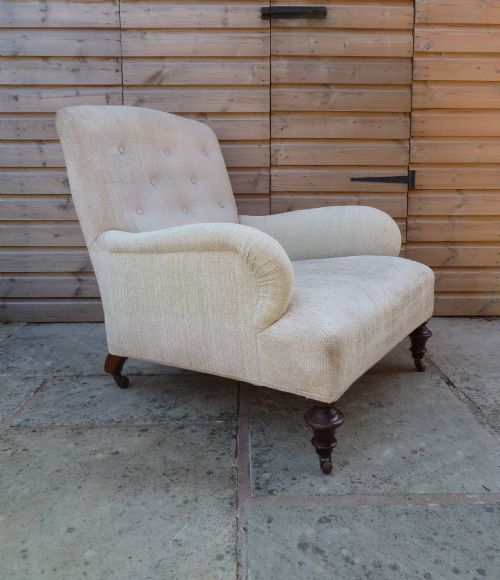
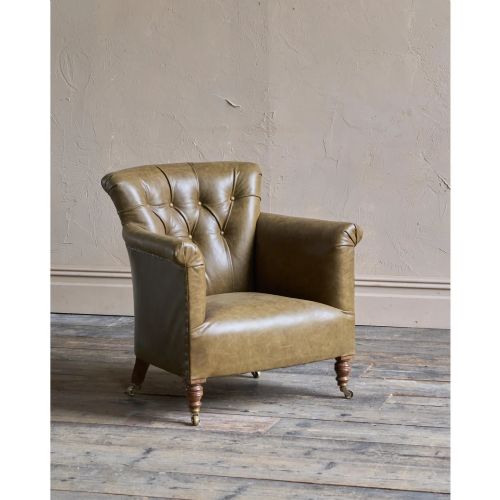
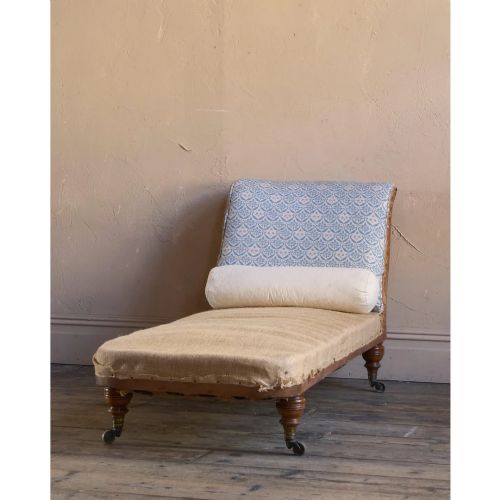
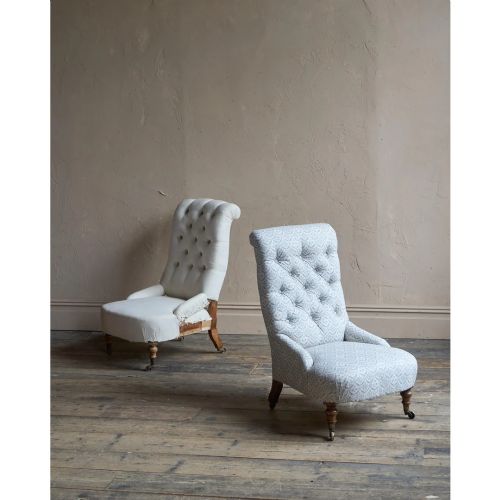
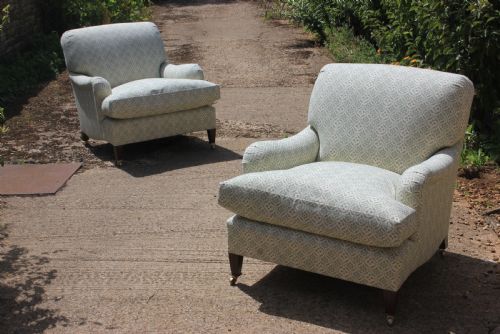
A victorian howard sons chair represents the pinnacle of nineteenth-century upholstered seating, built for deep lounge comfort and understated elegance. The pieces encountered most frequently on this page take the form of generous armchairs and club chairs, alongside occasional bedroom chairs, daybeds, and chaise longues.
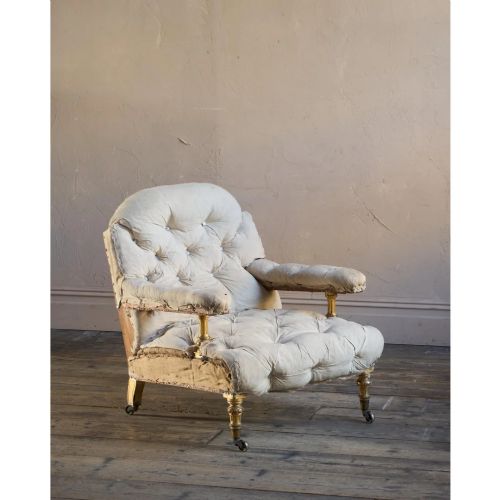
Makers of this standing produced specific named models such as the Bridgewater, Grafton, Woodstock, and Ingleby, each defined by low arms, sprung backs, and balanced proportions. Examples range from fully upholstered lounge seating covered in ticking or leather to open-arm variants with exposed timber frames.
The aesthetic bridges formal Victorian reception rooms and relaxed country house interiors, often bearing the maker's stamp or characteristic numbered castors. While many pieces originate from the nineteenth century and the Edwardian era, later adaptations also appear.
Materials and construction
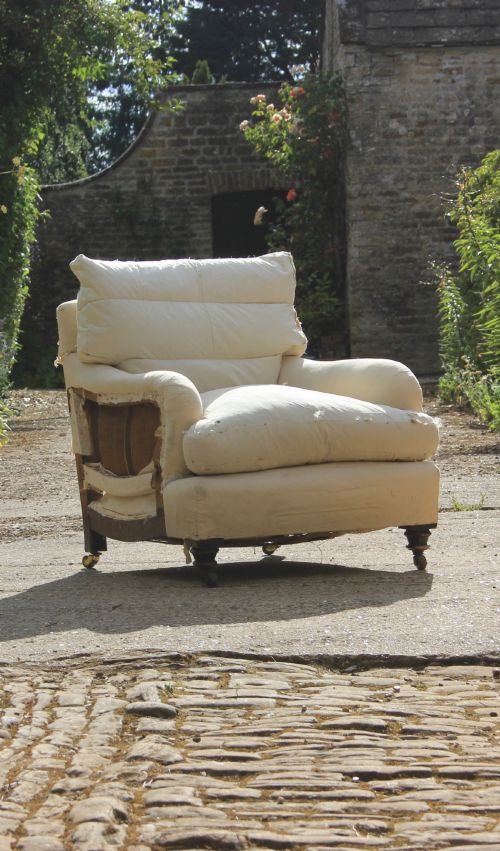
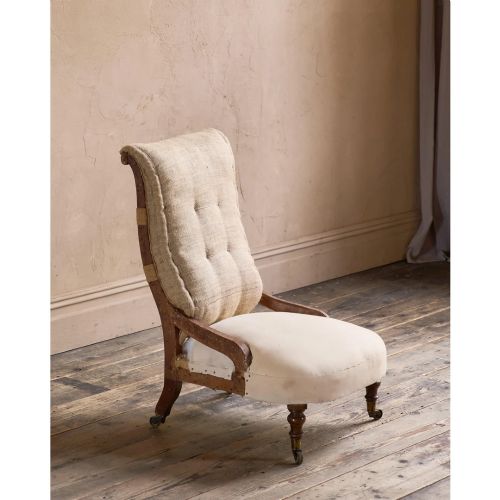
The internal frames are constructed from solid hardwoods such as mahogany, walnut, oak, and satin birch, providing a sturdy skeleton for complex upholstery. Traditional stuffing materials such as horsehair, hessian, and calico create the firm yet yielding foundation beneath the top cover.
Seating relies on coiled steel springs tied by hand, delivering the resilient suspension characteristic of the maker's workshop. Outer covers span heavy cotton ticking, woven fabrics, leather, and button-backed wool, supported by turned wooden legs fitted with brass castors.
Many armchairs conceal their maker's identity on the brass castors, rewarding anyone willing to turn the furniture upside down.
Assessing the standard
Quality rests upon the integrity of the original frame and the retention of traditional internal stuffing rather than modern foam replacements. Pieces bearing clear maker's stamps on the legs or castors command distinct attention from collectors.
Howard and Sons·James Shoolbred·Trollope and Sons
The Victorian Howard Sons Chair Glossary
- Bridgewater armchair
- A deep-seated upholstered armchair featuring low, rolled arms and generous cushioning designed for relaxation. This specific model remains one of the most recognisable forms associated with the maker.
- Ticking
- A tightly woven heavy cotton or linen fabric traditionally used as a durable foundation or outer cover. It became synonymous with the relaxed English country house aesthetic.
- Castor
- A small wheel attached to the base of a furniture leg to allow smooth movement across carpets and floors. Brass versions stamped with manufacturer details help authenticate the piece.
- Button back
- An upholstery technique where indentations are formed by pulling twine through the padding and securing it with buttons. This creates a diamond pattern that provides structural support and texture.
- Carver
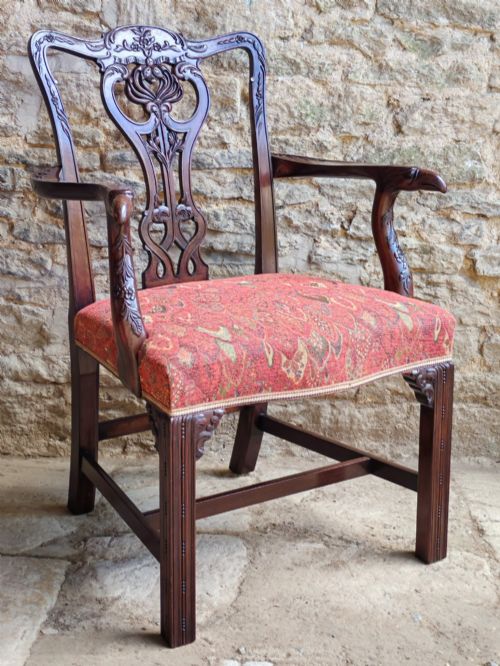
- An armchair designed with open sides, traditionally placed at the head of a dining table or used as a desk chair. These pieces share the upholstered comfort of larger lounge seating.
Victorian Howard Sons Chair: Frequently Asked Questions
How do I spot an authentic piece?
Authenticity is often confirmed by checking the wooden legs and brass castors for stamped manufacturer names and serial numbers. The weight of the frame and the traditional use of horsehair and hessian stuffing also indicate period manufacture.
Makers frequently branded their furniture directly into the castors or stamped the webbing underneath. Comparing the proportions against known models like the Bridgewater helps verify the design.
Are these chairs suitable for daily use?
These seats were engineered for deep, enduring comfort and remain well-suited to everyday lounging. The coiled spring systems and sturdy hardwood frames provide robust structural support.
Maintenance involves preserving the original upholstery or ensuring professional re-upholstery respects the traditional stuffing techniques. Plumping the cushions and protecting antique leather or ticking preserves their condition over decades of use.
How should I clean fabric upholstery?
Routine care involves gentle vacuuming using a low suction setting with a soft brush attachment to lift dust from the crevices. Stresses on antique fabric can be minimised by avoiding harsh chemical spot cleaners.
Professional textile conservators should handle deep cleaning or repairs for fragile period covers. For cotton ticking or leather, simple dusting and appropriate conditioning maintain the material without altering its patina.