

Howard Style Club Chair
A howard style club chair offers deep sprung comfort and traditional English country house character.
Howard Style Club Chair
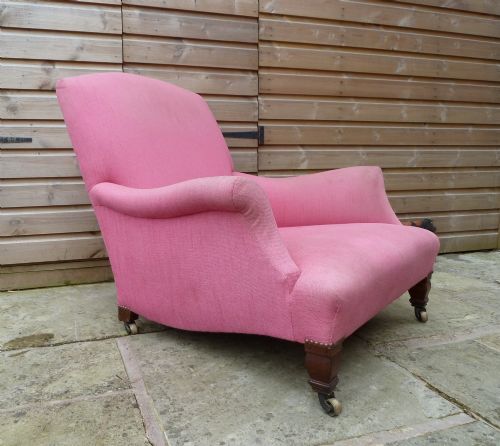
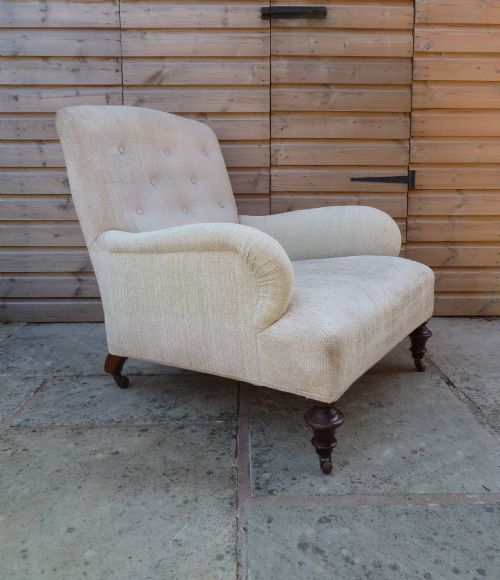
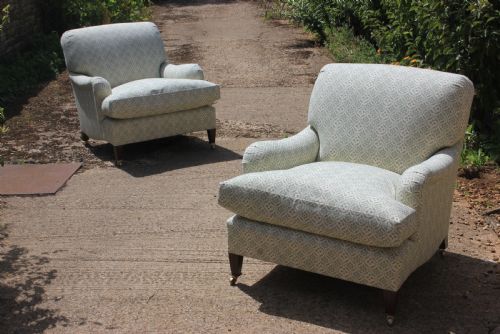
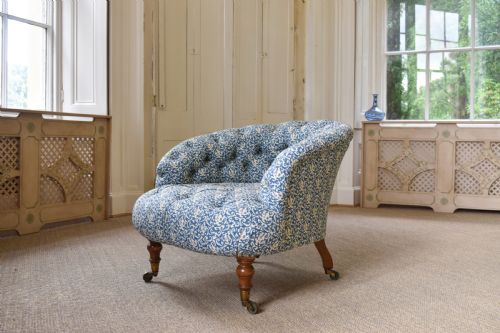
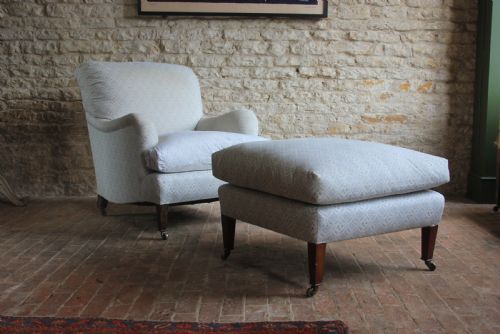
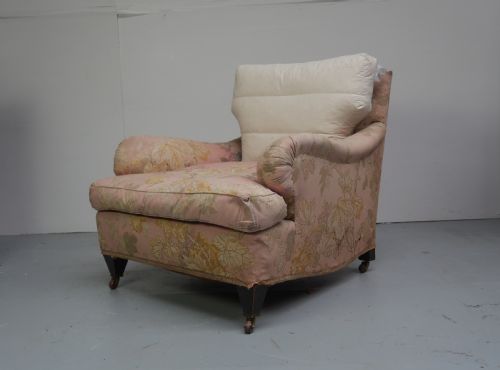
A howard style club chair is a deep seated armchair designed for relaxed lounging, frequently associated with nineteenth century and Edwardian English country houses. These seating pieces appear in various iterations, ranging from nineteenth century examples to Edwardian productions and later pieces.
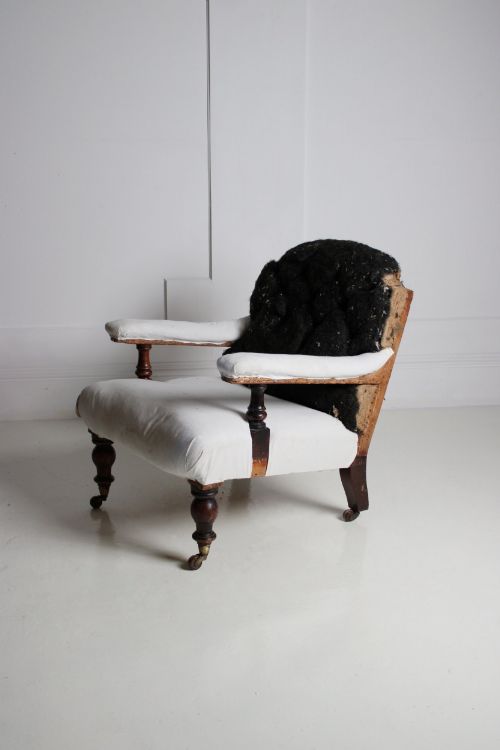
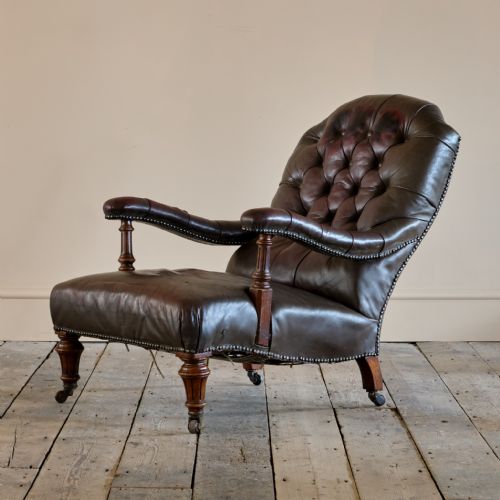
The most common formats on this page include large proportioned armchairs, bridge-water designs, and open armchairs. Many examples arrive upholstered in traditional ticking, calico, or heavy carpets, reflecting the relaxed aesthetic of country house interiors.
How they were made
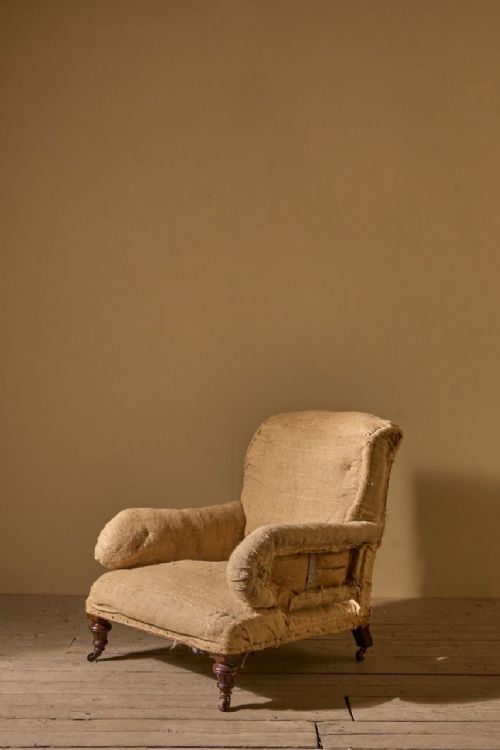
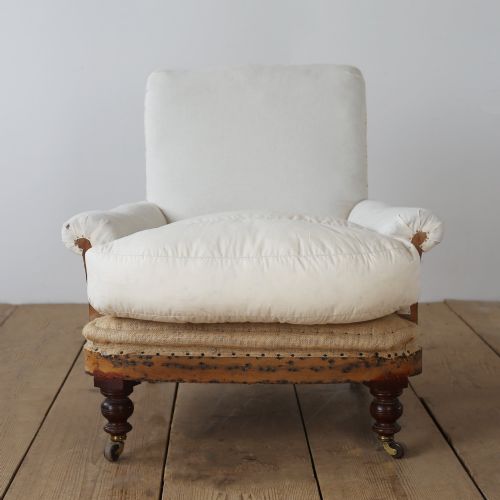
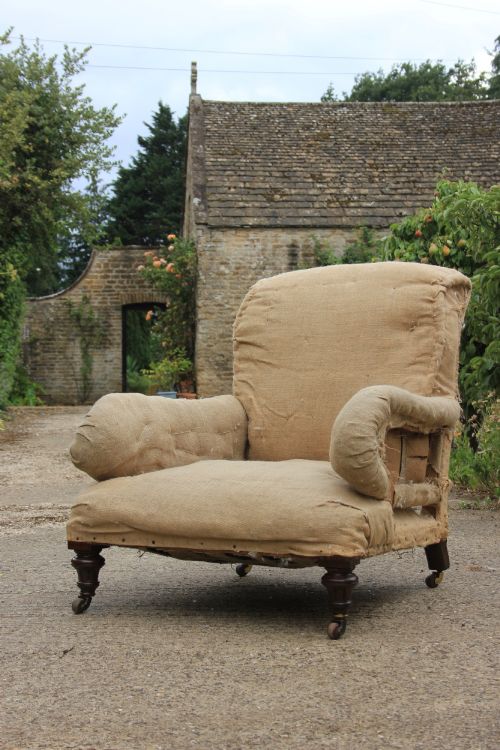
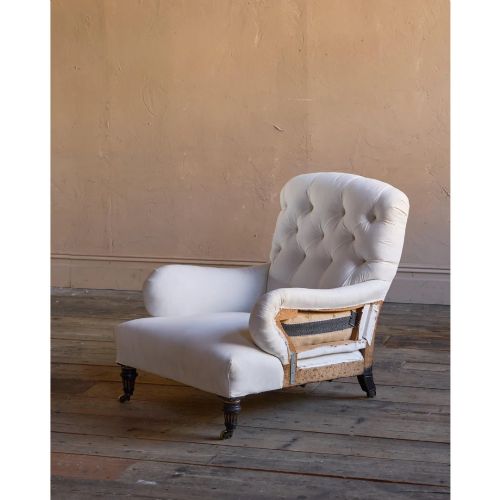
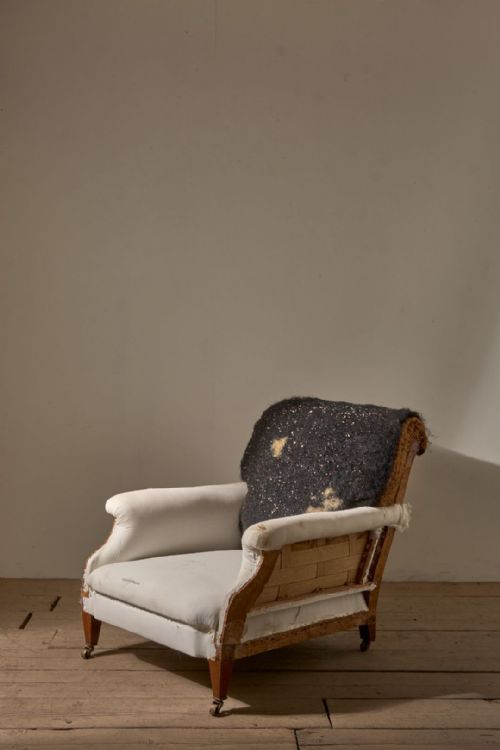
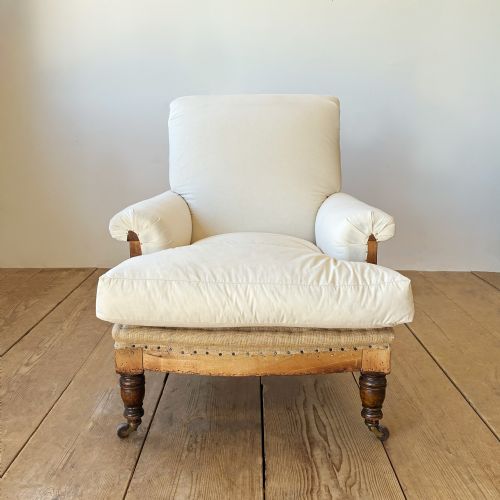
The construction relies on sturdy wooden frames shaped from mahogany or walnut, providing a solid foundation for complex upholstery. Frames are paired with internal support materials like hessian and cotton webbing to hold heavy interior stuffing.
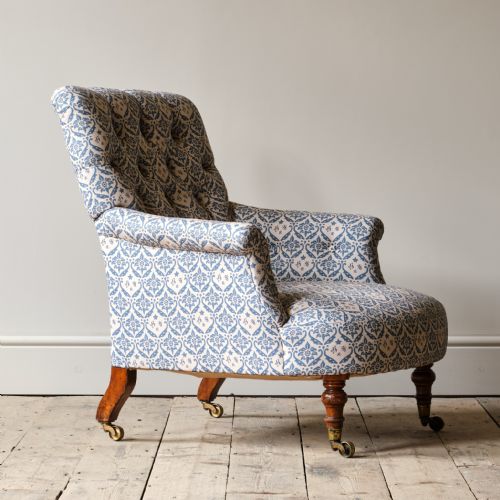
Visible elements often feature turned wooden legs mounted with brass castors for mobility. Surface treatments combine plain exposed timber with durable fabric covers including cotton, calico, and wool.
One robust club armchair arrives clad in an authentic Ushak turkey carpet, combining heavy floor-covering textiles with deep upholstery.
What varies in quality
Proportion and scale separate standard seating from exceptional examples, with larger, deep seated models offering a distinct presence. The integrity of the internal springing and the weight of the timber frame dictate the structural longevity.
Upholstery materials and finishing details mark the distinction between everyday workshop production and fine craftsmanship. Finer pieces demonstrate careful attention to fabric selection, such as fitted ticking or patterned carpet upholstery.
Howard and Sons·SF Cullen·James Shoolbred·Trollope and Sons·Waring and Gillow
The Howard Style Club Chair Glossary
- Calico
- A plain-woven cotton textile utilised as an initial layer of upholstery beneath decorative top covers. It provides a smooth foundation for the final fabric.
- Castor
- A small wheel attached to the base of furniture legs to permit easy movement across floor surfaces. These are frequently cast in brass on nineteenth-century seating.
- Hessian
- A coarse woven fabric made from jute fibres, employed inside upholstered frames to contain stuffing materials. It offers high tensile strength and durability.
- Bridge-water
- A specific armchair configuration characterised by low, rolled arms and deep proportions. This form is frequently linked to nineteenth-century and Edwardian country house seating.
Howard Style Club Chair: Frequently Asked Questions
What defines a howard style club chair?
These seating pieces are defined by low rolled arms, deep sprung seats, and generous proportions designed for lounging. They originate from Victorian and Edwardian manufacturing traditions.
Their silhouette prioritises occupant comfort over formal posture, making them central to traditional country house interiors.
How do I identify the period of an armchair?
Period identification relies on examining frame timbers, castor fixings, and upholstery construction methods. Nineteenth-century examples often utilise mahogany or walnut frames with brass castors.
Later Edwardian productions tend to show subtle shifts in proportion and leg turning styles compared to earlier Victorian iterations.
Where were these armchairs originally used?
They were principally placed in libraries, drawing rooms, and studies of English country houses for daily relaxation. Their robust construction suited domestic spaces requiring durable, comfortable seating.
Today, they transition easily into modern living spaces as statement reading chairs.