
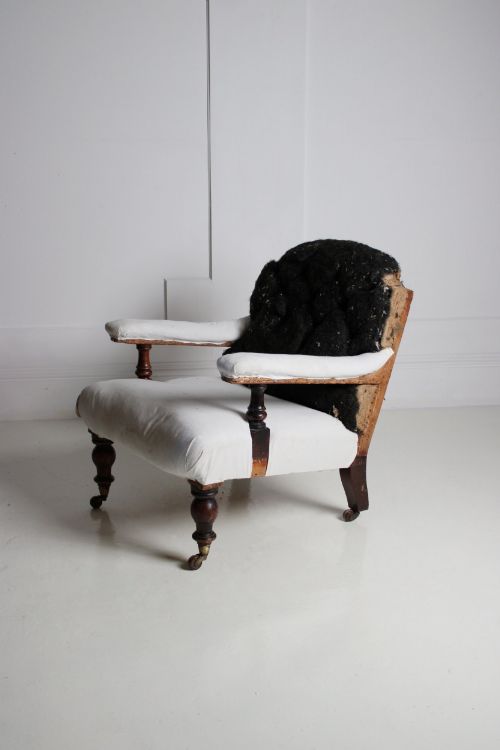

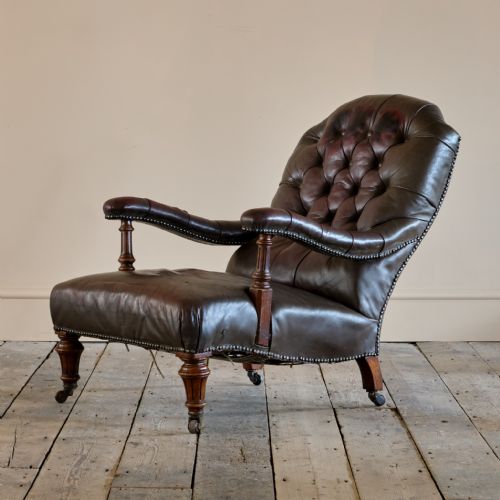


Mahogany Howard Armchair
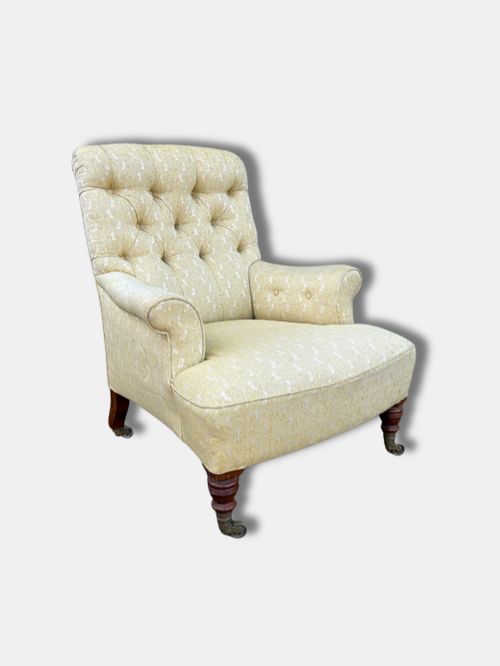
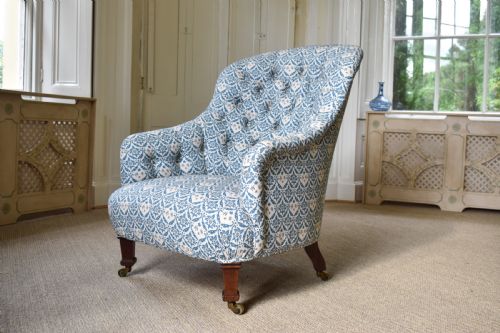
A mahogany howard armchair provides deep, sprung comfort paired with traditional English joinery, making it a staple for country house interiors.
Mahogany Howard Armchair
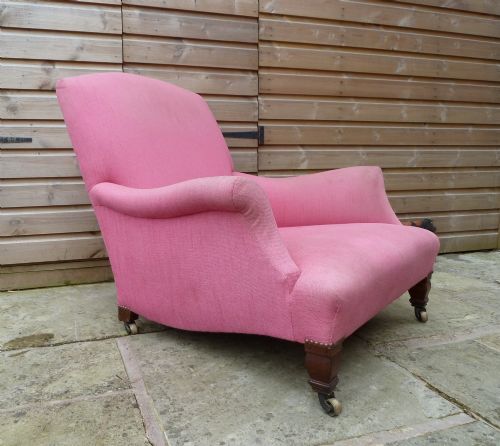
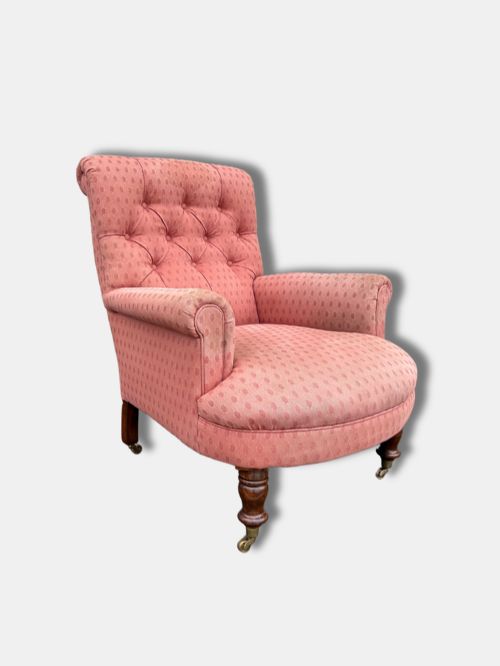
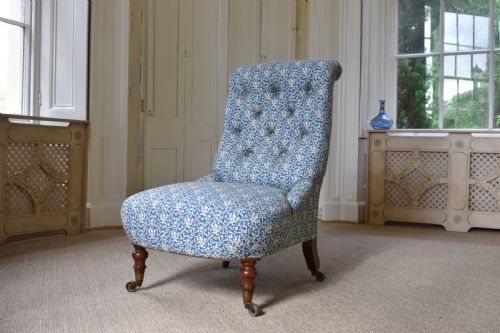
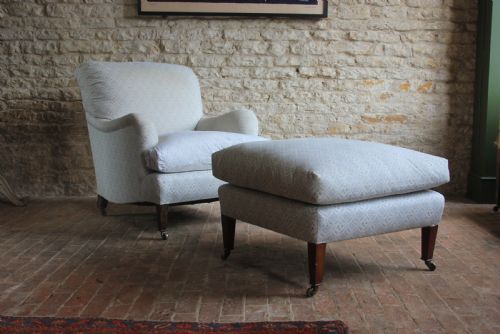
A mahogany howard armchair combines the generous, low-slung proportions of nineteenth-century upholstery with sturdy mahogany supports. These chairs span the Victorian and Edwardian eras, appearing in forms such as the classic Bridgewater shape, open-arm variants, and button-backed designs.
Most pieces on this page emerge from the late nineteenth century and the early twentieth century. Makers such as Howard and Sons set a standard for sprung ease, often replicated in later revival styles.
How They Were Made
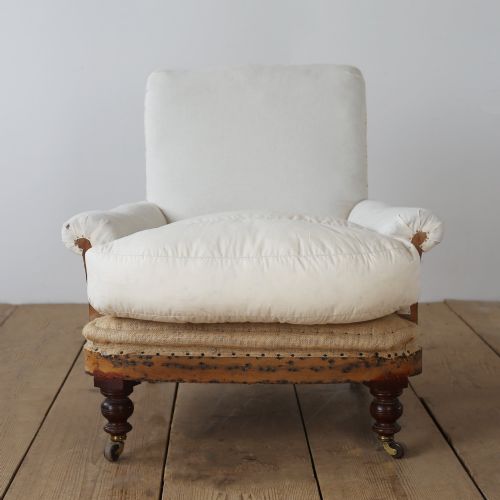
Frames rely on solid mahogany, sometimes shaped into turned legs or terminating in brass castors and claw and ball feet. Traditional stuffing utilises materials like horsehair, hessian, cotton, and wool-based webbings.
Upholstery techniques involve complex coil springing beneath calico or ticking covers, which are then finished in velvet, leather, or printed cotton fabrics.
Listings feature mahogany frames combined with horsehair, leather, velvet, and cotton materials across the Victorian and Edwardian periods.
What Varies in Quality
The integrity of the internal stuffing and the resilience of the coil springs define the seating experience. Original webbings and retained maker stamps add considerable weight to a piece.
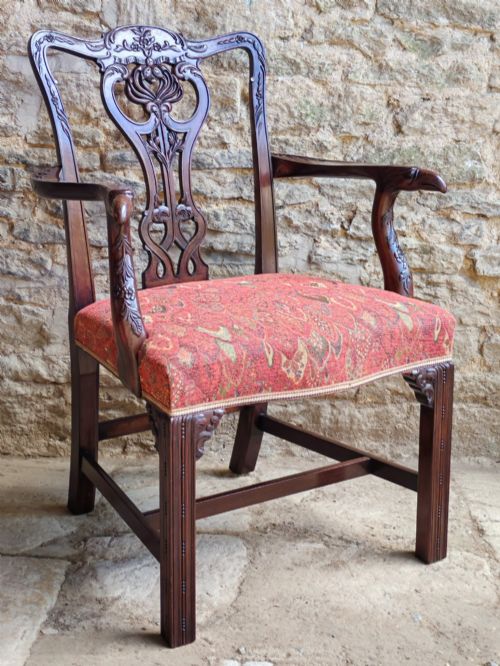
Timber selection and the crispness of the mahogany turnings or carved details separate standard workshop production from exceptional examples.
Howard and Sons·James Shoolbred·Robert Strahan
The Mahogany Howard Armchair Glossary
- Bridgewater armchair
- A distinct model characterised by low arms, a deep seat, and turned wooden legs fitted with brass castors. This form remains one of the most recognizable outputs of nineteenth-century upholstery firms.
- Horsehair
- A traditional stuffing material gathered from the manes and tails of horses, prized for its springiness and durability. It provides the firm yet resilient foundation typical of period seats.
- Ticking
- A tightly woven cotton or linen fabric traditionally used as a durable base cover over internal stuffing. Surviving original ticking is valued by collectors for authenticity.
- Castor
- A small wheel attached to the foot of a chair leg to allow easy movement across carpets and floors. Brass variants are standard on nineteenth-century upholstered seating.
Mahogany Howard Armchair: Frequently Asked Questions
How do I identify a genuine Howard chair?
Look for stamped maker marks on the wooden frame, often found near the castors, alongside characteristic low-slung proportions and traditional coil springing.
Examine the internal webbing and materials such as horsehair and ticking, which match the construction methods of the period.
What is a Bridgewater armchair?
A Bridgewater armchair is a specific deep-seated lounge chair design featuring low, rolled arms and turned wooden legs.
This form was popularized in the nineteenth century for maximum seating comfort in libraries and country houses.
Can I use these armchairs daily?
These pieces were built for heavy domestic use with robust mahogany frames and resilient sprung interiors designed to endure.
Routine maintenance of the upholstery fabric and internal stuffing keeps the chairs functional for everyday modern living.
Are mahogany frames common on these chairs?
Mahogany frequently forms the visible legs, stretcher bases, and structural supports of these armchairs across Victorian and Edwardian examples.
The timber provides a strong contrast to the heavy upholstered body above.