


Victorian Armchair Project
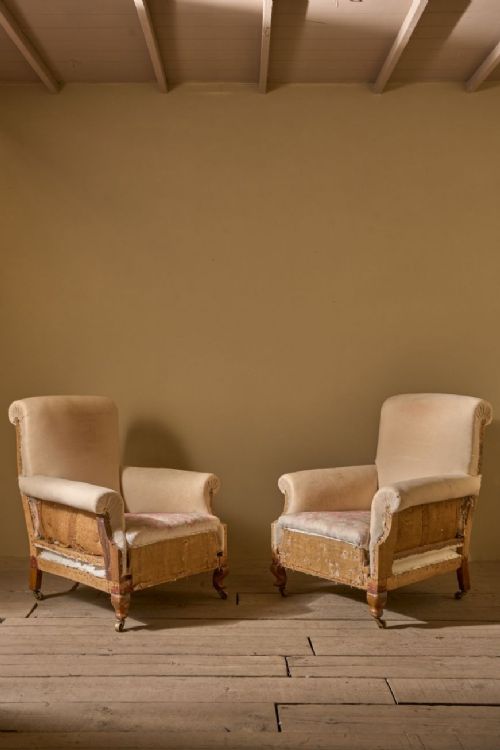
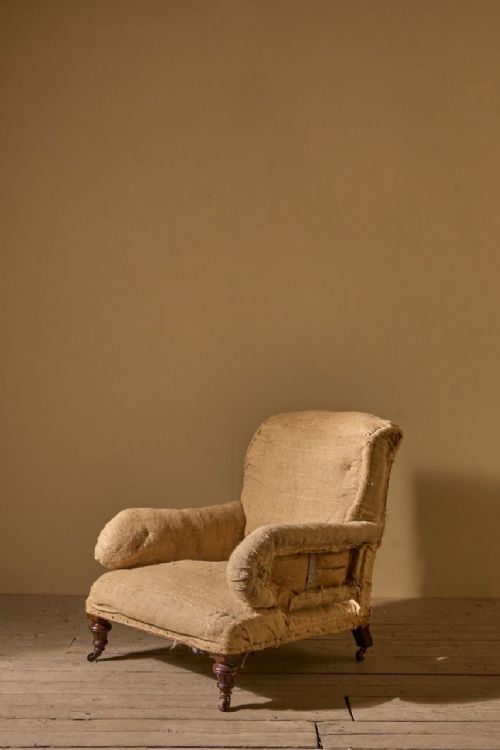
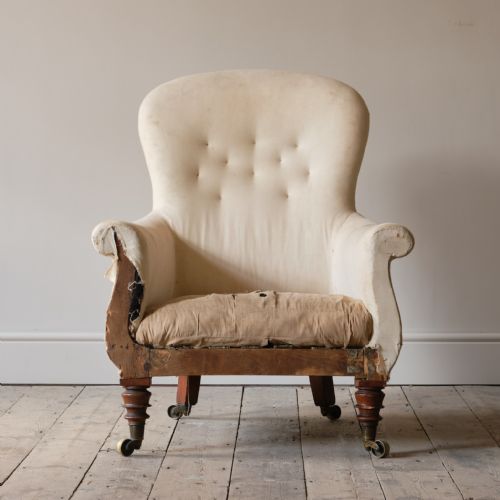
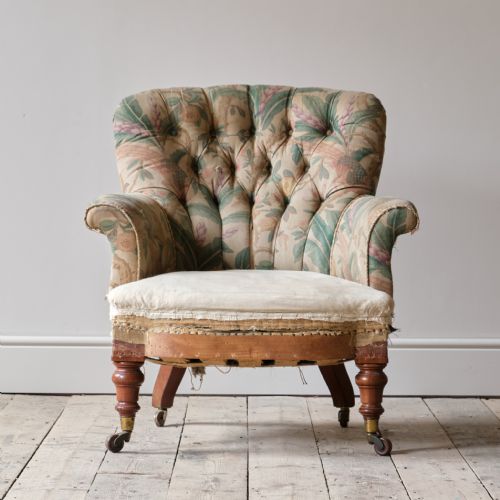
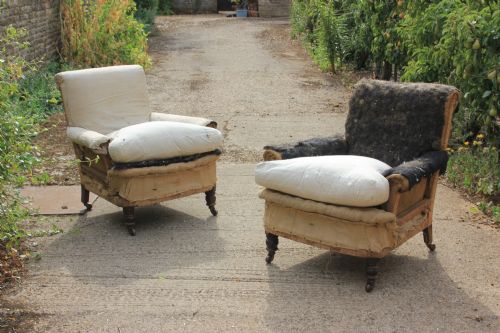
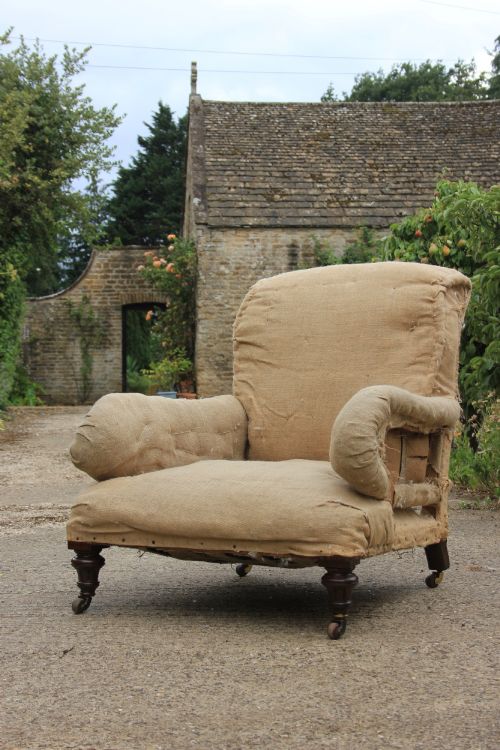
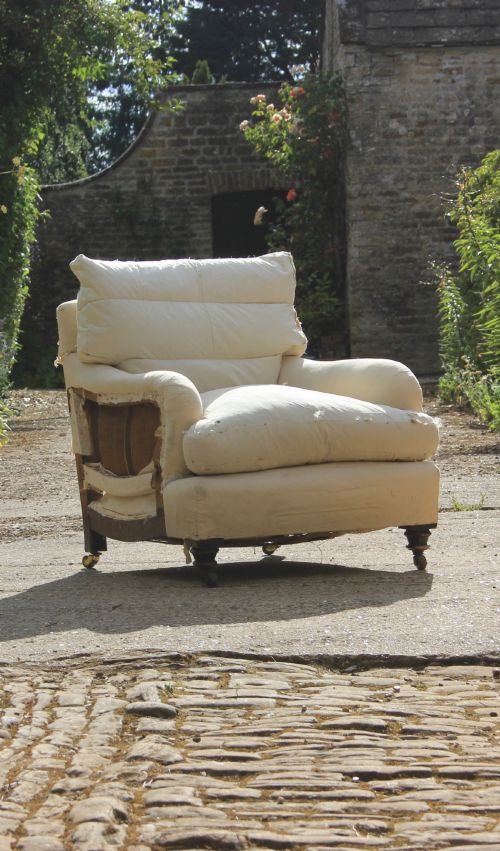
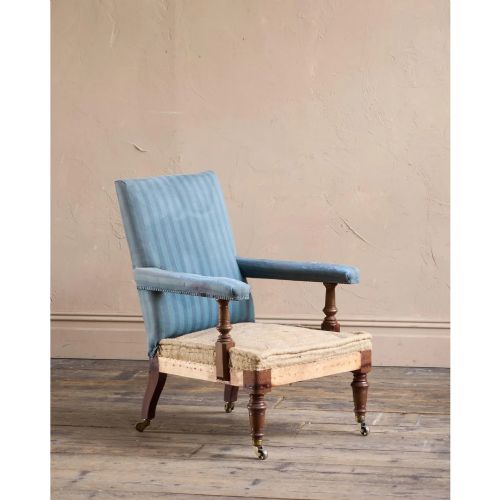
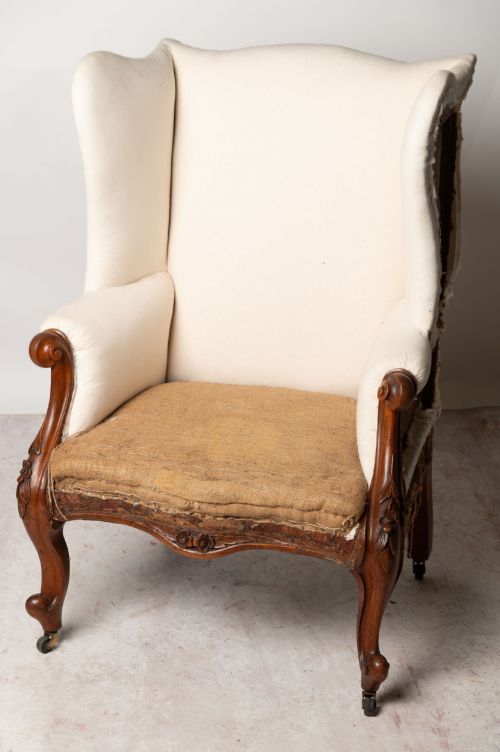
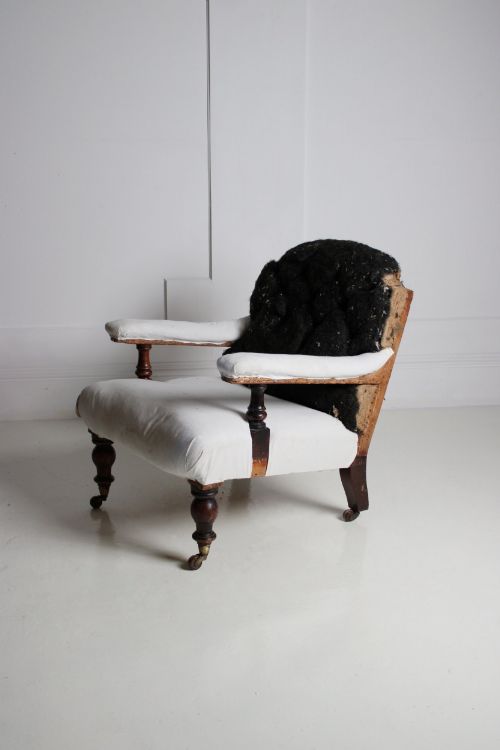
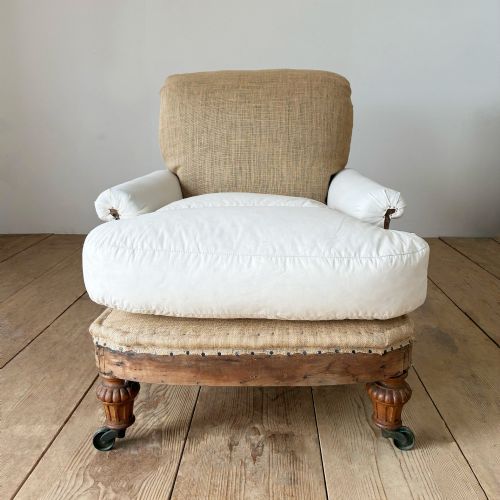
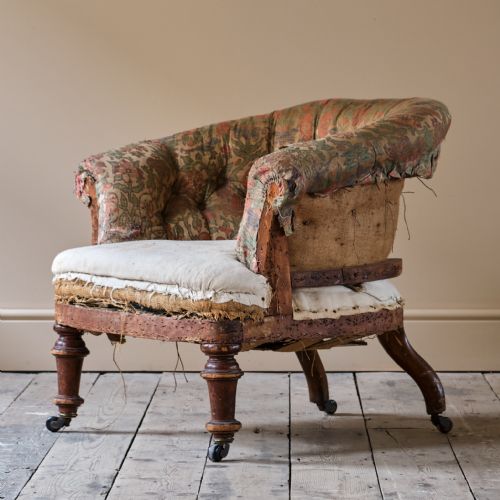
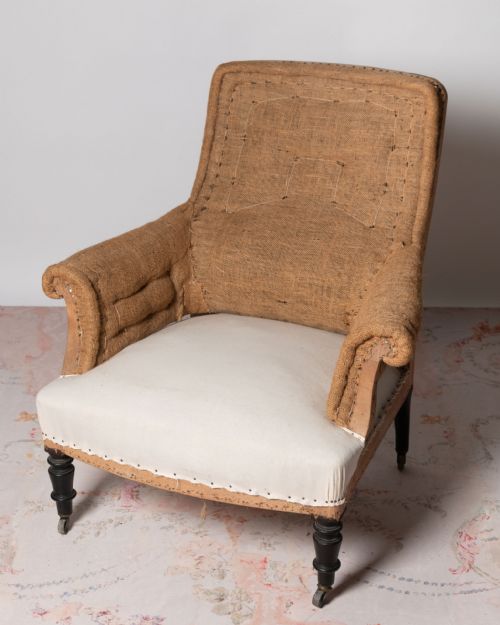
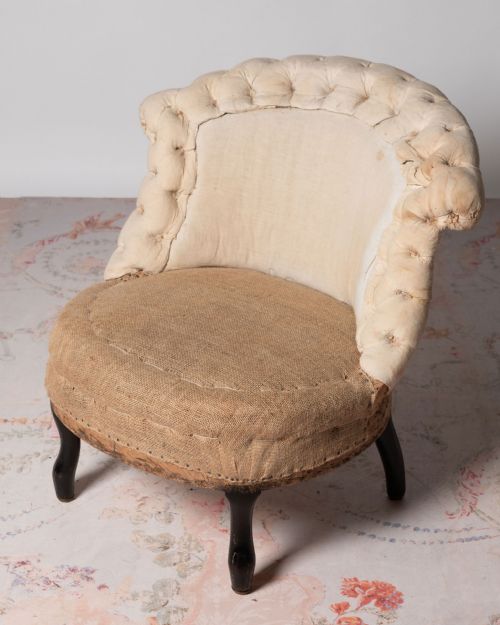
These pieces for a victorian armchair project are unrecovered seat frames and tired seating awaiting new horsehair, hessian and calico.
Victorian Armchair Project
A victorian armchair project brings together raw or worn seat frames that require complete stripping and reupholstery. Buyers encounter stripped mahogany or walnut structures, often sold down to the webbing or to a calico stage ready for top fabrics.
The selections span nineteenth century country house easy chairs, buttoned library models and low occasional seats. Many carry the low-slung, deep-sprung proportions associated with nineteenth century comfort.
Frames arrive in varying states of decay or partial restoration. Some retain old horsehair stuffing and hessian, while others consist purely of bare timber waiting for traditional hand-working.
Judging the underlying quality of a frame
Quality rests in the integrity of the timber frame and the weight of the underlying proportions. Substantial country house models show heavier joinery and deeper seats than lighter occasional chairs.
The sophistication of the carved or reeded show-wood distinguishes standard workshop output from finer cabinet work. Original brass castors and untouched timber surfaces elevate the standing of a piece.
Listings span the nineteenth century through to nineteen thirty, taking in walnut, mahogany, brass, horsehair and hessian.
Howard And Sons·Morison and Co·Hamptons and sons·Gillows
The Victorian Armchair Project Glossary
- Calico stage
- The intermediate upholstery phase where unbleached cotton covers the internal stuffing before decorative fabric goes on. This allows buyers to inspect the spring work and padding clearly.
- Horsehair
- The traditional animal hair stuffing used to build resilient, breathable padding inside nineteenth century seats. It packs tightly into forms and holds its shape across decades.
- Hessian
- A coarse woven jute fabric used as the foundational scrim to hold internal stuffing in place. It stretches across the wooden frame before the horsehair is applied.
- Reeded legs
- Upright furniture supports carved with parallel convex mouldings resembling bundled reeds. This ornamental turning appears frequently on nineteenth century mahogany frames.
- Button back
- An upholstery style where depressions are formed by pulling twine tightly through the padding to secure rows of fabric-covered buttons. This creates deep tufted diamond patterns on the backrest.
Victorian Armchair Project: Frequently Asked Questions
Can I sit in these chairs before they are recovered?
Most pieces sold as projects lack finished top covers and often sit down to the calico stage or exposed webbing.
Sitting in them requires caution because internal springs and horsehair stuffing may be exposed or lack their final tension.
What is a calico stage armchair?
A calico stage chair has had its internal webbing, springs, horsehair and inner cotton lining fully restored by an upholsterer.
This leaves the piece ready for the owner to apply their own decorative top fabric without redoing the structural padding.
Are these frames sturdy enough for daily use?
Hardwood structures made from mahogany and walnut provide robust foundations once any loose joints are secured by a restorer.
The durability depends on the condition of the internal wooden frame rather than the worn fabric covering it.