
Button Back Arm Chair
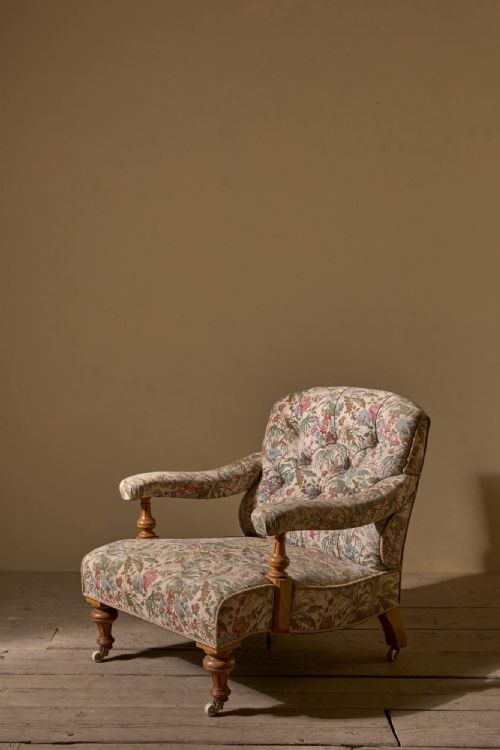
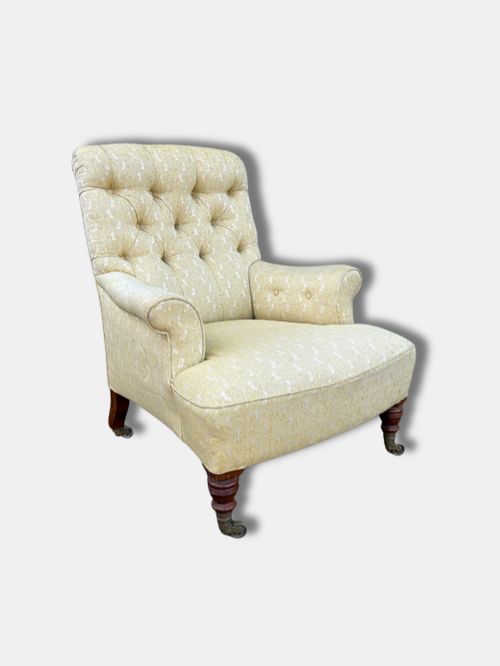
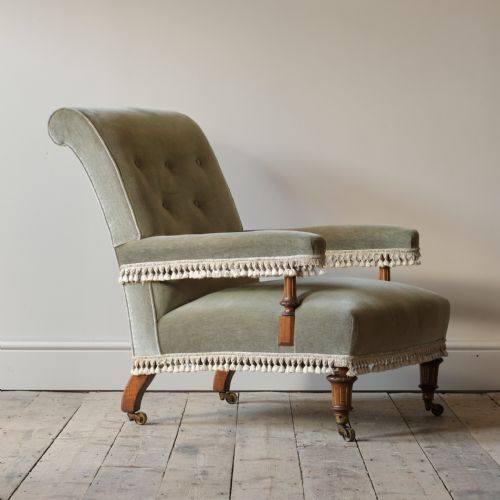
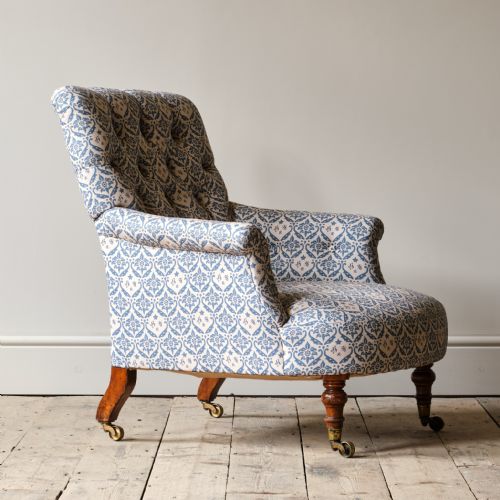
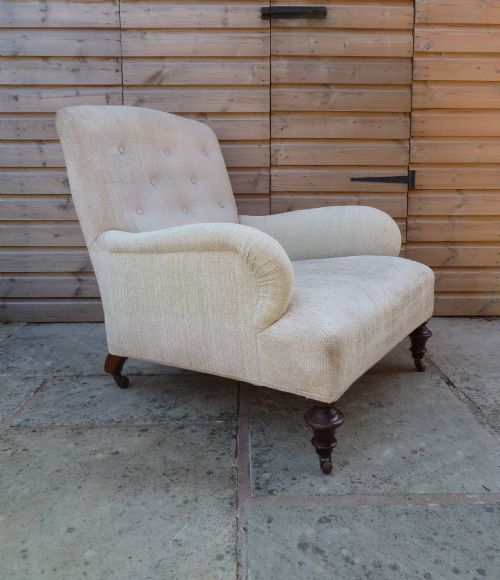
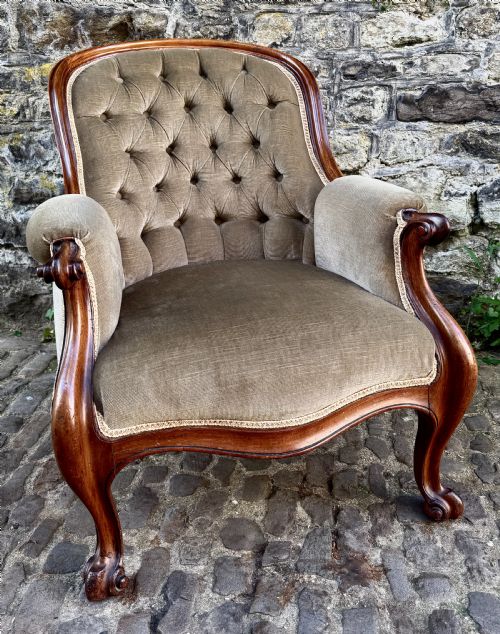
A button back arm chair offers deep upholstery pulled into characteristic tufts, combining generous proportions with traditional seating comfort.
Button Back Arm Chair
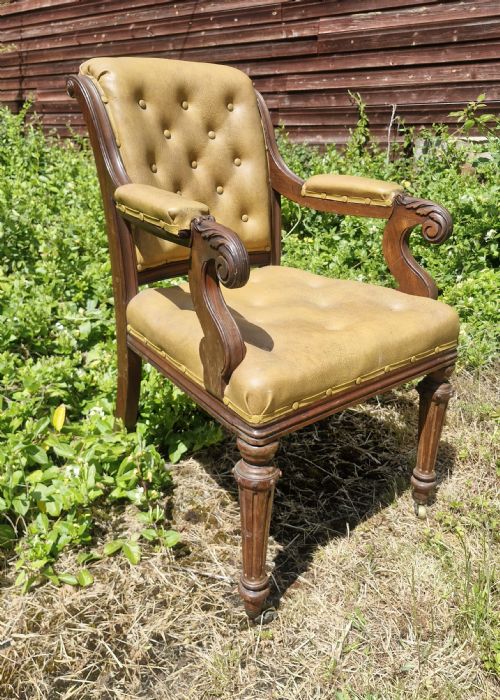
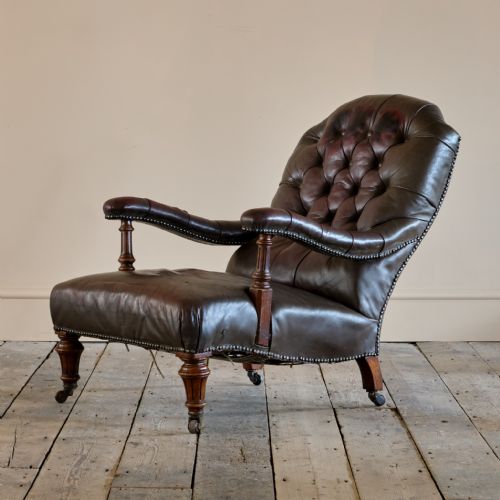
A button back arm chair is defined by its deeply padded upholstery secured with gathers or tufts, creating a distinctive quilted surface across the backrest. Buyers seeking these pieces encounter a variety of nineteenth-century and Edwardian forms, ranging from compact occasional chairs to large library and reading seats.
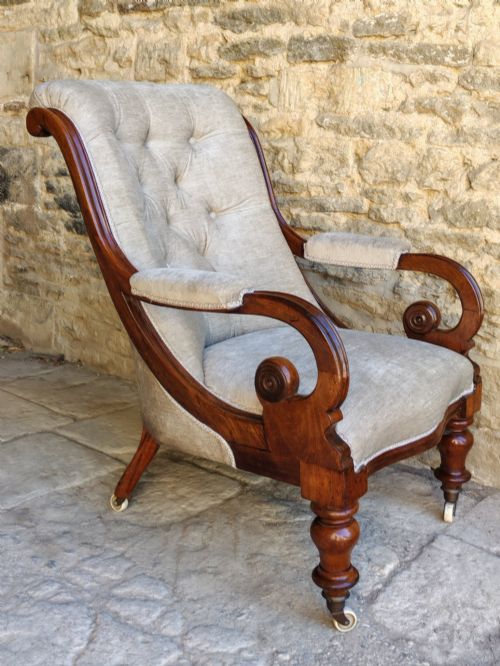
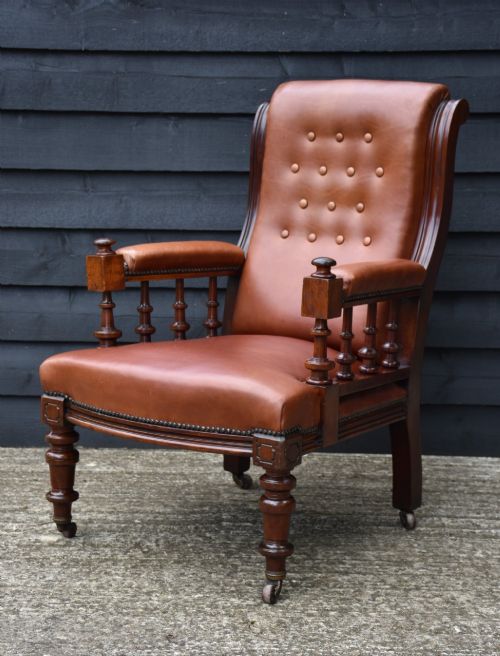
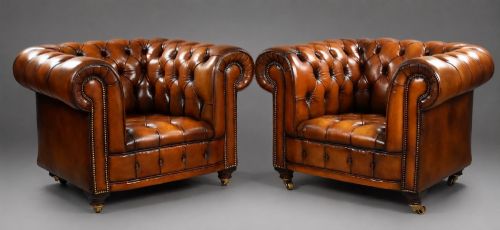
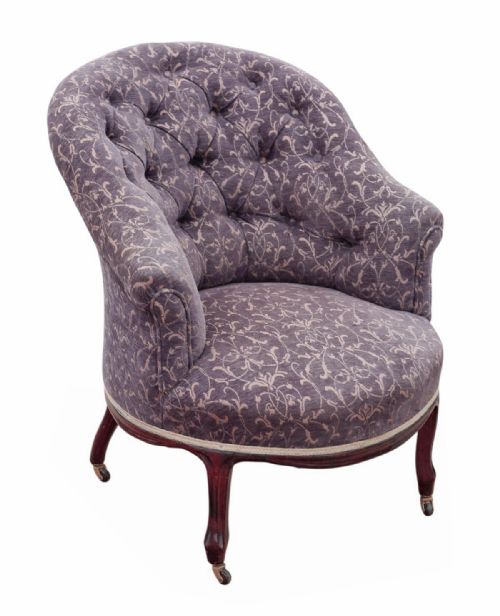
The most common examples on this page date from the Victorian period, often featuring walnut, mahogany, or rosewood frames paired with velvet, fabric, or leather coverings. These include low fireside chairs, tub chairs, and country house armchairs designed for domestic comfort.
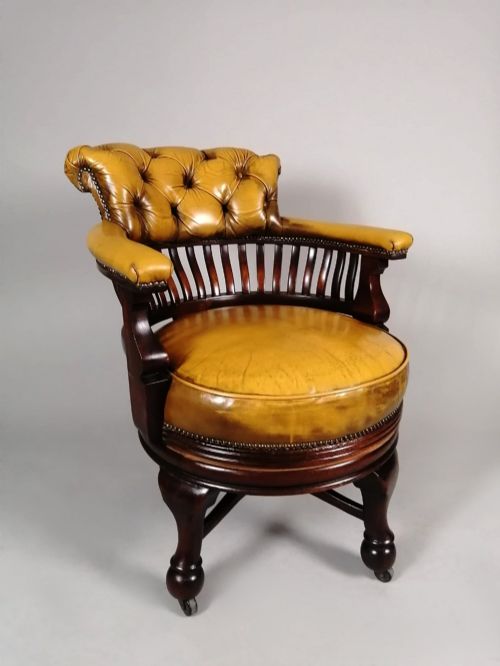
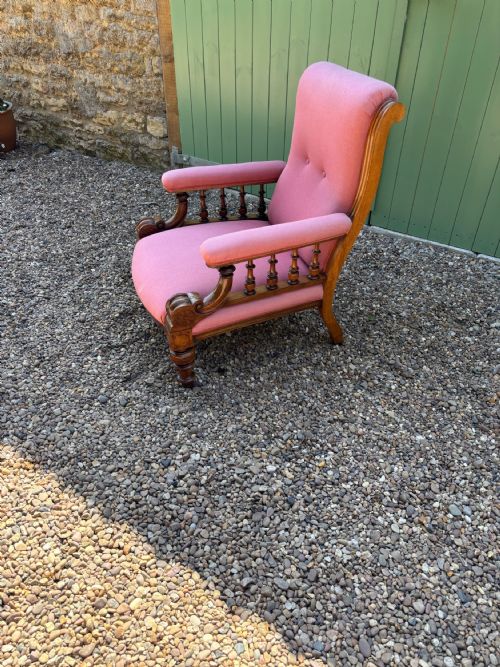
Beyond standard sitting rooms, the search phrase encompasses specialised variants such as revolving desk chairs, chaise longues, and bedroom armchairs with turned or barley twist supports. The enduring appeal lies in the combination of structural woodwork and tactile buttoned upholstery.
Materials and construction methods
Frames are constructed from hardwoods such as mahogany, walnut, and rosewood, frequently shaped with carved showwood details or turned legs fitted with brass castors. Some examples utilise iron frames hidden beneath the upholstery to provide a rigid internal skeleton.
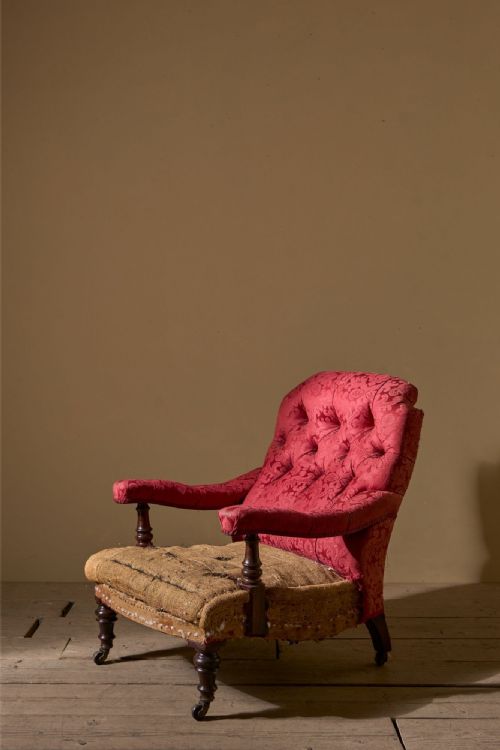
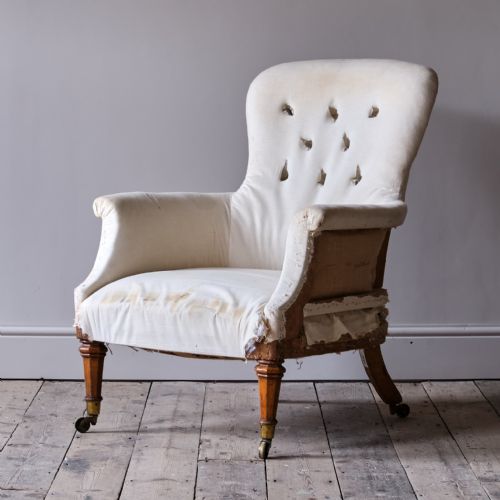
Upholstery relies on traditional stuffing techniques where horsehair or natural fibres are layered over springs and secured with twine before the outer fabric, velvet, or leather is applied. The signature buttons are individually pulled through the padding and anchored tightly to the internal webbing to maintain the characteristic diamond pattern.
Listings feature button back arm chairs spanning from the early nineteenth century through the Edwardian era, incorporating mahogany, walnut, leather, and velvet.
Evaluating quality and proportion
Quality rests in the integrity of the timber frame and the precision of the upholstery work, where tighter tufting and deep, even pleats indicate careful craftsmanship. Superior pieces maintain balanced proportions between the exposed woodwork and the generous padding of the back and arms.
Finer examples often incorporate secondary details such as hand-carved cabriole legs, brass-capped castors, or high-grade hide and velvet coverings that age gracefully. The distinction between standard and exceptional pieces depends on the weight of the timber and the retention of firm, supportive internal springing.
Howard and Sons·Gillows
The Button Back Arm Chair Glossary
- Button back
- Upholstery technique where buttons are sewn deeply into the padding to form a geometric grid of tufts. This method keeps the internal stuffing evenly distributed.
- Showwood
- Timber frame components left visible around the upholstered sections of the chair. It highlights the grain and carved details of woods like walnut and mahogany.
- Barley twist
- A type of turning shaped like a spiralling rope, frequently found on nineteenth-century chair legs and supports. It adds decorative texture to the wooden framework.
- Cabriole leg
- An S-shaped furniture leg curving outward at the knee and inward at the ankle, ending in a pad or scroll foot. This form draws on eighteenth-century design revivals.
- Tub chair
- An armchair with a rounded, enclosing backrest that flows continuously into the arms. It provides a compact and sheltered seating position.
Button Back Arm Chair: Frequently Asked Questions
How do I date a button back arm chair?
Dating relies on examining the timber species, leg turning style, and frame construction beneath the upholstery. Victorian pieces often display heavier mahogany or walnut frames with porcelain or brass castors, while later Edwardian examples lean toward lighter occasional proportions.
Secondary clues include the type of internal webbing and stuffing materials visible through wear or restoration. Comparing the stylistic markers against established nineteenth-century design periods helps narrow the manufacturing window.
Were these chairs used in offices?
Certain configurations, particularly those featuring revolving mechanisms and leather upholstery, served primarily as library or desk seating. These heavier variants allowed scholars and professionals to work comfortably while maintaining a formal domestic appearance.
Standard open armchairs and fireside models remained in living rooms and bedrooms, while swivelling desk chairs were tailored specifically for studies and offices.
What is the difference between Victorian and Edwardian examples?
Victorian models typically feature heavier timbers, darker wood tones, and robust frames designed for substantial domestic parlours and libraries. Upholstery from this era often utilises deep velvet, heavy fabrics, or dark leather.
Edwardian pieces generally present lighter overall proportions, brighter wood finishes, and more delicate framing suitable for smaller bedroom spaces or occasional rooms.
How do I care for leather button back chairs?
Leather upholstery requires regular dusting and periodic treatment with appropriate leather balms to prevent the hide from drying out around the deep folds. Keeping the furniture away from direct sunlight and heat sources preserves the suppleness of the material.
Particular attention should be paid to the button tufts, where dust naturally accumulates, requiring gentle cleaning with a soft brush attachment.