
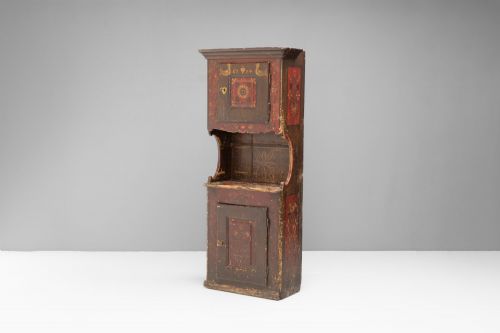


Red Painted Wall Cabinet
A red painted wall cabinet offers both colour and compact storage, bringing striking regional character to any room.
Red Painted Wall Cabinet
A red painted wall cabinet brings vibrant colour and practical storage to domestic spaces, drawing the eye while keeping surfaces clear. These pieces span from the eighteenth century to the twentieth century, with examples originating from various regional traditions.
The selection here includes painted pine wall cupboards alongside related wall-hanging display vitreen structures. Buyers frequently encounter nineteenth-century painted cupboards alongside earlier pieces featuring traditional finishes.
Beyond standard cupboards, the broader evidence reveals painted wooden frames, porcelain chargers, and decorative plates sharing similar aesthetic lineages. Such pieces demonstrate how red paint and lacquer work together with fitted shelving to create functional wall art.
Materials and construction methods
Construction relies primarily on pine and painted wood, providing a sturdy yet workable carcase for wall mounting. Artisans applied pigmented paint directly to the timber surfaces, often building up multiple layers to achieve a rich, opaque finish.
Many pieces incorporate glazed elements or open shelving, joining the timber body with metal hinges and fixtures. The integration of paint protects the underlying wood while delivering the distinct decorative impact characteristic of country and period furniture.
Every red painted wall cabinet hides decades of kitchen secrets behind its bright door.
Distinguishing quality in period cabinetry
Quality reveals itself in the integrity of the timber joints and the depth of the painted surface over time. Finer examples display careful joinery and patination that develops naturally through age and use.
Proportion and decorative restraint separate standard utility cupboards from more distinguished regional pieces. The harmony between the original red pigment and the underlying wood structure dictates the visual success of the object.
The Red Painted Wall Cabinet Glossary
- Pine
- A softwood commonly utilised for country furniture and painted cupboards due to its accessibility and stable grain. It provides an ideal receptive base for decorative paint layers.
- Vitreen
- A glass-fronted wall-hanging display case designed to showcase small collections of porcelain or curiosities. The term relates to the French influence on refined interior furnishings.
- Patina
- The surface sheen and textural change acquired by wood and paint over decades of handling and environmental exposure. It serves as a primary indicator of genuine period age.
- Carcase
- The main structural body or framework of a cabinet, excluding doors and detachable shelves. Its internal joinery dictates the overall durability of the piece.
- Pigment
- The coloured powder substance mixed into a medium to create the red paint finish on the wood. Historical formulations determine the exact hue and fading characteristics observed today.
Red Painted Wall Cabinet: Frequently Asked Questions
What is a red painted wall cabinet?
A red painted wall cabinet is a wall-mounted storage unit featuring a pigmented red surface finish. These pieces combine utility with decorative presence.
They function well in kitchens, hallways, or living spaces where floor area is restricted. The painted exterior adds a focal point to neutral walls.
How do I hang a heavy wall cupboard?
Hanging a period wall cupboard requires locating secure wall studs or using heavy-duty masonry fixings appropriate for the weight. The structural integrity of the timber backboards must support the load.
Professional installation is recommended for older pine cabinets to ensure safety. Distributing weight evenly across internal shelves prevents undue stress on the fixings.
How do I clean a painted cabinet?
Cleaning requires a soft, dry or slightly damp cloth to remove dust without harming the historic paint layer. Harsh chemical cleaners must be avoided entirely.
Maintaining a stable indoor humidity prevents the pine wood from expanding or contracting. This gentle care preserves the original surface patination.
How can I tell the age of a wall cabinet?
Determining age involves examining the construction joints, nail types, and the wear patterns on the paint surface. Hand-cut elements often point to earlier manufacturing periods.
Secondary woods used in the interior panels also offer clues to the region of origin. Comparing these details with documented pieces helps establish a reliable timeline.