


Pine Painted Wall Cupboard
A pine painted wall cupboard brings honest folk character to a room, offering compact storage with time-worn painted surfaces.
Pine Painted Wall Cupboard
A pine painted wall cupboard provides compact storage while displaying the distinct folk art traditions of 18th and 19th-century Europe. These hanging cabinets range from simple provincial English cupboards to brightly decorated Scandinavian and Austrian pieces.
Most examples found here date from the 19th century or earlier, encompassing regional styles such as French Provincial, Scandinavian country, and rustic farmhouse. They typically mount directly to walls or fit snugly into corners with internal shelving.
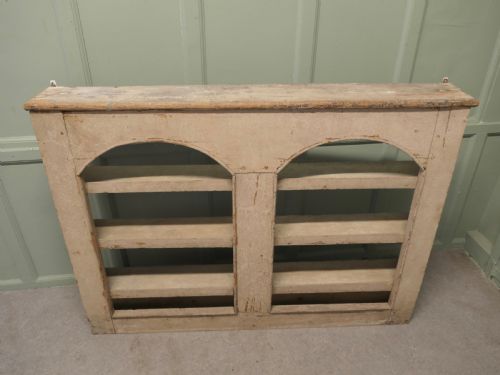
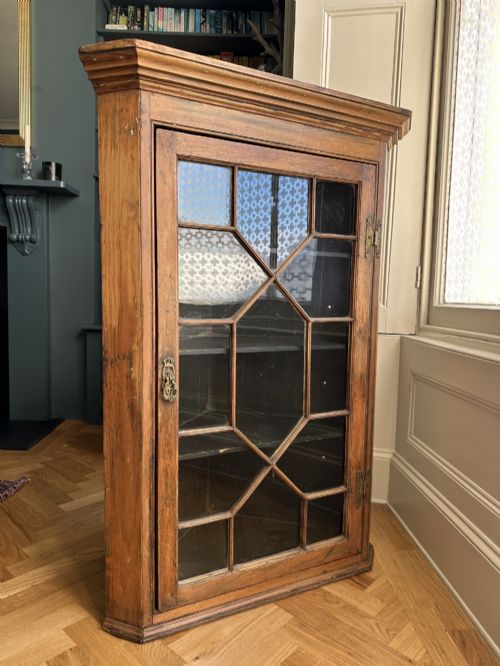
Buyers encounter variations including glazed doors, open top shelves, and alcove designs alongside solid door cupboards. The combination of softwood construction and historical surface decoration defines this category.
Materials and construction
Makers built these wall cabinets primarily using native pine, shaping the timber for wall hanging or corner placement. Iron and brass hardware such as hinges and latches secure the doors and provide structural function.
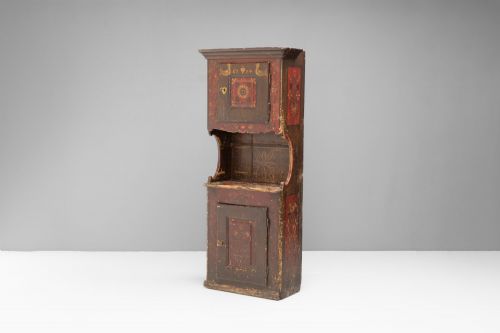
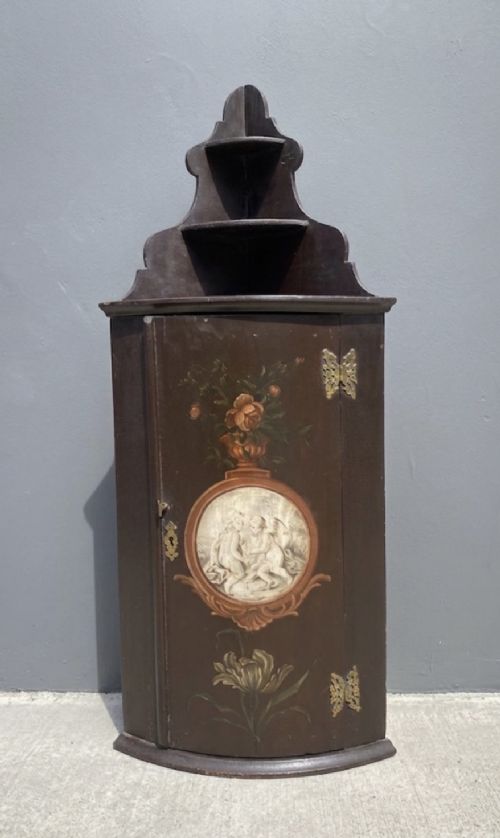
Surfaces received layers of distemper paint or traditional oil-based pigments, often finished in colours characteristic of folk art traditions. Glass panelling appears in select glazed door variants to display contents within.
Listings feature 18th and 19th-century pine wall cupboards alongside corner cabinets and alcove shelving from English, French, and Scandinavian origins.
Quality variations
The distinction between standard and superior pieces rests largely in the survival of original painted surfaces rather than plain stripped wood. Genuine historical paint patination, whether Scandinavian folk motifs or muted English tones, elevates the character of a piece.
Construction methods and hardware integrity also separate everyday utilitarian cupboards from finer examples. Original iron hinges, intact glass, and well-preserved internal shelving indicate better craftsmanship.
The Pine Painted Wall Cupboard Glossary
- Distemper paint
- A water-based paint medium using chalk or pigment bound with glue or size. This traditional finish often chalks slightly with age.
- Folk art
- Artistic work created within a traditional culture by untrained or self-taught artisans. These pieces reflect regional customs rather than academic styles.
- Corner cabinet
- A storage unit specifically built with an angled back to fit into the corner of a room. They maximise space in smaller interiors.
- Glazed door
- A door fitted with glass panes to allow visibility of the interior contents. This feature appears on select display cupboards.
- Alcove shelving
- Fitted shelving designed to sit within a recessed wall space. Pieces of this type integrate directly into domestic architecture.
Pine Painted Wall Cupboard: Frequently Asked Questions
Where should I hang a wall cupboard?
These cabinets suit kitchens, hallways, or living spaces where floor area is limited. Ensure the wall structure can support the weight of timber and stored items.
Allow sufficient clearance around the door swing and mount the cabinet at a comfortable eye level for daily access.
How do I clean a painted surface?
Dust gently with a dry, soft cloth to remove everyday particles. Avoid harsh modern chemical cleaners that can strip historical paint layers.
Test any mild cleaning solution on a hidden area first to ensure the pigment remains stable and secure.
Can I store heavy items inside?
Pine wall cupboards served historically for lightweight provisions, crockery, or dry goods. The internal shelves suit everyday tableware rather than massive loads.
Check the historical fixings and shelf supports before loading the interior to ensure safe daily use.
How do I identify regional painting styles?
Scandinavian and Austrian pieces often display brighter folk art colours and decorative motifs. English and French provincial examples tend towards more restrained, solid painted tones.
Examine the brushwork and pigment type to understand the local workshop traditions behind the finish.