




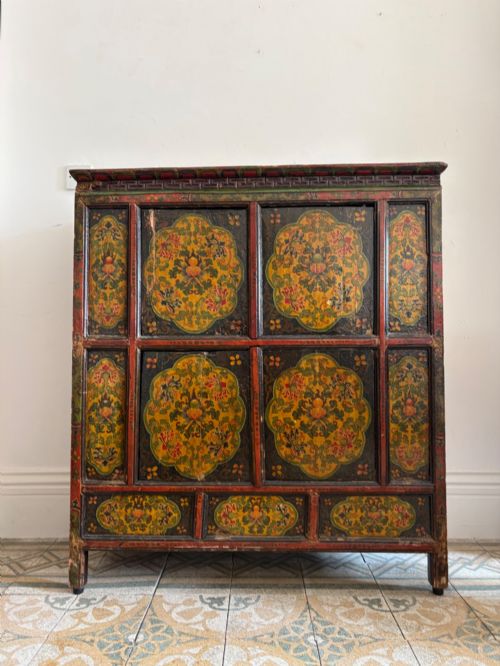


Red Painted Chest
A red painted chest brings character and bold colour into a room, offering practical storage wrapped in folk art or formal lacquer.
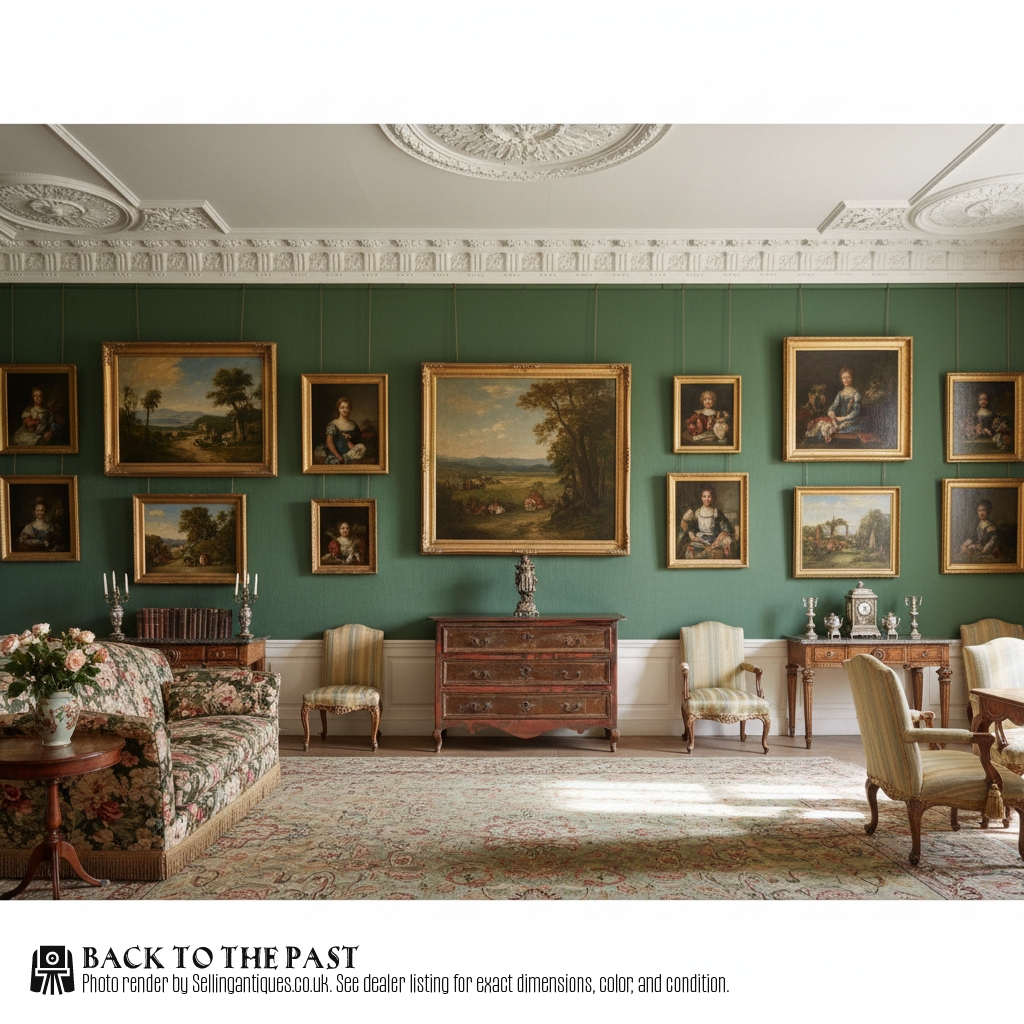
Red Painted Chest
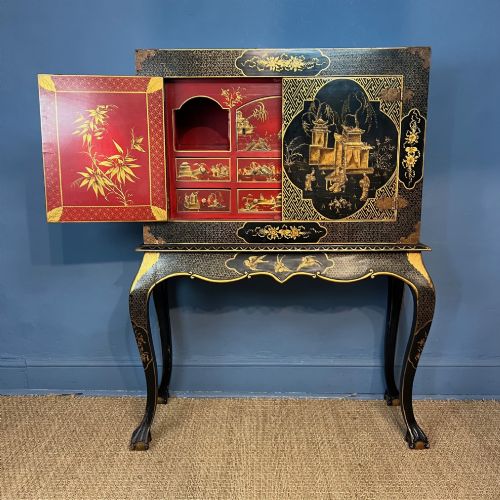
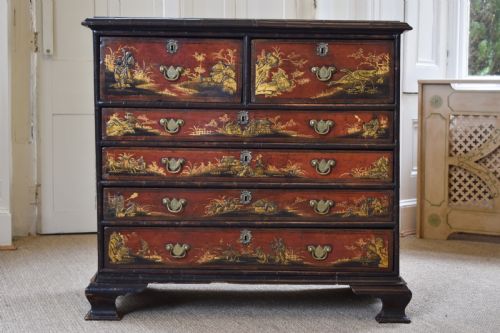
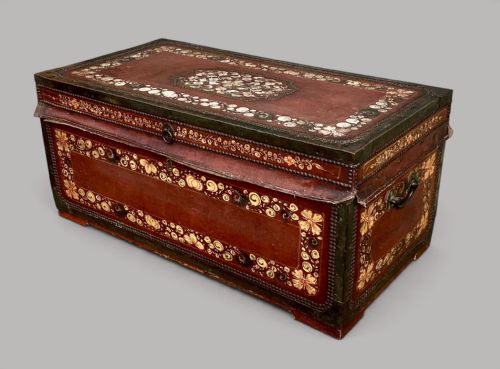
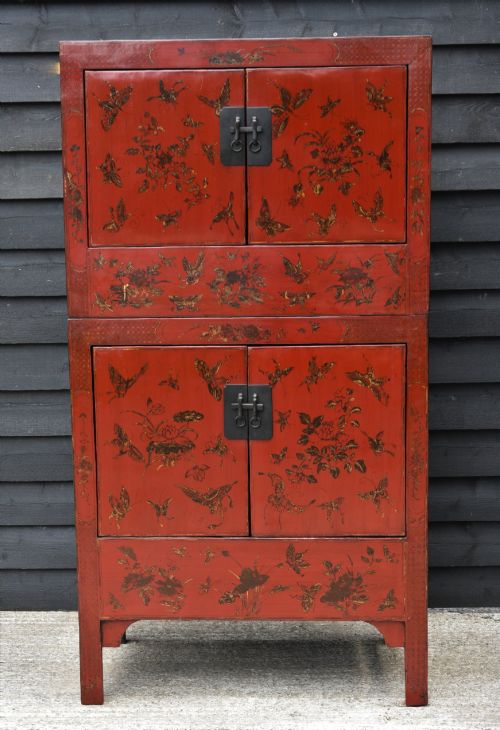
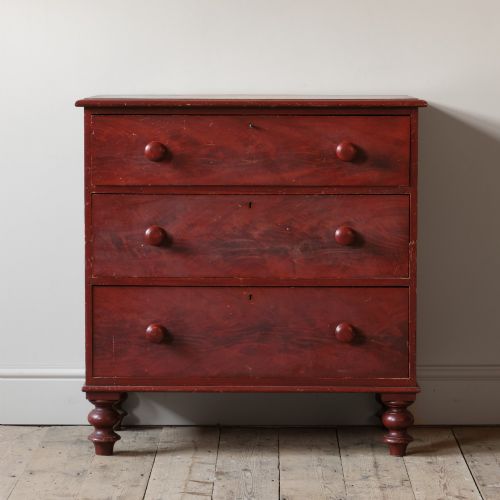
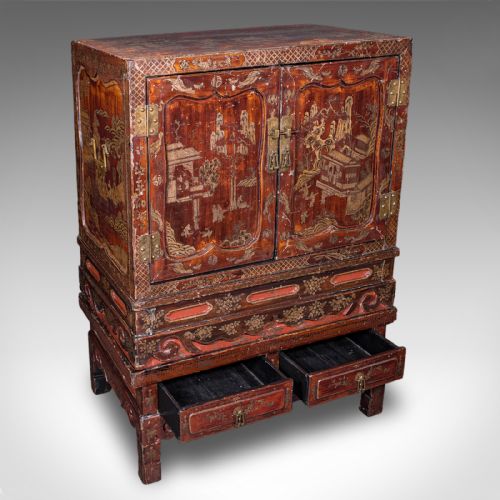
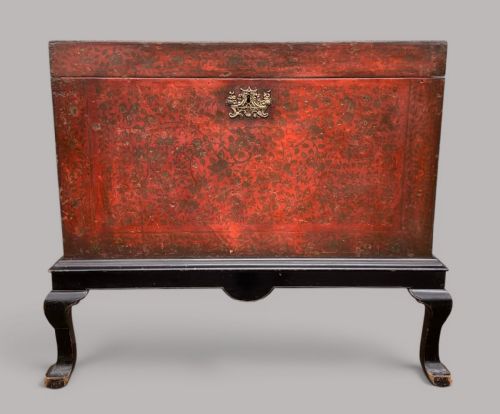
A red painted chest spans several distinct forms, from sturdy pine blanket boxes and mule chests to refined commodes and travelling trunks. When searching for a red painted chest, buyers encounter utilitarian storage furniture as well as decorative cabinets originating from European country workshops and Asian export trades alike.
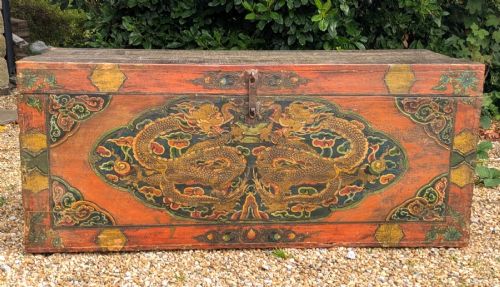
The selection ranges from 18th-century Georgian pieces to later Victorian examples, taking in Scandinavian folk art, Hungarian coffer boxes, and Chinese lacquered items. Many pieces rely on pine carcasses finished with original surface pigments, while others incorporate drawers, stands, or metal mountings.
How they were made
Carpenters typically constructed the foundational bodies using solid pine, oak, or mahogany, joining panels with dovetails or pegged joints depending on the date and origin. Iron or brass hardware such as hinges, handles, and corner brackets reinforced travelling trunks and heavy chests against daily wear.
Surfaces received layers of paint, lacquer, or pigment, sometimes sealed with varnish or detailed with hand-painted floral motifs and sign-writing. Makers applied finishes ranging from simple regional folk decoration to complex multi-layered Oriental lacquer work.
Red Painted Chest Retail Price Guide 2026
Typical asking prices for red painted chest among the pieces listed under this phrase on Sellingantiques today, from the lower quarter to the upper quarter. They describe what is for sale here now, not the wider market.
Listings feature items built from pine, oak, and camphor-wood, spanning the eighteenth, nineteenth, and early twentieth centuries.
What varies in quality
The survival and integrity of the original surface finish largely determine the quality of a piece, separating untouched painted schemes from later repainted or stripped surfaces. Finer examples display crisp hand-painted detailing, harmonious patination, and well-executed joinery that retains its structural stability.
Proportion and hardware integration also set pieces apart, as original brass or iron mounts and balanced drawer configurations indicate careful workshop production rather than hurried commercial output.
Shoolbred and Co·Louis Majorelle
The Red Painted Chest Glossary
- Coffer
- A heavy wooden chest traditionally used for storing valuables or textiles. These sturdy boxes often feature hinged lids and simple panel construction.
- Mule chest
- A traditional storage chest featuring one or more drawers built into the base beneath the main compartment. They bridge the gap between a blanket box and a chest of drawers.
- Chinoiserie
- European decorative style reflecting Chinese artistic influences, popular in furniture decoration. Artisans used lacquering and gilt motifs to mimic Asian export goods.
- Commode
- A low chest of drawers or cabinet on legs, originating in France. These decorative pieces often stood in bedrooms or formal reception rooms.
- Campaign case
- Portable furniture designed for travel by military officers or merchants. These pieces frequently incorporate brass corners, recessed handles, and sectional stands.
Red Painted Chest: Frequently Asked Questions
What is a red painted chest used for?
These pieces provide substantial storage for blankets, bed linen, and household items while serving as striking focal points in living spaces or hallways. Their robust construction suits everyday functional use.
Beyond domestic storage, many variations function as side tables, coffee tables, or statement cabinets that introduce rich colour into an interior scheme.
How do I care for original painted furniture?
Protect the surface by keeping the piece out of direct sunlight and away from rapid temperature changes that can cause wood to move and paint to flake. Dust gently with a dry, soft cloth.
Avoid using modern chemical polishes, cleaning sprays, or abrasive cloths, as these substances can damage historic pigments and delicate lacquered finishes.
How can I tell if the paint is original?
Original paint exhibits natural wear patterns, craquelure, and micro-abrasions consistent with age, integrating smoothly into the underlying wood grain. Close examination often reveals multiple historic layers beneath the top surface.
Re-painted surfaces frequently look uniform, lack expected age-related softening around edges and handles, and sit heavily across joints and hardware.
Where were these chests made?
The listings encompass diverse geographical origins, including rural workshops in Hungary, Sweden, and Spain, alongside formal cabinet-making centres in Britain and France. Trade routes also brought items from China and India.
Regional traditions heavily influenced construction methods and decorative motifs, resulting in distinct styles ranging from Scandinavian folk art to ornate Oriental lacquer.