

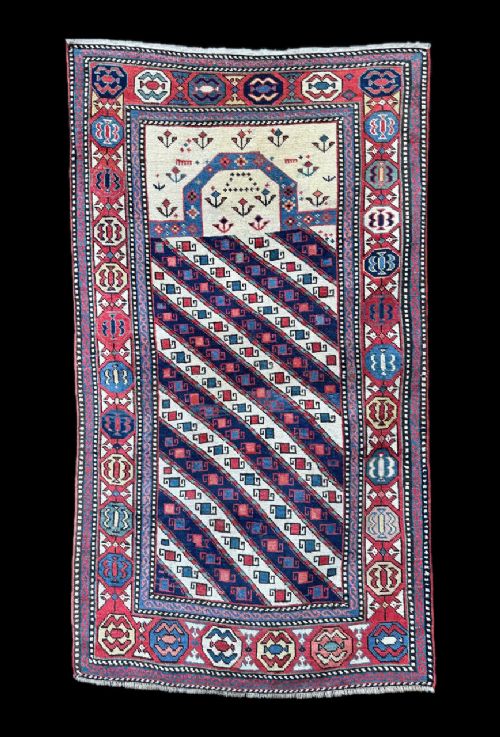

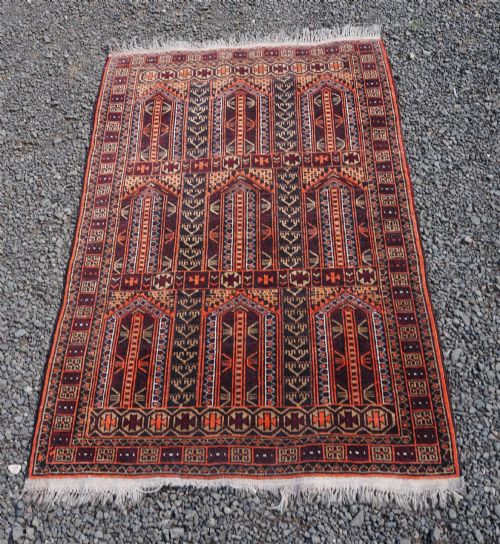

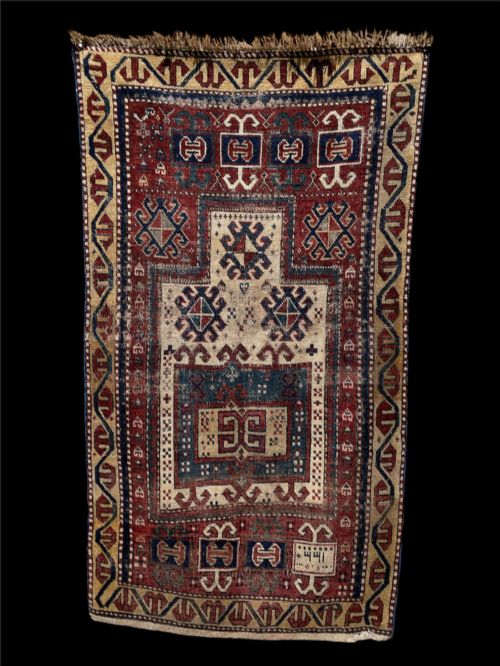
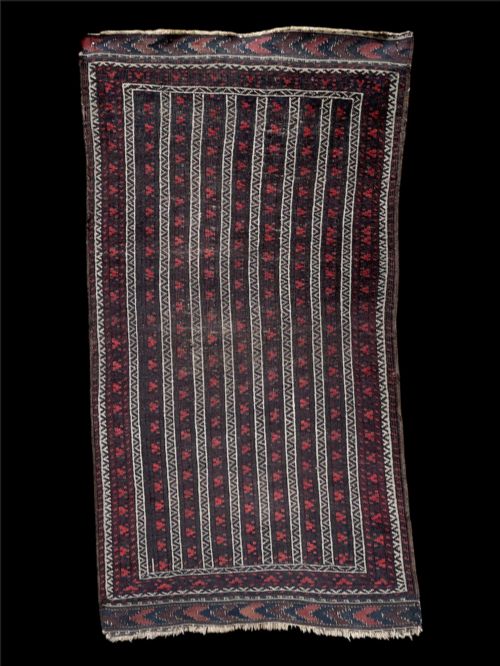


Red Navy Prayer Rug
These red navy prayer rug examples bring rich tribal iconography and deep indigo grounds into a room.
Red Navy Prayer Rug
A red navy prayer rug combines dark indigo fields with deep red accents, structured around a central arch that indicates the direction of prayer. These woven textiles come from regions such as the Caucasus, Persia, and Afghanistan, reflecting distinct regional weaving traditions from the late nineteenth and early twentieth centuries.
Village and nomadic weavers produced these floor coverings to serve functional devotional purposes while incorporating local geometric or floral motifs. Each specimen carries the specific design vocabulary of its origin, distinguishing Caucasian geometric patterns from softer Persian or Afghan village compositions.
Materials and construction methods
Weavers utilised natural wool for the pile and foundation yarns, sometimes combining it with cotton structural elements in specific regional workshops. These natural fibres were dyed using traditional organic colourants that yielded deep, saturated shades of red and navy blue which age gracefully over decades.
The hand-knotting technique secures the wool pile firmly to the warp and weft threads, creating a dense and durable textile surface. Nomadic and village makers employed upright or horizontal looms, resulting in variations in knot density and handle across different tribal groups.
Red Navy Prayer Rug Retail Price Guide 2026
Typical asking prices for red navy prayer rug among the pieces listed under this phrase on Sellingantiques today, from the lower quarter to the upper quarter. They describe what is for sale here now, not the wider market.
Current listings feature pieces spanning five distinct decades from eighteen-seventy to nineteen-twenty, utilising wool and cotton materials across Caucasian, Afghan, and Persian styles.
Judging quality and execution
The precision of the knotting and the complexity of the design layout separate standard village pieces from exceptional tribal examples. Tighter knot density allows for sharper definition in geometric lattices, boteh motifs, and floral vase designs.
The depth and saturation of the red and navy wool dyes dictate the visual impact of the piece. Superior examples retain intense, vibrant colour saturation across the pile without muddy transitions between the dark blue grounds and contrasting red details.
The Red Navy Prayer Rug Glossary
- Mihrab
- The arched niche design at the top of a prayer rug that mimics the architectural prayer niche found in mosques. This defining feature points the worshipper toward Mecca during daily devotions.
- Boteh
- A stylised almond or pear-shaped motif representing a leaf, bush, or flame. This ancient symbol appears frequently throughout Caucasian and Persian tribal weavings.
- Seh Mihrab
- A triple arch design layout featuring three distinct prayer niches across the upper field. This specific format appears in Afghan village and tribal rugs.
- Warp
- The vertical foundation threads stretched tightly on the loom before knotting begins. The visible fringes at either end of the rug are simply the extension of these structural cords.
Red Navy Prayer Rug: Frequently Asked Questions
How were prayer rugs used?
These textiles served as portable spaces for daily Islamic prayers, laid upon the ground to provide a clean surface for the worshipper. Owners rolled them up between prayer times or hung them over walls in domestic interiors.
Over decades of use, the orientation of the mihrab reminded users of the sacred direction while adding warmth and colour to nomadic tents and village homes.
Where do these rugs originate?
The pieces originate from various weaving centres across the Caucasus, Persia, and Afghanistan, produced by tribal groups and village communities. Distinct regions such as Gendje, Shirvan, and Daghestan developed their own recognisable palette and geometric vocabulary.
Nomadic groups like the Baluch and Qashqai also contributed distinct regional styles, utilising local materials and traditional dyeing techniques passed down through generations.
How do I date an antique rug?
Dating relies on examining the specific wool quality, structural materials, dye composition, and stylistic conventions characteristic of particular decades. Nineteenth-century examples often display subtle irregularities in symmetry and softer vegetable dye palettes compared to later productions.
Certain structural markers, such as depressed warps or specific selvedge treatments, help attribute pieces to specific periods between eighteen-seventy and nineteen-twenty.
How do I care for an antique rug?
Gentle vacuuming without a rotating brush roll prevents dust accumulation in the wool pile while protecting the delicate structural foundation. Keeping the textile away from direct sunlight preserves the rich red and navy dyes from fading over time.
Professional specialist cleaning is recommended for antique wool textiles to maintain the integrity of the natural fibres and organic colourants.