




Striped Tribal Rug
A striped tribal rug brings graphic linear rhythm and deep cultural history straight from the looms of Persian, Caucasian, and Central Asian nomads.
Striped Tribal Rug
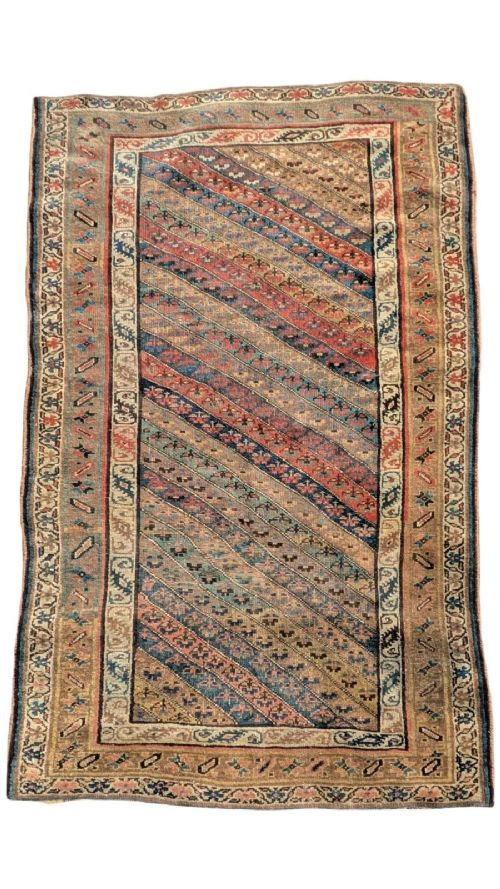
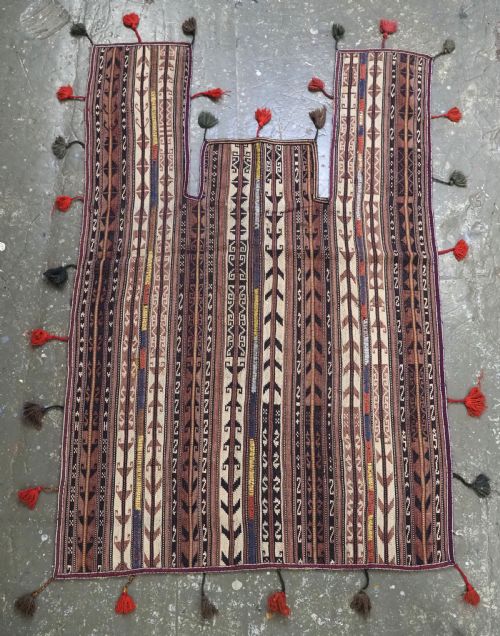
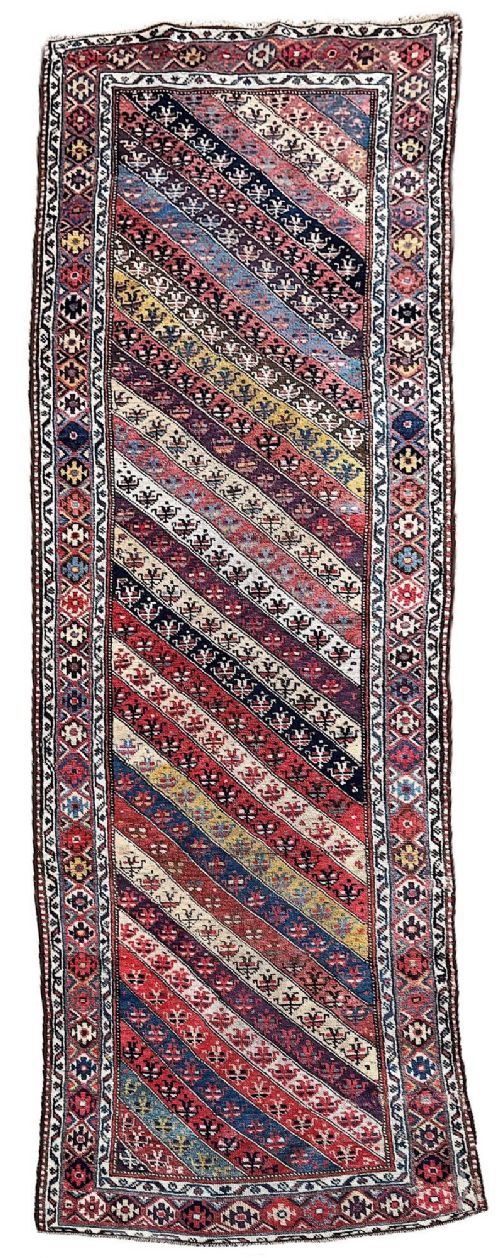
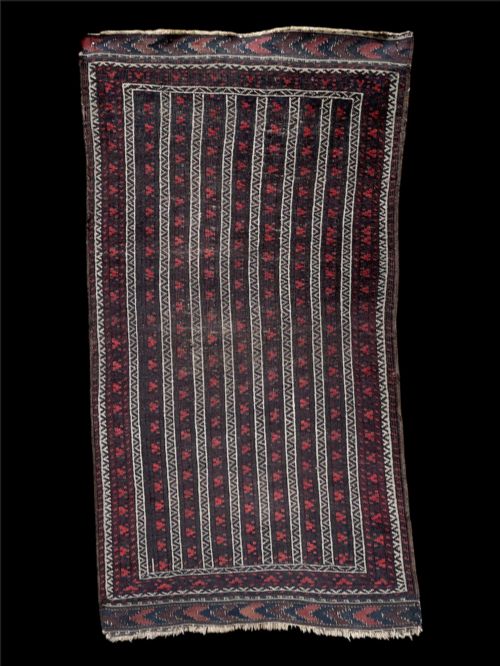
A striped tribal rug encompasses flatweaves, runners, and pile carpets displaying distinct linear bands, often created by nomadic groups such as the Yomut, Tekke, Qashqai, and Uzbek peoples. These textiles originated as functional household items, including grain sacks, horse covers, tent bands, and sofreh dining spreads, rather than decorative floor coverings for the Western market. Pieces spanning the nineteenth and early twentieth centuries frequently showcase geometric patterns, chevrons, and bold contrasting bands.
Runners and flatwoven kilims dominate the selection, bringing crisp linear formats created by weavers working on portable vertical or horizontal looms. Examples range from small mounted fragments and bag faces to larger wall hangings and floor spreads originating from regions like Fars, Shirvan, and the Chahar Mahal valley. Each item reflects the specific utilitarian traditions of its maker, whether intended for nomadic transport or communal gatherings inside a tent.
Materials and construction
Weavers relied principally on hand-spun wool and cotton, occasionally incorporating silk, goat hair, and leather for structural reinforcement or decorative contrast. Natural dyes provided the rich palette seen across these textiles, absorbing onto the animal fibres with subtle tonal variations over decades of use and exposure.
Techniques varied from standard pile knotting to flatweave constructions such as cicim and banded tapestries. Artisans frequently joined multiple narrow panels together to achieve larger formats, such as wide floor spreads or ceremonial horse blankets, utilising sturdy wool foundations to ensure durability.
Some runners started life as camel saddle bags before finding a second career on modern dining room floors.
Assessing craftsmanship and condition
Quality rests heavily on the fineness of the weave and the precision of the graphic banding executed by the weaver. Tightly compacted wefts and secure selvedges separate superior examples from more relaxed utility pieces intended strictly for daily farm or domestic chores.
The vibrancy and integrity of the natural dyes significantly influence the stature of a textile. Examples retaining deep, saturated colour without excessive fading or harsh chemical alterations demonstrate superior original materials and expert mordant preparation.
The Striped Tribal Rug Glossary
- Kilim
- A flatwoven textile produced without a pile, created by tightly interweaving warp and weft threads to form crisp geometric patterns. These pieces were traditionally used as rugs, wall hangings, and covers.
- Sofreh
- A dining or meal spread woven by tribal women for communal eating and food preparation. They often feature strong linear designs and durable wool construction.
- Mafrash
- A large rectangular storage bag or travel container used by nomadic tribes to transport household goods on pack animals. Panels from these items are frequently repurposed into smaller flatweaves.
- Jajim
- A strong, durable flatweave textile traditionally utilised as a blanket, floor covering, or wall hanging. They are commonly constructed from several narrow woven strips stitched together side by side.
- Cicim
- An embroidery-like flatweave technique where supplementary weft threads are floated over the warp to create raised geometric patterns. This method adds rich surface texture to tribal textiles.
Striped Tribal Rug: Frequently Asked Questions
How were striped tribal rugs used?
Nomadic communities utilised these textiles for daily survival, employing them as floor spreads, grain sacks, animal covers, and eating cloths. They served practical roles inside tents and during migrations before entering the collector market.
Many items were constructed specifically to hold provisions like wheat or to blanket horses during ceremonies, meaning their linear designs often carried functional or tribal significance.
What materials make up these rugs?
Traditional pieces rely primarily on hand-spun wool and cotton, sometimes accented with silk, goat hair, or leather elements. Dyes were sourced from local plants and minerals, creating organic tones that age gracefully.
The combination of resilient animal fibres and natural colorants gives these older textiles their characteristic weight and flexible handle.
How can I date a tribal rug?
Dating relies on structural analysis, wool quality, and the specific chemical composition of the natural dyes used by the weavers. Nineteenth and early twentieth-century pieces display distinct hand-spun textures and regional weave structures that differ from later commercial production.
Comparing the border motifs, tribal attributions, and known workshop traditions helps narrow the decade of origin.
How do I care for an antique flatweave?
Protect delicate flatweaves by placing a quality breathable underlay beneath them to prevent slipping and reduce friction against hard floors. Regular gentle vacuuming without a rotating brush roll keeps dust from settling into the wool foundations.
Keep textiles out of direct, harsh sunlight to preserve the natural dyes, and consult a specialist textile conservator for professional cleaning when necessary.