





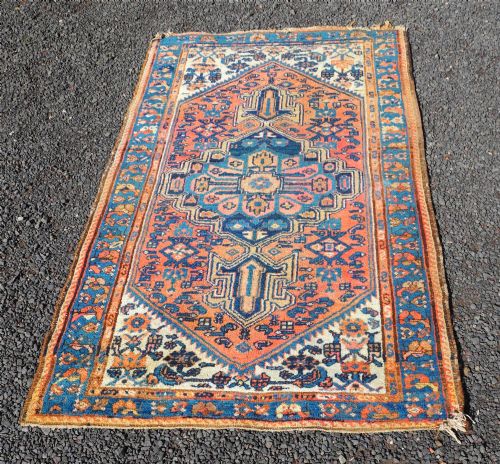
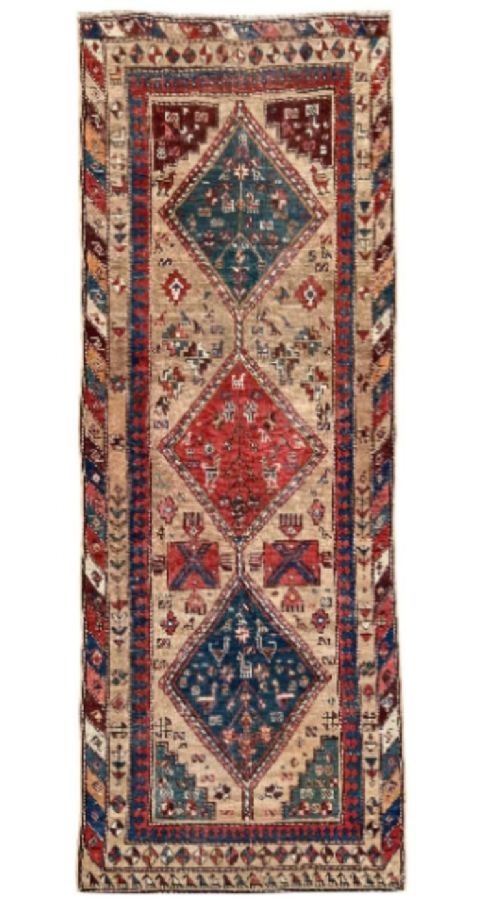
Tribal Oriental Carpet
A tribal oriental carpet brings geometric village tradition and deep regional dye colour directly onto the floor.
Tribal Oriental Carpet
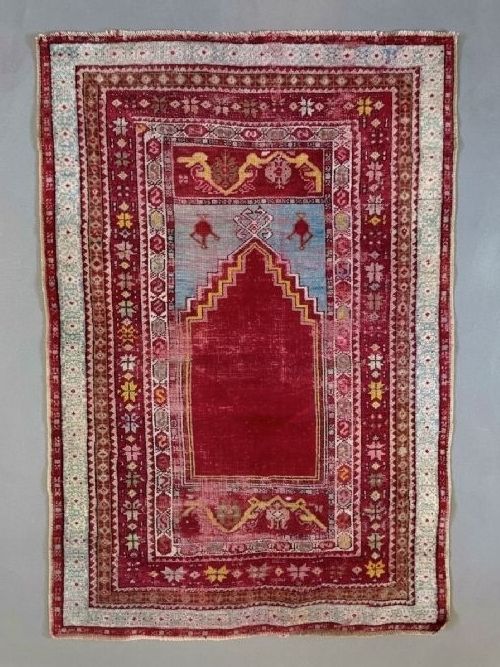
A tribal oriental carpet gathers regional weaving traditions from Persia, the Caucasus, Anatolia, and Turkmenistan into heavy floor coverings. These pieces include formats ranging from compact prayer rugs and kilims to long hallway runners and large main carpets.
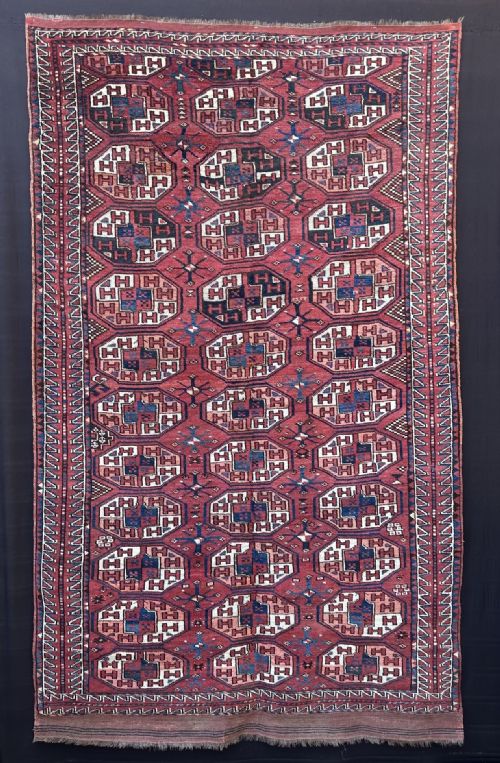
The material record spans the nineteenth century through the early twentieth century, taking shape through village workshops and nomadic tribal groups. Buyers on this page encounter pieces attributed to specific groups such as the Baluch, Bakhtiar, Afshar, and Ersari Turkmen alongside broader regional origins.
How they were made
The pieces rely upon wool, cotton foundations, and hand-spun wool fibres knotted or woven by hand. Many examples incorporate camel wool and natural dyes to establish enduring structural integrity and deep regional palettes.
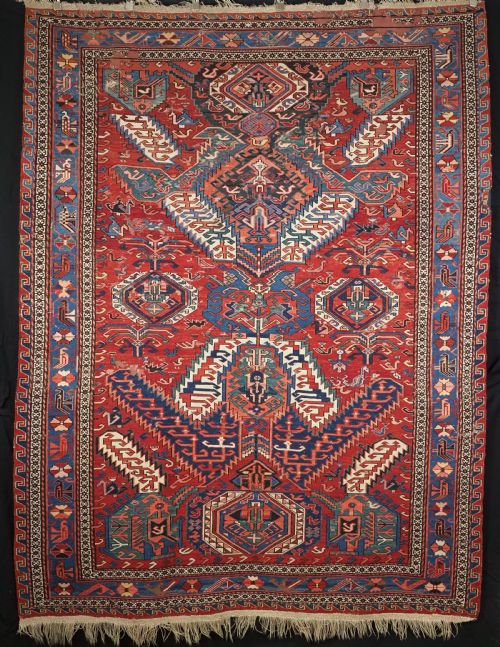
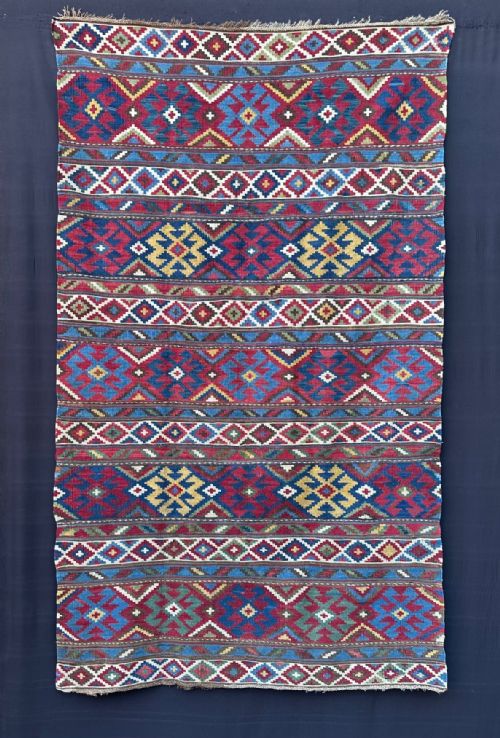
Weaving techniques vary from standard pile knots to flat-woven Soumak and kilim structures. Artisans constructed these carpets using traditional village and nomadic methods passed down through generations.
Listings span periods from the early nineteenth century through 1930, utilising wool, cotton, and natural dyes.
What varies in quality
Quality rests upon the crispness of tribal geometry, the depth and saturation of natural dyes, and the density of the wool pile. Finer knotting and well-preserved structural edges separate exceptional village and nomadic examples from standard utilitarian room carpets.
The integrity of the hand-spun wool and the complexity of regional designs, such as scarce dragon motifs or double mihrabs, dictate the distinction between ordinary production and superior craftsmanship.
The Tribal Oriental Carpet Glossary
- Soumak
- A flat-weaving technique that wraps supplementary weft threads around warp threads to produce a textured surface. This method creates durable carpets without a traditional cut pile.
- Kilim
- A flat-woven carpet or rug made without pile by tightly interweaving warp and weft strands. These textiles often display sharp geometric patterns characteristic of village production.
- Main carpet
- A large-format tribal weaving traditionally produced for domestic use within a nomadic tent or village home. These pieces often serve as the central floor covering of a household.
- Natural dye
- Colour derived from plant, insect, or mineral sources rather than synthetic chemicals. These dyes yield rich, mellow tones that develop patina over time.
Tribal Oriental Carpet: Frequently Asked Questions
How do I identify a tribal rug?
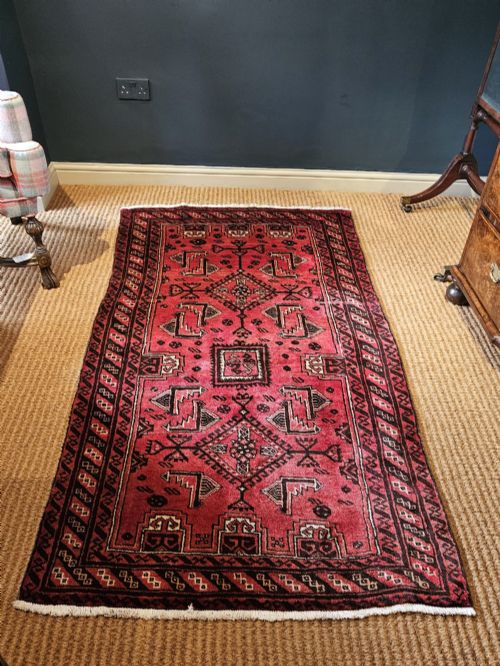
Tribal rugs display bold geometric motifs, asymmetric village designs, and earthy colour palettes rooted in specific regional traditions. They lack the precise symmetry and curlicue florals found in formal city workshop carpets.
Look for distinctive structures like hand-spun wool, visible abrash in the dye lots, and thick foundations typical of nomadic or village production.
Where were these carpets made?
The pieces originate across Western and Central Asia, encompassing regions in Persia, the Caucasus, Anatolia, and Turkmenistan. Specific tribes and villages such as the Afshar, Bakhtiar, and Ersari Turkmen created distinct local styles.
Each geographic area utilised local materials and traditional dyeing methods, giving their carpets recognizable regional characteristics.
Can I use a runner in a hallway?
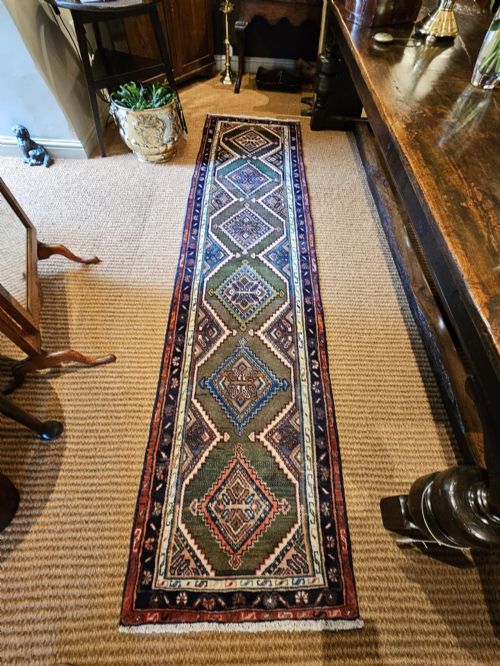
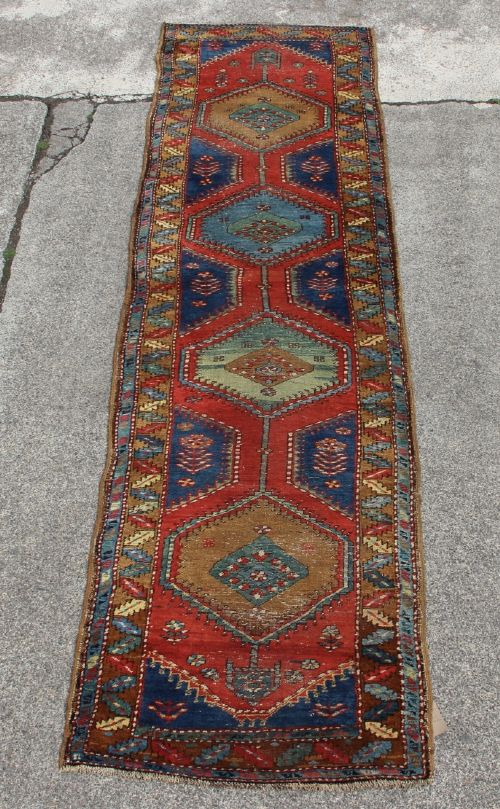
Long narrow formats, including antique runners and hallway pieces, suit high-traffic corridors and transitional spaces. Their durable wool construction withstands regular foot traffic while introducing historical pattern to narrow areas.
Ensure an appropriate underlay is placed beneath the rug to prevent shifting on hard floors.
What is a prayer rug used for?
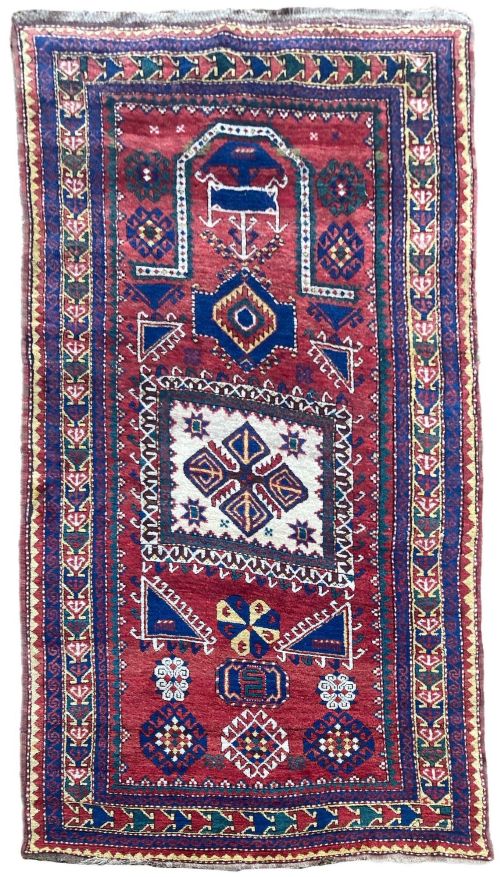
Prayer rugs feature a distinctive architectural arch or mihrab design that traditionally indicated the direction of Mecca during daily devotions. Their compact size allowed nomadic weavers to roll and transport them easily.
Today, collectors appreciate these smaller formats as decorative wall hangings or focused accent pieces in a room.