
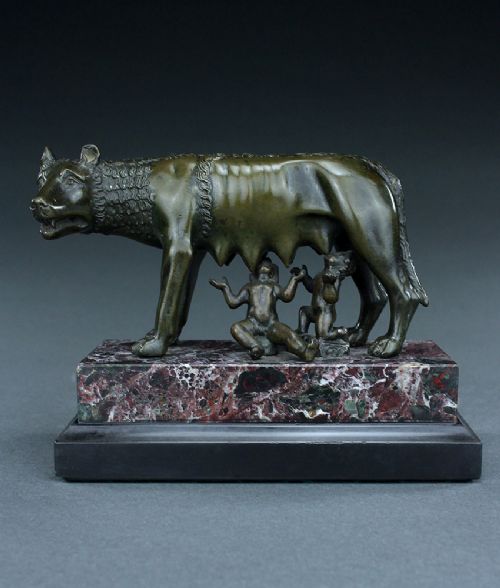

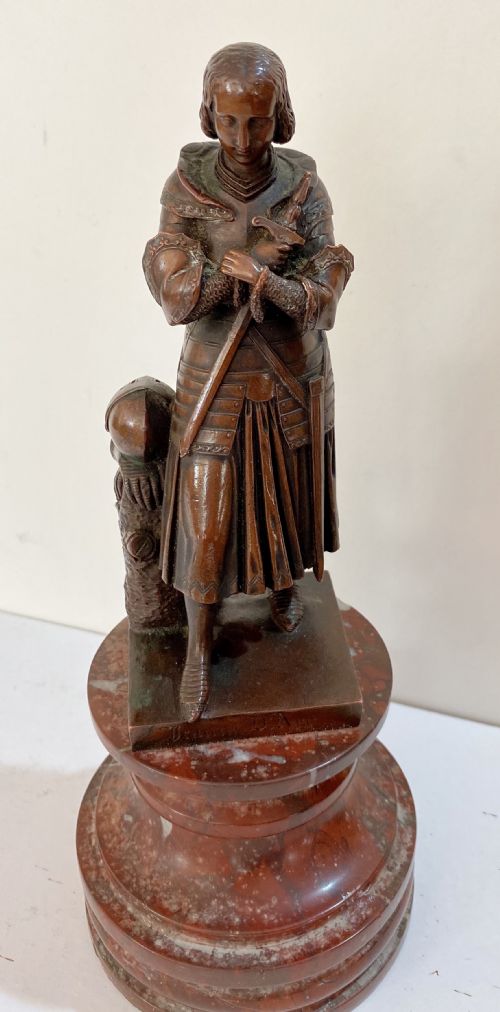


Red Marble Bronze Figures
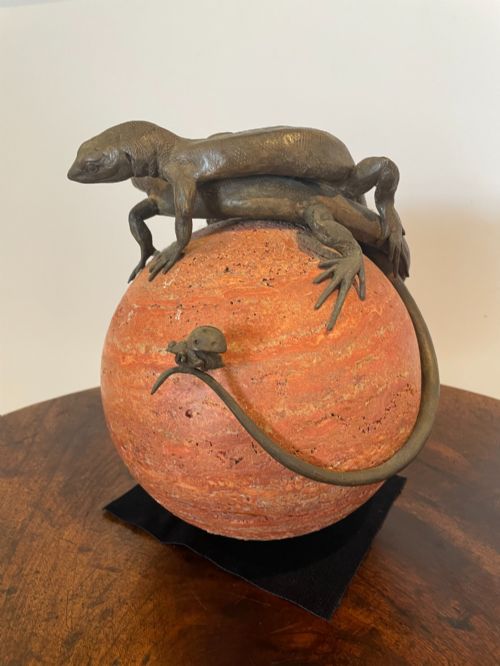
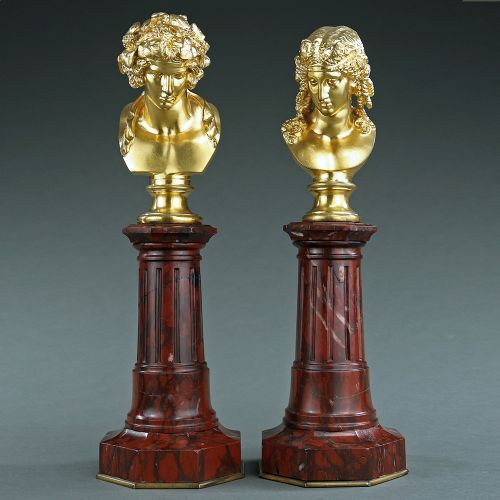
These red marble bronze figures bring classical subjects and animal studies into interiors through nineteenth-century metalwork mounted on stone bases.
Red Marble Bronze Figures
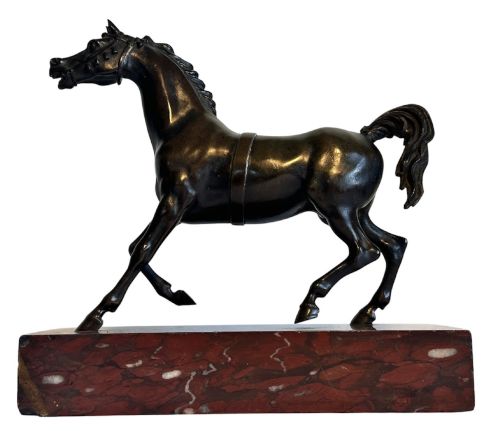
Red marble bronze figures combine cast metalwork with polished stone plinths, most commonly appearing as nineteenth-century French and Italian productions. Buyers encounter animalier studies, mythological subjects, and classical souvenir bronzes created during the Victorian and Grand Tour eras.
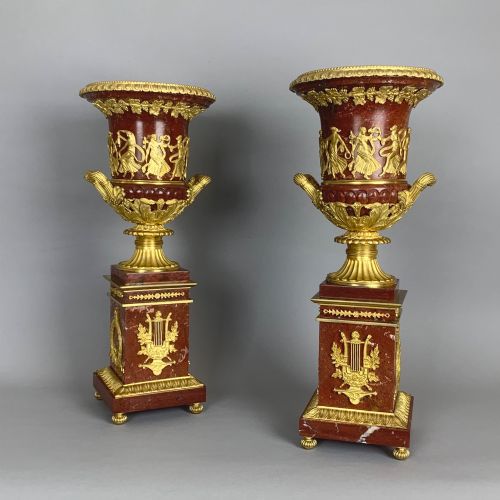
The objects take various domestic forms including mantel clocks, candelabra, bookends, and standalone statuettes mounted upon red or rouge marble bases. These pieces reflect Neoclassical, French Empire, and Renaissance Revival tastes that dominated European decorative arts through the 1800s.
Materials and construction
Foundry work relied on traditional casting methods to produce patinated or gilt bronze figures, which were subsequently fixed to turned and polished marble plinths. Ormolu accents frequently highlight the cast bronze elements, providing textural contrast against the deep red stone.
The integration of metal and stone required precision engineering to secure heavy bronze sculptures onto marble bases using concealed pins or threaded bolts. Artisans applied chemical patination or mercury gilding to the metal surfaces to achieve specific tonal finishes.
Listings feature nineteenth-century bronze and marble works incorporating Neoclassical, French Empire, and Animalier styles.
Qualities of execution
The refinement of the bronze chasing directly dictates the visual success of the piece, separating crisp musculature and feather details from softer, worn casts. Superior examples retain fine surface tooling and deep patination applied directly after casting.
The selection and density of the marble base influence the overall integrity, with dense rouge or Rosso Levanto varieties offering superior weight and polish. Harmonic proportion between the bronze sculpture and its stone support determines the aesthetic balance of the work.
Prosper Lecourtier·Christophe Fratin·Emmanuel Villanis·Messina Roma
The Red Marble Bronze Figures Glossary
- Animalier
- A nineteenth-century artistic genre and style focused on realistic depictions of animals, particularly predators, hounds, and horses. These sculptures often feature animated postures set upon naturalistic or architectural marble bases.
- Grand Tour
- A traditional trip through Europe undertaken by upper-class young men in the eighteenth and nineteenth centuries to study classical art. Souvenirs purchased on these journeys frequently included small bronze reductions of ancient sculptures mounted on marble.
- Ormolu
- Gilded bronze produced by applying a mixture of mercury and gold to a bronze base, then heating to vaporise the mercury. This technique creates a durable, rich golden surface finish common in French clock sets and candelabra.
- Patination
- The surface coloration of bronze resulting from oxidation or chemical treatment applied by the foundry. Artisans manipulate this process to achieve various shades ranging from deep brown to metallic black.
- Rosso Levanto
- A striking dark red marble veined with white and purple, frequently utilised for nineteenth-century architectural mantel pieces and sculpture bases.
Red Marble Bronze Figures: Frequently Asked Questions
What periods do these figures come from?
The pieces span the nineteenth century, with strong representation from the 1860s, 1870s, and 1880s periods. French Empire and Italian Grand Tour workshops produced the majority of these works.
Later Victorian interpretations and occasional twentieth-century Art Deco examples also appear within this decorative tradition.
How were these figures used originally?
Many served functional roles as mantel clocks, candelabra sets, and bookends within formal nineteenth-century drawing rooms and libraries. Standalone statuettes and busts functioned as scholarly ornaments displaying classical learning.
Travellers brought smaller souvenir bronzes home to display cultural literacy acquired during continental journeys.
How do I care for bronze and marble?
Dust the bronze regularly with a soft, dry cloth to prevent particulate accumulation on the patinated or gilt surface. Avoid harsh chemical cleaners that strip the original patination.
Clean the marble base gently with a damp cloth and dry immediately to protect the polished stone surface from moisture marks.
How do I distinguish Grand Tour pieces?
Grand Tour bronzes typically represent reduced-scale studies of famous ancient Roman or Greek sculptures. They frequently utilise distinctive Italian marbles like Rosso Levanto for their pedestals.
Inscriptions naming Italian foundries or specific antique monuments often appear near the base of these souvenir studies.