

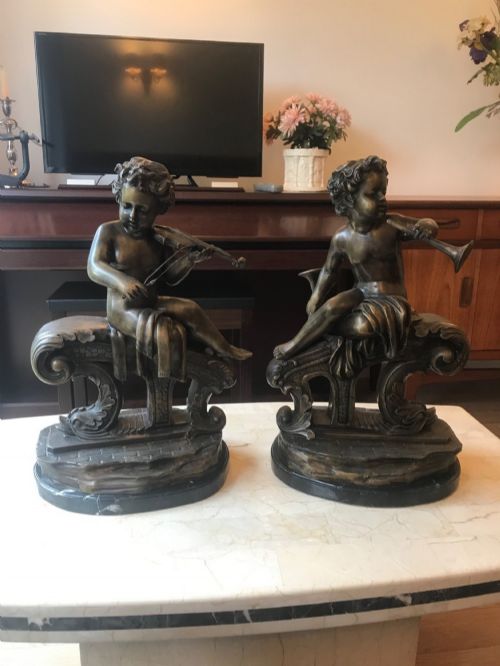
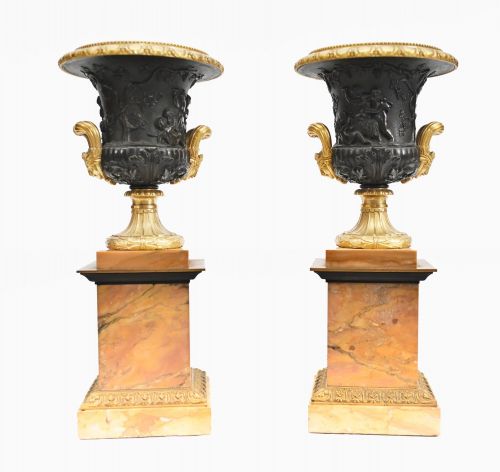


Classical Bronze Cherub Pair
These classical bronze cherub pair pieces bring expressive Neoclassical and French design into a room through finely cast figural metalwork.
Classical Bronze Cherub Pair
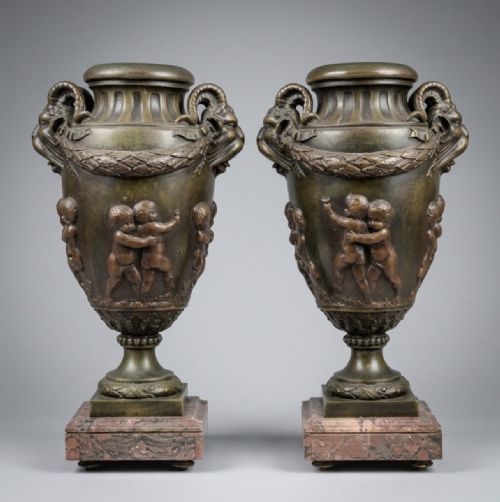
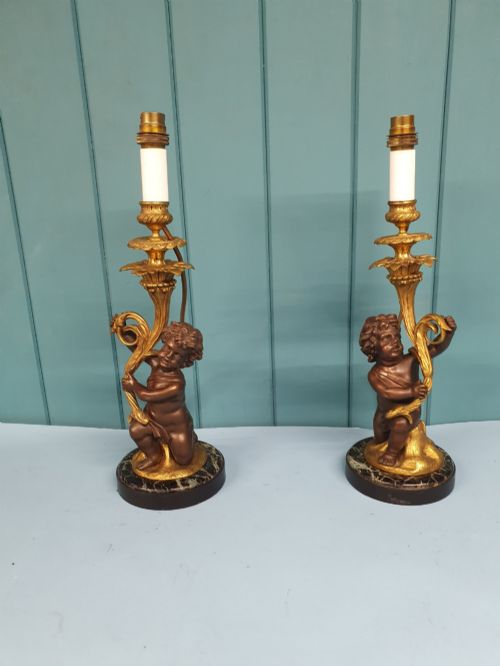
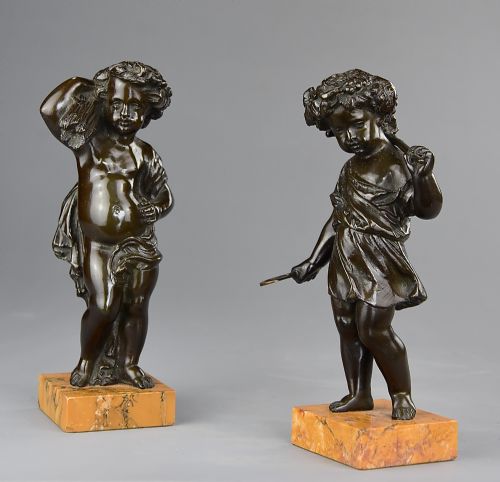
A classical bronze cherub pair consists of two matching figural sculptures, candlesticks, lamps, or wall sconces depicting winged putti, cupid figures, or children. The pieces originate primarily from the nineteenth century, reflecting Neoclassical, French Empire, and Rococo Revival tastes.
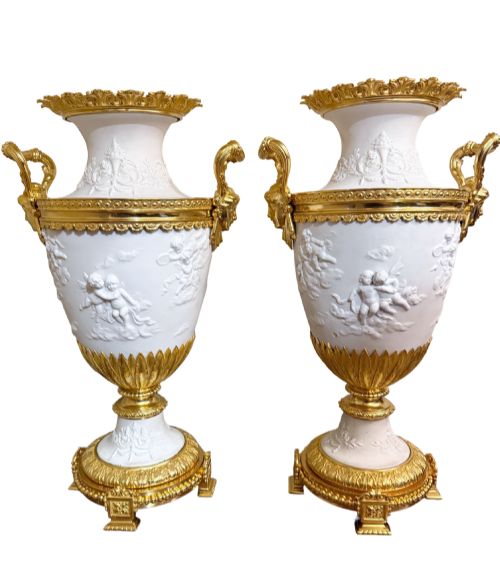
Buyers encounter these works cast in bronze, patinated bronze, gilt bronze, and ormolu, frequently mounted on marble or porphyry bases. The forms range from musical cherubs and harvest allegories to functional candelabra and table lamps.
The aesthetic draws heavily on French decorative arts and Grand Tour souvenirs. These matched assemblies serve as decorative urns, wall lights, and sculptural figures designed to balance interior mantelpieces and side tables.
How they were made
Makers utilised traditional metal casting methods to create these figures, often finishing the bronze with a dark patination or applying surface gilding known as ormolu. Metal components were frequently paired with carved marble bases, porphyry, and sometimes porcelain elements.
Detailing was achieved through chased surface work after casting, defining the hair, wings, and drapery of the putti. Elements such as arms, musical instruments, and candelabra branches were cast separately and joined mechanically or through brazing.
Materials across these listings include bronze, gilt bronze, patinated bronze, ormolu, brass, spelter, marble, porcelain, and porphyry.
What varies in quality
The fidelity and sharpness of the metal chasing define the upper tier of these pieces, where facial expressions and feather details on the wings remain crisp and well-defined. Lesser examples exhibit softer contours and blurred surface textures resulting from worn moulds.
The quality of the foundational materials dictates the overall substance of the object, with dense marble bases and heavy cast bronze marking superior production. Lighter substitute metals like spelter or hollow base constructions alter the weight, resonance, and ageing characteristics of the pair.
K and O·Claude Michael Clodion·Dumond·Charles Cumberworth
The Classical Bronze Cherub Pair Glossary
- Putto
- A plump, naked child figure, frequently winged, seen across Renaissance and Neoclassical art. These figures form the primary subject of the sculptural pairs.
- Ormolu
- Finely ground high-carat gold-mercury amalgam applied to bronze objects. This historic gilding technique produces a rich, warm yellow lustre on metal surfaces.
- Patinated bronze
- Metal treated with chemical solutions to produce a specific surface colour, typically dark brown or green. This layer protects the bronze and accentuates modelled contours.
- Campana
- A traditional bell-shaped classical urn profile often utilised in decorative metalwork and Grand Tour pieces. The shape originates from ancient pottery discoveries in Italy.
- Torchère
- A tall ornamental stand or lamp designed to hold lights. In these listings, the form appears adapted into electrified or candle-bearing pairs.
Classical Bronze Cherub Pair: Frequently Asked Questions
What periods do these pieces date from?
The listings span the nineteenth century, including specific years from the 1880s and 1890s through to the early and mid twentieth century.
Most works reflect revivalist movements such as French Neoclassical, Rococo Revival, and Arts and Crafts styles.
How were these metal pairs used originally?
These matched figures functioned as decorative table sculptures, bookends, and architectural wall sconces. Many incorporated practical elements such as candle nozzles, lamp fittings, or hollow urn bodies.
Wealthy travellers on the Grand Tour and domestic buyers utilised them to decorate salons, drawing rooms, and mantelpieces.
What is the difference between bronze and spelter?
Bronze is a durable alloy of copper and tin that accepts fine detail and ages with a stable patina. Spelter is a cheaper zinc alloy used as a substitute in later or more commercial decorative objects.
Spelter is softer, lighter, and more prone to surface wear than traditional bronze.
How do I care for marble and bronze pairs?
Dust the bronze surfaces gently with a soft, dry cloth to prevent the accumulation of grit in recessed chasing. Avoid liquid cleaners or chemical polishes that can strip the original patination or gilt.
Keep marble bases clear of moisture and acidic substances to protect the polished stone surface.