


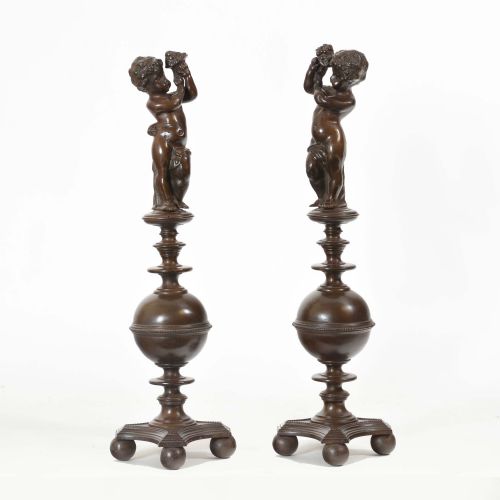

Pair Bronze Cherub Figures
Pair bronze cherub figures bring classical grace and playful mythology into a room, cast in metal and mounted for display.
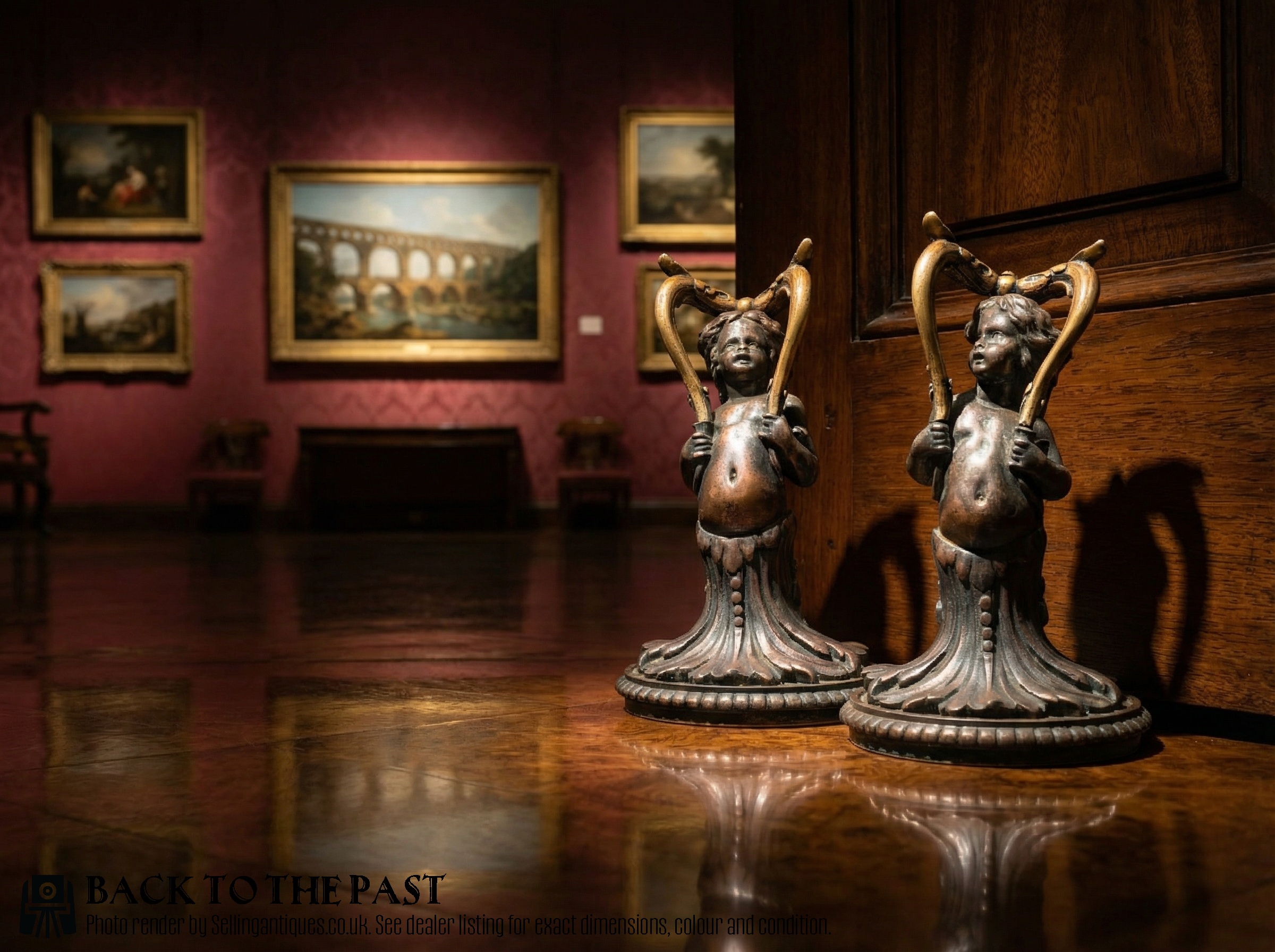
Pair Bronze Cherub Figures
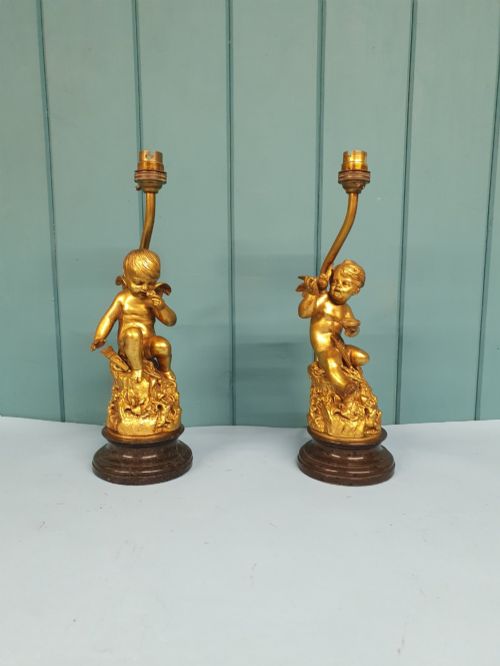
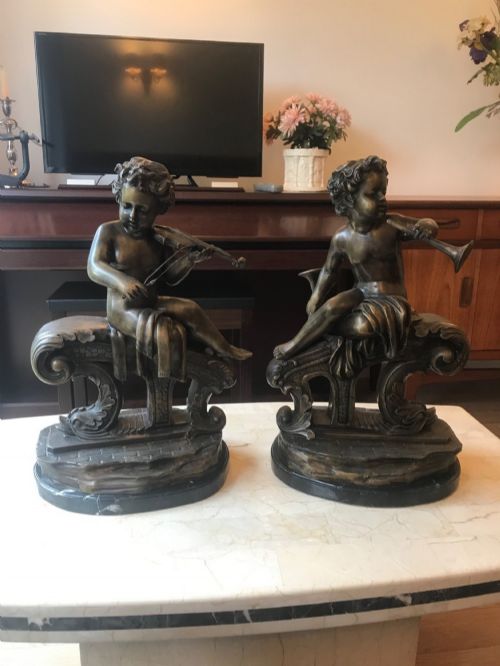
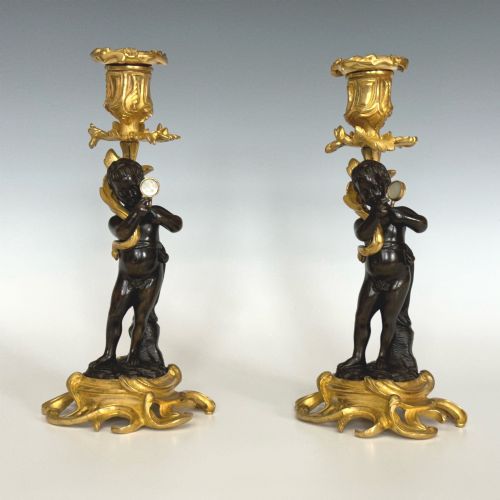
When you search for pair bronze cherub figures, you encounter sculptural works depicting winged putti, cupids, and allegorical children across the nineteenth and twentieth centuries. These decorative objects take many functional and ornamental forms, appearing as standalone sculptures, bookends, doorstops, and candle holders.
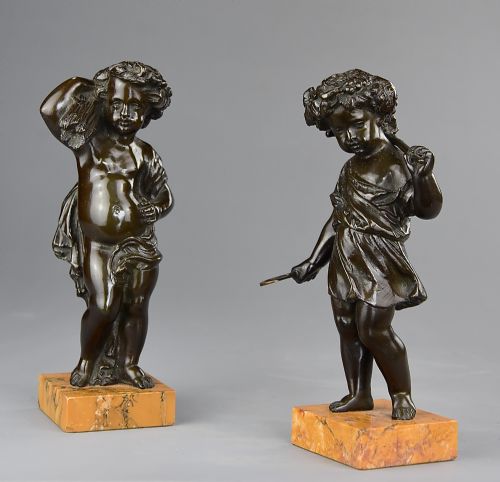
The selections span French Empire, Neoclassical, and Rococo Revival styles, often featuring figures engaged in music, harvest, or classical pursuits. Many examples pair the cast metalwork with contrasting stone bases, particularly white and green marble.
How they were made
Foundry workers cast these figures in bronze, often applying dark patinated finishes or gilding the metal to create ormolu details. The resulting metal sculptures are frequently secured to heavy marble plinths to provide stability and visual weight.
Artisans also utilised cast iron with bronze finishes for utilitarian items like andirons, combining durability with ornamental elegance. Detail work on the faces, hair, and wings demonstrates traditional foundry techniques from the nineteenth century onward.
Listings feature materials including bronze, gilt bronze, patinated bronze, ormolu, white marble, and green marble across the nineteenth and twentieth centuries.
What varies in quality
The fineness of the chasing and hand-finishing after casting determines the sharpness of expression and detail in the figures' hair and drapery. Superior examples show careful attention to anatomical proportions and smooth transitions in the patination.
The integration between the metal figures and their marble bases indicates the standard of manufacture. Higher quality pieces utilise dense, unblemished marble mounts that complement the weight and balance of the bronze work.
Claude Michael Clodion·K and O·Dumond·Charles Cumberworth
The Pair Bronze Cherub Figures Glossary
- Putti
- Winged infants or cherubs frequently depicted in classical and Renaissance art. They symbolise divine presence or playful mythological themes in decorative metalwork.
- Ormolu
- Gilded bronze produced by applying a finely ground high-carat gold-mercury amalgam to a bronze object. This technique imparts a rich yellow gold lustre.
- Patinated bronze
- Metal treated with chemical solutions to produce a specific surface colour and tone. This finish protects the metal and defines sculptural contours.
- Grand Tour
- Cultural travel undertaken by nineteenth-century Europeans to collect classical antiquities and bronzes. Italian workshops frequently produced souvenirs for these travellers.
- Andirons
- Horizontal metal supports used in pairs inside a fireplace to elevate logs. Elaborate examples feature cast figures or decorative bronze mounts.
Pair Bronze Cherub Figures: Frequently Asked Questions
How were pair bronze cherub figures used historically?
These pieces served both decorative and functional roles in nineteenth-century interiors, functioning as candelabra, mantel garnitures, and table lamps.
Owners also utilised heavier figural pairs as practical items like bookends and doorstops in grand libraries and hallways.
Where should I place these figures in a modern room?
They suit mantlepieces, entrance consoles, and side tables where their detailed casting can be appreciated from close range.
Pairing them with neutral backgrounds allows the dark bronze patination or gilt surfaces to stand out effectively.
How do I distinguish French styles from other origins?
French nineteenth-century pieces often incorporate ormolu mounts and draw on Rococo Revival or Napoleon III design motifs.
Italian grand tour examples frequently feature distinct patination and are mounted directly on simple marble plinths.
What is the difference between putti and cherubs?
While modern usage often treats the terms as interchangeable, art history distinguishes putti as secular mythological infants from religious cherubim.
Both forms appear frequently in nineteenth-century decorative metalwork depicting harvest, music, and allegorical scenes.