
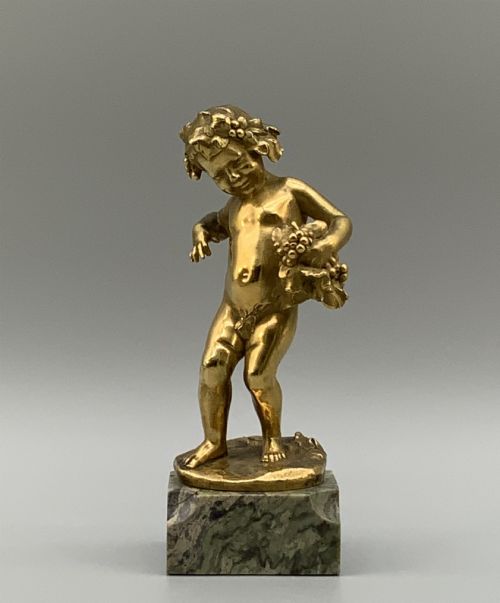

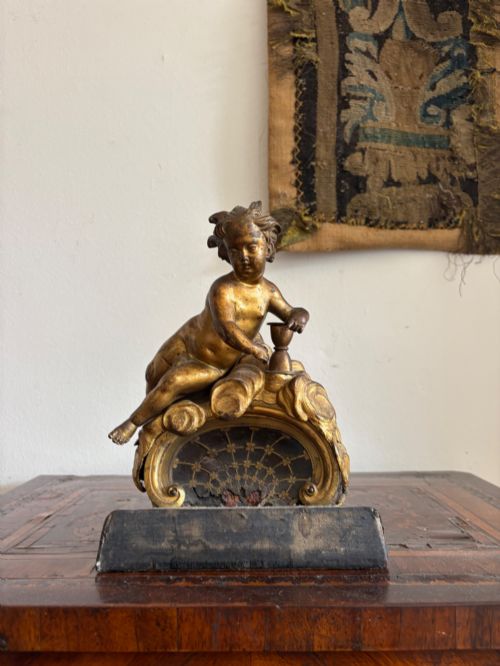
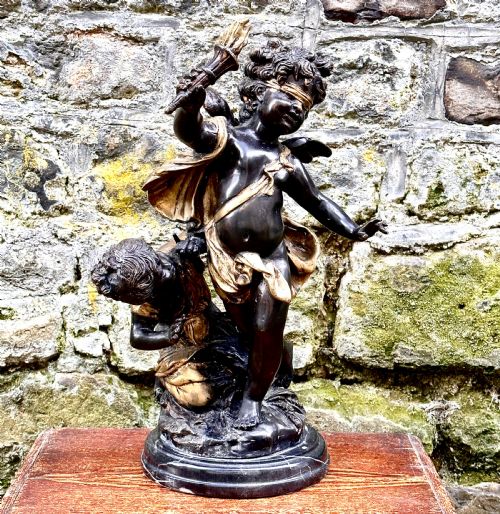


Gilt Bronze Putti Statues
These gilt bronze putti statues bring playful classical charm to a room, cast in bronze and ormolu during the eighteenth and nineteenth centuries.
Gilt Bronze Putti Statues
When you search for gilt bronze putti statues, you encounter figural works depicting winged infants and cherubs associated with classical mythology, Cupid, and Bacchus. These pieces take the form of freestanding sculptures, decorative mounts, lamp bases, candlesticks, and clock components.
The selections on this page stem predominantly from the nineteenth century, reflecting French Classical, Rococo Revival, and Second Empire aesthetics. They range from small finial ornaments to substantial sculptural figures by named nineteenth-century French makers.
How they were made
These figures are produced through traditional metal casting methods, using bronze and ormolu with gilded surfaces. Artisans frequently combine patinated bronze with gilt bronze highlights to create textural contrast across the figures.
What varies in quality
Quality in these pieces is dictated by the crispness of the chasing and the warmth of the original gilding or ormolu. Finer examples display meticulous attention to anatomical detail in the putti and secure integration with bases of marble or bronze.
Works carrying signatures from established foundries or sculptors exhibit superior handling of posture and expression. Converted items, such as figures adapted into table lamps, rely on how sympathetically the original bronze has been treated.
Charles Louis Malric·Susse Freres·Aug. Moreau·Carrier
The Gilt Bronze Putti Statues Glossary
- Putto
- A plump, often winged infant depicted in classical art, frequently representing Cupid or a cherub. These figures appear widely in Renaissance and nineteenth-century decorative works.
- Ormolu
- Finely ground high-carat gold applied to a bronze base using a mercury amalgamation process, or later via electroplating. It provides a bright, durable golden finish on decorative mounts.
- Finial
- A relatively small decorative ornament that terminates the top of an object, such as a clock case, furniture mount, or lamp. They are frequently cast as diminutive putti or classical motifs.
- Chasing
- The manual tooling of a metal casting with punches and hammers to refine surface details, sharpen lines, and remove casting flaws. High-quality pieces show crisp, deliberate chasing across the skin and hair.
Gilt Bronze Putti Statues: Frequently Asked Questions
What are putti statues?
Putti statues depict winged infant figures, often styled as cherubs, cupids, or infant mythological characters like Bacchus. They were widely produced in bronze during the nineteenth century as standalone sculptures or decorative furnishings.
These pieces reflect classical and rococo revival tastes, serving both decorative and functional roles in period interiors.
How were these bronzes used?
Gilt bronze putti served multiple functions in nineteenth-century interiors, acting as mantelpiece clocks, candlesticks, lamp bases, and furniture mounts. Smaller figures were integrated into clocks and finials, while larger works stood independently as sculptures.
Many pieces were adapted later in their lifespans, such as bronze cherub statuettes converted into table lamps.
How do I date a bronze putto?
Dating relies on the casting technique, the style of the base, and the nature of the patina or gilding. Nineteenth-century French pieces often incorporate characteristic materials like white marble plinths and hand-painted clock dials.
Signatures or foundry marks stamped into the bronze can also provide specific attribution to makers active between 1800 and 1910.
How do I clean gilt bronze?
Gilt bronze requires gentle maintenance to preserve the delicate ormolu surface and underlying patina. Dusting with a soft, dry cloth is usually sufficient for regular care, avoiding harsh chemical cleaners that strip the gold layer.
Professional advice should be sought if the metal requires deeper conservation or removal of accumulated grime.