


Victorian Bronze Putti Figures
These Victorian bronze putti figures capture neoclassical mythological charm in solid metal, offering collectors classic decorative sculpture and functional horology.
Victorian Bronze Putti Figures
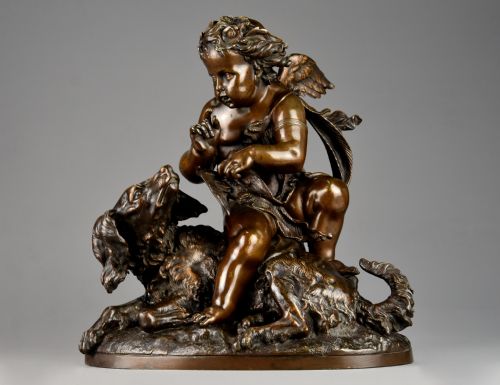
Victorian bronze putti figures comprise sculptural works, mantel clocks, table lamps, and doorstops produced during the nineteenth century. These pieces frequently depict winged cherubs, amorini, or infant mythological figures engaged in musical, hunting, or bacchanalian pursuits.
The selection ranges from single statuettes and matched pairs mounted on marble or inlaid wood bases to complex clock garnitures and converted lighting. French and English makers dominate the aesthetic, drawing heavily on classical revival and rococo styles.
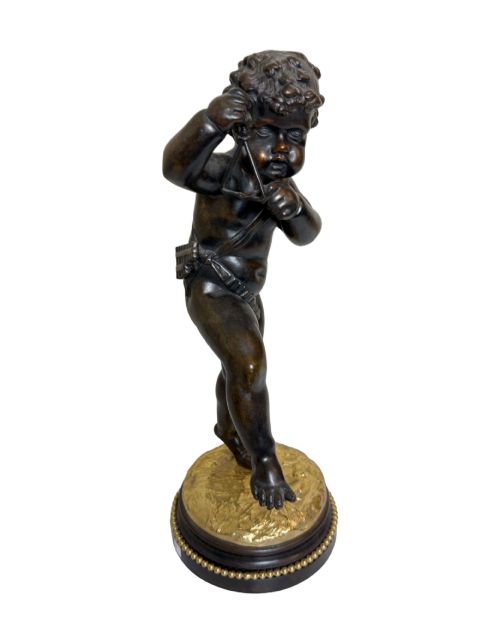
Buyers encounter subjects such as Bacchus groups, grape gatherers, and musical cherubs playing triangles. Patination varies from warm gilt surfaces to dark patinated bronze finishes.
Materials and Working Methods
Casting work integrated mixed media, mounting bronze figures onto white or coloured marble plinths and polished wooden bases. Ormolu and gilt finishes highlighted specific decorative elements on clocks and sculptural groups.
Clockmakers and sculptors incorporated porcelain enamel dials and wooden cabinetry alongside cast metal components. Secondary materials such as marble and enamel provided structural weight and colour contrast to the dark bronze metal.
Listings feature nineteenth-century materials including bronze, gilt bronze, marble, enamel, wood, ormolu, and porcelain.
Assessing the Workmanship
The integration of materials dictates overall execution, particularly where bronze meets marble bases or clock housings. High-grade works maintain secure mechanical joints, heavy gauge metal, and harmonious patination across all component parts.
Aug Moreau·Phillipe H Mourey·F Marti
The Victorian Bronze Putti Figures Glossary
- Putto
- A plump, often winged infant figure derived from classical art, frequently depicted in Renaissance and nineteenth-century revival works. They appear singly or in groups representing mythological themes.
- Ormolu
- Gilt bronze produced by applying a finely ground high-carat gold mercury amalgam to a bronze object. This technique imparts a rich golden lustre to decorative metalwork.
- Patinated Bronze
- Metal treated with chemical solutions to produce a stable surface colour ranging from warm brown to deep black. This finish protects the underlying alloy and defines sculptural contours.
- Grand Tour
- A cultural journey undertaken by nineteenth-century travellers who collected classical antiquities and bronze reductions in Italy. These souvenirs heavily influenced contemporary Victorian sculpture.
- Clock Garniture
- A set comprising a central mantel clock accompanied by matching side ornaments such as urns or candelabra. They formed elaborate decorative schemes on nineteenth-century fireplaces.
Victorian Bronze Putti Figures: Frequently Asked Questions
What is a putto?
A putto is a representation of a small child, often winged, originating in classical art and revived during the nineteenth century. These figures frequently symbolise love, merriment, or mythological narratives.
In Victorian bronze sculpture, they appear alone or interacting with animals, grapes, and musical instruments.
How do I identify French pieces?
French nineteenth-century bronzes often display refined chasing and are frequently associated with clockmakers or prominent foundries of the period. Signature marks on clock movements or bronze bases commonly point to Parisian origin.
Stylistic cues include neoclassical proportions and elaborate rococo revival mounts.
Were these figures functional?
Many Victorian bronze putti served practical purposes beyond pure decoration, functioning as mantel clocks, table lamps, doorstops, and garniture components. Clock movements integrated figural sculpture into timekeeping devices.
Other examples were cast strictly as standalone statuettes or sculptural groups for display on furniture surfaces.
What bases support these bronzes?
Nineteenth-century bronze figures frequently incorporate marble plinths, slate clock bodies, or inlaid wooden bases. These mounts provided necessary stability for heavy metal castings and added architectural presence.
Grand Tour pieces in particular often utilised polished marble to elevate the statuary.