



Red Mahogany Server
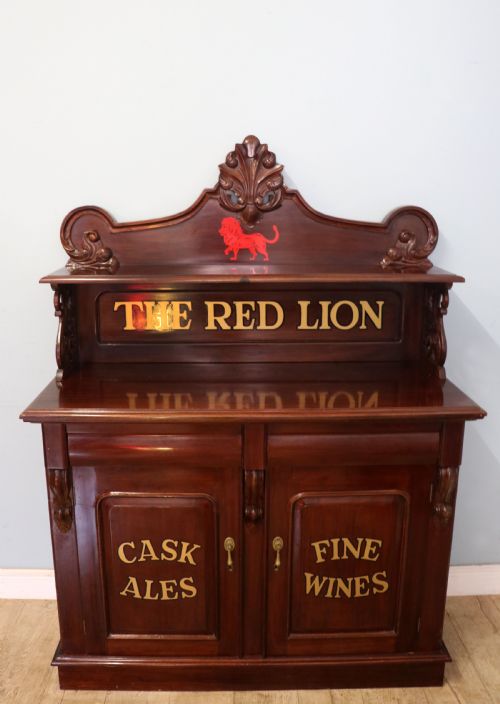
A red mahogany server brings deep timber tones and stately utility to a dining room, offering sturdy surface space for serving food and drink.
Red Mahogany Server
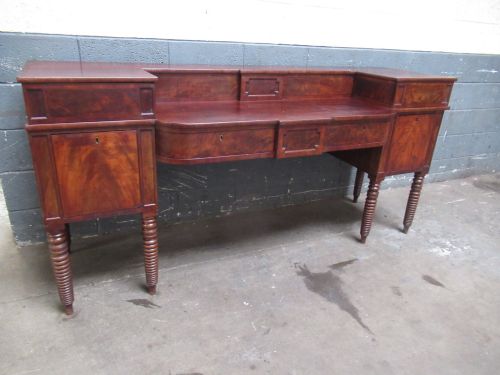
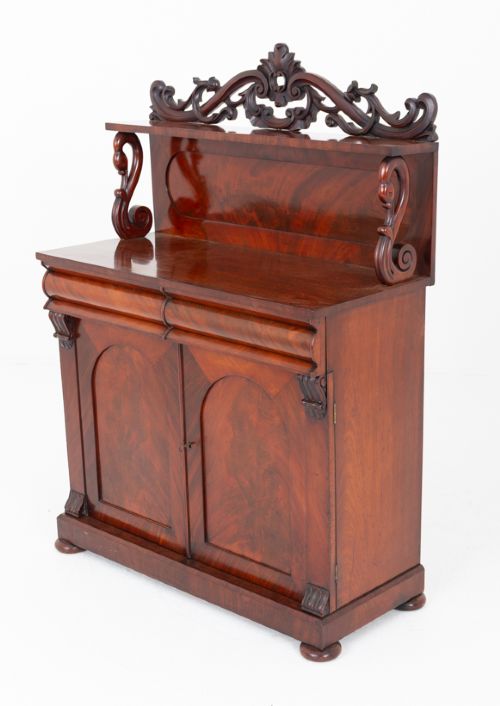
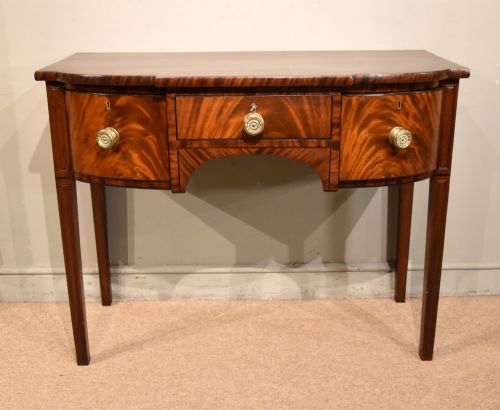
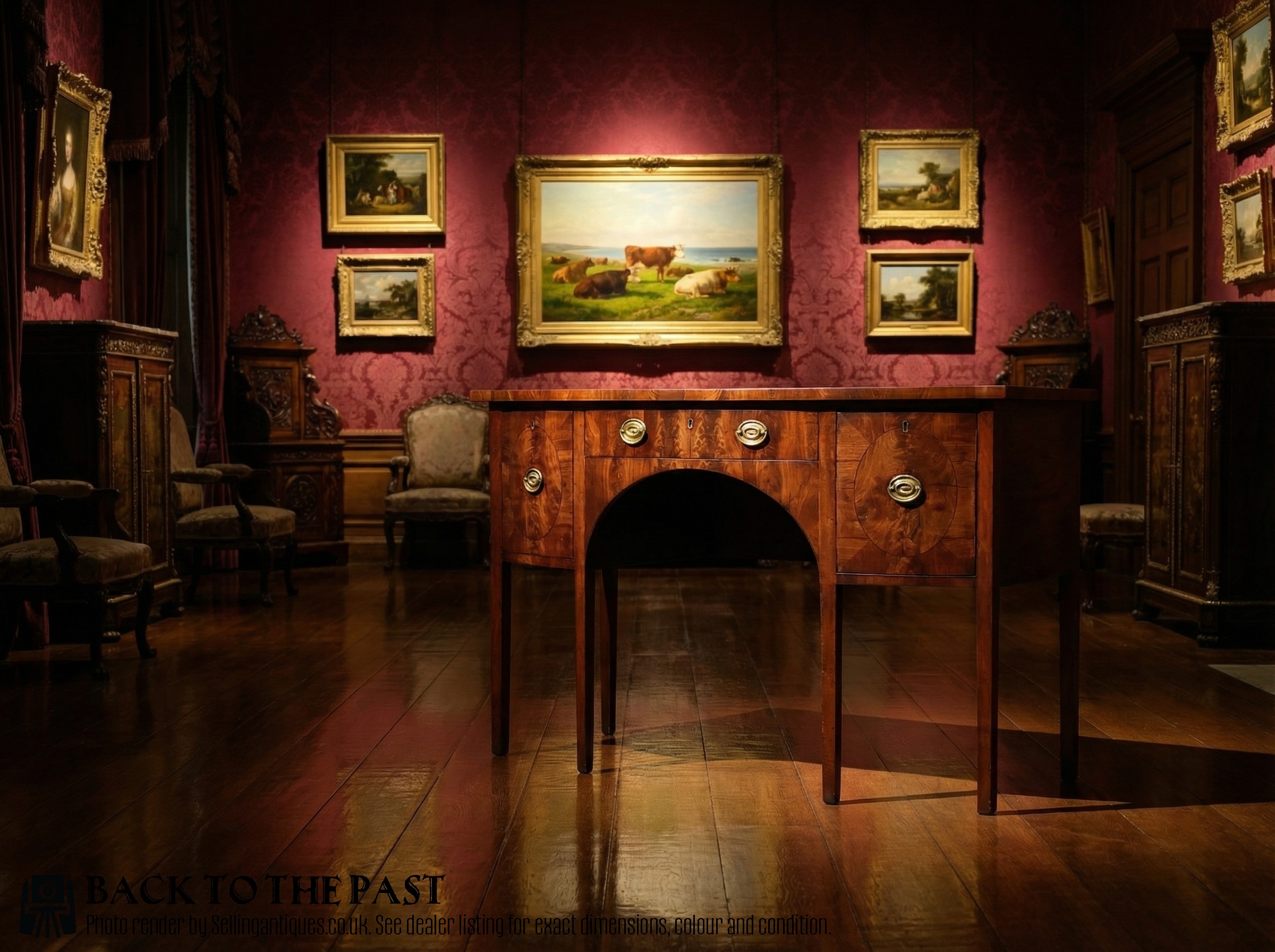
When you search for a red mahogany server, you are looking at substantial dining furniture designed for storage and service, most frequently encountered here as Victorian or Georgian sideboards, side tables, and buffets.
The pieces span from the late eighteenth century through the Edwardian era, taking forms such as pedestal sideboards, bow fronted side tables, and tiered dumb waiters.
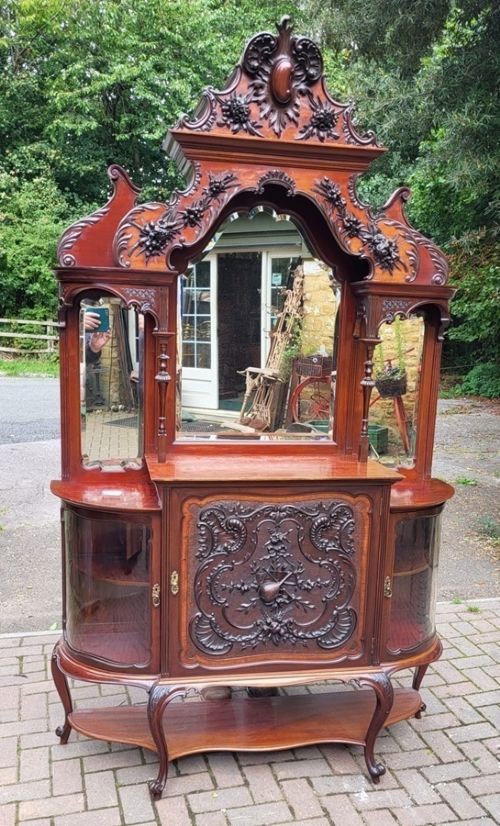
Originating largely from British workshops, these servers range from simple solid mahogany chiffoniers to grand mirror back cabinets and flame mahogany pedestal designs.
How they were made
Cabinet makers utilised solid mahogany and applied flame mahogany veneer to create rich grain patterns across large surfaces like drawer fronts and cabinet doors.
Construction frequently incorporated brass hardware for handles and galleries, alongside structural elements such as rouge marble tops on specific washstands and serving tables.
Object types seen include sideboards, side tables, buffets, dumb waiters, washstands, and console tables.
What varies in quality
The standard of timber selection marks the difference between basic utility pieces and high workshop output, with matched flame veneer and dense solid mahogany sitting at the upper end.
Joinery execution, such as dovetailed drawer construction and the crispness of carved details on pedestals and mirror backs, defines the superior examples on the market.
James Shoolbred & Co
The Red Mahogany Server Glossary
- Flame mahogany veneer
- A thin slice of timber cut from where branches join the main trunk, creating a dramatic, flickering grain pattern. Cabinet makers laid this over secondary woods on prominent surfaces.
- Pedestal sideboard
- A form featuring distinct flanking cupboards or pedestals supporting a central surface or drawer section. This layout became prominent during the Regency and Victorian periods.
- Bow front
- A convex, curved cabinet or table front that swells outward. This shape required skilled joinery to bend timber or shape solid stock.
- Dumb waiter
- A piece of tiered furniture with revolving or stationary circular shelves used for holding dishes or drinks without servants present. These appear in multi-tier formats from the nineteenth century.
- Chiffonier
- A low sideboard or cabinet featuring shelves or a mirror superstructure above. The form evolved during the nineteenth century for dining and drawing rooms.
Red Mahogany Server: Frequently Asked Questions
What is the difference between a sideboard and a buffet?
Sideboards and buffets both serve dining rooms, but buffets traditionally include tiers or cabinets specifically arranged for displaying and serving food dishes during meals.
Sideboards often incorporate drawers and cupboards focused more on storing linen and flatware while providing an extended top surface.
How do I identify a Georgian server?
Georgian servers generally display restrained classical proportions, straight or bow fronts, and simpler mahogany grains without the heavier carvings seen later.
Cabinet makers in this period relied on elegant bracket feet, subtle stringing, and proportion over overt ornamentation.
Where should I place a mahogany server in my home?
These pieces suit dining rooms, large hallways, or living spaces where their surface and storage capacity can be fully utilised.
Keep them away from direct sunlight and heat sources to protect the mahogany polish and prevent veneer splitting.
What distinguishes Victorian mahogany furniture?
Victorian pieces often feature bolder proportions, darker finishes, and more robust carving, including mirror backs and pedestal bases.
Makers during this era utilised mechanical adjustments, brass fittings, and applied architectural details to meet changing domestic fashions.
How do I care for flame mahogany veneer?
Maintain the surface by dusting with a dry, soft cloth and applying appropriate beeswax sparingly when the timber appears dry.
Avoid chemical sprays and excessive moisture to preserve the polished finish over the underlying veneer.