

18th Century Credenza
An 18th century credenza brings substantial timber storage and period presence to a dining room or hall.
18th Century Credenza
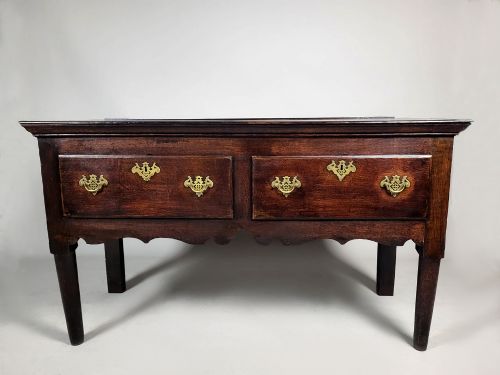
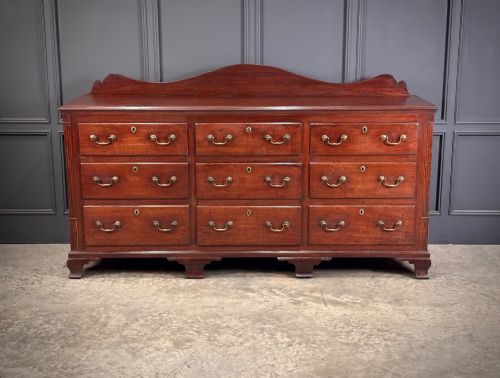
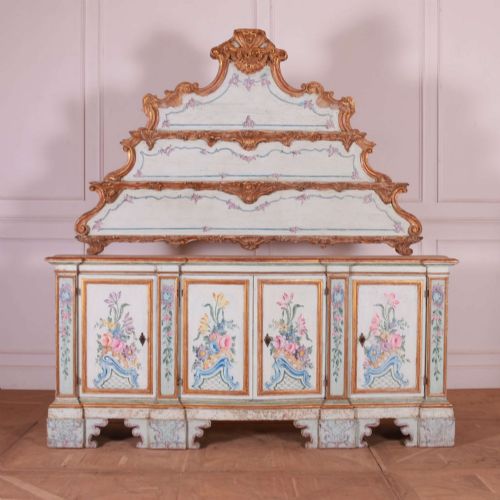
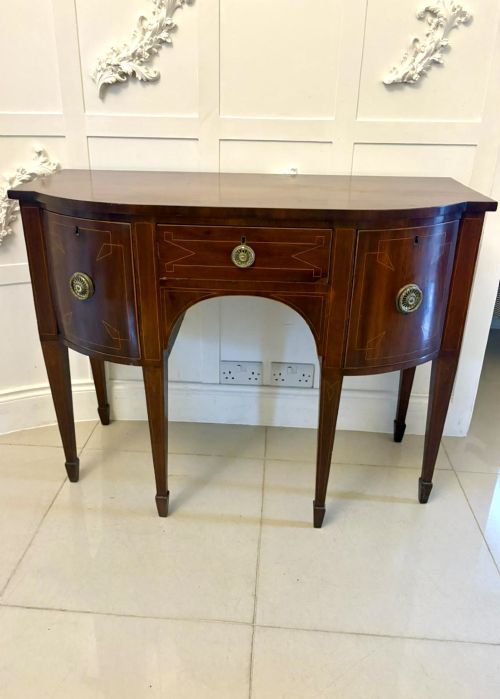
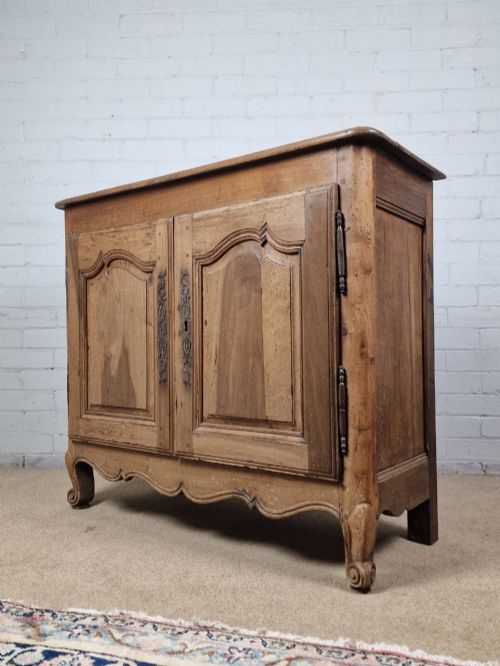
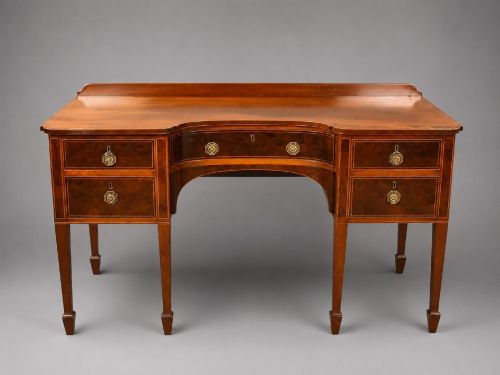
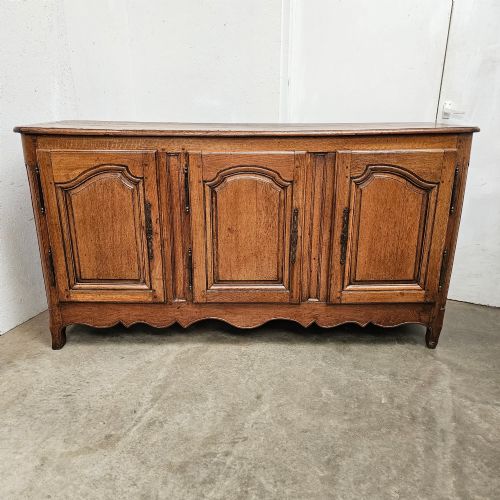
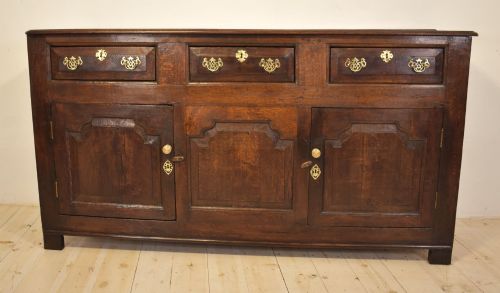
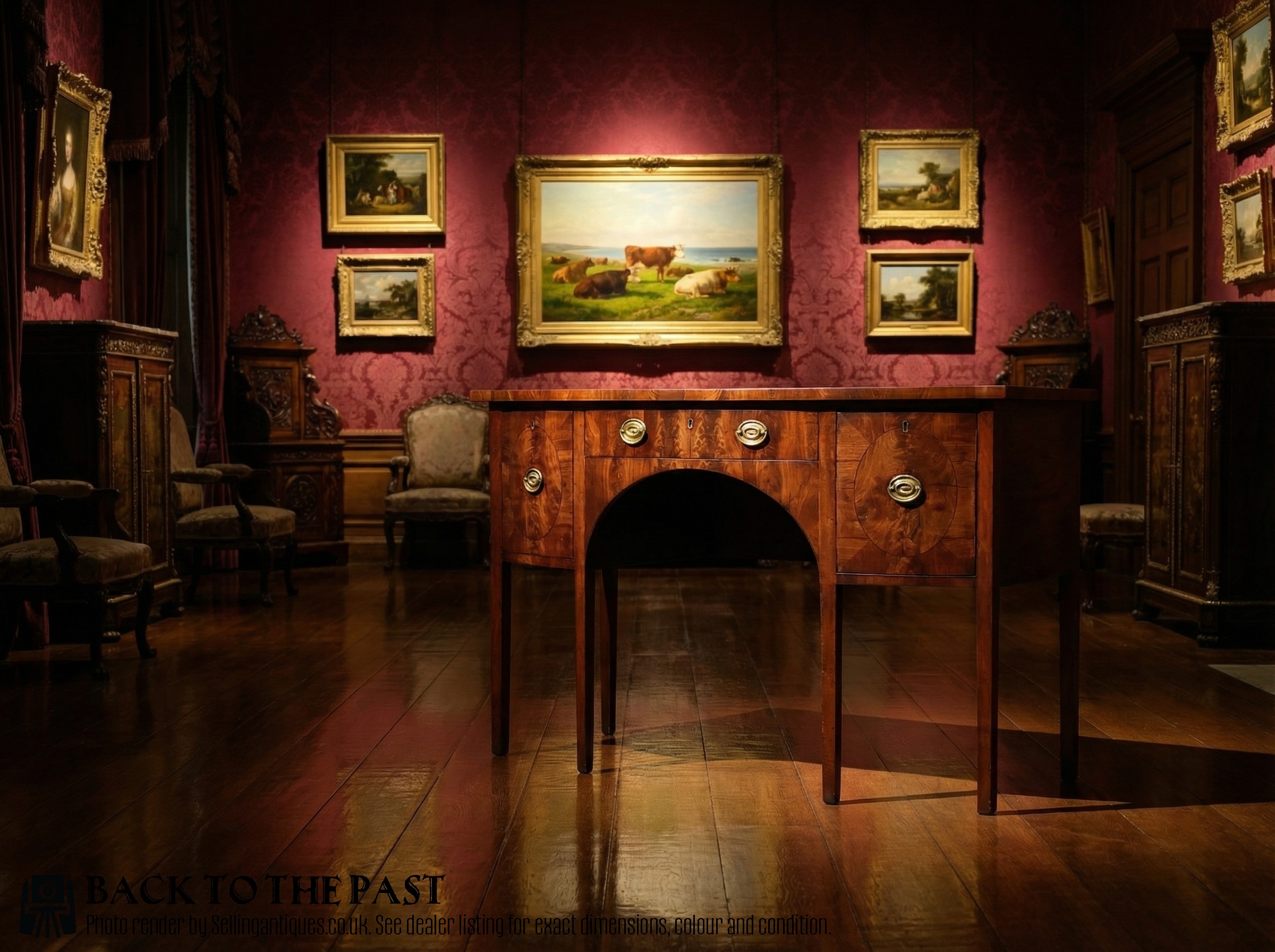
When you search for an 18th century credenza, you encounter substantial dining furniture and serving surfaces rather than formal Italian Renaissance credenzas. The selection spans robust oak dresser bases, mahogany sideboards, and French enfilades.
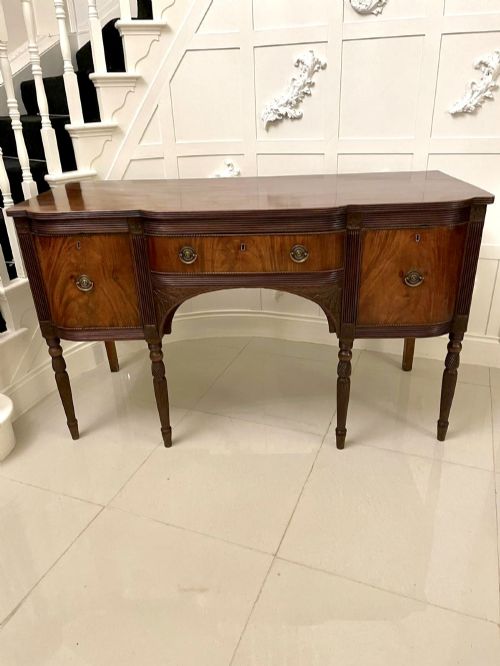
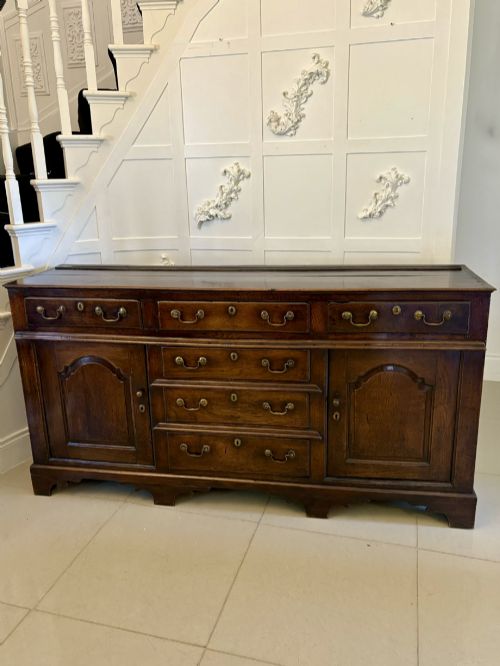
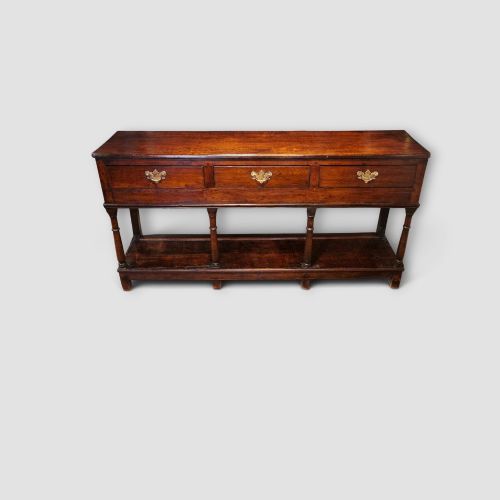
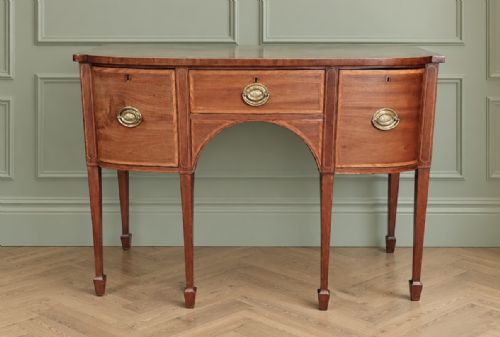
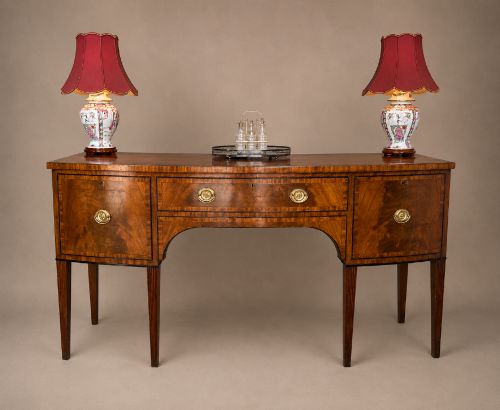
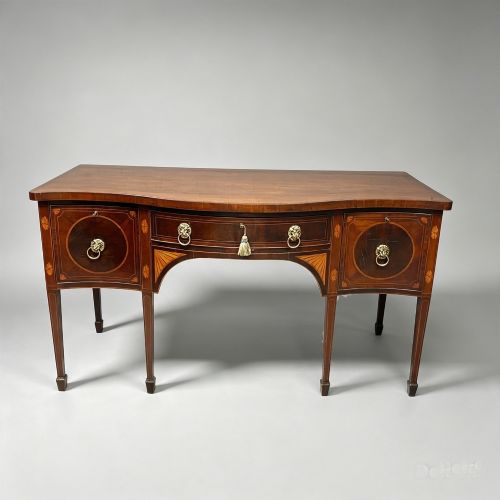
The George III period dominates the selection, bringing figured mahogany, serpentine fronts, and inlaid satinwood details. Oak examples often take the form of Welsh dressers or potboard bases.
Regional variations include Venetian painted pieces, Scottish stage-back sideboards, and Dutch or French country storage. These forms served to hold linen, silver, and serving vessels.
Craftsmanship and Proportion
Quality rests upon the selection of timber figures, such as book-matched mahogany veneers or dense, well-grained oak boards. Superior execution shows in crisp inlay work, tight drawer dovetails, and retained original brass hardware.
Proportion and structural integrity distinguish finer examples from standard utility pieces. Untouched timber surfaces with deep patination carry greater distinction than heavily restored or stripped frames.
Listings feature oak, mahogany, walnut, and fruitwood, alongside decorative satinwood inlay and brass hardware.
The 18th Century Credenza Glossary
- Potboard
- An open lower shelf on a dresser base used originally for storing pots and heavy domestic utensils. It sits just above the floor on short feet or stile extensions.
- Serpentine
- A front profile curving outward in the centre and inward toward the ends. This contour requires skilled cabinet work to shape solid timber or align veneers.
- Enfilade
- A long French storage cabinet featuring a succession of doors along the front. These pieces typically stand in dining rooms for storing tableware.
- Stage-back
- A raised tier at the rear of a sideboard surface used for displaying platters and serving dishes. This feature appears on larger Scottish and English examples.
- Stringing
- Thin inlaid lines of contrasting timber set flush into the surface of a panel or drawer front. Cabinet makers used boxwood or ebony to create geometric borders.
18th Century Credenza: Frequently Asked Questions
What is an 18th century credenza?
An 18th century credenza encompasses the large sideboards, oak dresser bases, and serving cabinets used for dining room storage during the Georgian era.
These pieces provide cupboards and drawers for tableware, featuring timber construction such as mahogany, oak, and walnut.
How do I identify a George III sideboard?
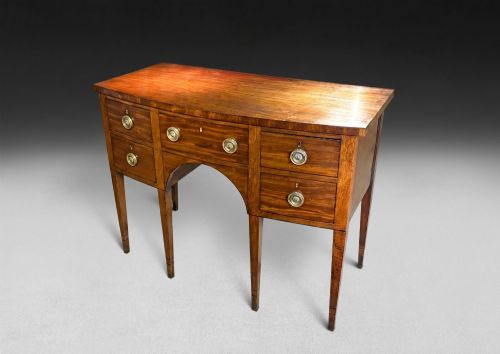
George III sideboards typically feature mahogany construction, often enhanced with satinwood inlay, brass drop handles, and tapered legs.
Many examples adopt a bow-front or serpentine shape, reflecting the refined neoclassical design trends of the late 18th century.
Where were oak dresser bases used?
Oak dresser bases served as the primary storage and preparation furniture in country houses and farmhouse kitchens.
The deep drawers and open potboards held heavy pots, linen, and daily provisions.
How do I care for antique mahogany?
Maintain antique mahogany furniture by keeping it away from direct heat sources and sudden humidity changes to prevent timber splitting.
Apply natural beeswax occasionally to nourish the grain and preserve the surface patination.