
Bow Fronted Buffet
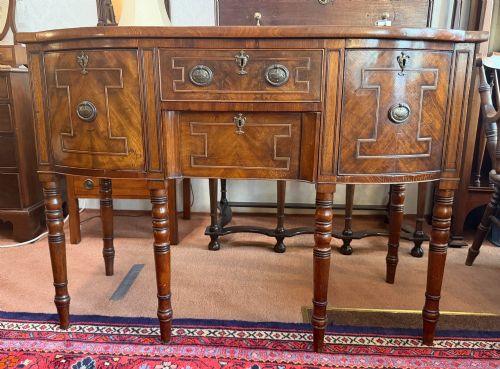
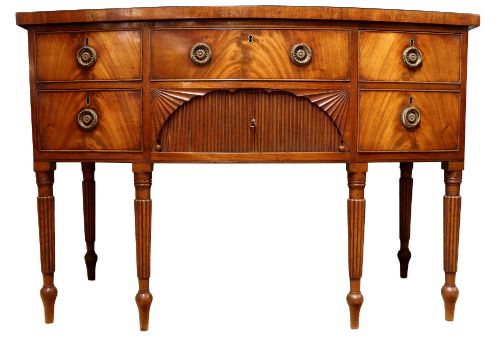
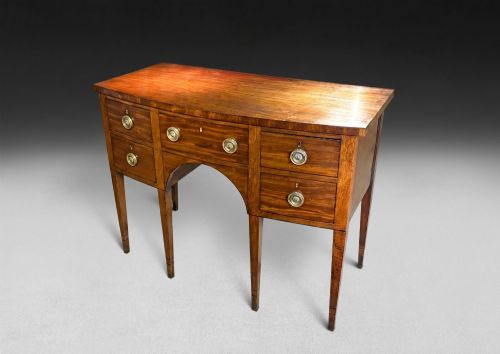
A bow fronted buffet is a curved dining room cabinet built to hold silver and china while anchoring a room with timber grain.
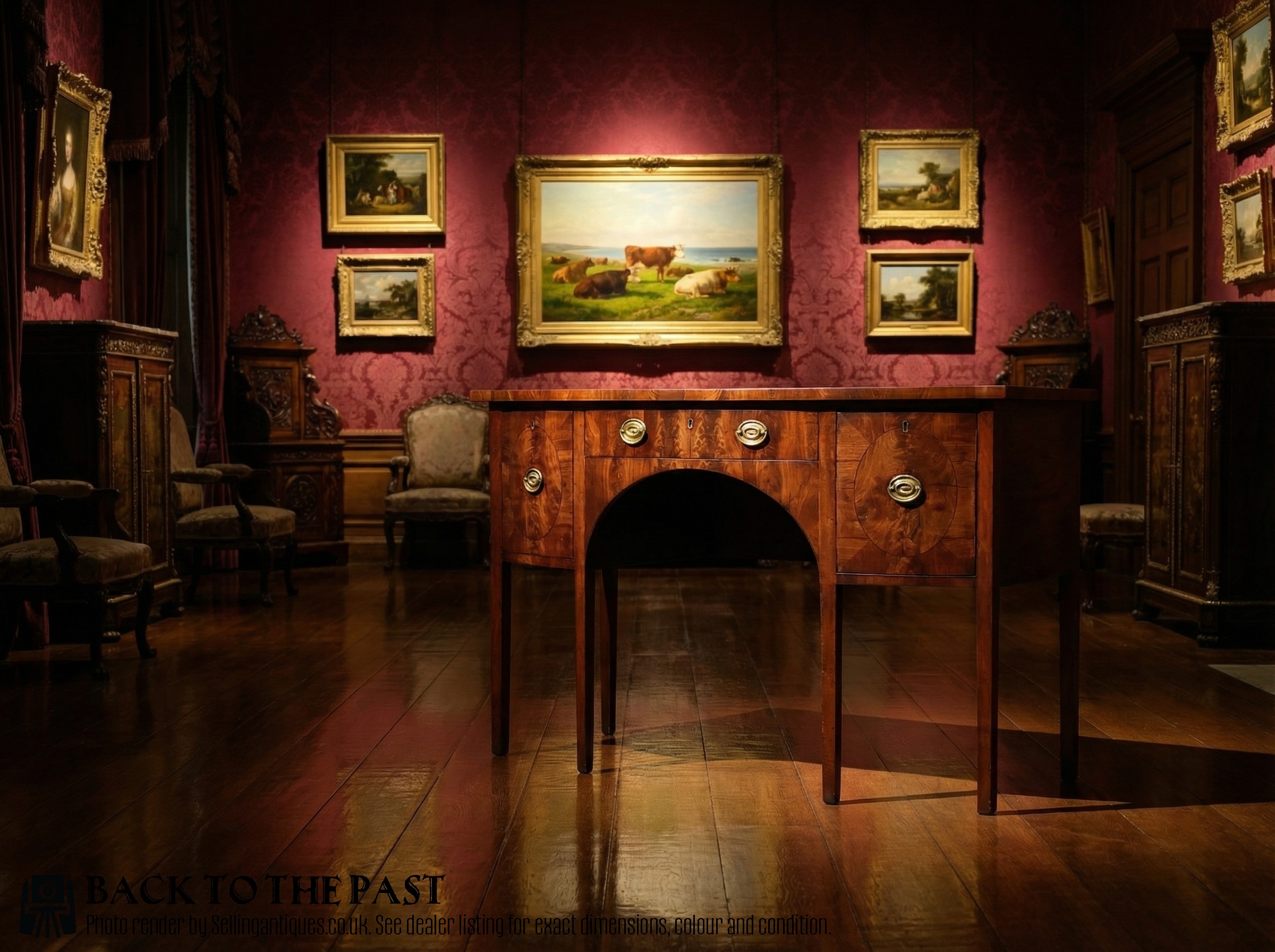
Bow Fronted Buffet
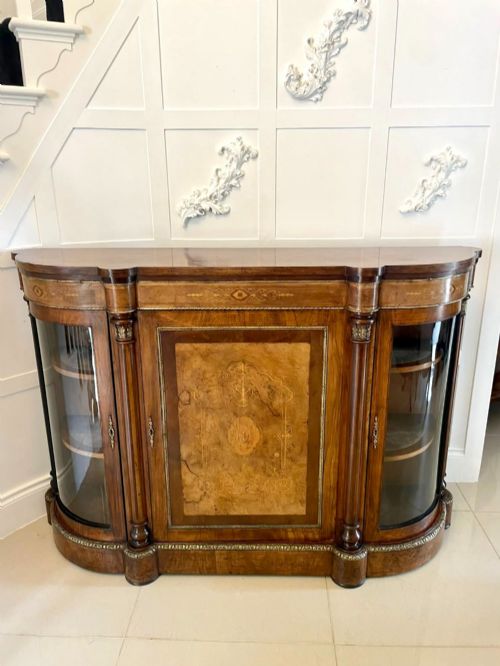
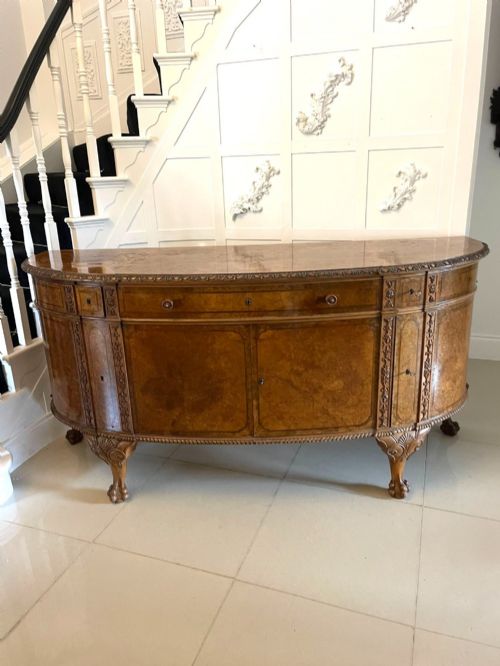
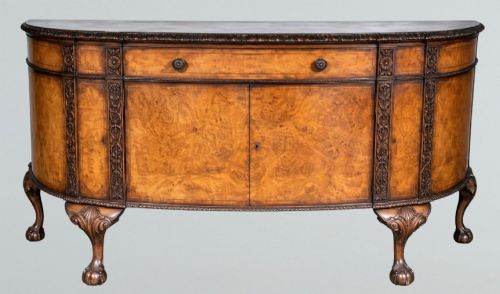
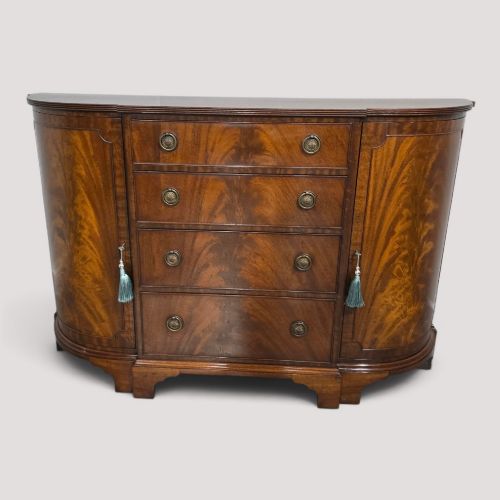
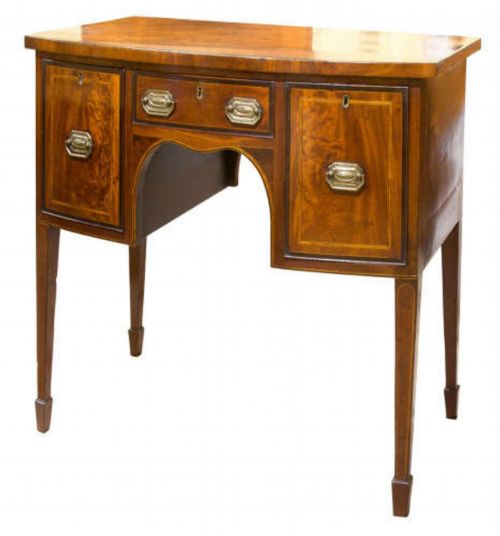
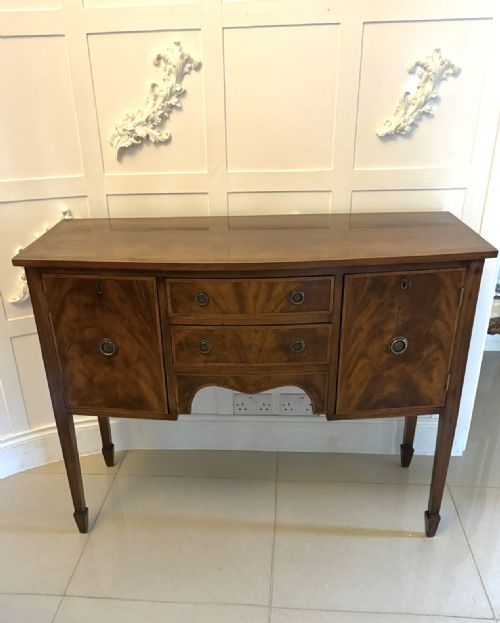
When searching for a bow fronted buffet, buyers encounter a range of dining room storage furniture spanning the eighteenth, nineteenth, and early twentieth centuries. These pieces present a convex curved front profile designed to soften the corners of a formal dining room or hall.
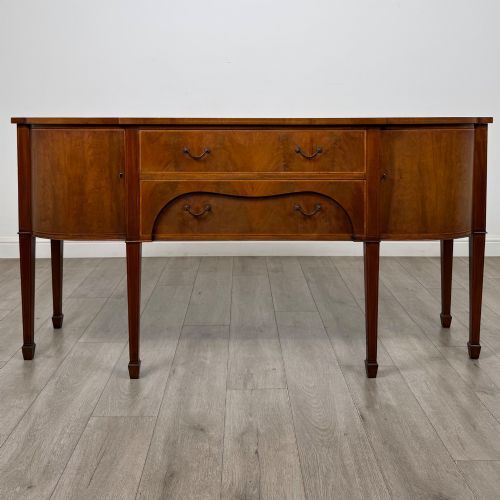
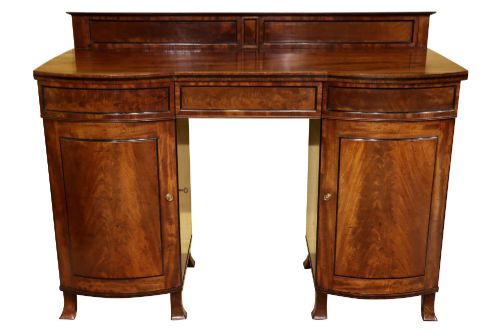
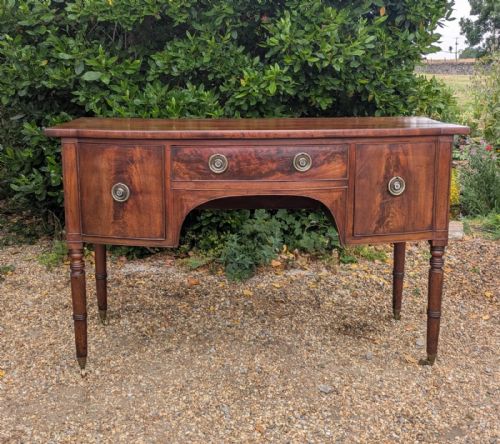
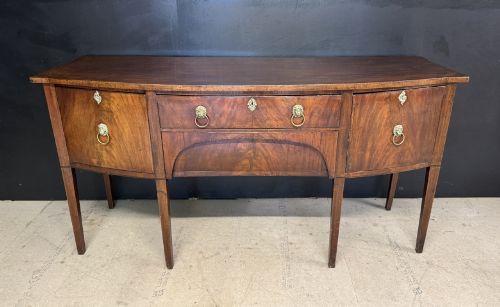
The form most frequently met on this page is the mahogany sideboard originating from the Georgian, Regency, and Victorian periods. Cabinetmakers constructed these pieces with deep central storage sections flanked by cupboards and drawers, often resting on tapered or turned legs.
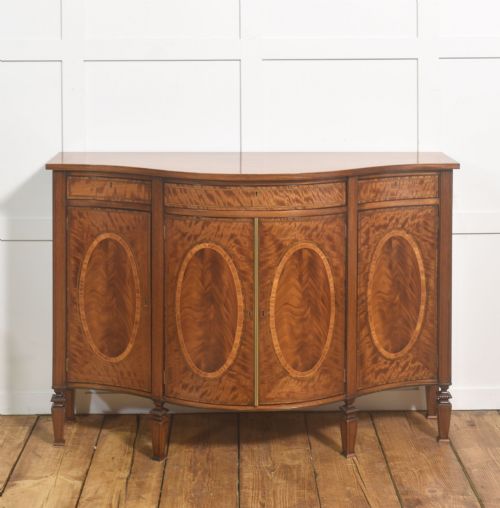
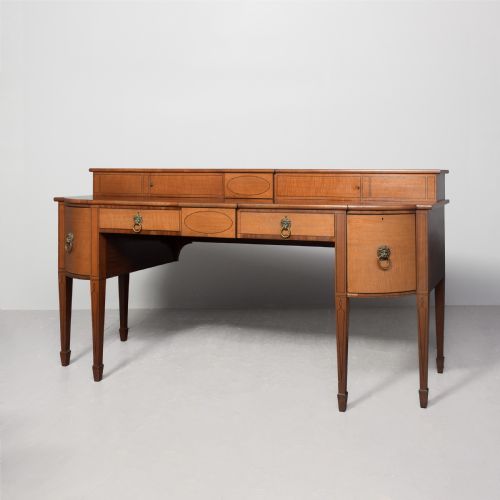
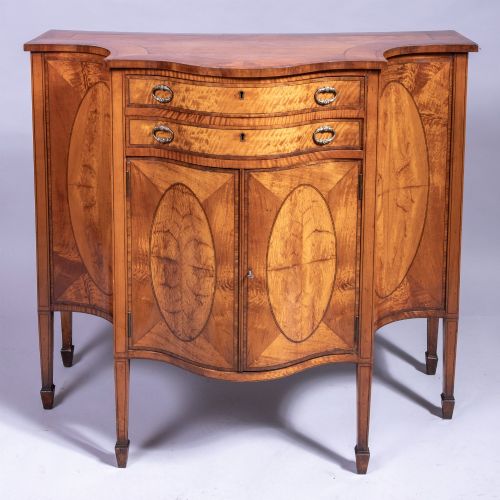
Makers adapted the basic bow front design across various regional workshops and later revival periods, resulting in pieces finished with boxwood stringing, satinwood banding, or marquetry. The primary function remains serving and storage, though proportions vary from compact side tables to large stage-back and pedestal formats.
What varies in quality
Quality rests in the selection of timber figures and the precision of the curved joinery that forms the bowed facade. Superior examples display mirrored mahogany flame grain or rich burr walnut across the drawers, matched seamlessly at the centre seams.
The refinement of the inlay work and the retention of original brass hardware distinguish finer pieces from standard production. Cabinetmakers who spent time hand-cutting boxwood stringing and fitting solid secondary wood drawer linings produced furniture that maintains its structural rigidity over centuries.
Listings feature eighteenth-century Georgian designs alongside nineteenth-century Victorian pieces and twentieth-century Edwardian revivals.
The Bow Fronted Buffet Glossary
- Bow front
- A cabinet front that curves outward in a convex shape. This profile became popular during the Georgian period to soften the geometric lines of dining room furniture.
- Stringing
- A narrow inlaid line of contrasting wood used to outline drawers and borders. Makers utilised boxwood or ebony strips to create crisp geometric framing on mahogany surfaces.
- Marquetry
- Decorative patterns formed by fitting small pieces of veneer into a prepared background. Artisans used various coloured woods to depict floral or geometric motifs.
- Pedestal sideboard
- A form featuring distinct side cabinets or pedestals flanking a central serving section. This layout originated in the late eighteenth century for large dining spaces.
- Stage-back
- A raised tier or superstructure at the rear surface of a sideboard. This addition provided extra display space for platters and tableware.
Bow Fronted Buffet: Frequently Asked Questions
Where did people use a bow fronted buffet?
These cabinets stood principally in formal dining rooms and large entrance halls of period homes. Households utilised the top surface for serving dishes and displaying silver during meals.
Interior spaces benefited from the curved front because the convex shape allowed easier movement around the furniture in narrow dining areas. Cupboards and drawers underneath stored household linens, cutlery, and glassware.
How do I clean a mahogany buffet?
Maintain the timber surface by dusting regularly with a soft, dry lint-free cloth. Avoid silicone sprays and modern household polishes that build up a hazy film over the old finish.
Apply a traditional beeswax sparingly once or twice a year to nourish the timber grain and protect the polish. Buff the surface gently with a clean brush or cloth to restore the natural sheen.
How can I tell a Georgian piece from a Victorian one?
Examine the construction methods and timber characteristics inside the drawers and cabinet backs. Georgian pieces typically feature hand-cut dovetails and native secondary woods like oak or pine.
Victorian furniture often displays heavier proportions, machine-sawn components, and richer burr walnut veneers. Revivals from the Edwardian era frequently incorporate lighter satinwoodbanding and marquetry decoration.
Will a bow fronted buffet fit a modern dining room?
Measure the available floor space carefully, noting that the curved front extends further out than a flat sideboard. Check the depth at the centre point of the bow rather than the edges.
Consider the surrounding clearance needed for opening drawers and cabinet doors fully. Many compact nineteenth-century variations suit modern rooms without dominating the interior layout.