


Red Mahogany Buffet
These red mahogany buffet pieces bring deep timber tones and stately dining room presence, uniting practical storage with formal nineteenth century design.
Red Mahogany Buffet
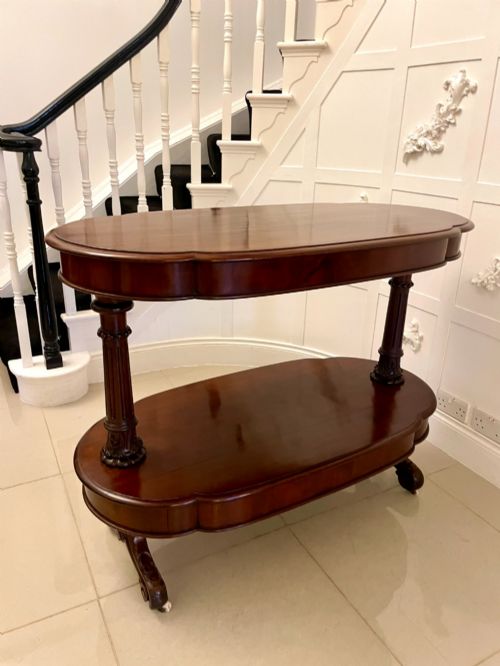
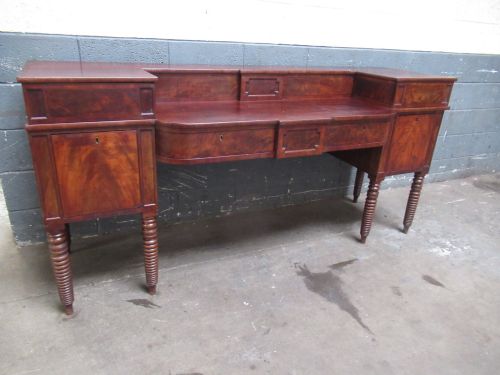
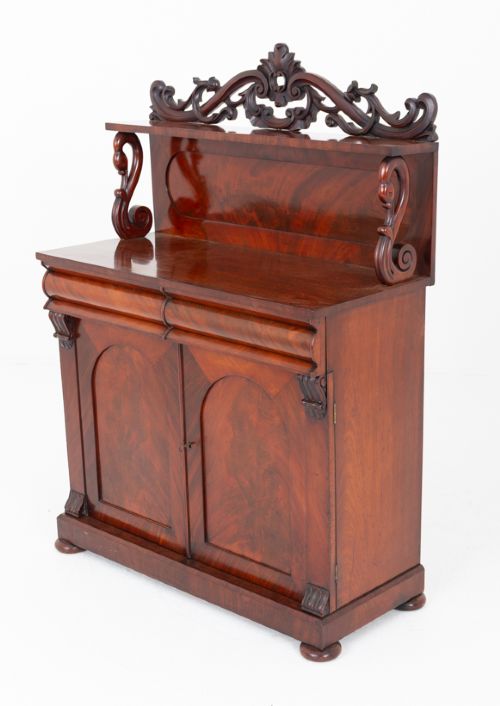
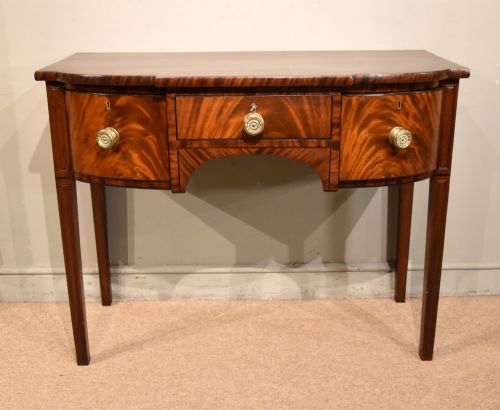
A red mahogany buffet gathers pieces serving dining spaces across the Georgian, Regency, and Victorian eras, including sideboards, chiffoniers, and multi-tiered servers. Buyers searching for a red mahogany buffet typically encounter pedestal sideboards with cupboards, stage-back designs, and three-tiered adjustable serving pieces.
The selection ranges from early nineteenth century Scottish forms to Edwardian and Chippendale revival pieces, showing bow fronts, serpentine shapes, and plain rectangular bodies. Side cabinets and dumb waiters also appear within this group, offering similar timber characteristics and serving functions.
Victorian examples dominate the listings, frequently featuring panelled doors, flame mahogany veneer, and pedestal bases designed for heavy dining room storage. Georgian and Regency pieces provide cleaner architectural lines, sometimes incorporating satinwood stringing or brass gallery rails.
Quality factors in red mahogany furniture
Quality rests in the selection and matching of the mahogany veneer, where symmetrical grain alignment across large surfaces indicates superior cabinet work. The depth of the timber's red colour and the crispness of carved mouldings or turned details distinguish standard production from finer workshop output.
Structural integrity depends on the original joining methods, the smooth operation of tiered adjustable mechanisms, and the retention of period brassware. Secondary timbers used inside drawers and back panels further reflect the standard of construction appropriate to the piece's period.
Several tiered servers feature adjustable trays, ready for afternoon tea service or balancing overly ambitious Victorian dessert arrangements.
James Shoolbred & Co
The Red Mahogany Buffet Glossary
- Flame mahogany
- A veneer cut from the fork of the mahogany tree, producing a distinctive, fiery grain pattern. It appears frequently on the doors and drawers of nineteenth century dining furniture.
- Stage-back
- A raised architectural tier at the rear of a sideboard used for displaying plate. This feature is particularly characteristic of Scottish Georgian and Victorian dining pieces.
- Pedestal sideboard
- A large storage form featuring two independent pedestals flanking a central section, often fitted with cellarets or cupboards. These heavy pieces form the core of the Victorian dining room selection.
- Dumb waiter
- A multi-tiered serving stand with revolving or stationary shelves supported on a central column. Examples in these listings typically feature three graduated tiers with brass castors.
Red Mahogany Buffet: Frequently Asked Questions
How do I spot a Victorian red mahogany buffet?
Victorian pieces usually display heavier proportions, rich flame mahogany veneers, and functional interior shelving or cellaret drawers. They often incorporate pedestal cupboards or a raised back structure designed for practical dining room use.
Looking closer at the construction reveals machine-sawn elements alongside hand-finishing, distinguishing them from earlier Georgian items which relied entirely on hand-cut joinery. The presence of brass castors and turned wooden gallery rails is also typical of mid nineteenth century production.
What is the difference between a buffet and a sideboard?
Sideboards generally provide larger enclosed storage compartments, sometimes featuring pedestals or extensive drawer arrangements for formal dining silver and linen. Buffets often emphasise tiers or open serving surfaces intended for presenting food during meals.
In practice, nineteenth century makers and later cataloguers used these terms interchangeably, leading to overlap in how multi-tiered stands and low cabinets are described. Examining the internal depth and door configuration clarifies the primary storage intent of each specific piece.
How do I care for red mahogany furniture?
Maintain the timber by keeping it away from direct heat sources and strong sunlight, which can fade the red mahogany tone and dry out the veneer. Dust regularly with a soft, dry cloth and apply occasional high-quality beeswax to nourish the polished surface.
Avoid liquid polishes containing silicone, as they penetrate old finishes and create a hazy film that proves difficult to remove. Gentle handling of brass hardware and castors prevents unnecessary strain on the original wood joints.
Are these pieces suitable for modern dining rooms?
These sideboards and tiered servers offer deep storage capacities and surface areas that suit contemporary dining spaces or living rooms as media consoles and display surfaces. Their robust timber construction handles everyday usage while adding traditional warmth to neutral interiors.
Measuring the floor space and doorway clearance is essential before acquisition, given the substantial scale of pedestal sideboards and multi-tiered stands. Arranging them against a primary wall allows the flame mahogany grain to function as a focal point in the room.