
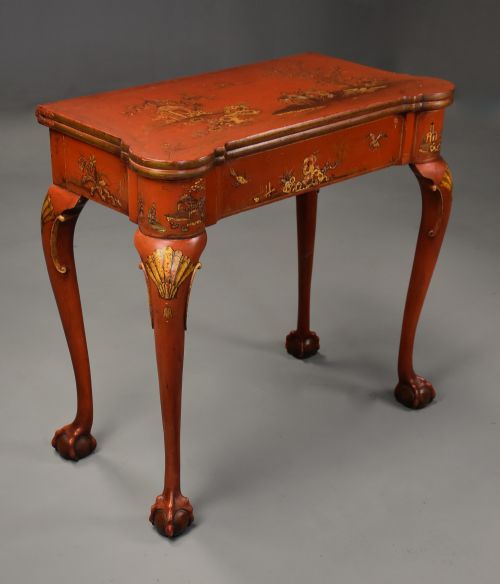

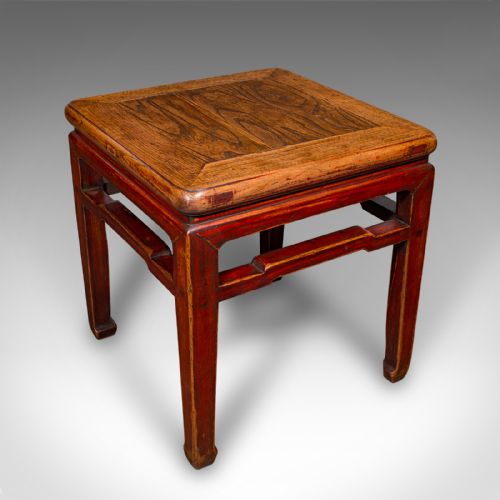


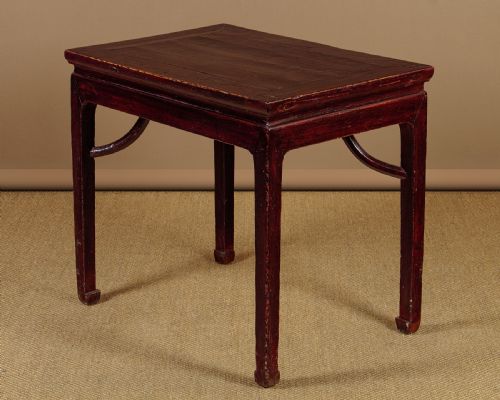

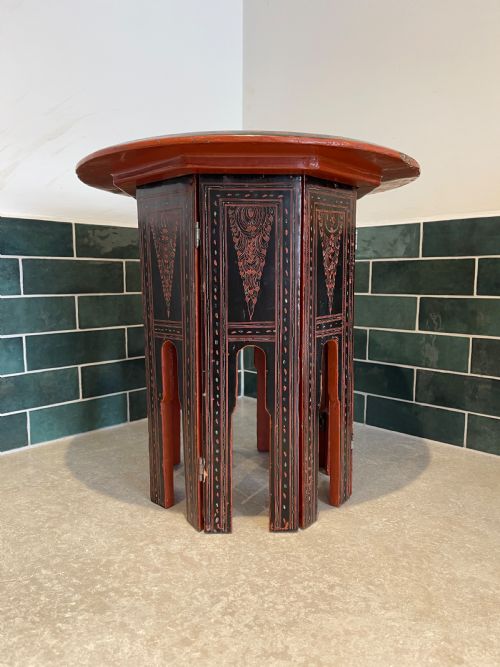


Red Lacquered Tea Table
A red lacquered tea table brings vibrant colour and global design history into a room, spanning styles from Chinoiserie to Japanese Meiji.
Red Lacquered Tea Table
How they were made
Construction relies heavily on wood, notably elm, combined with applied lacquer, pigment, and gold leaf or gilding to create decorative surfaces. Artisans employed traditional techniques suited to regional workshops, from Chinese export methods to Anglo-Burmese and Japanese joinery.
The application of red lacquer provides both the striking visual finish and the durable protective coating characteristic of these Asian and British colonial pieces.
Listings span the 18th Century, Victorian era, and 1920, utilising lacquer, elm, pigment, and gold leaf.
What varies in quality
Quality in a red lacquered tea table is determined by the depth and preservation of the lacquer work, the finesse of the gilding and pigment details, and the integrity of the underlying wood construction. Pieces displaying refined Chinoiserie motifs or intricate Meiji craftsmanship stand apart in execution.
The distinction between provincial items and fine decorative workshop production lies in the precision of the surface decoration and the structural balance of the form, whether a nest of tables or a games table.
The Red Lacquered Tea Table Glossary
- Chinoiserie
- European decorative style reflecting Chinese artistic influences, frequently seen in red lacquer furniture from the eighteenth and nineteenth centuries.
- Meiji
- The period in Japanese history spanning from 1868 to 1912, associated with fine craftsmanship found on tables and boxes.
- Lacquered wood
- Wood treated with natural or synthetic resins to form a hard, smooth, and durable decorative surface.
- Elm
- A sturdy hardwood commonly utilised in Chinese provincial side tables and furniture construction.
- Nest of tables
- A set of graduated tables designed to fit neatly beneath one another when not in use.
Red Lacquered Tea Table: Frequently Asked Questions
What is a red lacquered tea table used for?
These tables function as versatile surface pieces for daily living, serving drinks, or displaying decorative objects within a room.
Their compact forms, such as low occasional pieces or nests, allow them to fit easily beside seating areas.
How do I date a red lacquer table?
Dating relies on examining construction methods, wood types like elm, and stylistic indicators such as Meiji or Chinoiserie motifs.
Evidence from the eighteenth to the early twentieth century shows distinct regional techniques that help identify the period.
Where did these tables originate?
The pieces originate from diverse regions including China, Japan, Burma, and India, reflecting trade and colonial history.
Styles range from Chinese export and provincial works to Japanese Meiji pieces and Anglo-Burmese designs.
How do I care for a lacquered surface?
Lacquered wood requires gentle dusting with a soft cloth and protection from direct sunlight and excessive moisture.
Avoiding harsh chemical cleaners preserves the pigment, gilding, and red lacquer finish over time.