





Red Lacquer Storage Chest
A red lacquer storage chest brings rich colour and enduring utility into a room, spanning cabinet forms from nineteenth-century China and Japan.

Red Lacquer Storage Chest
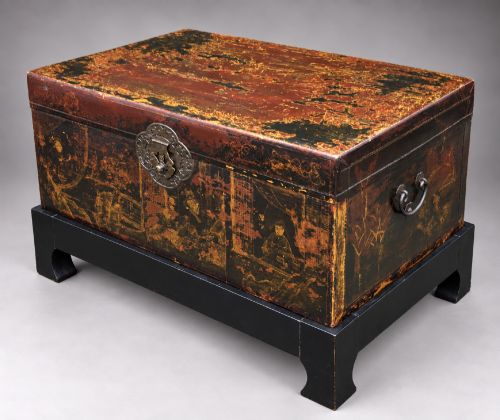
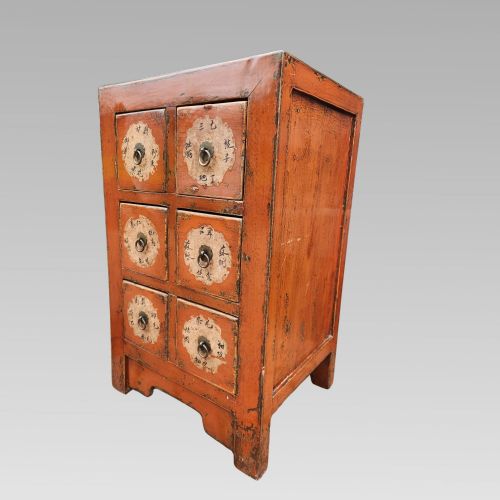
A red lacquer storage chest combines traditional cabinet-making with protective coatings of tree sap, appearing in forms such as blanket boxes, tansu chests, and apothecary cabinets. These pieces serve both decorative and practical roles for organising belongings in domestic spaces.
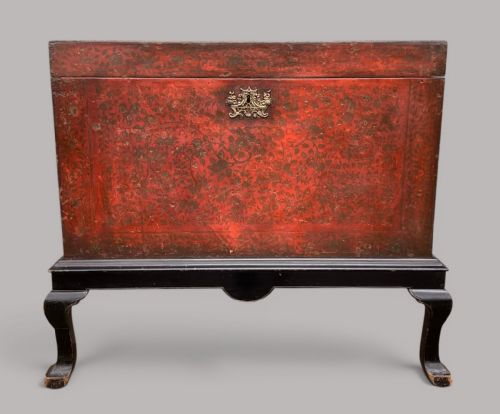
The versions most commonly met on this page belong to the nineteenth and early twentieth centuries, drawing on Chinese, Japanese, and Anglo-Indian traditions. They range from low bedside cabinets to monumental cupboards and chests raised on stands.
Makers utilised various regional styles, including Qing Dynasty aesthetics, Chinoiserie, and Japanese Meiji period designs. Each red lacquer storage chest reflects the specific storage needs and workshop practices of its origin.
How they were made
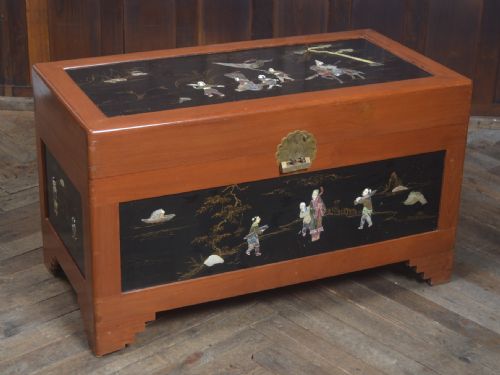
Construction relies upon solid timbers such as wood, camphor wood, and kiri wood to form the structural carcasses of cabinets and blanket boxes. These wooden foundations receive multiple applications of lacquer to create a durable, glossy exterior surface.
Decoration often incorporates gilt, gold leaf, and hand painting to produce intricate Chinoiserie motifs across the red surfaces. Hardware components typically consist of brass and iron for hinges, plates, and drawer pulls.
Listings feature pieces spanning the nineteenth century through to the 1930s, utilising wood, brass, iron, and paper.
What varies in quality
The depth and application of the lacquer finish distinguish standard utility pieces from finer decorative works, particularly where gold leaf or hand-painted details are present. The consistency of the red surface and the preservation of underlying wood reveal the original skill of the workshop.
Structural integrity depends on the condition of the wooden joints and the survival of original brass or iron hardware. Pieces retaining their original stands or matching pairs demonstrate greater historical completeness.
The Red Lacquer Storage Chest Glossary
- Chinoiserie
- European interpretation and imitation of Chinese and other East Asian artistic traditions, often featuring figures, landscapes, and pavilions rendered in lacquer.
- Tansu
- Traditional Japanese mobile cabinetry and storage chests constructed from wood, designed for domestic organisation and portability.
- Lacquer
- A durable protective and decorative coating derived from natural plant sap, built up in layers and polished to a smooth finish.
- Gilt
- Application of gold leaf or powdered gold to the surface of wood or lacquer to highlight decorative details.
- Qing Dynasty
- The final imperial dynasty of China, spanning from the mid-seventeenth to the early twentieth century, noted for rich decorative arts.
Red Lacquer Storage Chest: Frequently Asked Questions
Where should I put a red lacquer storage chest?
These chests suit living rooms, hallways, or bedrooms where their vibrant colour acts as a focal point. Their enclosed storage keeps items neatly concealed.
Ensure they are placed away from direct sunlight and damp conditions to protect the delicate lacquer surfaces over time.
How do I clean red lacquer?
Dust the surface gently with a soft, dry microfibre cloth to prevent scratching the polished finish. Avoid chemical sprays, abrasive cleaners, or excess water.
Maintaining a stable room temperature helps prevent the underlying wood from expanding and cracking the lacquer coating.
Are these chests heavy?
Weight depends on the timber used in the construction, such as camphor wood or standard cabinet woods. Larger cupboards and chests on stands require two people to move safely.
Smaller bedside cabinets and cashier boxes are easily repositioned by hand within a room.
How do I date a lacquer chest?
Dating relies on examining the construction methods, the type of wood, and the style of the brass or iron hardware. Nineteenth-century pieces often display hand-cut joinery and aged patination.
Twentieth-century examples, including those from the 1920s and 1930s, may show slightly different manufacturing tolerances and decorative techniques.