




Brass Mounted Red Cabinet
A brass mounted red cabinet brings striking colour and refined metalwork to a room, offering both decorative presence and practical storage.

Brass Mounted Red Cabinet
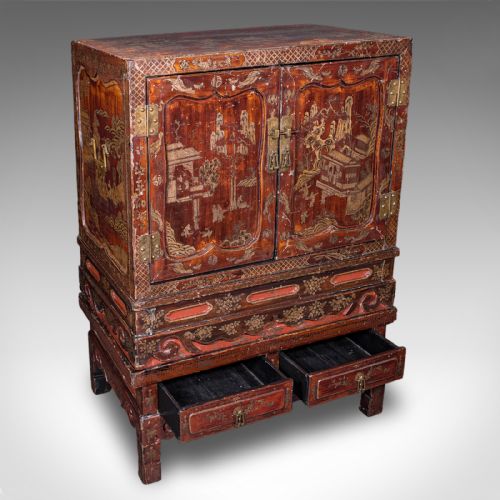
A brass mounted red cabinet is a striking storage piece that unites vivid lacquered surfaces with polished metal mounts. When you search for this phrase, you encounter pieces that range from vibrant Chinoiserie and Oriental lacquerwork to rich nineteenth-century French designs.
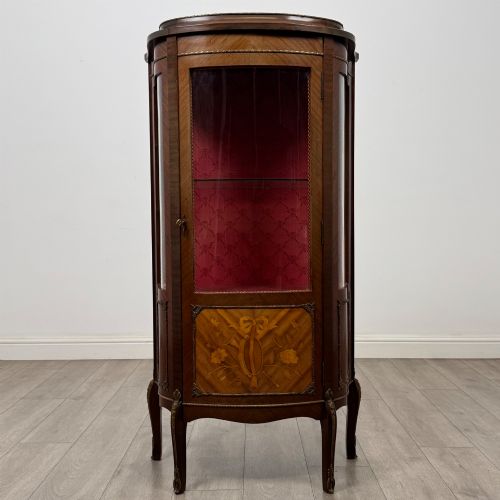
The selection on this page centres primarily on distinctive red lacquered finishes paired with brass, alongside related forms in mahogany, ebonised wood, and kingwood. These cabinets appear in various formats, from display cabinets and pier cabinets to cocktail cabinets, bedside units, and cabinets on stands.
The periods represented stretch from the Victorian and Edwardian eras into the twentieth century, capturing both nineteenth-century revival styles and traditional Chinese craftsmanship. Buyers choose these pieces to introduce a focal point of intense colour and historic character into an interior.
Materials and construction methods
Cabinet makers utilised sturdy foundational timbers such as mahogany, elm, and kingwood to build the carcase, often applying multiple layers of red lacquer or polishing the wood to a high sheen. Ebonised wood and tortoiseshell also appear in certain French revival pieces to create stark textural contrast.
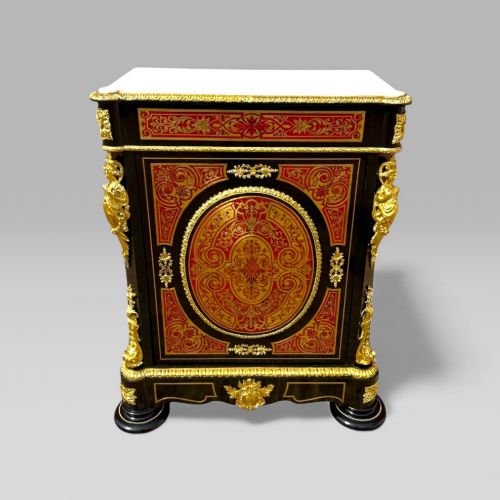
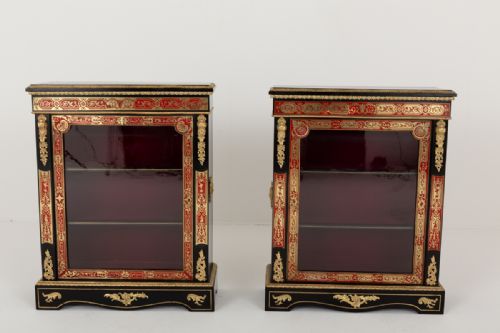
Brass and ormolu form the essential hardware, cast and chased into mounts, edgings, and handles that frame the doors and drawers. Glass panels are integrated into vitrine and display variants, while velvet sometimes lines the interior compartments of bijouterie and display furniture.
A sturdy elm noodle cabinet originally meant for kneading dough now happily holds your cocktail glassware.
Distinctions in quality and execution
The standard of a brass mounted red cabinet depends heavily on the depth and execution of its surface finish, whether hand-applied lacquer or meticulously laid tortoiseshell and brass boullework. Finer examples display crisp hand-chasing in the metal mounts rather than simple cast repetition.
Structural integrity and the retention of original brass hardware elevate certain pieces above standard production. The precision of joinery in the carcase and the clarity of glass in display doors further mark out superior workshops.
The Brass Mounted Red Cabinet Glossary
- Vitrine
- A glass-panelled display cabinet designed for the presentation of porcelain, curiosities, or books. These pieces often feature glazed sides to maximise light penetration.
- Boulle
- An elaborate marquetry technique using brass and tortoiseshell inlaid into wood, popular in nineteenth-century French furniture. The style takes its name from André-Charles Boulle.
- Chinoiserie
- European artistic interpretation of Chinese and East Asian decorative motifs, frequently expressed through lacquered finishes and gilded scenes. This aesthetic flourished across various revival periods.
- Ormolu
- Gilt bronze applied to furniture as decorative mounts and feet. The technique involves treating bronze with an amalgam of gold to achieve a rich metallic lustre.
- Pier Cabinet
- A narrow cabinet designed to fit the wall space between windows. These pieces often incorporate marble tops and mirrored backs.
Brass Mounted Red Cabinet: Frequently Asked Questions
Where should I place a red cabinet?
These cabinets work effectively as focal points in drawing rooms, dining spaces, or hallways where their vivid colour can stand out against neutral walls.
Smaller variants such as bedside units or table cabinets suit intimate spaces while providing practical enclosed storage.
How do I care for lacquered surfaces?
Lacquered and polished wood surfaces require gentle dusting with a soft, dry cloth to prevent abrasion. Avoid placing these pieces in direct sunlight or near heat sources to protect the finish.
Regular indoor humidity control helps maintain the stability of both the timber carcase and the applied metal mounts.
How do I distinguish revival styles?
Nineteenth-century revival pieces draw heavily on earlier court aesthetics like Louis XV and Louis XVI, reinterpreting them with Victorian or Edwardian manufacturing techniques. Examining the secondary woods and construction methods often reveals the true period of manufacture.
Oriental and Chinoiserie examples follow distinct stylistic traditions rooted in traditional Asian lacquer craft or twentieth-century interpretations.