


Japanese Lacquer Cupboard
A japanese lacquer cupboard brings rich dark surfaces and intricate gilding into a room, offering deep tones and historic craft that collectors prize.

Japanese Lacquer Cupboard
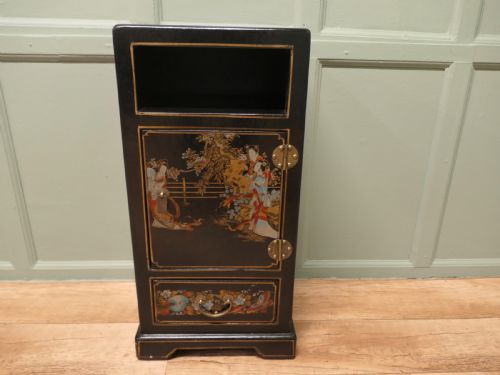
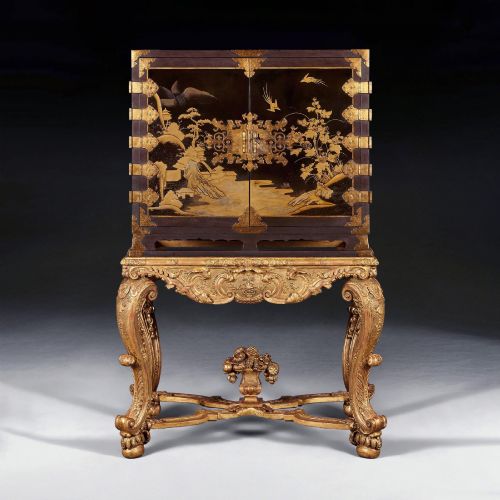
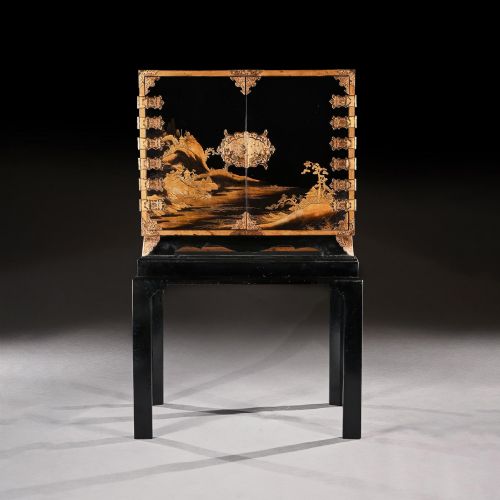
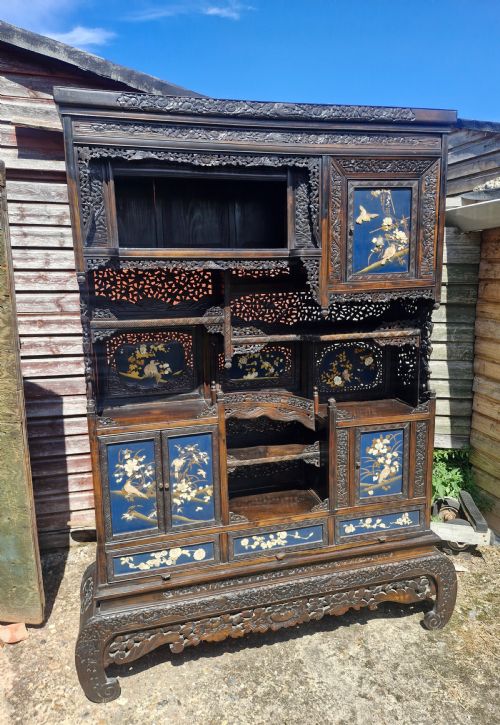
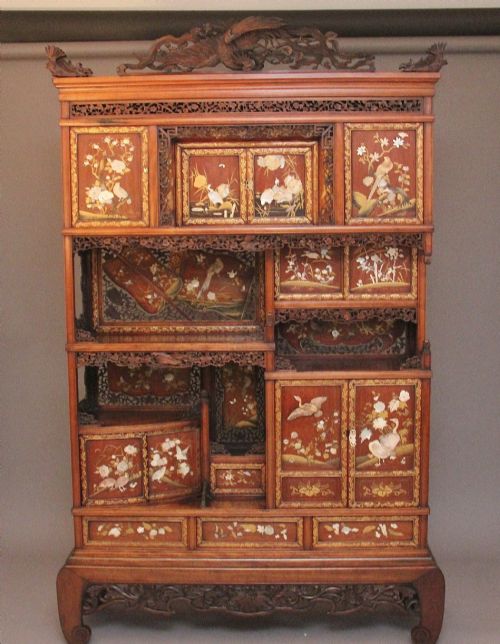
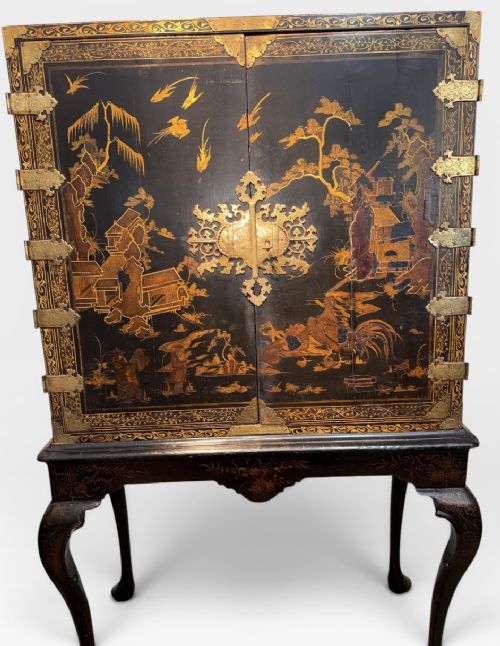
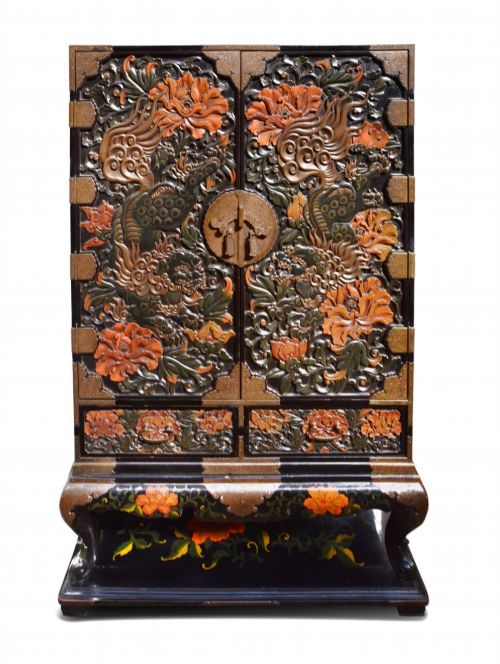
When you search for a japanese lacquer cupboard, you encounter forms ranging from compact table cabinets and portable tansu chests to large display pieces on stands. The examples on this page span several centuries, with pieces originating in both Japanese workshops and European revival movements.
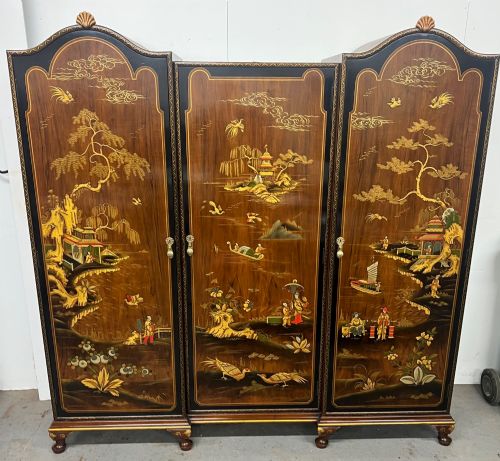
The most common versions met here are cabinets on stands from the Meiji period and the seventeenth century, alongside twentieth-century Chinoiserie interpretations. Each type brings distinct proportions and surface detailing, reflecting the period of its construction.
Materials and construction methods
Construction relies upon seasoned hardwood and specialised lacquered wood surfaces, finished with applied gold leaf and polished details. Artisans built these carcasses to withstand shifts in climate while providing a stable foundation for multiple layers of resin.
Surface decoration frequently incorporates mother of pearl inlay and brass mounts, alongside carved cinnabar or detailed painting. These materials interact to create high-contrast panels that catch the light from different angles.
Listings span from the seventeenth century through the Edwardian era, featuring lacquer, brass, and mother of pearl.
Factors that define quality
Quality rests upon the depth of the lacquer layers and the precision of the underlying wood joinery. Superior pieces display smooth, unblemished surfaces where gold leaf and inlay integrate seamlessly into the background.
The finesse of the hardware and the integrity of the stands, whether original Japanese designs or later European giltwood mounts, further distinguish finer examples from standard production.
Maples and Co·Beurdeley
The Japanese Lacquer Cupboard Glossary
- Lacquer
- A durable varnish made from tree sap, applied in numerous thin coats to wooden surfaces. It cures to a hard, water-resistant finish that accepts polishing and decoration.
- Shodana
- A traditional Japanese tabletop or freestanding display cabinet with staggered shelving. These pieces showcase varied compartments for displaying small artistic objects.
- Tansu
- A traditional mobile chest from Japan constructed primarily for storage. They often feature multiple drawers and sliding doors with iron or brass hardware.
- Cinnabar
- A bright scarlet mineral used to create carved red lacquer. Artisans layer the pigment thickly before carving intricate pictorial scenes into the surface.
- Meji Period
- An era in Japanese history spanning from eighteen sixty-eight to nineteen twelve, characterised by opening trade and exceptional decorative arts export production.
Japanese Lacquer Cupboard: Frequently Asked Questions
How do I date a Japanese lacquer cabinet?
Dating relies upon examining the timber construction methods, the style of the hardware, and the characteristics of the lacquer finish. Earlier pieces from the seventeenth and eighteenth centuries show different structural joinery compared to Meiji period or twentieth-century revival works.
Examining the underside, interior drawer linings, and the mounting of any stands provides further clues to the precise era of manufacture.
Where should I place a lacquer cabinet?
Position these cabinets away from direct sunlight and steady heat sources to protect the delicate wooden carcasses and resin finishes. Stable indoor humidity prevents the lacquer from drying out or crazing over time.
Place them on level surfaces where their decorative doors and fine hardware can be safely opened and appreciated at close range.
How do I care for antique lacquer?
Dust the surface regularly with a soft, dry cloth to prevent abrasive particles from scratching the polished finish. Avoid using modern chemical polishes, water, or commercial cleaners on the lacquer or gilding.
Professional conservation is recommended if the surface develops cracks or if decorative panels require stabilization.