


Antique Chinoiserie Sideboard
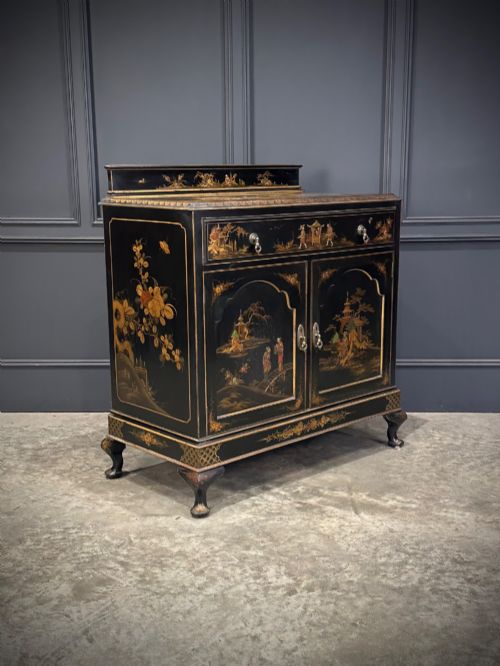
An antique chinoiserie sideboard brings spirited lacquered ornament and bold colour into a room, offering practical storage disguised as oriental fantasy.
Antique Chinoiserie Sideboard
When you search for an antique chinoiserie sideboard, you encounter an array of lacquered storage forms including cabinets, sideboards, chiffoniers, and commodes. These pieces span the nineteenth century, Regency era, and early twentieth century, showing influences from French Rococo revival, Chinese Qing dynasty furniture, and Chinese Chippendale design.
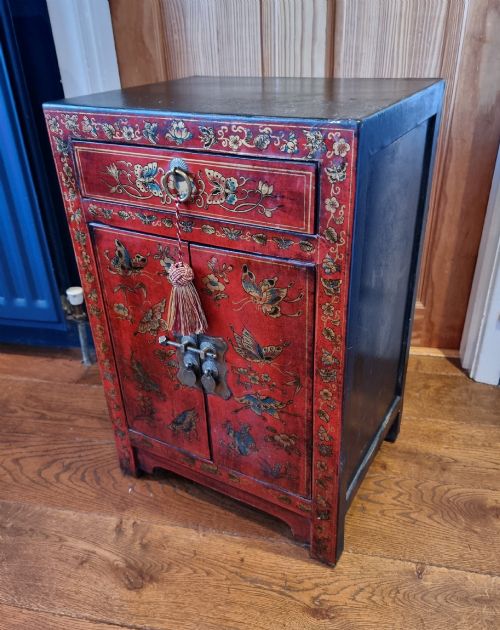
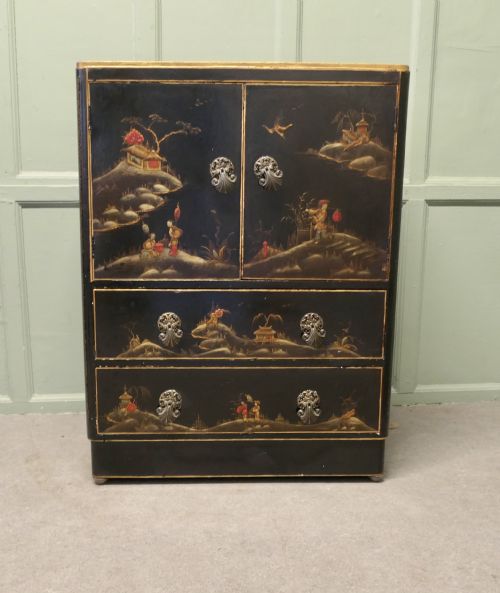
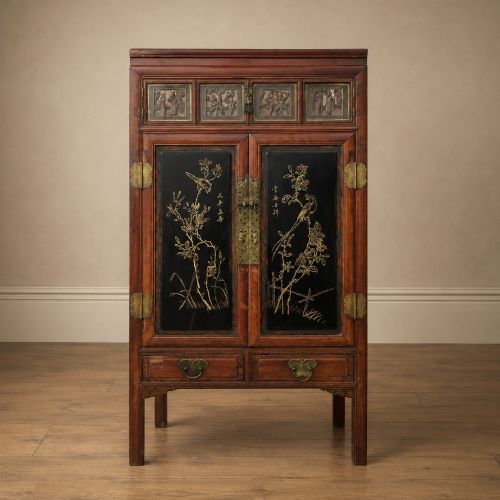
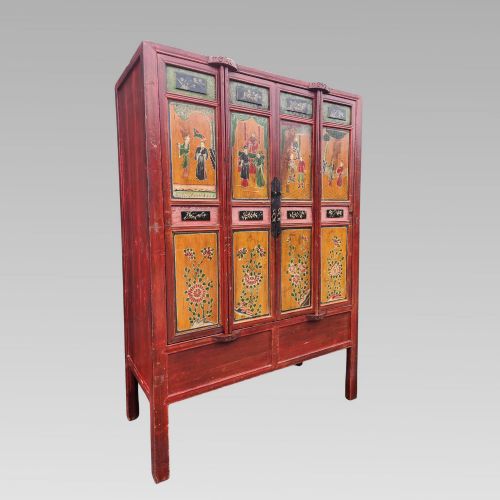
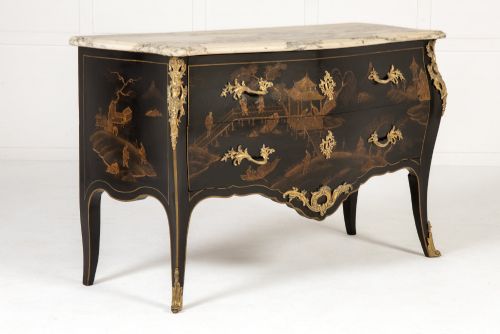
You are most likely to meet black or red lacquered cupboards, side cabinets, and cabinets on stands decorated with birds, flowers, and oriental motifs. The selection includes French bombe commodes alongside Chinese marriage cabinets from Fujian and European interpretations involving japanned finishes.
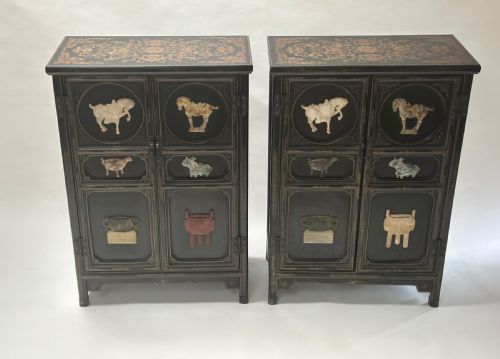
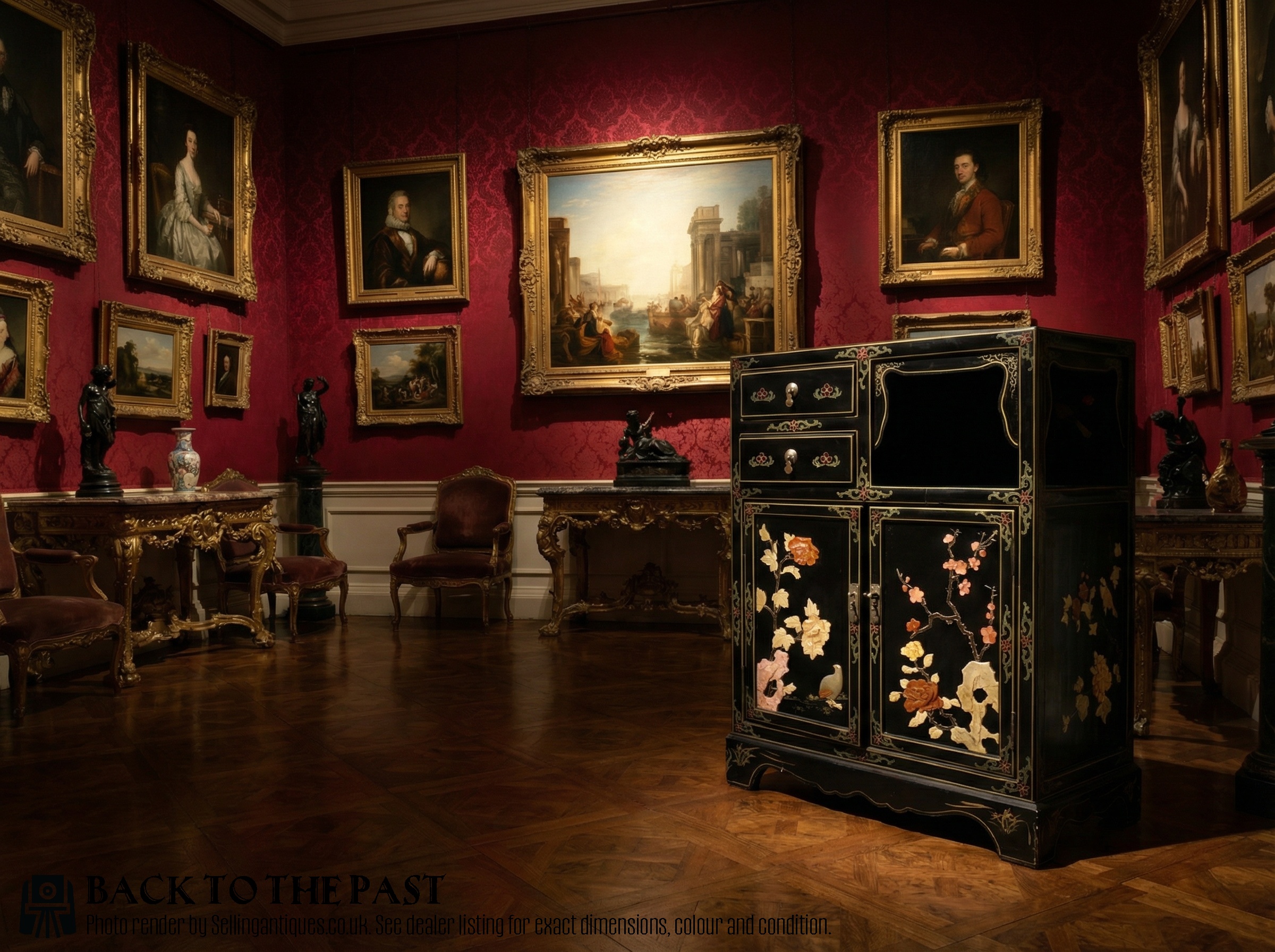
The term sideboard encompasses related storage forms on this page, uniting low cupboards and chiffoniers with taller side cabinets and commodes. Each piece relies on decorative lacquer surfaces, ranging from dark black grounds to vibrant red finishes embellished with gilt and hardstone details.

Materials and construction
Makers built these pieces using wood substrates prepared for layers of lacquer, often finished with gilt highlights and brass hardware. Artisans applied successive coats of lacquer to achieve deep black or red surfaces before painting oriental scenes and motifs.
Construction techniques combine traditional cabinet making with specialised surface decoration, such as japanning and carved stands. Some items incorporate marble tops, metal mounts, and applied hardstone details atop carved or panelled wooden frames.
Some cupboards come populated with painted birds and flowers so lively they practically chirp at breakfast.
Distinctions in quality
Quality reveals itself in the depth of the lacquer work and the fidelity of the painted decoration. Superior examples display crisp detail in the birds, flowers, and figures, while simpler pieces show broader, less intricate application.
The integration of the stand with the upper cabinet or commode distinguishes workshop standards. Finer pieces demonstrate careful proportion between carved stands and lacquered bodies, accompanied by refined brass or gilt mounts.
Mercier Frères
The Antique Chinoiserie Sideboard Glossary
- Chinoiserie
- European artistic interpretation of Chinese and East Asian decorative styles, popular in furniture and interior design. This style utilises motifs such as pagodas, landscapes, birds, and figures.
- Japanning
- European imitation of East Asian lacquer work developed during the seventeenth and eighteenth centuries. The technique involves applying multiple coats of varnish and heat-drying them before decoration.
- Commode
- A low piece of furniture with drawers or doors, functioning as a sideboard or cabinet. French commodes often feature bombe curved sides.
- Chiffonier
- A small sideboard or tall narrow chest of drawers equipped with shelves or cupboards. Regency examples frequently combine enclosed storage with display surfaces.
- Qing Dynasty
- The final imperial dynasty of China, ruling from sixteen forty-four to nineteen twelve. Pieces from this period include red and black lacquer cabinets from regions such as Fujian.
Antique Chinoiserie Sideboard: Frequently Asked Questions
What is an antique chinoiserie sideboard?
An antique chinoiserie sideboard is a lacquered storage piece decorated with oriental scenes, flowers, and birds in red, black, and gilt colours. These items include side cabinets, cupboards, and chiffoniers dating from the nineteenth and early twentieth centuries.
The category encompasses both European interpretations, such as French commodes and Regency chiffoniers, and authentic Chinese Qing dynasty cabinets from regions like Fujian.
How do I style a chinoiserie cabinet?
These pieces function as focal points in dining rooms, living spaces, or hallways, providing enclosed storage while displaying decorative surfaces. Their strong red or black lacquer finishes complement neutral walls and antique or contemporary furniture alike.
Items with stands or marble tops offer a surface for lamps, ceramics, or books, balancing practical storage with visual presence.
How do I tell different periods apart?
Regency and nineteenth-century pieces often reflect specific revival styles like French Rococo or Chinese Chippendale, utilising classical proportions and traditional hardware. Early twentieth-century examples frequently feature bold black or red lacquer with bird and floral decoration.
Chinese Qing dynasty cabinets display regional construction methods from areas such as Fujian, distinguishing them from European japanned furniture of the same era.
What materials were used?
Construction relies primarily on lacquered wood, with makers applying layers of lacquer to create smooth black or red grounds. Decoration involves gilt painting, brass mounts, and occasionally hardstone or marble elements.
Stands and cabinets may feature carved wooden frames supporting the main storage body, alongside metal hardware for doors and drawers.