




Vintage Chinoiserie Chest
These vintage chinoiserie chest pieces bring painted lacquer, gilt, and camphor wood into a room with distinct character.
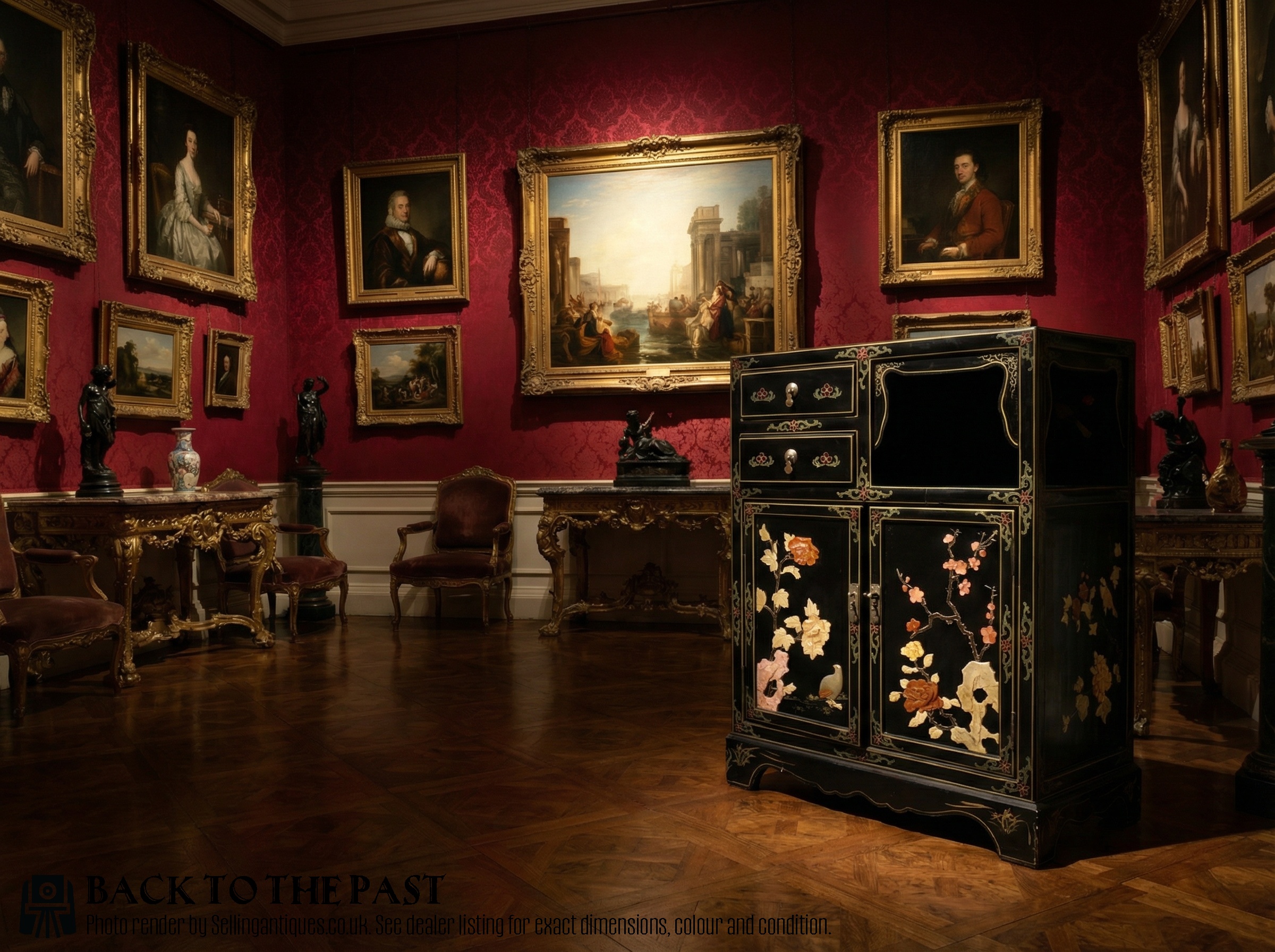
Vintage Chinoiserie Chest
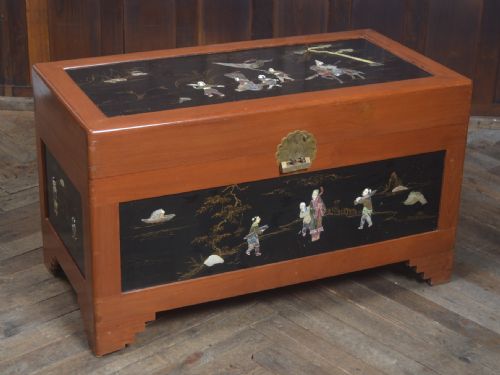
A vintage chinoiserie chest brings ornamental lacquerwork and painted Oriental motifs to storage furniture, spanning formats from blanket boxes to tallboys and side cabinets. When searching for a vintage chinoiserie chest, buyers encounter items ranging from 19th-century camphor wood coffers to 1920s Japanned chests of drawers and 1930s cocktail cabinets.
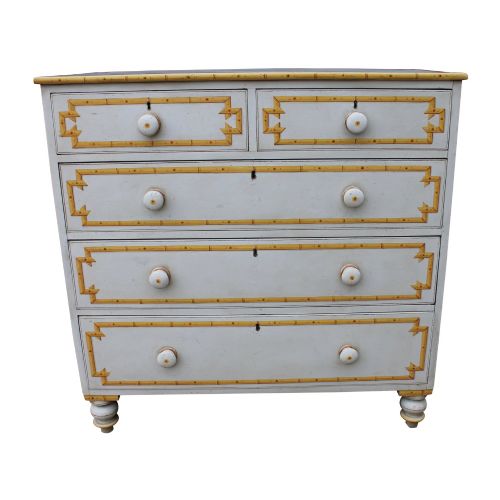
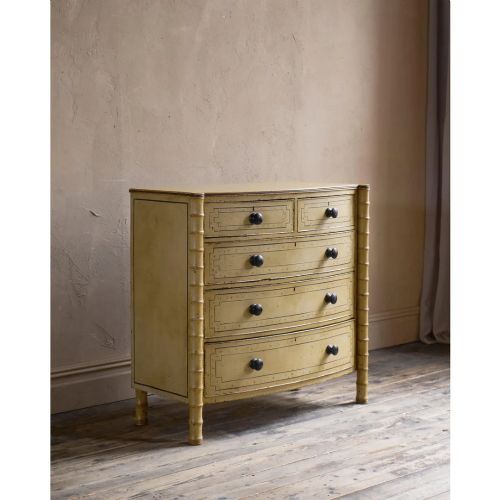
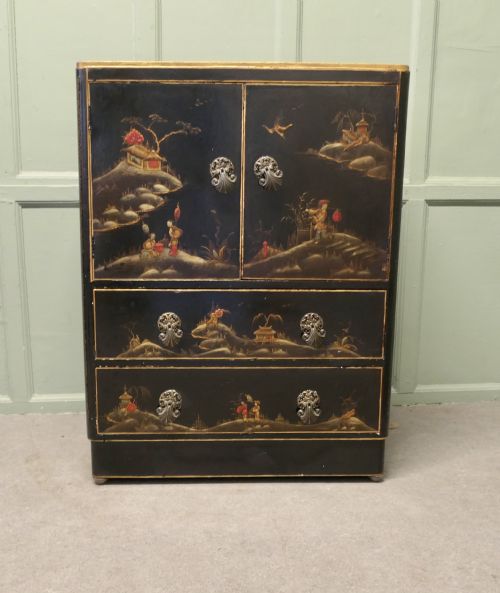
The selection here draws primarily from nineteenth-century origins through the 1920s and 1930s, featuring styles that mix Regency lines with faux bamboo or traditional Chinese forms. Cabinets on stands and lowboys sit alongside black lacquer cupboards decorated with birds and flowers, offering functional storage with decorative surfaces.
How they were made
Construction relies on wood carcasses, including pine and solid camphor wood, built to house drawers and storage compartments. Brass hardware often secures corners and provides lift handles, particularly on heavy storage chests.
Surfaces receive layers of paint and lacquer, finished with gilt and hand-painted details depicting traditional scenes, birds, and flora. Japanning techniques build up dark or pale cream coloured grounds that are subsequently decorated and sealed.
Several pieces feature hand-painted birds and flowers sitting quietly on black or pale cream lacquer, keeping company with whatever you store inside.
What varies in quality
The standard of surface decoration dictates much of the distinction across these pieces, separating simple painted finishes from intricate, multi-layered lacquerwork featuring detailed gilding and pictorial depth. The crispness of faux bamboo turning and the solidity of joinery in woods like camphor and pine also set individual examples apart.
Hardware application and internal fittings contribute to overall execution, where heavy brass mounts and purpose-built cocktail cabinet interiors reflect higher initial manufacture standards.
Harrods
The Vintage Chinoiserie Chest Glossary
- Chinoiserie
- European interpretation and imitation of Chinese artistic traditions and motifs, popular in furniture decoration. This style employs painted figures, landscapes, and floral patterns upon lacquered surfaces.
- Japanning
- European imitation of Japanese and Chinese lacquerwork, developed in the seventeenth and eighteenth centuries. The technique involves applying successive coats of varnish or paint, often heat-cured, before decoration.
- Camphor Wood
- An aromatic timber frequently utilised for storage chests and blanket boxes due to its insect-repellent properties. The dense grain takes carving and lacquer well.
- Faux Bamboo
- Wood turned or carved to imitate the segmented stalks of bamboo. This decorative technique appears frequently on nineteenth-century frames and drawer surrounds.
- Tallboy
- A tall chest of drawers, often constructed as one chest stacked upon another. This form maximises vertical storage capacity while maintaining a modest footprint.
Vintage Chinoiserie Chest: Frequently Asked Questions
How do I care for lacquer surfaces?
Dust gently with a soft, dry cloth and keep pieces away from direct sunlight and heat sources to prevent the lacquer from cracking.
Avoid using chemical polishes, water, or abrasive cleaners, which can permanently dull or damage the delicate painted and gilt details.
Are camphor wood chests safe for clothes?
Camphor wood naturally repels moths and other insects, making these chests traditionally ideal for storing woolen garments and linens.
The strong aromatic scent of the wood can transfer to fabrics, so airing items before wear is common practice for sensitive individuals.
What is the difference between a cocktail cabinet and a standard cupboard?
Cocktail cabinets usually date from the twentieth century and feature specialised internal fittings designed for entertaining, such as mirrored back panels, pull-out mixing trays, and glass storage shelves.
Standard cupboards and chests focus on general domestic storage with traditional shelving or drawer configurations behind closed doors.
How can I tell a 19th-century piece from a 1920s piece?
Nineteenth-century examples often utilise solid camphor wood or feature faux bamboo turnings alongside traditional Chinese forms and heavy brass mounts.
Pieces from the 1920s and 1930s frequently showcase Japanned finishes in black or pale cream, occasionally aligning with Art Deco forms or cocktail cabinet designs.