




Red Lacquer Chest
A red lacquer chest brings vibrant colour and layered depth to a room, offering practical storage through traditional forms.
Red Lacquer Chest
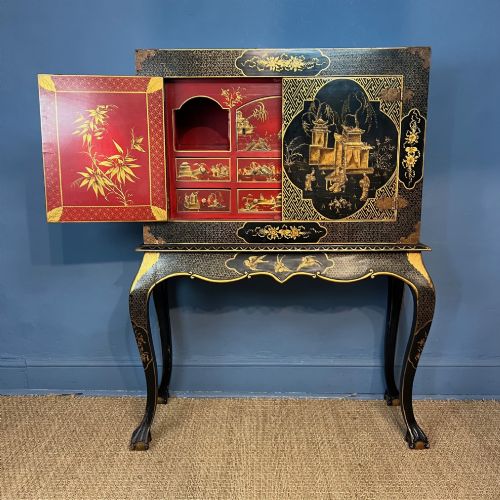
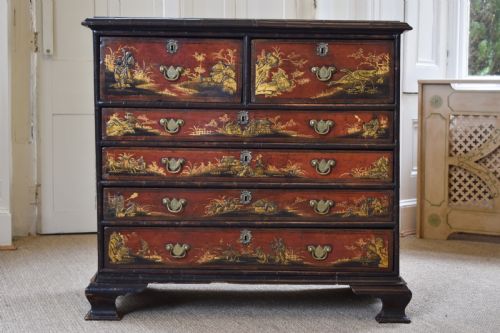
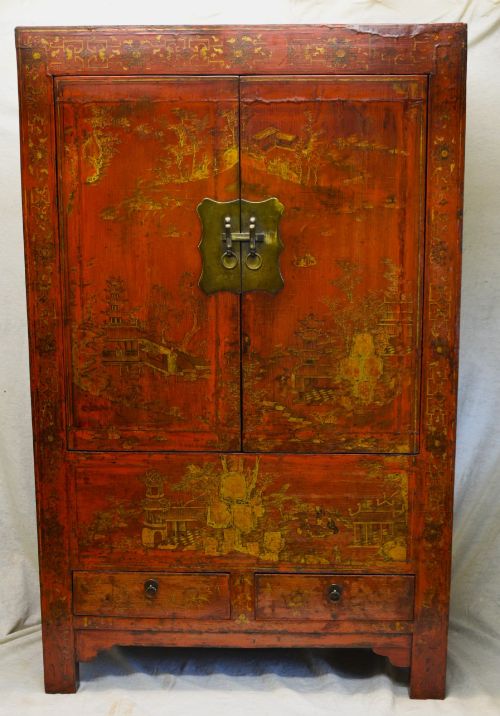
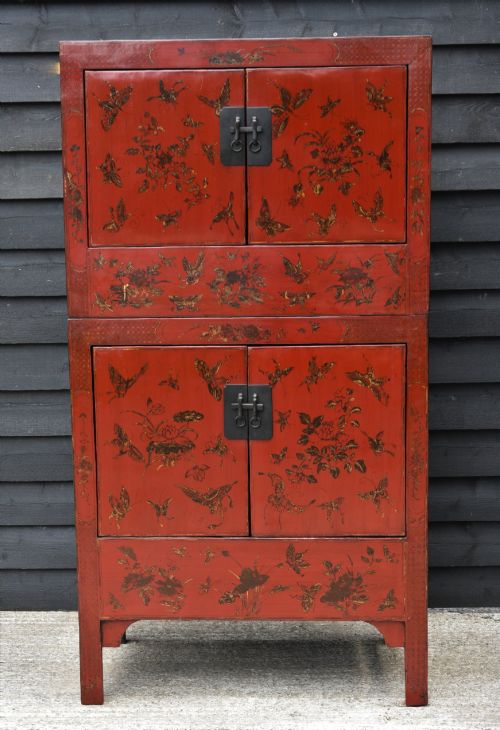
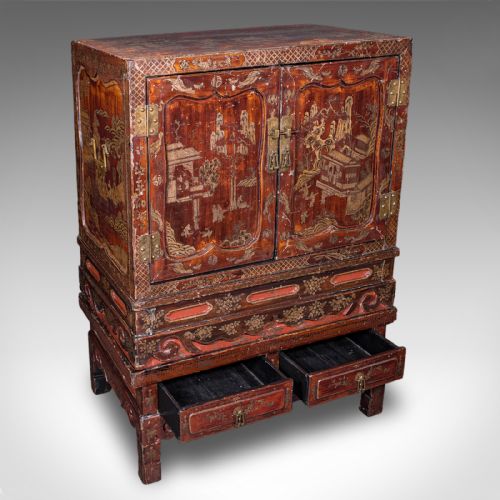
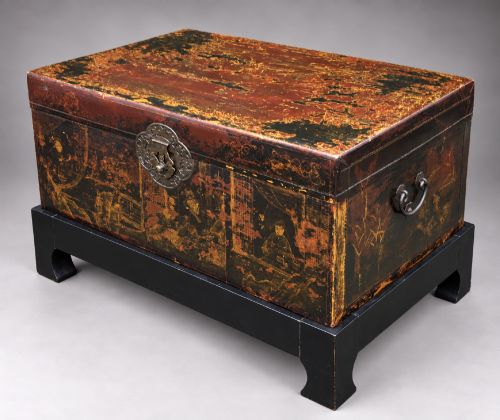
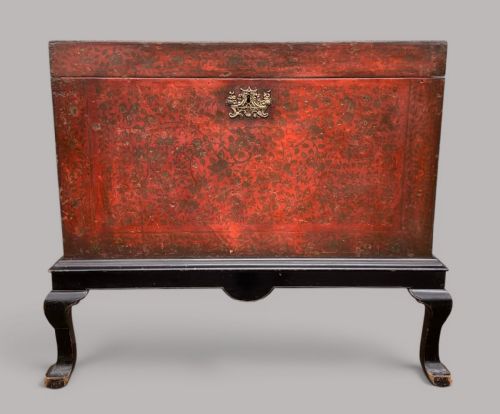
When searching for a red lacquer chest, collectors encounter a diverse group of storage furniture spanning the eighteenth, nineteenth and early twentieth centuries. These pieces encompass blanket boxes, apothecary cabinets, trunks and chests on stands originating from China, Japan and India, alongside European interpretations.
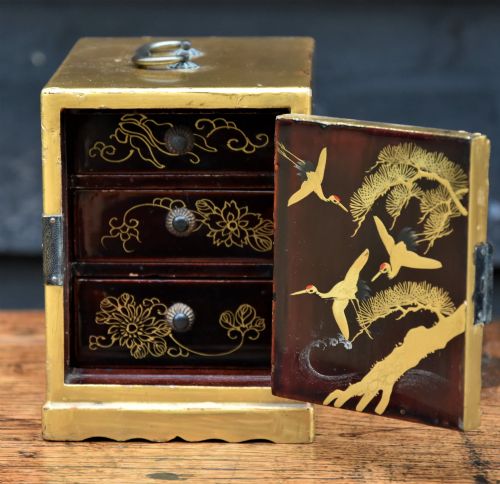
The objects serve primarily as functional storage containers, ranging from large blanket boxes and wedding boxes down to small bedside cabinets and travelling jewellery cases. Many pieces incorporate stands, drawers or cupboards, reflecting the specific domestic or commercial requirements of their original makers.
How they were made
Construction relies upon traditional timber frames utilising woods such as pine, camphor and kiri, upon which multiple layers of lacquer are applied. Artisans build the characteristic finish through repeated coats, allowing each layer to cure before smoothing and polishing.
Decoration frequently incorporates gold leaf, paint and carved details to produce intricate Chinoiserie scenes or geometric motifs. Brass and iron hardware, including hinges, lock plates and carrying handles, secure the wooden panels and provide structural reinforcement.
Red Lacquer Chest Retail Price Guide 2026
Typical asking prices for red lacquer chest among the pieces listed under this phrase on Sellingantiques today, from the lower quarter to the upper quarter. They describe what is for sale here now, not the wider market.
Form categories represented include apothecary cabinets, wedding boxes, blanket chests, commodes and campaign cases with regional origins across Asia and Europe.
What varies in quality
The refinement of the surface finish distinguishes superior examples from simpler utilitarian containers, particularly in the depth of the red lacquer and the precision of the gilt work. Master artisans achieved smoother grounds and more detailed pictorial compositions that retain their lustre across centuries.
The integrity of the underlying woodwork and the survival of original metal mounts determine the overall structural merit of a piece. Examples retaining their matching stands or original internal drawer configurations command greater consideration among collectors.
The Red Lacquer Chest Glossary
- Chinoiserie
- European artistic interpretation of Chinese and East Asian decorative styles, widely utilised in surface decoration during the eighteenth and nineteenth centuries.
- Tansu
- Traditional Japanese mobile storage cabinetry featuring timber construction and specialised iron hardware, produced in various regional forms.
- Lacquer
- A durable resin finish applied to wooden substrates in successive layers, yielding a hard, glossy surface resistant to moisture.
- Campaign case
- Portable furniture designed for travel, typically fitted with recessed brass handles, corner brackets and sturdy structural reinforcement.
Red Lacquer Chest: Frequently Asked Questions
How do I clean a lacquer chest?
Dust the surface gently with a soft, dry cloth to prevent accumulation of grit. Avoid chemical polishes, modern detergents or excessive moisture, which can damage the delicate finish.
Maintain stable environmental conditions away from direct sunlight and radiators. Rapid changes in temperature or humidity cause the underlying wood to expand and contract, placing stress on the lacquer layers.
Where should I place this furniture?
A low chest functions effectively as a coffee table substitute or bedside cabinet, providing enclosed storage while introducing rich colour into a neutral scheme. Larger blanket boxes anchor the end of a bed or serve as statement storage in a hallway.
Position pieces away from direct heat sources and strong ultraviolet light to preserve the pigments and gold leaf. Allowing adequate clearance around the piece prevents accidental knocks to fragile corners and protruding hardware.
How do I identify the period?
Examine the construction methods of the interior woodwork, drawer dovetails and backboards for indicators of age. Hand-sawn timbers and forged iron or brass hardware point towards earlier manufacturing techniques.
Compare the decorative style against documented regional motifs from Chinese, Japanese or European traditions. Subtle shifts in palette, such as the darker tones associated with nineteenth-century Japanese pieces compared to brighter eighteenth-century interpretations, help narrow the timeframe.
Are these pieces suitable for daily use?
Sturdily constructed storage chests and cabinets remain practical for holding linens, clothing or everyday items. The durable nature of cured lacquer historically protected the timber beneath from wear and moisture.
Care must be taken with heavy objects placed on the top surface and sharp items inside unlined drawers. Using felt pads under display items preserves the decorative lacquer from scratches and abrasions.