
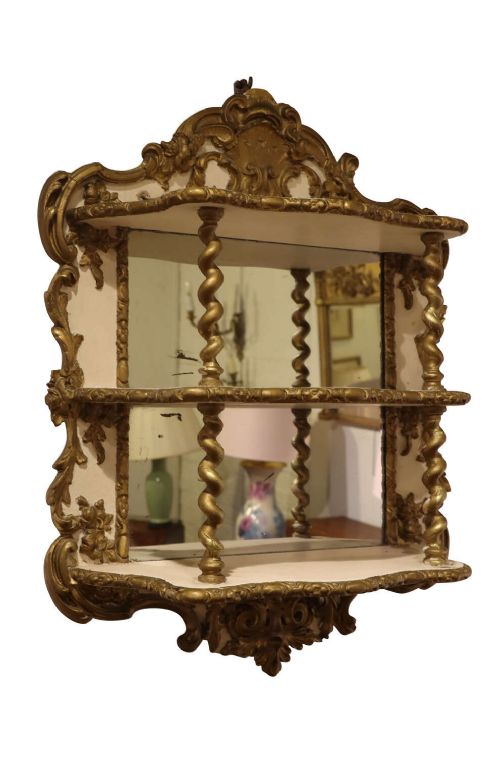
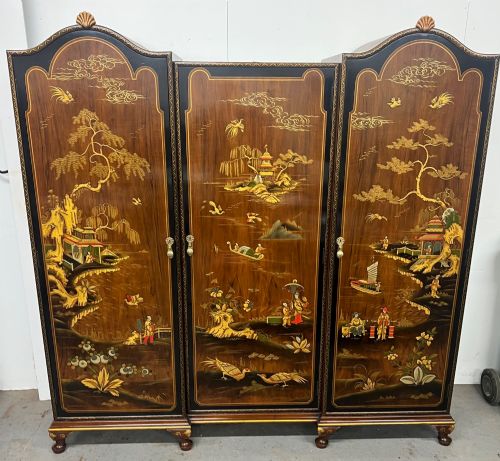
Gilt Painted Cabinet
When you seek a gilt painted cabinet, you enter a world of polished wood, brilliant metal leaf, and meticulous hand-rendered decoration.
Gilt Painted Cabinet
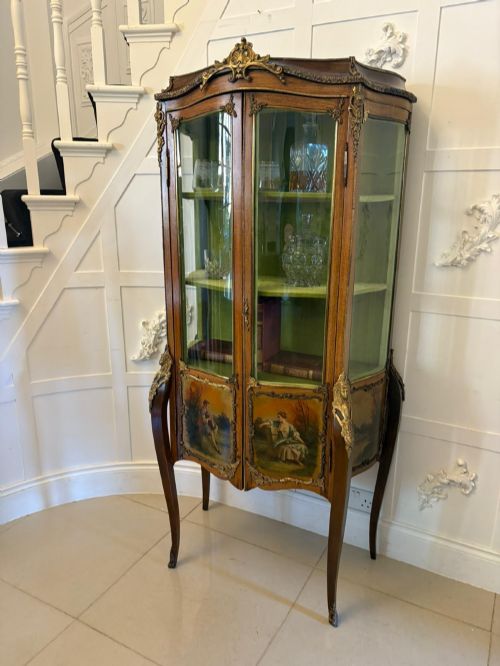
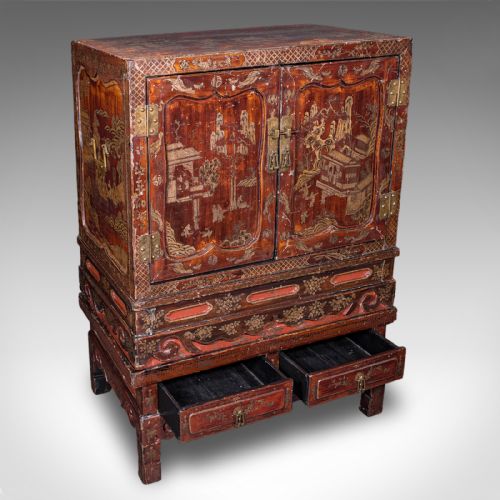
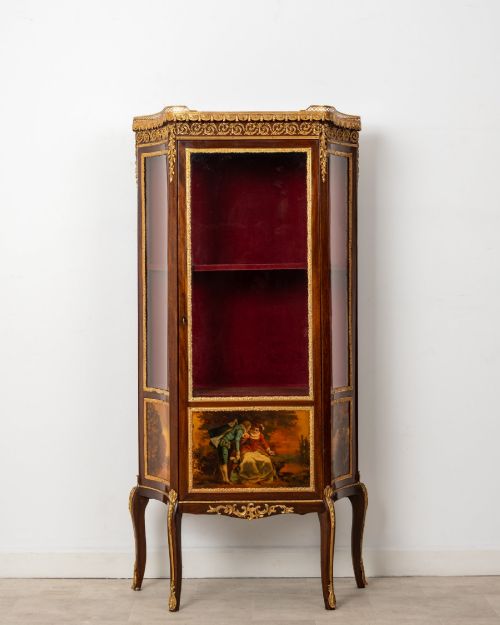
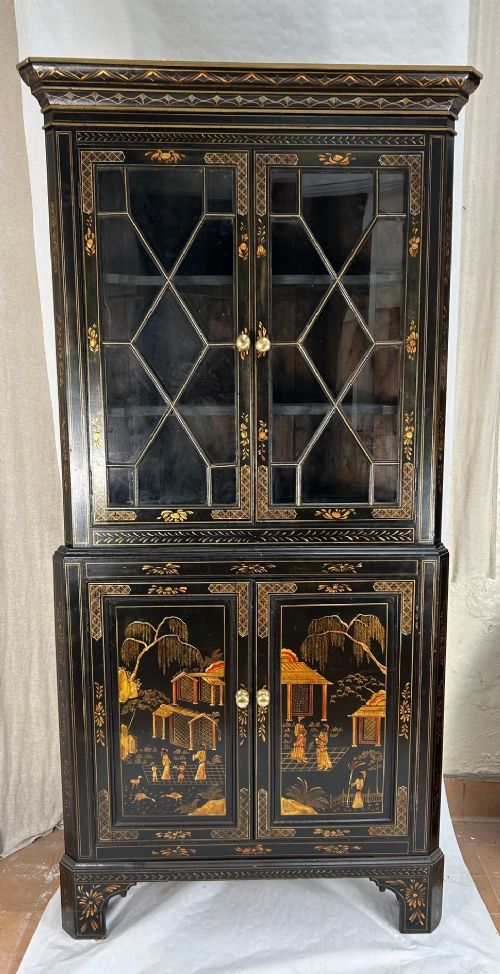
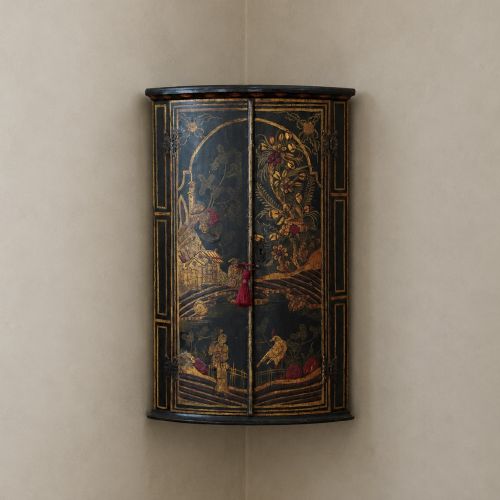
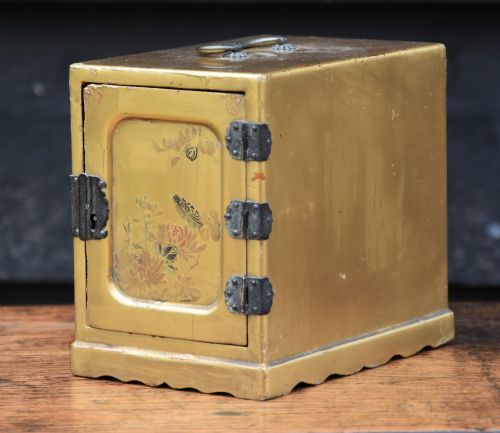
A gilt painted cabinet encompasses various forms of storage and display furniture enriched with metallic leaf and surface decoration, spanning display vitrines, corner cupboards, and bedside chests. Buyers searching this phrase encounter substantial nineteenth-century French vitrines alongside lighter Edwardian pieces and oriental lacquer cupboards.
The aesthetic vocabulary draws heavily on French Rococo revival, Chinoiserie, and Aesthetic movement styles, producing pieces that function as both functional storage and decorative centrepieces. Formats range from serpentine glass-fronted vitrines with marble tops to compact corner cabinets and painted bedside commodes.
How they were made
Construction relies upon traditional cabinet timbers such as mahogany, kingwood, and walnut, frequently finished with specialised surface treatments including japanning, lacquer, and simulated rosewood graining. Artisans applied gold leaf or gilt paint by hand to accentuate carved details, mouldings, and figurative scenes.
Many French examples utilise the Vernis Martin technique, applying translucent varnishes over painted decorations to imitate Asian lacquer work. Mounts of cast brass or ormolu frequently frame the doors and corners, secured alongside marble tops on the more elaborate display cabinets.
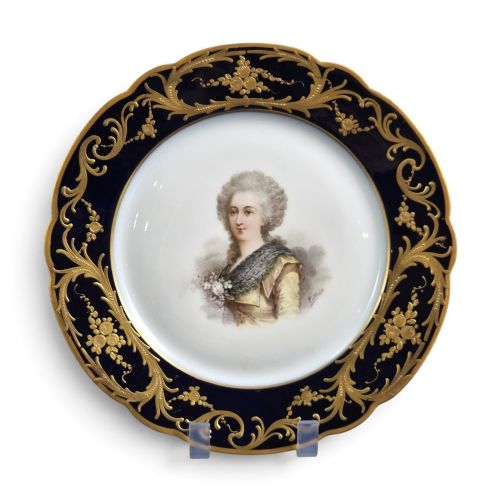
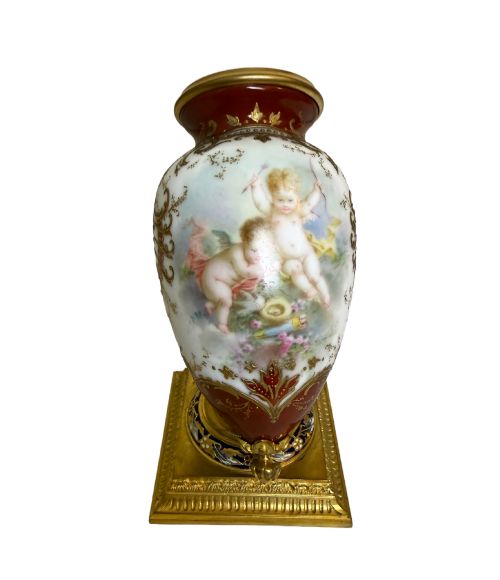
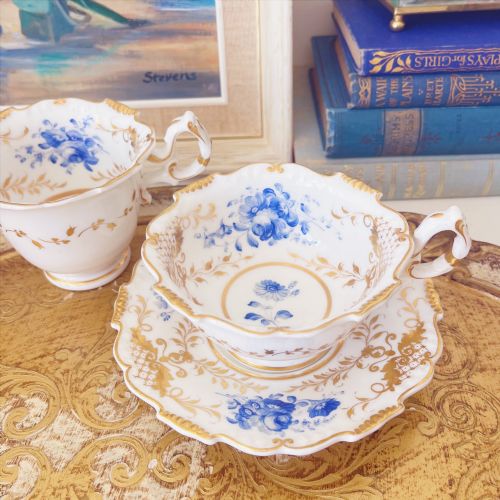
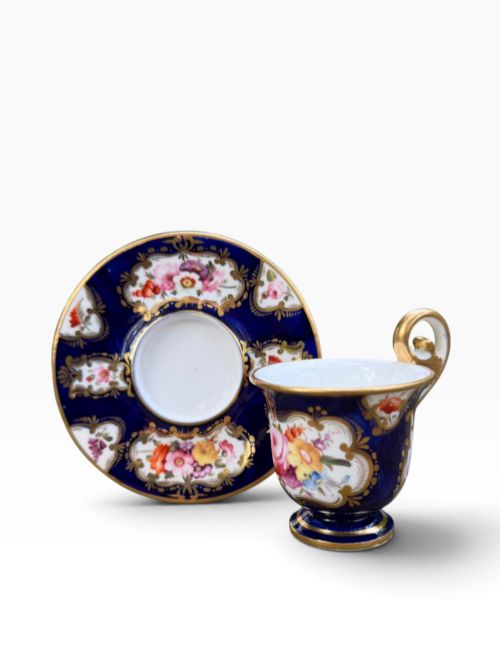
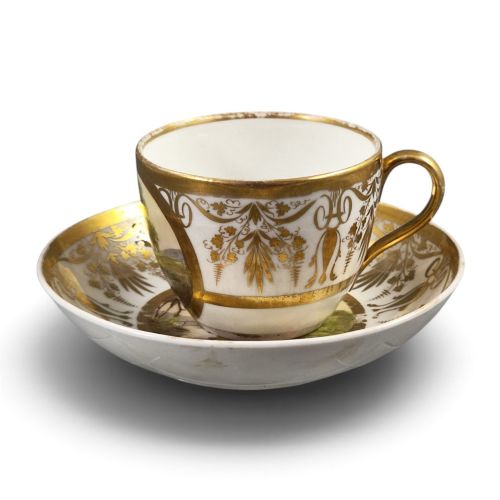
Listings feature pieces spanning the nineteenth and early twentieth centuries, incorporating materials such as porcelain, gold leaf, and brass.
What varies in quality
Quality reveals itself in the execution of the hand-painted details and the precision of the gilding, where finer pieces display crisp brushwork and deep, lustrous metallic layers rather than flat, uniform paints. The structural integrity of the timber framework and the weight of the bronze or ormolu mounts indicate the standard of workshop production.
The sophistication of the surface finish marks the distinction between standard production and masterwork pieces, particularly in the depth of Vernis Martin varnishes and the complexity of Chinoiserie motifs. Original marble tops, well-fitted glass panes, and intact interior silk linings further separate superior examples from simpler utilitarian cupboards.
Maples and Co
The Gilt Painted Cabinet Glossary
- Vitrine
- A glass-fronted display cabinet designed for porcelain and objets d'art. These pieces often feature glazed sides to maximise light exposure.
- Vernis Martin
- A simulated lacquer finish developed in eighteenth-century France, featuring layered varnishes over painted designs. The technique was widely revived during the nineteenth century.
- Ormolu
- Gilded bronze mounts applied to furniture for decorative and structural reinforcement. High-quality mounts are finely chased after casting.
- Chinoiserie
- European theatrical interpretations of Chinese and East Asian artistic traditions. This style frequently employs gold motifs on dark lacquered backgrounds.
- Japanning
- A European imitation of Japanese and Chinese lacquerwork created using heat-dried varnishes and metallic powders. It is commonly found on Georgian and Victorian cabinets.
Gilt Painted Cabinet: Frequently Asked Questions
What is a gilt painted cabinet?
A gilt painted cabinet is a piece of furniture decorated with metallic leaf or paint, encompassing everything from tall glass-fronted display vitrines to compact bedside cupboards.
These items frequently showcase revival styles such as French Rococo or Chinoiserie, serving to display collections while adding decorative colour to a room.
How do I care for a gilt painted cabinet?
Maintenance requires gentle dusting with a soft, dry cloth and avoiding modern chemical polishes that can lift fragile gold leaf or damage varnished surfaces.
Keep these cabinets away from direct sunlight and dramatic temperature shifts to protect the delicate timber and painted finishes from splitting or fading.
Where were these cabinets made?
Production centres were primarily located in Britain and France, though certain decorative styles draw inspiration from Italian workshops and East Asian lacquer traditions.
Nineteenth-century manufacturers frequently adapted historical French designs, producing elaborate display furniture for domestic drawing rooms and salons.
How do I date a gilt painted cabinet?
Dating relies upon examining construction methods, timber choices, and stylistic markers such as the presence of Aesthetic movement motifs or heavier Victorian proportions.
Cabinet hardware, the composition of ormolu mounts, and the specific formulation of painted varnishes also help establish the approximate period of manufacture.