
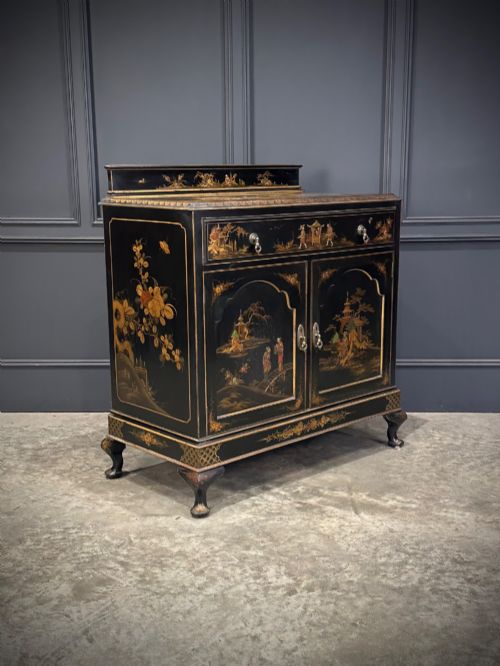
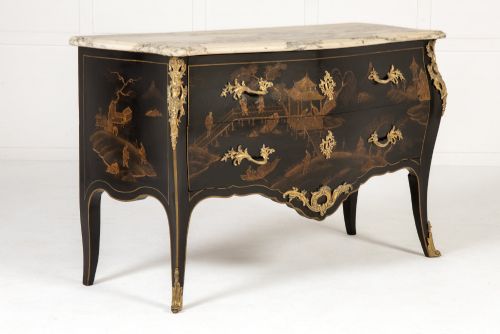


Edwardian Lacquered Cabinet
An edwardian lacquered cabinet brings dramatic Chinoiserie ornament and rich surface detail into a room, drawing the eye instantly.
Edwardian Lacquered Cabinet
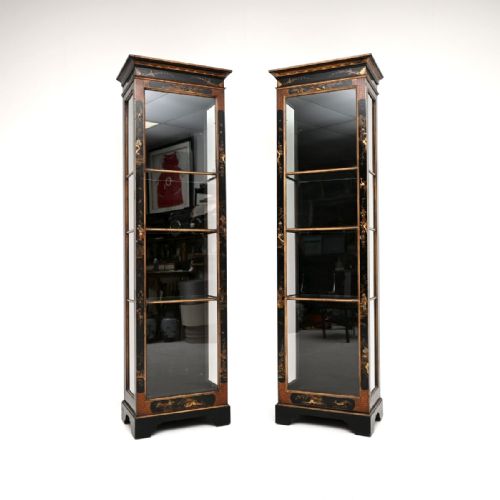
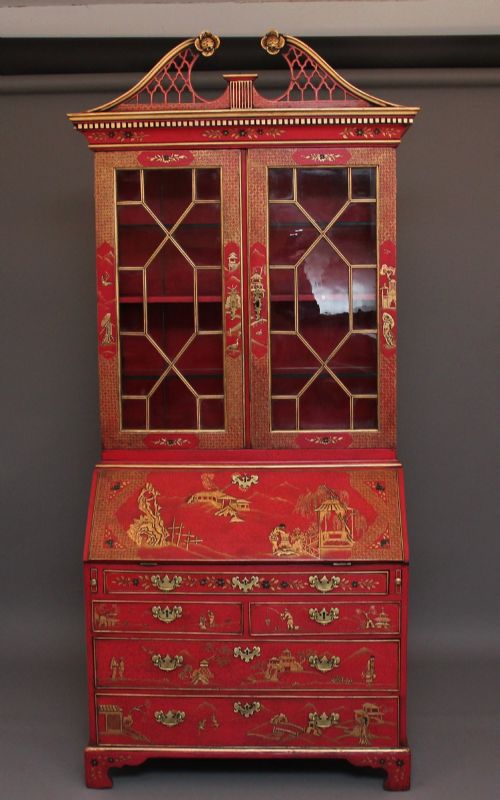
The edwardian lacquered cabinet appears in numerous forms across this selection, ranging from tall bureau bookcases and display cabinets to compact side cabinets and pieces mounted on stands. Many examples date from the Edwardian era and the early twentieth century, though nineteenth-century Victorian pieces and Meiji period Japanese items also appear alongside them.
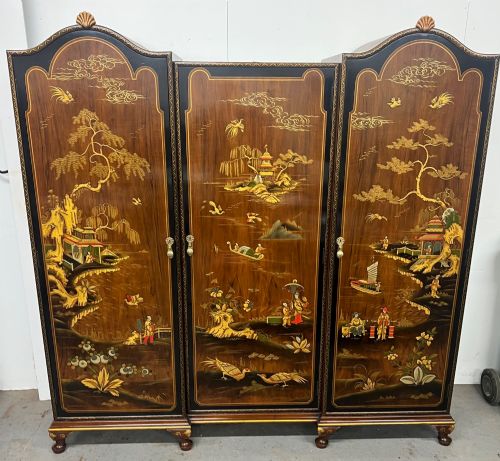
Chinoiserie and Japanned styles dominate these listings, presenting black and pale cream colour grounds decorated with oriental motifs in gold leaf and gilt. Buyers encounter display shelves, commodes, and wardrobes that demonstrate the enduring popularity of orientalist design during the early decades of the twentieth century.
Materials and Technique
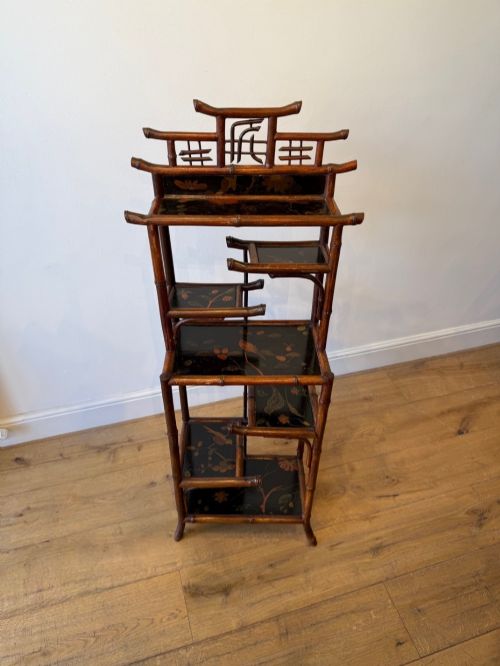
Construction relies upon traditional timbers such as mahogany and bamboo, providing a sturdy carcase for decorative surface treatments. Brass hardware often complements the dark and pale lacquer finishes.
Artisans applied layers of lacquer and gold leaf to create the characteristic Chinoiserie and Japanned scenes seen across these items. Glass panels frequently appear in display doors, while carved stands elevate specific cabinets from the floor.
Materials recorded across the inventory include lacquer, brass, glass, gold leaf, mahogany, bamboo, and gilt.
Quality and Execution
The refinement of the hand-painted Chinoiserie decoration dictates the visual appeal of an edwardian lacquered cabinet. Superior examples display crisp detail in the gold leaf motifs and harmonious proportions across doors, drawers, and cornices.
The choice of underlying material and the integrity of the lacquered surface determine longevity. Pieces incorporating solid mahogany or carefully structured bamboo support the decorative finish more effectively over decades of use.
Maples & Co.
The Edwardian Lacquered Cabinet Glossary
- Chinoiserie
- European interpretation and imitation of Chinese and East Asian artistic traditions, popular in furniture decoration. This style employs motifs of figures, landscapes, and pagodas rendered in gold on dark grounds.
- Japanned
- European lacquering technique imitating Japanese export wares. It typically involves building up layers of varnish and paint to produce a hard, glossy surface.
- Bureau bookcase
- Combination furniture piece featuring a sloping desk flap folding down for writing above storage shelves or enclosed cabinet space. These often incorporate glass doors for displaying books.
- Bijouterie table
- Glass-topped display table designed for housing small decorative items and precious objects. They frequently utilise bamboo or fine wood frames.
- Shodana
- Japanese tiered display cabinet featuring staggered shelving and small cupboards. These items originate from the Meiji period.
Edwardian Lacquered Cabinet: Frequently Asked Questions
What is an edwardian lacquered cabinet?
An edwardian lacquered cabinet is a storage or display piece finished with orientalist Chinoiserie or Japanned decoration. These items typically feature painted scenes in gold on dark or pale backgrounds.
They reflect the turn-of-the-century taste for exotic ornamentation, adapting traditional forms like side cabinets and bureau bookcases into striking decorative furnishings.
How were these cabinets used?
Owners utilised these cabinets for storing household goods, writing letters, or displaying prized porcelain and curiosities behind glass doors. Tall bureau versions provided a private workspace alongside enclosed shelving.
Smaller side cabinets and pieces on stands served primarily to anchor a room's decorative scheme while offering convenient enclosed storage.
How do I style a lacquered cabinet?
Position your cabinet where ambient light can catch the gold leaf and glossy lacquer finish without exposing the surface to direct sunlight. Pairing the piece with neutral walls allows the intricate Chinoiserie motifs to stand out clearly.
Use display shelves or glass-fronted sections to exhibit small collectibles while keeping the surrounding area uncluttered to maintain visual balance.
How do I distinguish Edwardian from Victorian pieces?
Edwardian examples often lean towards lighter, airier interpretations of Chinoiserie, sometimes utilising pale cream colour palettes alongside traditional black lacquer. Victorian pieces tend to favour heavier ebonised finishes and denser decorative arrangements.
Examining the underlying timber, such as mahogany or bamboo, alongside construction methods helps confirm the approximate period of manufacture.