




Red Geometric Flatweave Rug
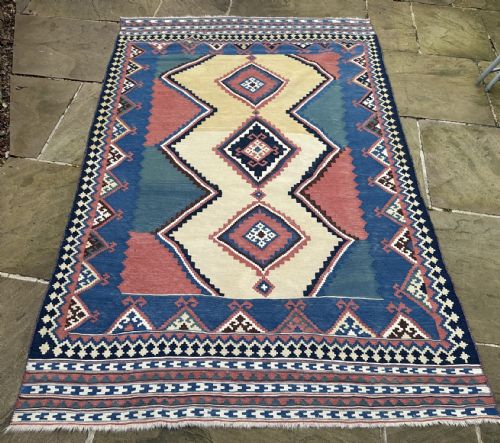
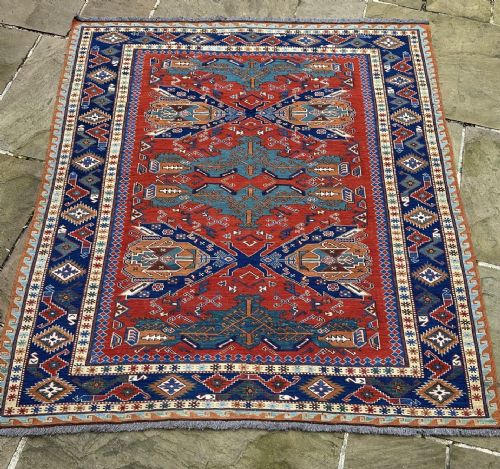
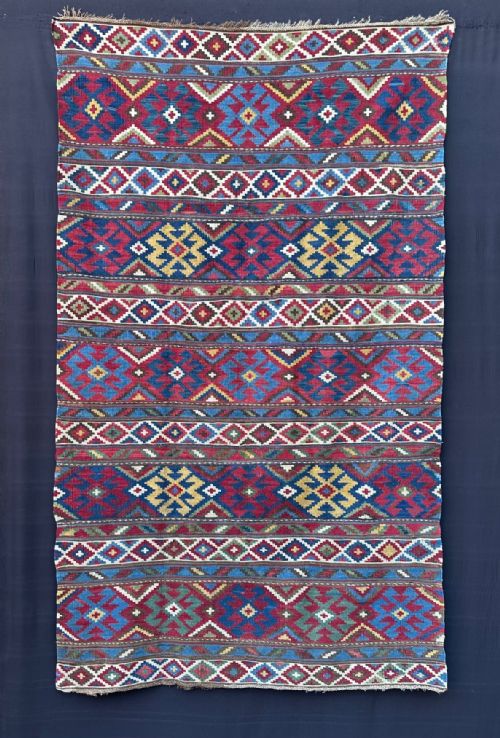
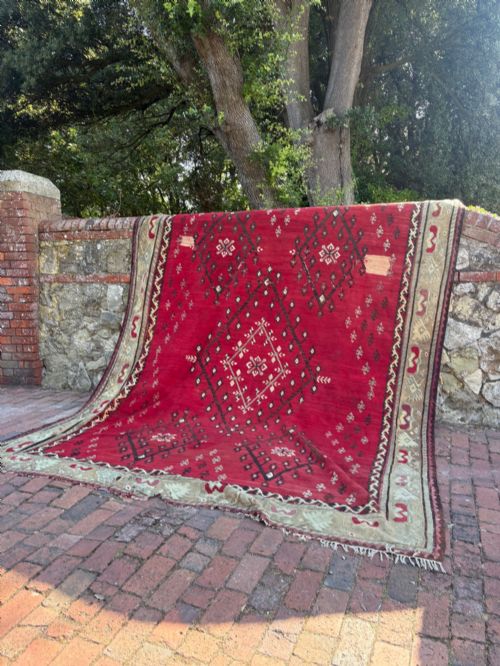
A red geometric flatweave rug brings together tribal village weaving traditions from Anatolia, the Caucasus, and Persia.
Red Geometric Flatweave Rug
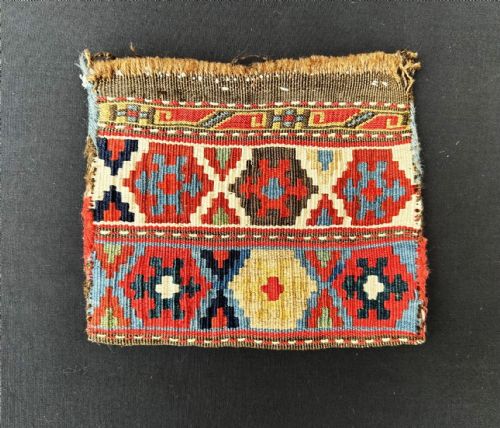
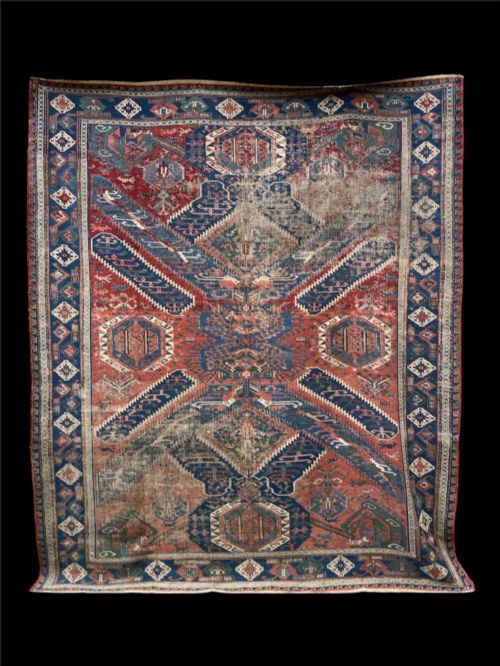
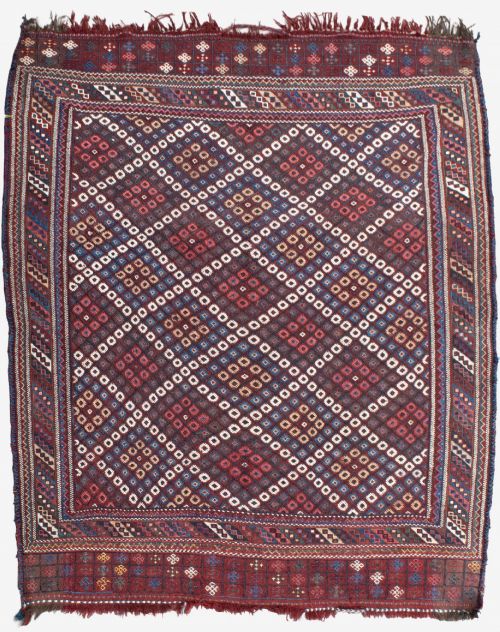
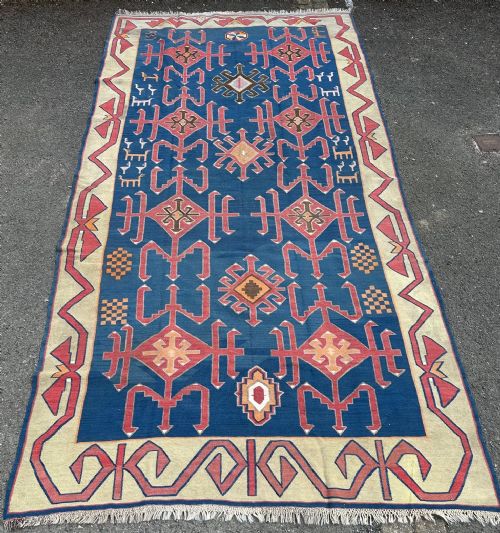
A red geometric flatweave rug comprises flat-woven carpets, kilims, runners, and storage bags produced by nomadic and tribal groups across Central Asia, the Caucasus, and Persia. These textiles originate from periods spanning the mid-nineteenth century through the early twentieth century, reflecting regional tribal motifs.
The selections on this page lean heavily towards tribal and nomadic outputs such as Shirvan, Qashqai, Afshar, and Uzbek flatweaves. Buyers encounter formats ranging from large carpets and long runners down to smaller cushions, bags, and sofreh dining cloths.
How they were made
Weavers constructed these textiles primarily using wool and hand-spun wool, often paired with cotton for structural integrity in specific regional pieces. Artisans utilised natural dyes to achieve the varied tones recorded across the pieces.
Techniques relied on flat-weaving methods, slit-tapestry weaves, and soumak work, producing durable floor coverings and utilitarian tribal items without a pile.
Nomads wove miniature saddle-bags and salt bags with the same care as large carpets, ensuring even packhorses travelled in geometric style.
What varies in quality
Variations in quality stem from the precision of the geometric layout, the handling of natural dye colour palettes, and the fineness of the flat-woven structure. Tightly beaten wefts and complex regional motifs distinguish more accomplished tribal examples from standard utility pieces.
The integrity of the wool, the consistency of the hand-spinning, and the preservation of the original borders or selvedges further differentiate individual rugs and flatweaves.
The Red Geometric Flatweave Rug Glossary
- Kilim
- A flat-woven carpet or rug produced without a pile by tightly interweaving warp and weft strands. These textiles often display sharp geometric patterns resulting from the slit-tapestry technique.
- Sofreh
- A spreading cloth used traditionally for dining, kneading bread, or general household purposes by nomadic tribes. They frequently feature strong linear and geometric compositions.
- Soumak
- A brocaded flat-weave technique where coloured weft threads are wrapped around the warp threads for added durability and texture. This method creates a raised surface pattern distinct from standard tapestry weaving.
- Mafrash
- A large rectangular storage bag or chest panel used by nomadic tribes for bedding and household possessions. They typically exhibit bold tribal designs suited to transportation.
- Selvedge
- The finished side edges of a rug or flatweave that prevent the weaving from unravelling. Original selvedges indicate careful preservation of the textile.
Red Geometric Flatweave Rug: Frequently Asked Questions
What is a flatweave rug?
A flatweave rug is a textile constructed without a pile by interlocking warp and weft threads directly on a loom.
These pieces rely on tapestry or soumak techniques rather than knotted piles, resulting in a lightweight structure suitable for floors and wall hangings.
How were tribal rugs used?
Nomadic and village groups utilised these textiles as floor coverings, blankets, animal trappings, and storage bags for daily domestic life.
Many pieces served specific functions such as eating cloths, grain sacks, or bedding containers within tribal tents and settlements.
How do I care for an antique rug?
Maintenance requires gentle vacuuming without a rotating brush bar and occasional professional cleaning suited to natural dyes and wool.
Placing a breathable underlay beneath the textile prevents slipping and reduces friction against hard flooring.
How are regional styles told apart?
Regional attributions depend on specific geometric motifs, colour palettes, and weaving structures characteristic of groups like the Qashqai, Afshar, or Shahsevan.
Analysing the wool preparation and border arrangements helps assign pieces to specific Caucasian, Persian, or Central Asian origins.