
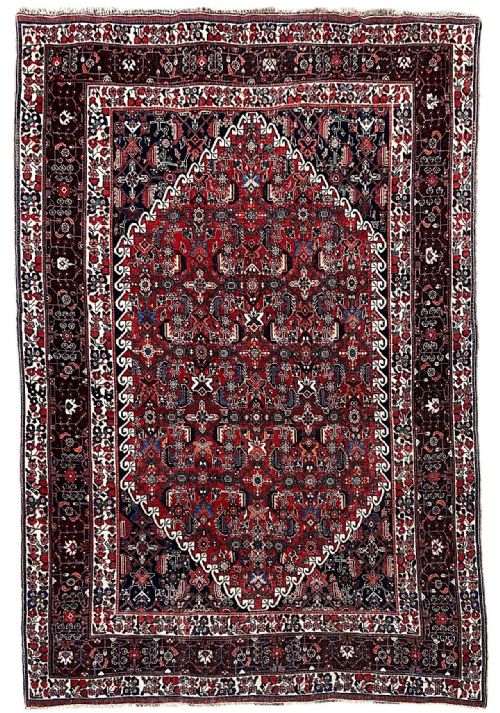
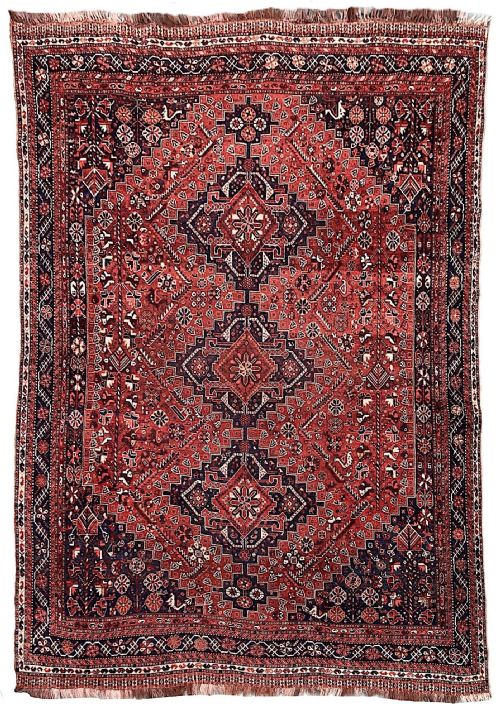


Persian Qashqai Tribal Carpet
When searching for a persian qashqai tribal carpet, collectors encounter handwoven pieces that bring rich historical patterns and nomadic artistry into domestic spaces.
Persian Qashqai Tribal Carpet
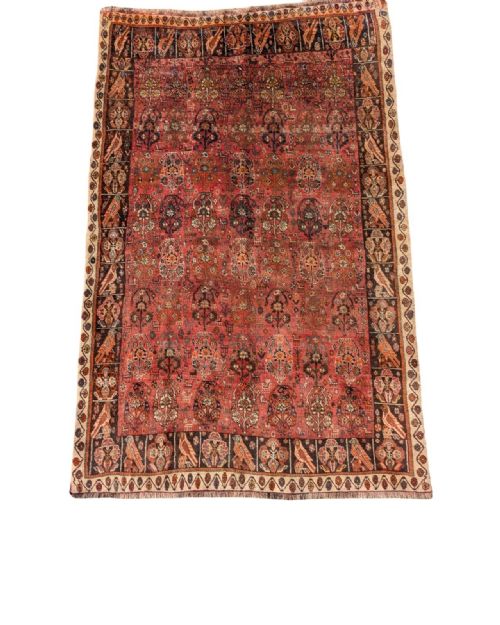
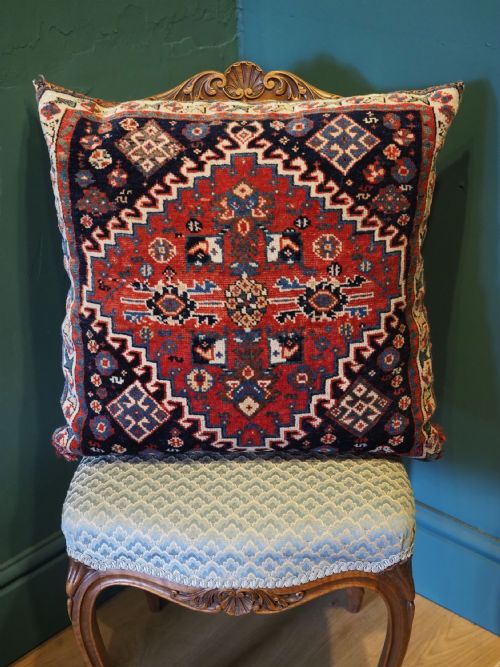
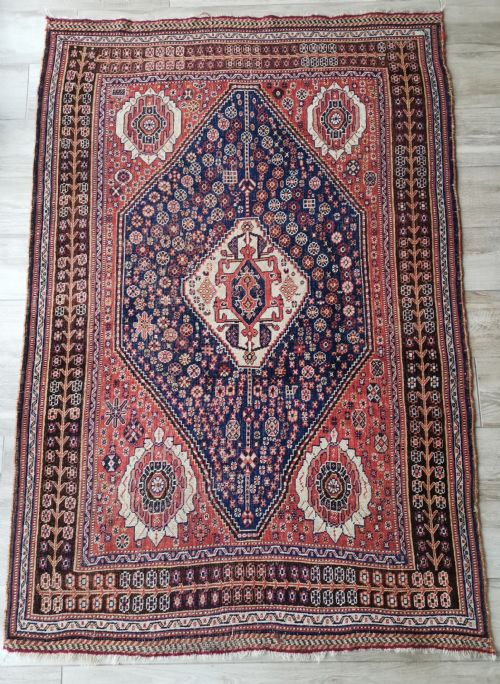
A persian qashqai tribal carpet encompasses traditional woven floor coverings and flatweaves created by nomadic and village weavers in southwestern Persia. The selection ranges from larger carpets and kelleh formats down to compact scatter rugs, saddle bag cushions, and kilims.
Most examples discovered on this page date from the late nineteenth century through to the early decades of the twentieth century. These pieces display distinct tribal motifs, including central medallions, geometric animals, tree of life designs, and stylized peacocks.
In addition to standard pile carpets, the inventory frequently includes related regional weaving traditions such as Khamseh, Luri, and Shiraz pieces. Gabbeh and Shekarlu subtypes also appear, offering alternative textures and simpler geometric compositions.
How they were made
The construction relies heavily on wool, frequently hand-spun, combined with cotton foundations depending on the specific tribal origin and period. Weavers utilised natural dyes to achieve deep colour palettes that developed rich patinas over decades of use.
Techniques range from densely knotted pile construction to flatwoven kilim structures and specific tribal variations like Gabbeh weaving. Each item represents traditional handloom methods passed down through nomadic generations in southwestern Persia.
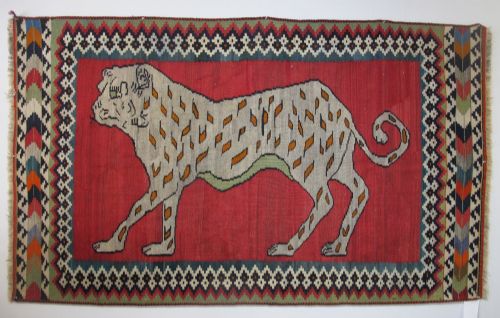
Keep an eye out for rogue peacocks and lions woven directly into the geometric fields by imaginative nomadic weavers.
What varies in quality
Quality differences emerge in the fineness of the knotting and the precision of the geometric or figurative drawing across the field. Tighter structures and more complex pictorial elements, such as detailed lion or tree of life motifs, separate finer works from simpler village pieces.
The integrity and depth of the natural dyes also dictate the visual standard of the weaving. Examples retaining vibrant, harmonious colour saturation command greater attention from collectors than those with faded or uneven dyework.
The Persian Qashqai Tribal Carpet Glossary
- Kilim
- A flatwoven carpet or rug produced without a pile. These pieces use interlocking warp and weft threads to create sharp geometric patterns.
- Gabbeh
- A coarsely knotted, thick pile rug traditionally made by tribal weavers. They often feature minimal designs with large expanses of solid colour.
- Medallion
- A central ornamental motif placed in the middle of the carpet field. It serves as the primary focal point for the surrounding tribal design.
- Kelleh
- A long, rectangular format of carpet traditionally suited for specific room dimensions. This format is narrower than a standard large carpet.
- Khamseh
- A confederation of tribes in southwestern Persia known for distinct weaving styles. Their work often shares aesthetic traits with Qashqai carpets.
Persian Qashqai Tribal Carpet: Frequently Asked Questions
How do I identify a genuine piece?
Examine the reverse of the weaving to check for irregular knotting and hand-spun wool characteristics. Natural dyes and slight asymmetries in the tribal motifs typically indicate authentic nomadic production.
Compare the piece against known regional styles from southwestern Persia. Consistent use of traditional iconography like medallions and animal figures provides further confirmation of origin.
Where were these carpets made?
These textiles originate from the tribal regions of southwestern Persia, specifically associated with the Qashqai confederation and neighbouring groups. Nomadic and village weavers produced them in camp settings and rural settlements.
Production often extended across historical trade routes and seasonal migration paths in Fars province. Surviving examples reflect the distinct cultural visual language of these specific tribes.
How should I care for an antique rug?
Position the carpet in areas away from direct, harsh sunlight to preserve the integrity of the natural dyes. Regular gentle vacuuming without a beater bar prevents dust accumulation in the wool pile.
Rotate the piece periodically to ensure even wear across the surface from foot traffic. Professional cleaning by specialists in antique textiles is recommended when deep maintenance is required.