
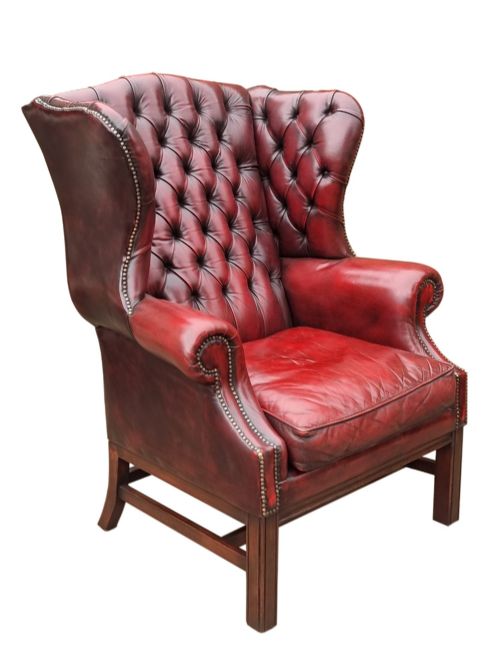
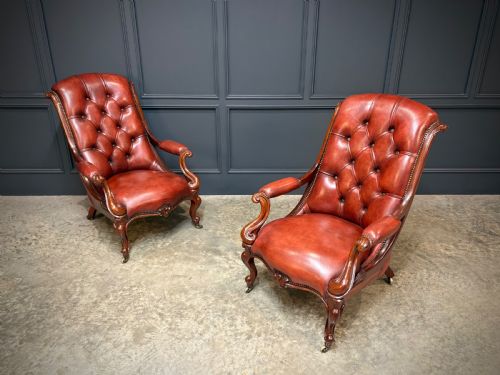


Red Button Back Chair
A red button back chair brings deep historical character and traditional seating comfort to a room through distinctive padded upholstery.
Red Button Back Chair
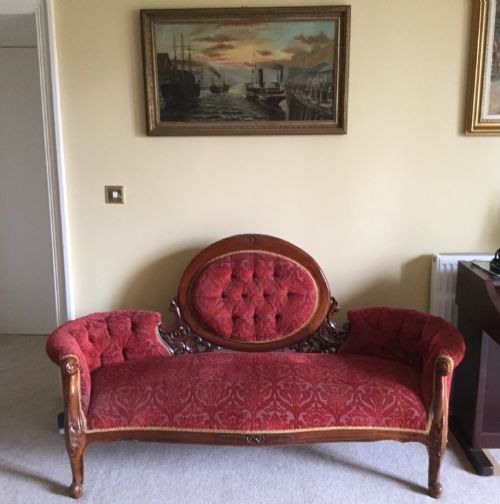
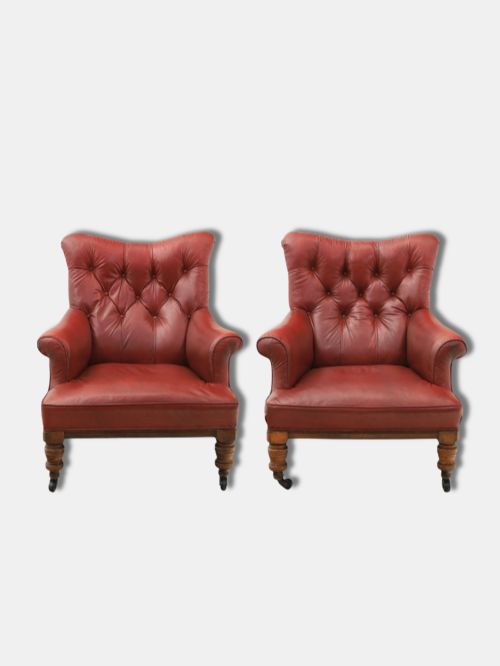
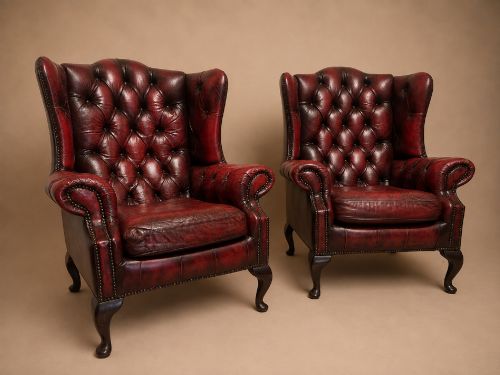
A red button back chair encompasses a variety of traditional forms including library armchairs, nursing chairs, and Chesterfield seating from the nineteenth and early twentieth centuries. These pieces typically feature deep tufting secured by buttons across the backrest, creating a textured surface that accentuates rich red tones in leather, velvet, and fabric.
Buyers encountering this selection will frequently find Victorian walnut and mahogany frames alongside later Edwardian and twentieth-century interpretations. The styles range from ornate carved spoonbacks to sturdy country house armchairs designed for sustained comfort.
Materials and construction methods
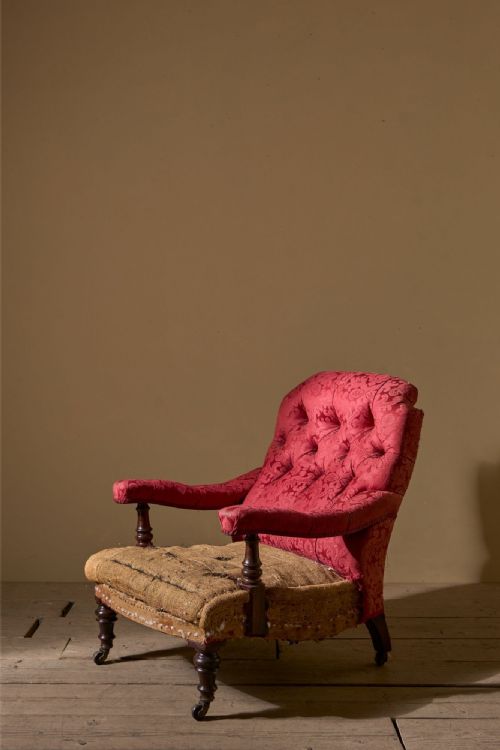
Makers constructed the structural frames of these seats using dense hardwoods such as mahogany, walnut, and oak, often incorporating turned or cabriole legs mounted on castors. Show wood frames display intricate hand-carved detailing, particularly around the crest rails and scrolled arm supports.
Upholstery techniques relied on traditional springing and horsehair stuffing beneath outer coverings of leather, rexine, or heavy textiles. Artisans pulled the fabric deep into the padding to form the characteristic tufted pattern, securing each depression with tightly anchored twine and buttons.
Certain nineteenth-century desk chairs incorporate built-in writing slopes, proving that Victorian multitasking was serious business.
Distinctions in craftsmanship
The distinction between standard examples and superior pieces rests in the integrity of the internal frame and the precision of the upholstery work. Higher quality chairs exhibit harmonious proportions, tight and symmetrical buttoning, and robust joinery that withstands long-term seating pressure.
The selection of covering materials also marks grade differences, with fine hand-dyed leathers and heavy velvet piles showing greater durability and depth of colour compared to standard commercial textiles.
Howard and Sons·Gillows·Cornelius V Smith
The Red Button Back Chair Glossary
- Buttoning
- The technique of indenting upholstery at regular intervals using secured threads or buttons to create a diamond pattern. This method keeps internal stuffing firmly distributed.
- Show wood
- Exposed polished wooden framing on an upholstered chair that displays the grain and carving. Makers used this to highlight the craftsmanship of the timber alongside the textile work.
- Spoonback
- An upholstered chair back shaped like the bowl of a spoon, curving inward to support the sitter. This profile is frequently seen on mid-nineteenth-century parlor and nursing seats.
- Chesterfield
- A large, deeply buttoned upholstered sofa or armchair featuring arms and back of the same height. The design originated in the eighteenth century and became a staple of British domestic interiors.
Red Button Back Chair: Frequently Asked Questions
Where should I place a red button back chair?
These substantial chairs suit studies, libraries, and drawing rooms where their deep colour and traditional silhouette provide a strong focal point. They pair effectively with wooden desks or beside fireplaces as dedicated reading seats.
Because of their historical presence, they also anchor empty corners in hallways or bedrooms, adding both texture and functional seating to transitional spaces.
How do I care for leather upholstery?
Leather surfaces require regular dusting with a soft, dry cloth and periodic treatment with appropriate balms to prevent drying and cracking. Avoiding direct sunlight preserves the rich oxblood and red dye.
Careful attention around the button tufts prevents dust accumulation in the deep folds of the upholstery.
How do I distinguish Victorian from Edwardian examples?
Victorian chairs often feature denser dark timbers such as walnut and mahogany, accompanied by heavier carving and elaborate spoonback or balloon profiles. The buttoning is typically deep and rigidly structured.
Edwardian pieces generally lean towards lighter proportions, simpler framing lines, and alternative cover materials like rexine or patterned textiles.
Were these chairs used for specific daily tasks?
Different forms served distinct domestic functions, from low nursing chairs designed for tending hearths to heavy library armchairs built for reading and writing. Desk chairs incorporated swivel mechanisms or ergonomic tilts for administrative work.
Larger Chesterfield and wing variants provided enclosed comfort against drafts in large country houses.