


Red Velvet Wingback Chair
A red velvet wingback chair brings deep texture and classic seating to a room, offering high wings that block draughts and cradle the sitter.
Red Velvet Wingback Chair
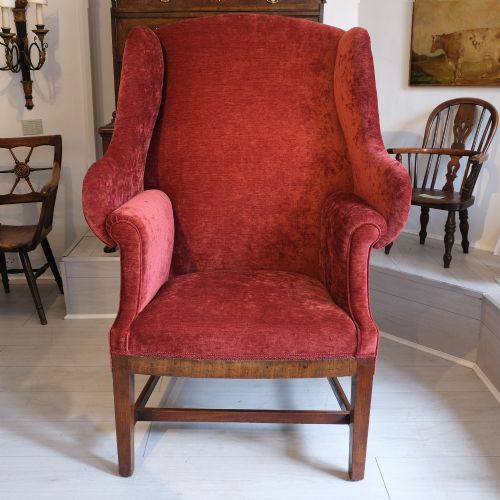
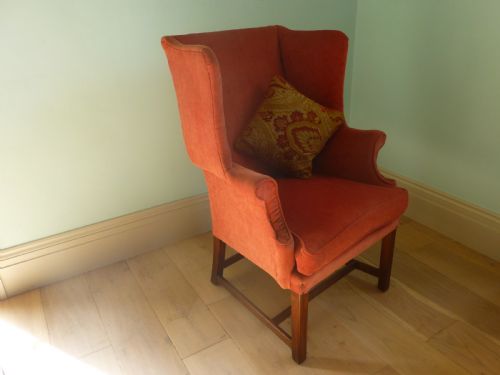
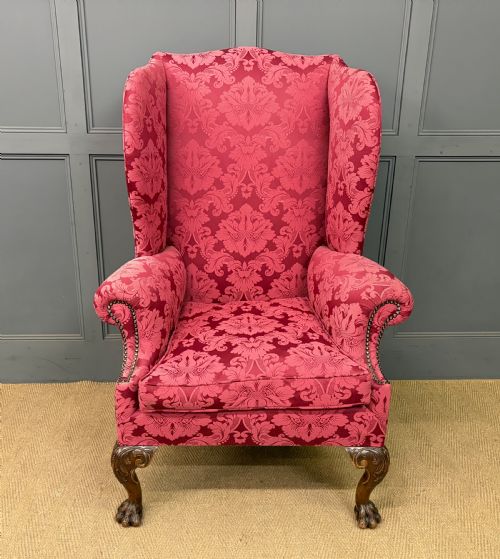
A red velvet wingback chair is a substantial armchair designed with protective side panels on the backrest, known as wings, to trap heat from a fireplace and shield the occupant from cold air. The examples seen on this page span the Georgian period, the nineteenth century, and the early twentieth century, showing both authentic antique craftsmanship and later revival styles.
Most pieces meeting this description date from the nineteenth century or the Victorian era, alongside formal Georgian models and twentieth-century interpretations. These armchairs appear in diverse forms, ranging from walnut and mahogany frames to generous upholstered shapes covered in rich fabric, velvet, damask, corduroy, and chenille twill.
Makers and designers of these seats draw upon English country traditions and Queen Anne style influences, resulting in stately proportions and deep seats. Whether you examine a late nineteenth-century walnut wing armchair or an eighteenth-century Georgian piece, each item fulfils the traditional function of providing a sheltered, comfortable place to sit.
How they were made
The underlying frames of these armchairs rely on sturdy timber construction, predominantly using dense hardwoods such as mahogany and walnut to ensure structural stability through centuries of use. Joinery techniques connect the legs and seat rails firmly, supporting the heavy load placed upon the high back and wings.
Upholstery forms the visual character of each piece, utilising sumptuous velvet, damask, chenille twill, and corduroy stretched tightly over deep padding. Brass tacks frequently secure the edges of the fabric to the timber frame, adding a metallic outline that contrasts with the softness of the textile.
Listings feature timbers like mahogany and walnut paired with textiles including velvet, damask, and corduroy across the nineteenth and twentieth centuries.
What varies in quality
The refinement of the timber frame and the precision of its carving separate simpler workshop productions from the finest examples. Superior pieces display carefully shaped wooden legs, balanced proportions, and robust joinery that maintains the rigid geometry of the high back and wings.
The grade of the textile and the density of the internal padding dictate the tactile richness and longevity of the seating. Higher quality execution shows in the tight, even tension of the velvet or damask across the curves, alongside well-distributed stuffing that retains a supportive shape.
HOWARD AND SONS
The Red Velvet Wingback Chair Glossary
- Wingback chair
- An upholstered armchair featuring flanking panels attached to the armrests or backrest designed to shield the sitter from draughts. This form became popular during the seventeenth and eighteenth centuries for fireside use.
- Chenille twill
- A woven fabric characterised by a fuzzy, caterpillar-like yarn and a diagonal parallel rib pattern. It offers a soft texture and durable surface suitable for heavy upholstery.
- Damask
- A reversible figured fabric traditionally woven on a jacquard loom with patterns formed by contrasting warp and weft threads. It provides a subtle sheen and formal appearance.
- Gainsborough chair
- A wide, open-armed armchair with a low back, upholstered seat, and padded armrests, typically dating from the mid-eighteenth century. The style gained popularity in subsequent revival periods.
Red Velvet Wingback Chair: Frequently Asked Questions
What is the purpose of the wings on these chairs?
The wings serve to trap heat from an open fire around the head and shoulders while blocking chilly air currents in older houses. They also provide a comfortable surface to rest the head against while sleeping or reading.
Over time, this functional feature evolved into a distinct stylistic element that defines classic British upholstery design. The size and angle of the wings often indicate the specific period and intended comfort level of the armchair.
How do I distinguish a Georgian chair from a Victorian one?
Georgian pieces, including those dating around seventeen-eighty, typically exhibit lighter proportions, refined timber framing, and restraint in ornamental carving. Victorian examples tend to be heavier and more imposing, reflecting nineteenth-century preferences for padded comfort and deep buttoning.
Examining the underlying timber and the construction of the seat rails also helps clarify the age. Walnut and mahogany appear across multiple eras, so stylistic details and joinery methods provide the clearest clues to dating.
What materials are used in the upholstery?
Upholstery materials on these chairs include traditional velvet, damask, corduroy, and chenille twill stretched over supportive internal padding. Brass tacks frequently secure the fabric edges to the timber frame.
These textiles provide varied textures, from the dense pile of velvet to the patterned sheen of damask. The choice of fabric often reflects the period of manufacture or a subsequent reupholstery phase.
How do I fit a large wingback chair into a modern room?
A substantial armchair works well as a focal point in a living room, study, or bedroom, paired with a reading lamp or positioned near a fireplace. Its tall silhouette adds vertical interest and balances lower modern furniture.
Allowing sufficient floor space around the chair prevents the room from feeling crowded and highlights the proportions of the high back and wings. Neutral walls provide a quiet background that lets the rich colour of the velvet stand out.