




Red Blue Kazak Rug
A red blue kazak rug brings bold tribal geometry and saturated natural dyes from the Caucasus directly onto the floor.
Red Blue Kazak Rug
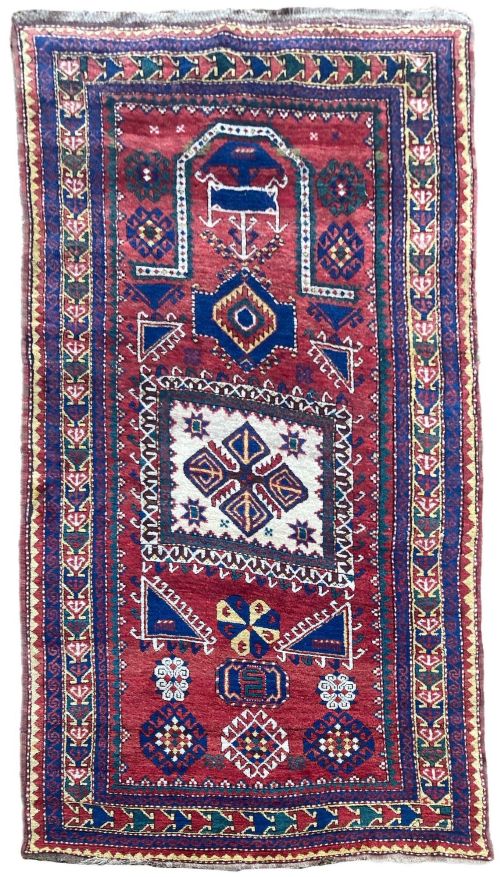
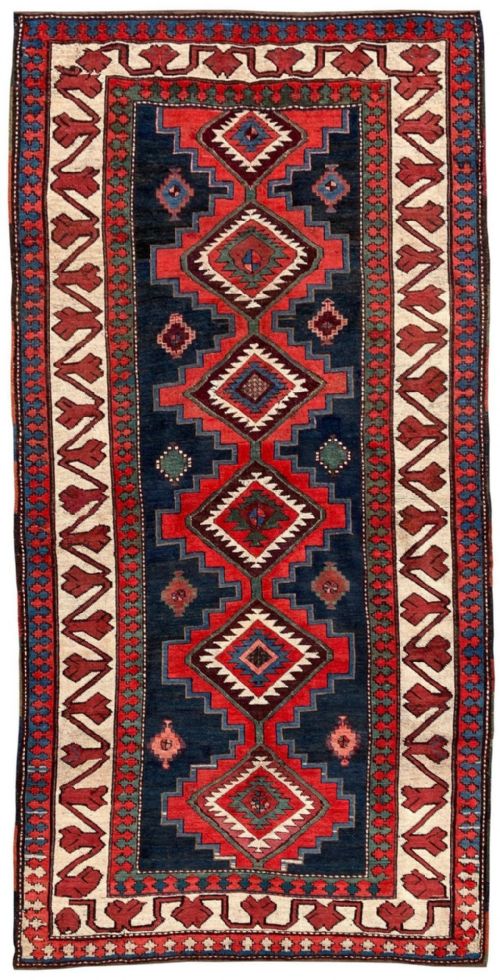
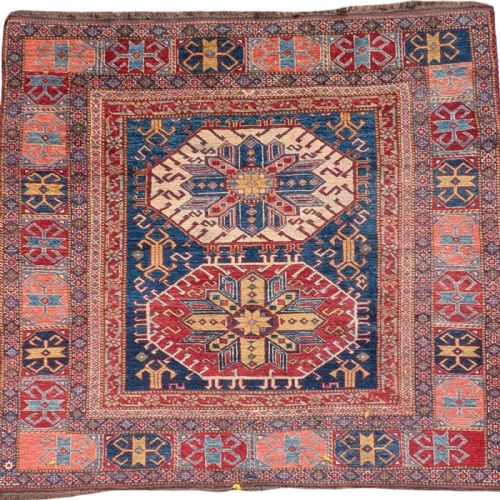
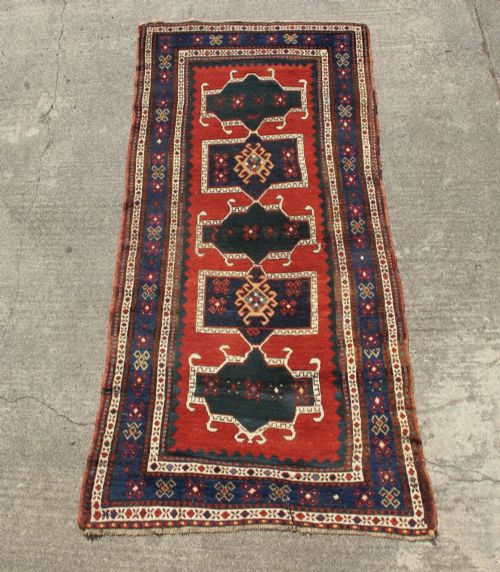
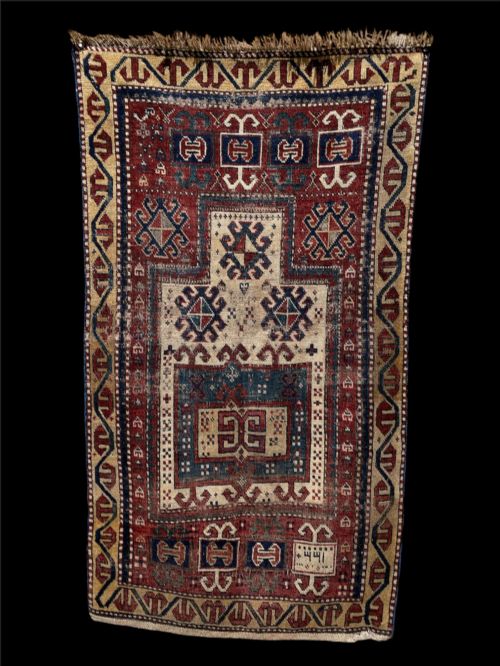
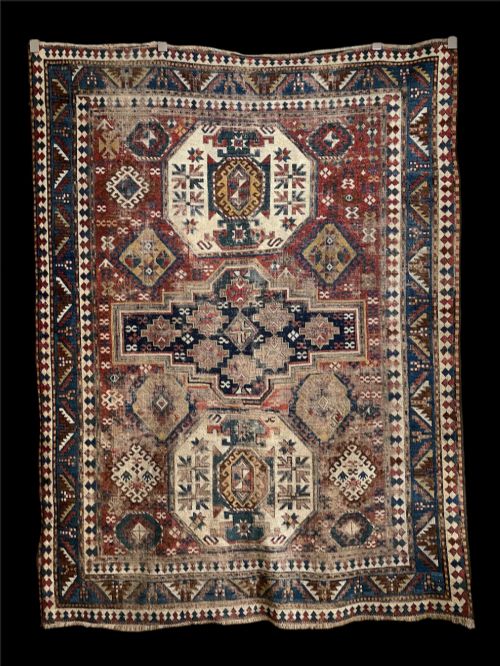
A red blue kazak rug represents woven tribal floor coverings originating from the Caucasus region during the nineteenth and early twentieth centuries. These pieces typically display geometric medallions, hooked motifs, and prayer formats created by village weavers.
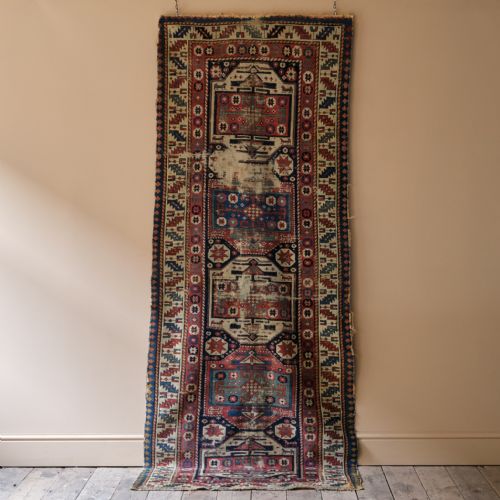
The most common examples on this page are antique Caucasian rugs featuring triple medallions or specific regional designs such as Fachralo, Bordjalou, and Karachov. They appear as standard area rugs, long runners, and dedicated prayer formats.
How They Were Made
These floor coverings were constructed using hand-spun wool for the pile and cotton or wool foundations, knotted by hand on vertical looms. Weavers utilised natural dyes to achieve deep saturated tones of red and blue alongside secondary shades.
The combination of hand-spun wool and traditional dyestuffs gives the surface its characteristic tactile weight and allows the wool to age with a distinct patina over generations.
What Varies in Quality
Quality in these tribal pieces depends upon the precision of the wool spinning, the depth and clarity of the natural dyes, and the tightness of the knotting. Finer examples retain crisper geometric lines and more harmonious colour balances.
The handling of traditional motifs, such as latch hooks and central medallions, distinguishes standard village production from exceptionally accomplished weaving. Preservation of the original outer borders and side cordings also influences the standing of an individual piece.
The Red Blue Kazak Rug Glossary
- Medallion
- A central ornamental motif set within the field of the rug. These often take geometric, hooked, or polygonal forms.
- Prayer Rug
- A smaller format rug featuring a directional mihrab or arch design at one end, traditionally used for personal devotion.
- Latch Hook
- A stepped, geometric outline ornamenting the edges of medallions and borders. This detail is characteristic of Caucasian weaving traditions.
- Runner
- A long, narrow carpet format designed for hallways or corridors. They frequently display repeating medallion sequences.
- Natural Dyes
- Colourants derived from plants, insects, and minerals used before the introduction of synthetic alternatives. They yield rich tones that soften gracefully over time.
Red Blue Kazak Rug: Frequently Asked Questions
Where were these rugs made?
These pieces were woven in the Caucasus region by various village and tribal groups, including those in the Fachralo, Borchalu, and Gendje areas.
Production spanned the nineteenth and early twentieth centuries, reflecting distinct local weaving traditions and indigenous geometric designs.
How do I care for an antique rug?
Protect the piece by placing it in a low-traffic area or using a breathable, high-quality underlay to prevent sliding and wear.
Vacuum gently without using a rotating brush roll, and consult a specialist in historic textiles for professional cleaning.
What is a prayer niche?
A prayer niche, or mihrab, is a pointed architectural arch design woven into one end of a prayer rug.
This motif traditionally indicated the direction of prayer and sets these specific formats apart from standard central-medallion carpets.
How do I identify regional types?
Regional attribution relies on specific structural characteristics, border arrangements, and signature medallion shapes like the keyhole or Memling gul.
Comparing the specific arrangement of hooked motifs and primary colours helps link a piece to areas such as Karabagh or Moghan.