
Reading Wing Armchair
A reading wing armchair is a high-backed seat designed to shield the sitter from drafts, and the selection ranges from Georgian originals to later revivals.
Reading Wing Armchair
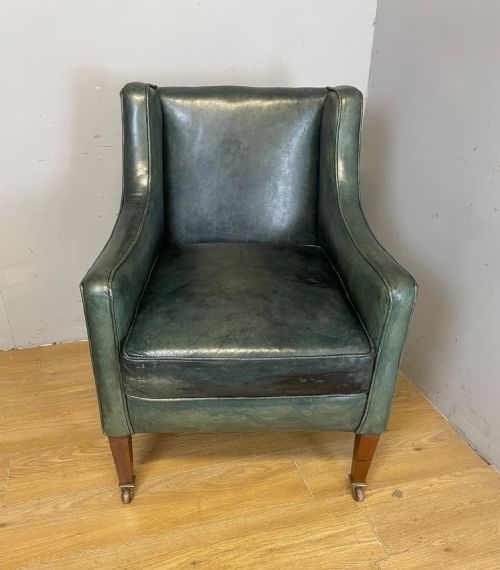
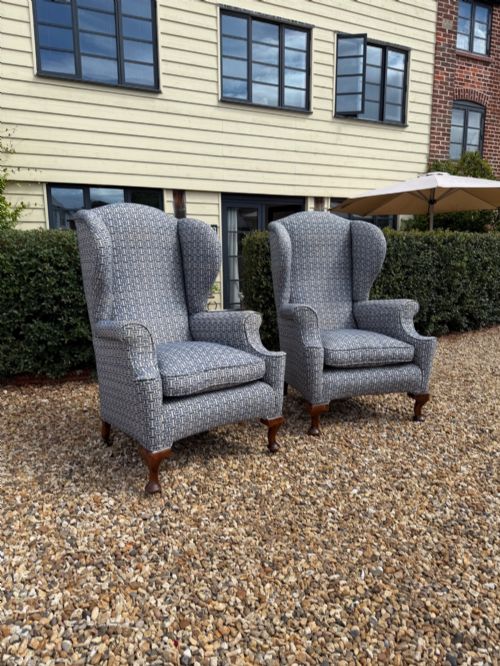
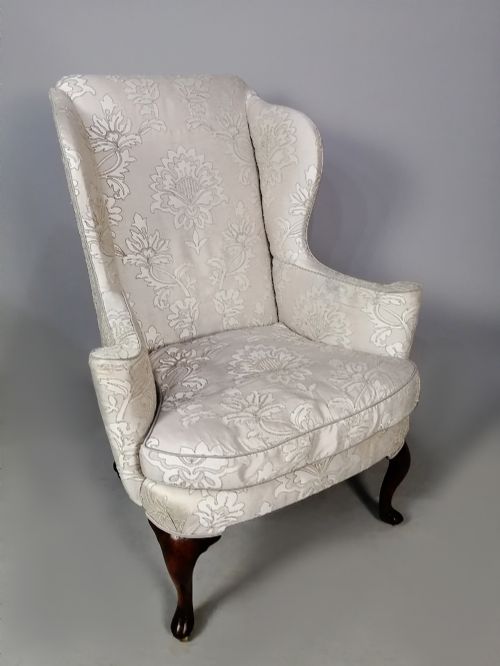
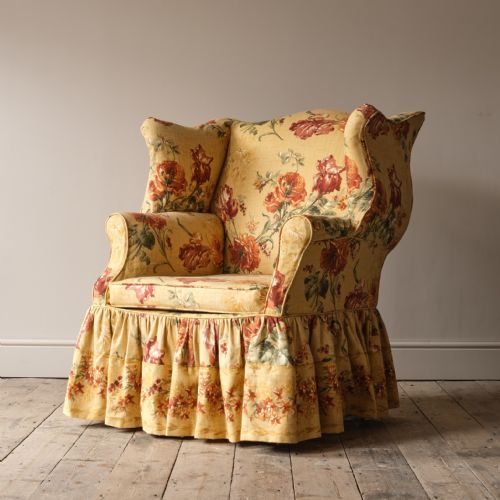
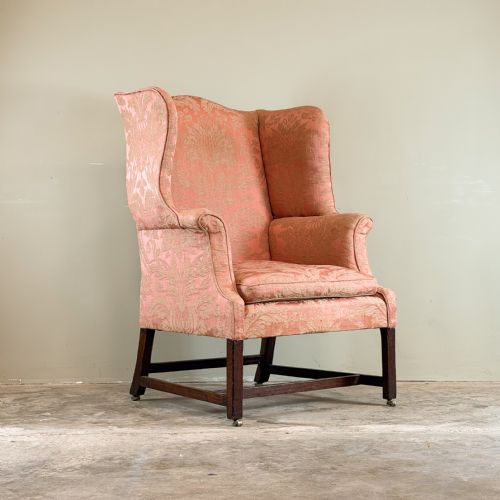
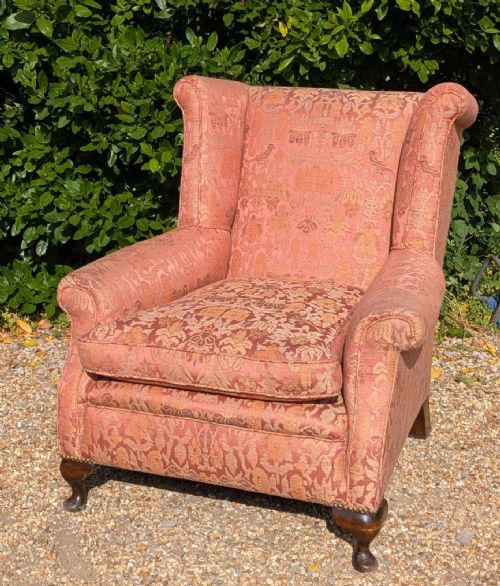
When you search for a reading wing armchair, you find deep-seated chairs featuring protective side panels designed to trap warmth and block draughts in period rooms. These pieces originate from the 18th century through to the 1930s, encompassing Georgian, Victorian, and Edwardian periods.
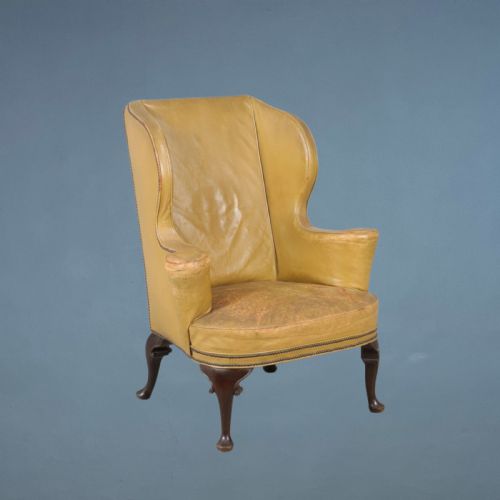
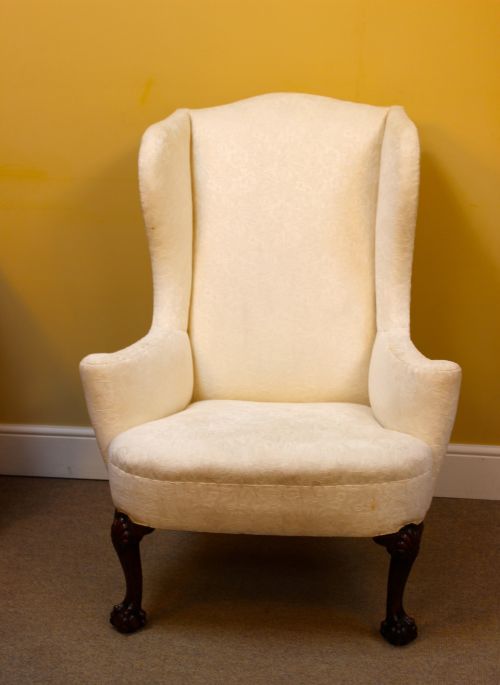
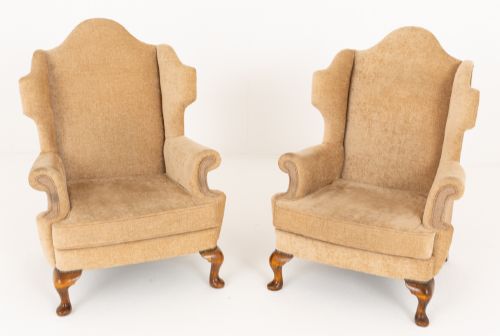
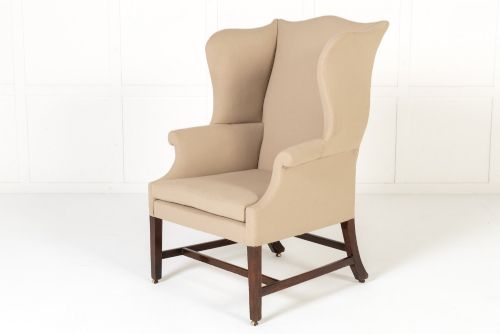
The version you are most likely to meet on this page is a 19th-century or Georgian timber-framed example upholstered in leather or fabric. Many incorporate traditional styling such as Queen Anne, Chippendale, or Carolean revivals alongside vernacular country house iterations.
How they were made
Frames are constructed from dense hardwoods like mahogany, walnut, and general timber, providing structural stability for the deep upholstery. Joinery methods of the period rely on sturdy internal framing to support the high back and prominent wings.
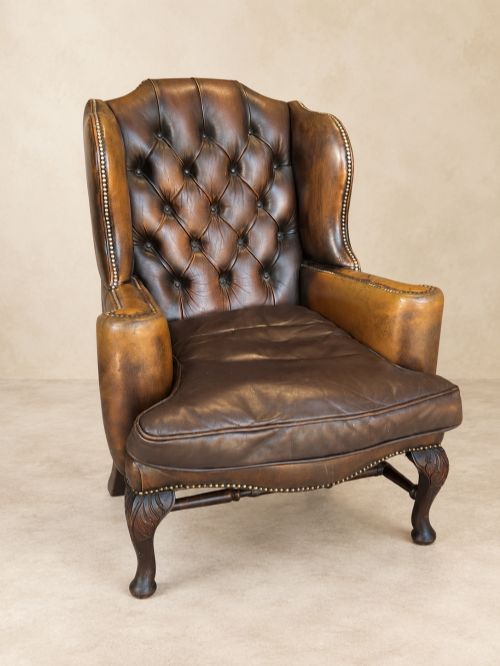
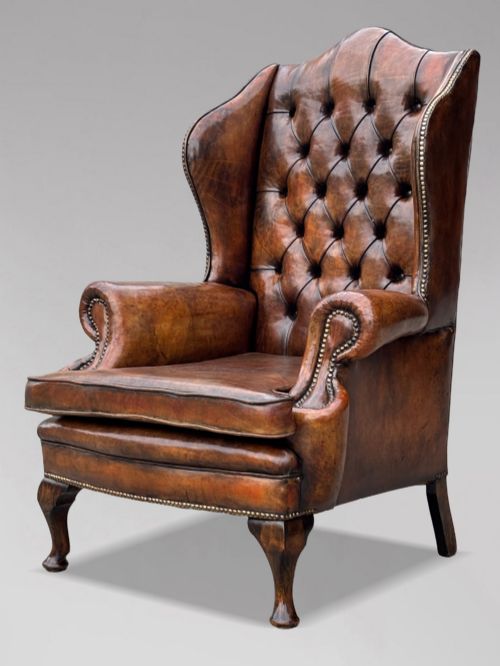
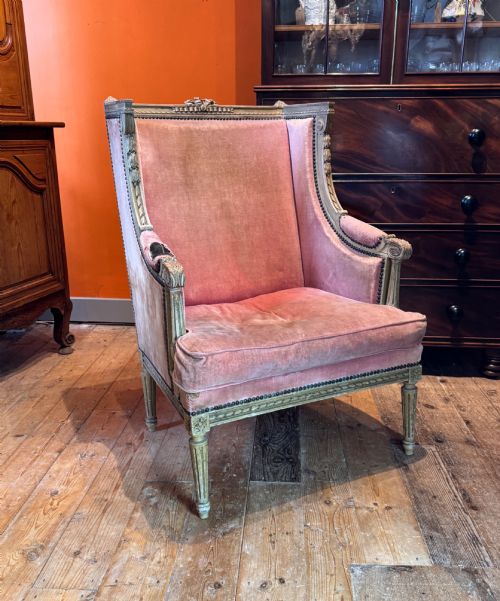
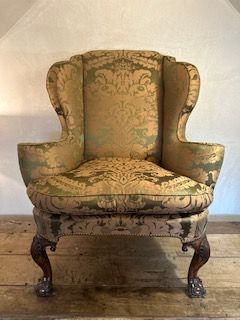
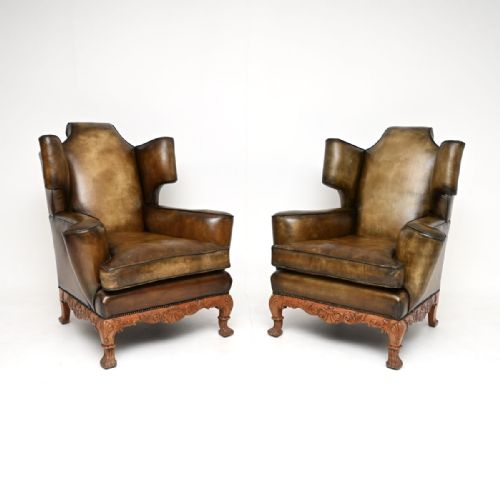
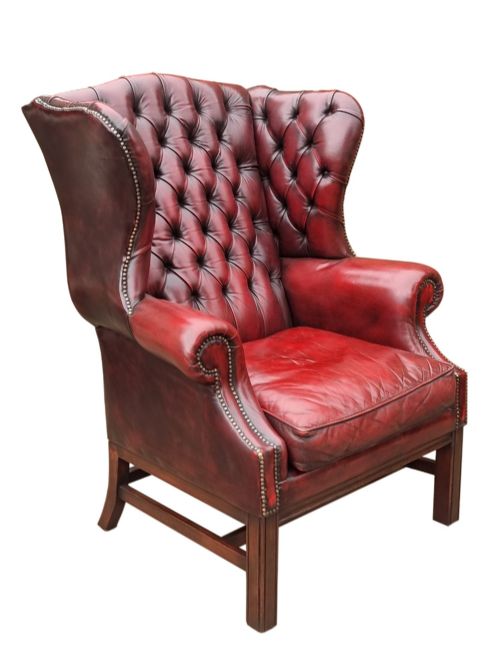
Surfaces are finished with hand-worked leather, velvet, chenille, plaid fabric, or calico, often secured with buttoning or brass detailing. Cabriole or straight wooden legs anchor the base, frequently displaying carved or inlaid motifs.
Some chairs escaped the library entirely to spend centuries keeping guard in French châteaux and English country houses.
What varies in quality
The integrity of the underlying timber frame and the proportion of the wings dictate the foundational standard of each piece. Earlier examples demonstrate more refined cabinetmaking in the hand-carved legs and structural joints.
The grade of the upholstery materials, from supple antiqued leather to woven plaid and chenille, establishes the visual richness of the finish. Original or period-appropriate materials and traditional stuffing methods elevate the standing of an individual chair.
Howard And Sons
The Reading Wing Armchair Glossary
- Wingback
- A chair style featuring projecting side panels attached to the arms and back. These wings were originally designed to shield the occupant from fireplace draughts.
- Cabriole leg
- A furniture leg that curves out and then in, resembling an animal's leg. This form is frequently seen on 18th-century and revival seating.
- Buttoning
- An upholstery technique where indentations are formed by pulling ties through the padding and securing them. This secures the filling and creates a patterned surface.
- Chenille
- A fuzzy woven fabric utilised for soft upholstery. The yarn has short lengths piled perpendicular to the core, giving it a velvety texture.
Reading Wing Armchair: Frequently Asked Questions
What is a reading wing armchair?
A reading wing armchair is a deep-seated upholstered chair with high sides designed to keep the user warm.
They were traditionally placed near firesides or in libraries to offer comfort during extended periods of reading.
How do I identify a Georgian wing chair?
Georgian examples typically display characteristic timber legs, such as cabriole designs, paired with substantial proportions.
Construction details and traditional materials help distinguish these 18th-century pieces from later 19th-century revivals.
Are these chairs comfortable for daily use?
Many period pieces feature generous padding, feather filling, and deep seats designed for relaxation.
Upholstery varies from buttoned leather to heavy fabrics, accommodating different preferences for daily seating.
What materials were used for the frames?
Cabinetmakers utilised sturdy hardwoods including mahogany and walnut for the primary structural framework.
Timber quality and visible wood grain on the legs contribute significantly to the character of each piece.