




Railway Wall Timepiece
A railway wall timepiece keeps precision time with robust clarity, offering an industrial focal point rooted in operational history.
Railway Wall Timepiece
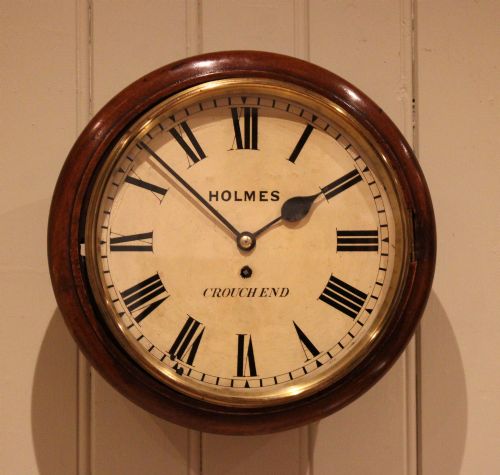
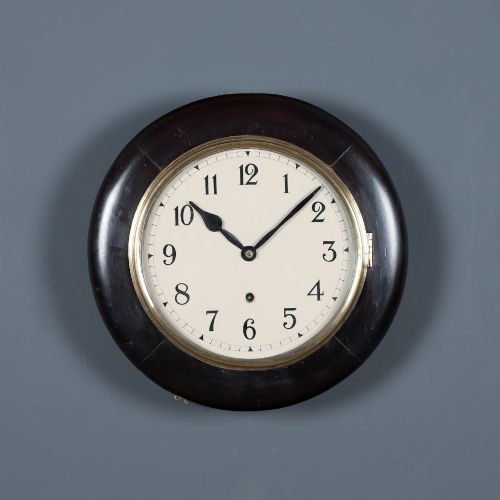
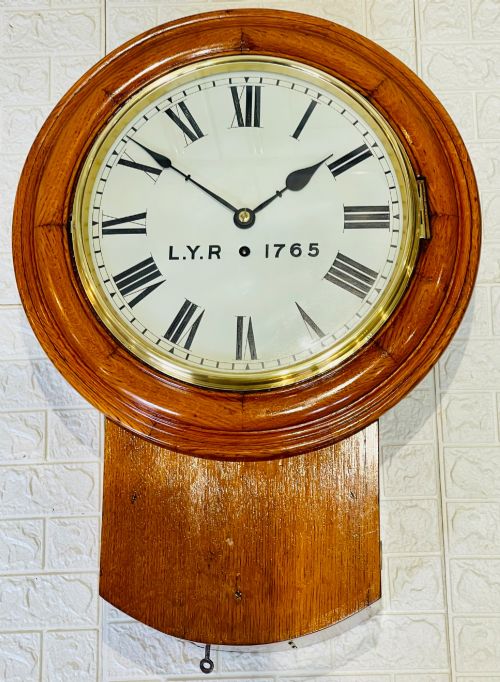
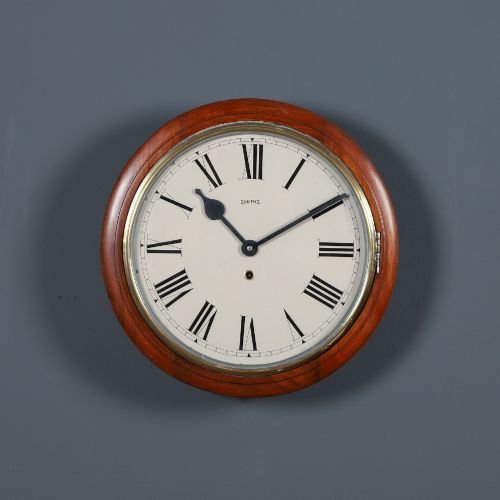
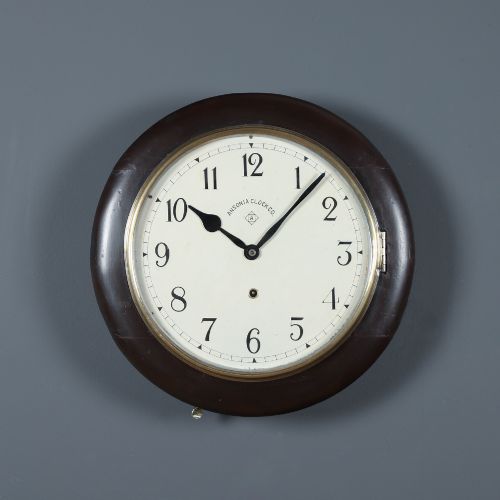
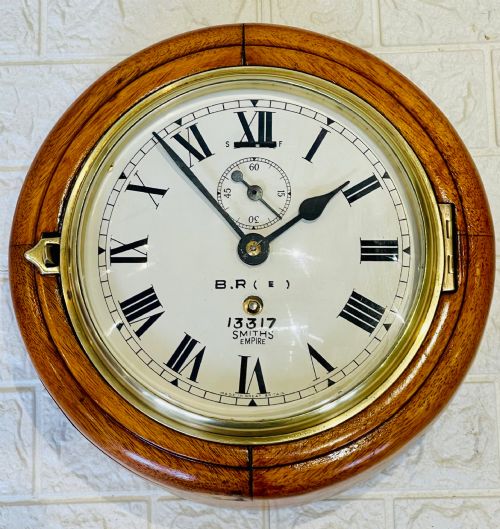
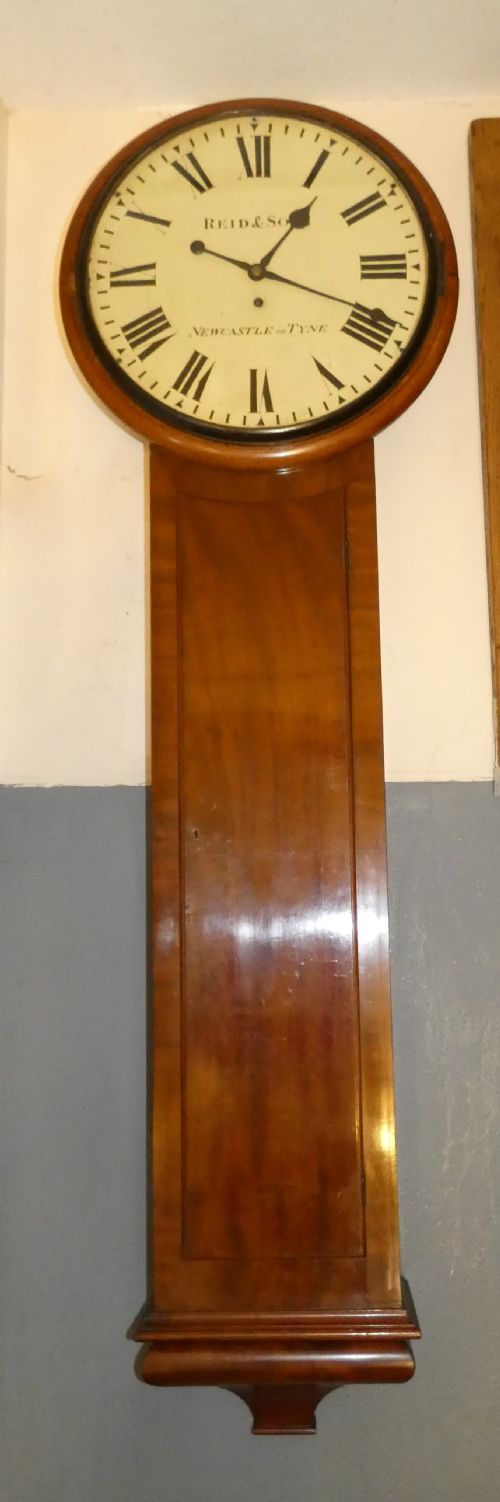
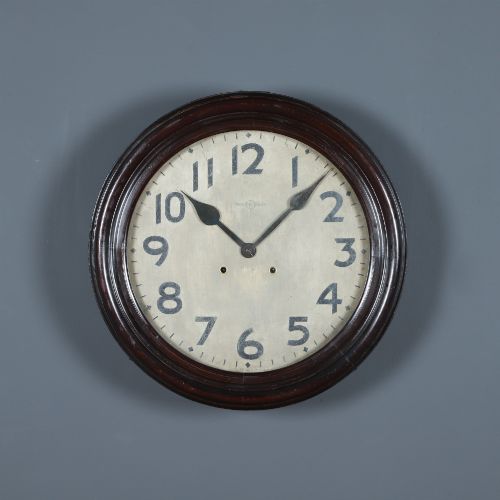
A railway wall timepiece is a sturdy round dial clock designed for clear legibility in stations, offices, and operational hubs. Buyers searching for a railway wall timepiece often encounter robust fusee movements and bold arabic or roman numerals encased in solid timber.
The pieces appearing here span from the Victorian era through the mid twentieth century, encompassing regional company commissions and standard station issues. Mahogany and oak dominate the timber casings, complemented by protective brass bezels and heavy glass covers.
Most examples originate from British railway companies like the Great Western Railway or the London, Midland and Scottish Railway, alongside selected international station clocks. These wall timepieces served a functional role in keeping strict timetables across network platforms and administrative rooms.
Materials and construction
Fusee movements appear regularly among the Victorian examples, employing a cone shaped pulley to maintain even tension as the mainspring unwinds. This mechanical arrangement prioritises steadfast accuracy over complex chiming mechanisms, suiting the demands of busy railway operations.
Railway Wall Timepiece Retail Price Guide 2026
Typical asking prices for railway wall timepiece among the pieces listed under this phrase on Sellingantiques today, from the lower quarter to the upper quarter. They describe what is for sale here now, not the wider market.
Many a station master relied on these steady ticks to keep bustling platforms running while steam filled the air.
Assessing quality and character
Quality rests in the crisp legibility of the dial and the original integrity of the timber case rather than mere decorative flourish. Superior pieces retain clear company lettering on the dial face and original fusee movements that demonstrate careful mechanical execution.
Later twentieth century examples transition into simpler production methods, whilst nineteenth century Victorian pieces often display finer cabinetwork and more intricate dial painting. The distinction lies between standard utilitarian issue and finely tuned station master timekeepers.
Ansonia·Smiths·John Walker·Anglo Swiss Watch Co.
The Railway Wall Timepiece Glossary
- Fusee
- A conical pulley connected to the mainspring by a chain or cord, designed to equalise the torque as the spring unwinds. This mechanism ensures consistent timekeeping throughout the duration of the wind.
- Bezel
- The metal ring that holds the glass door in front of the clock face. In these clocks, brass bezels are common and often hinged for easy access to the hands.
- Dial
- The face of the clock where the numbers and markers are displayed. Railway timepieces typically feature bold black numerals against a white background for maximum visibility.
- Regulator
- A precision pendulum clock designed for high accuracy. These pieces often feature an extended case and a dedicated second hand sub dial.
Railway Wall Timepiece: Frequently Asked Questions
How do I wind a fusee railway clock?
A small key fits into the winding hole on the dial face to tension the mainspring via the fusee chain. Care must be taken not to overwind the movement.
Most fusee timekeepers run for eight days on a single wind, requiring a consistent weekly routine to maintain accuracy.
Were these clocks used outside?
These specific timepieces hung inside station booking halls, platform waiting rooms, and administrative offices rather than exposed outdoor locations. Their wooden casings and painted dials required protection from damp weather.
Robust glass and brass bezels protected the face from coal smoke and dust common in busy Victorian transport hubs.
How do I date a railway clock?
The style of the wooden case, the lettering of company initials on the dial, and the complexity of the movement provide clear chronological clues. Victorian examples often feature fusee movements and distinct regional company stamps.
Later pieces from the mid twentieth century frequently reflect simpler joinery and updated transport board nomenclature.
Where should I hang a heavy wall clock?
Solid masonry walls or direct mounting into wooden wall studs provide the necessary support for heavy mahogany and oak cases. The weight of the timber and internal movement demands secure wall fixings.
Level placement ensures the pendulum swings evenly and the timepiece maintains a steady beat.