

Railway Wall Clock
When you seek a genuine railway wall clock, you are looking at substantial timepieces built to keep strict timetables across vast transport networks.
Railway Wall Clock
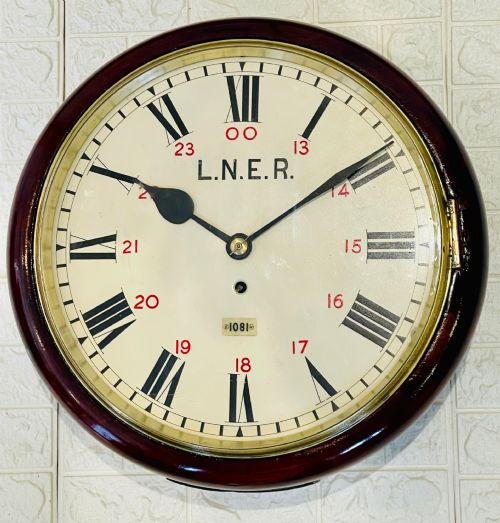
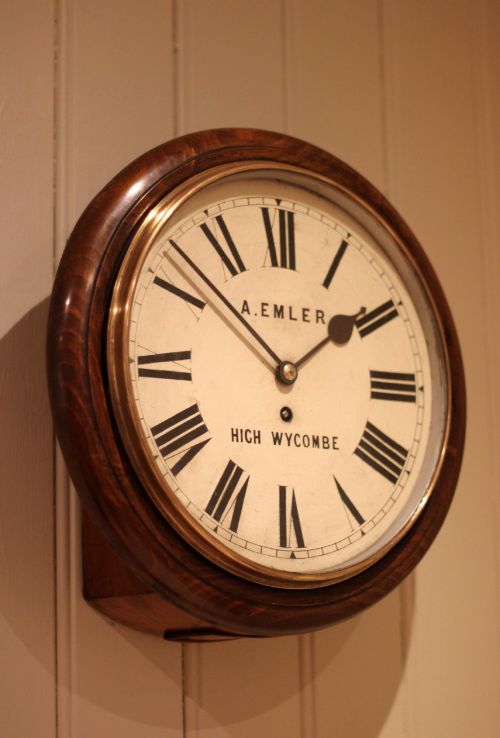
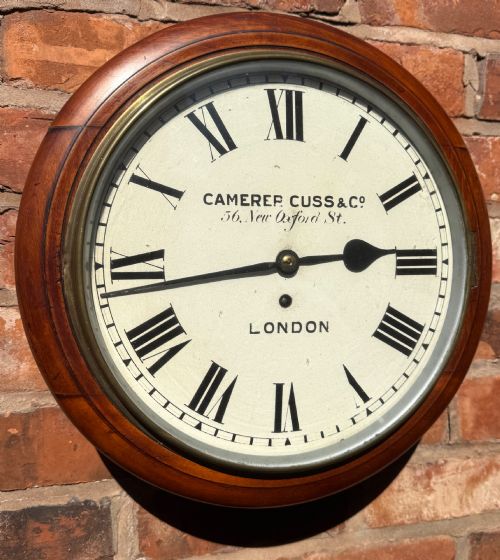
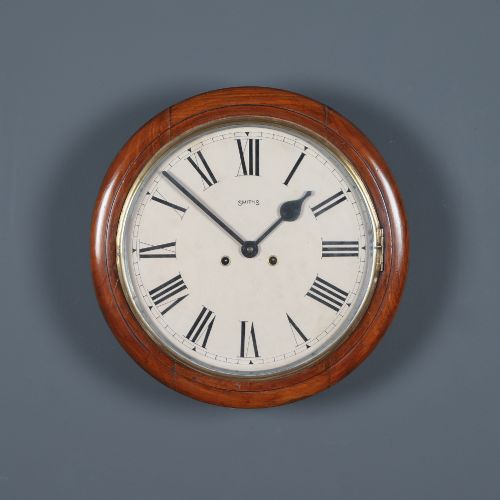
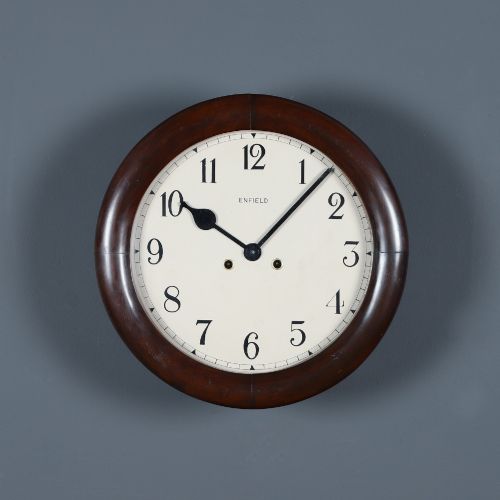
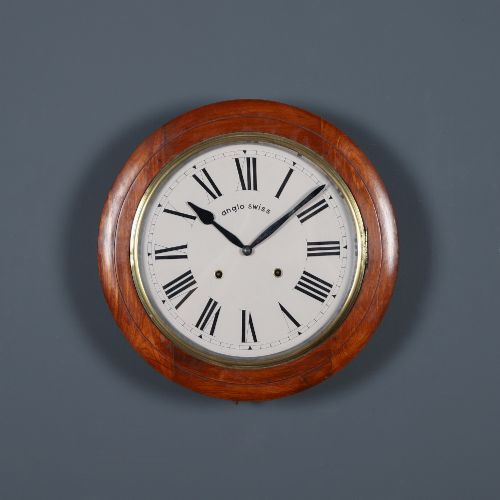
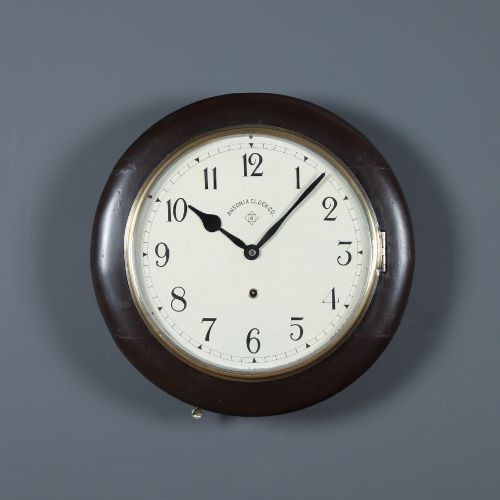
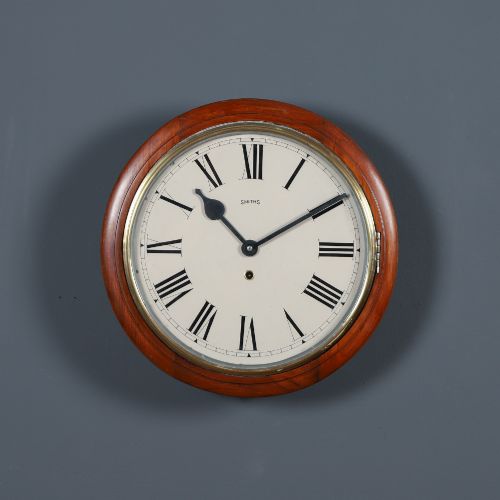
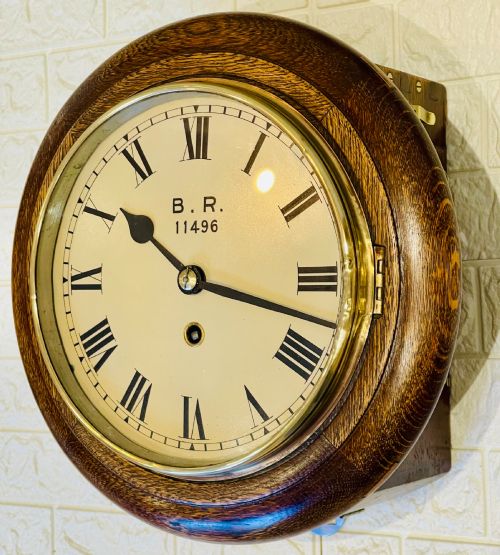
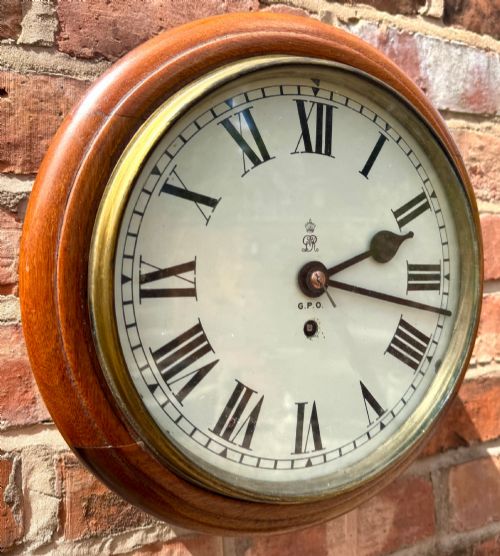
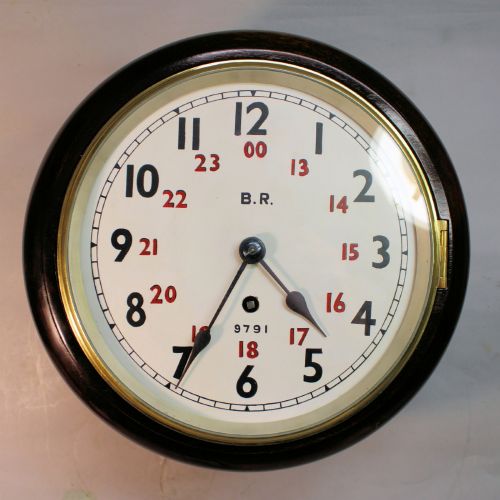
A railway wall clock serves as a utilitarian timekeeper originating from nineteenth and twentieth-century transport hubs, signal boxes, and station offices. These pieces display clear, bold white or cream dials with legible numerals designed for rapid reading from a distance by passengers and staff alike.
How They Were Made
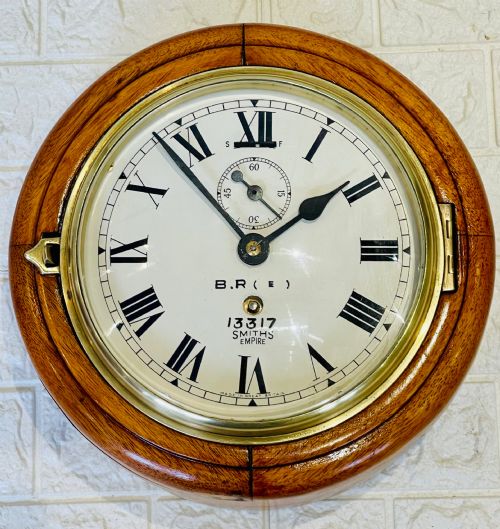
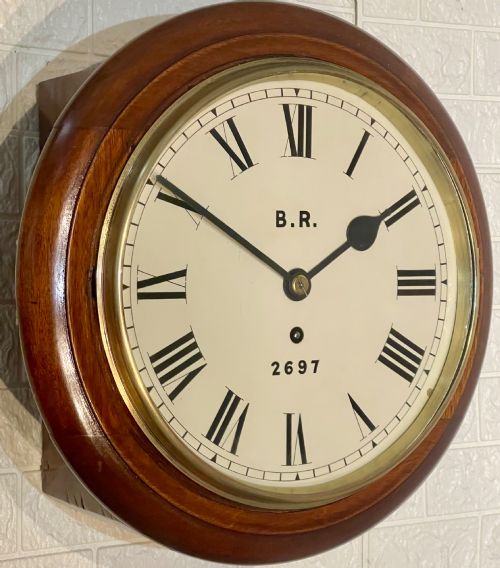
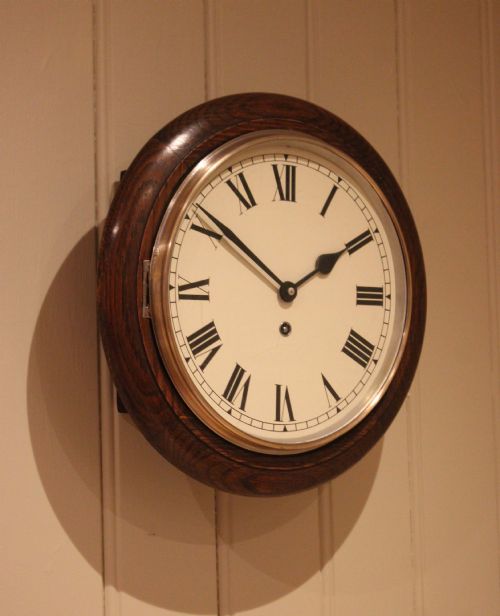
Case makers predominantly utilised solid mahogany and oak, turning timber into deep circular bezels with side doors or bottom access boxes designed to protect delicate internal mechanisms from station dust and vibrations. Glass protected the painted paper or iron dials, secured firmly by brass hinges and latches.
Movements relied heavily on fusee gear setups utilising chains or cords to equalise the pull of the mainspring, ensuring accurate timekeeping throughout the eight-day running cycle. Maker signatures, station allocations, and serial numbers were frequently engraved onto the brass backplates or stamped directly into the wooden cases.
Some signal box clocks were affectionately nicknamed pork pie clocks because their deep, protruding wooden bezels resembled pastry crusts.
What Varies in Quality
Quality rests significantly on the provenance and original railway operating company associated with the piece, with verified association to specific stations or named makers carrying distinct weight. The crispness of the original dial signwriting and the integrity of the heavy turned timber bezel separate standard examples from finer specimens.
The sophistication of the internal movement further dictates worth, particularly the presence of an original chain-driven fusee mechanism rather than a later pendulum or quartz conversion. Unaltered cases retaining their authentic patination, matching numbered components, and original securing pegs indicate superior preservation.
Camerer Cuss And Co·John Walker·Smiths·JW Benson·Ansonia
The Railway Wall Clock Glossary
- Fusee
- A conical pulley connected to the mainspring by a chain or cord that ensures even power delivery to the gear train as the spring winds down.
- Drop dial
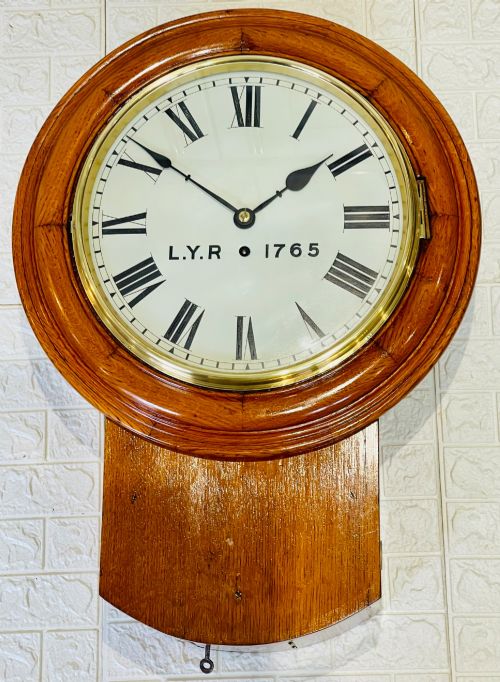
- A clock case featuring an extended lower wooden trunk designed to accommodate the pendulum swing beneath the circular dial.
- Bezel
- The ring of wood, brass, or metal that holds the glass door protecting the clock face.
- Timepiece
- A clock movement that tells the time without incorporating striking or chiming mechanisms.
- Dial
- The visible face of the clock where numerals are painted or applied to indicate hours and minutes.
Railway Wall Clock: Frequently Asked Questions
What is a fusee movement?
A fusee movement employs a conical pulley and chain system to regulate the force exerted by the mainspring. This clever mechanical arrangement maintains steady torque as the spring unwinds, delivering superior timekeeping accuracy.
Such mechanisms were essential for railway operations where strict punctuality dictated the movement of trains across the network.
How were these clocks used?
Station masters, platform staff, and signalmen relied on these clocks to coordinate departures, arrivals, and track switching. They hung prominently in ticket offices, waiting rooms, and signal boxes.
Because reliability was paramount, many were serviced regularly by company horologists who logged maintenance and inspected movements frequently.
How do I hang a heavy wall clock?
These timepieces carry substantial weight due to their solid timber cases and thick glass bezels. Secure the clock directly into wall studs or utilise heavy-duty wall anchors rated for the specific load.
Ensure the back case rests flush against the wall so the pendulum swings freely without catching on the interior housing.
Why do some dials feature railway company letters?
Railway companies stamped their initials, such as GWR or LNER, onto dials and cases to denote corporate property and asset tracking. These markings prevented theft and ensured equipment remained within specific regional divisions.
Collectors prize these painted or engraved ciphers because they anchor the timepiece to a precise historical transport network.