





Qing Dynasty Writing Desk
A qing dynasty writing desk offers a practical piece of history, bringing handsome hardwood surfaces and traditional craftsmanship straight into a modern study.
Qing Dynasty Writing Desk
When you search for a qing dynasty writing desk, you examine pieces primarily originating from the nineteenth century alongside related items from the wider scholar's studio tradition. These objects range from full-sized desks and side tables to smaller desk cabinets and writing boxes.
The versions most commonly met on this page span the nineteenth century, including specific dates such as eighteen eighty and eighteen ninety, as well as Chinese export and provincial styles. Buyers encounter both robust hardwood furniture and smaller lacquer or travelling pieces designed for portability.
Such pieces reflect the functional needs of Chinese scholars and administrators, adapted over time for export markets and Western Victorian interiors. Their forms vary from simple elm tables to elaborate padouk and rosewood constructions.
Materials and Construction
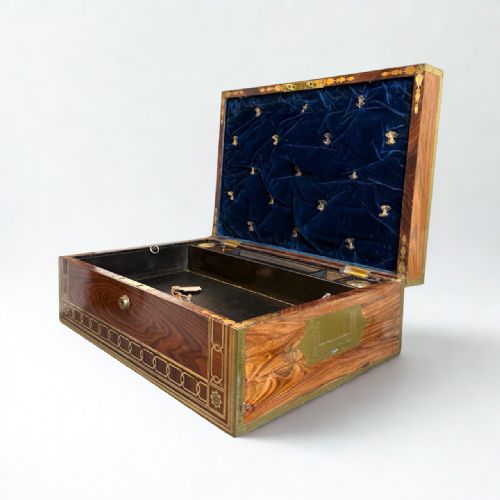
The pieces rely heavily on dense Asian hardwoods such as rosewood, padouk, hongmu, and elm, selected for their structural stability and rich grain. Carpenters utilised traditional joinery techniques to frame these heavy timbers without relying on modern metal fasteners.
Surface finishes include black lacquer enriched with gold leaf detailing, particularly on Canton desk cabinets and specific export boxes. Brass hardware appears frequently as structural reinforcement and decorative mounts on travelling cases and writing boxes.
Qing Dynasty Writing Desk Retail Price Guide 2026
Typical asking prices for qing dynasty writing desk among the pieces listed under this phrase on Sellingantiques today, from the lower quarter to the upper quarter. They describe what is for sale here now, not the wider market.
The inventory spans multiple stylistic categories, including Chinese export, provincial work, and items from traditional scholar's studios.
Assessing Quality and Execution
Quality rests upon the selection and density of the timber employed, with dense hardwoods like padouk and rosewood occupying the upper tier of execution. The refinement of carved details, such as dragon motifs or geometric panels, distinguishes standard utility pieces from finer scholar's items.
The integrity of the lacquer work and the precision of fitted brass elements dictate the overall standard of preservation and craftsmanship. Pieces retaining their original patination and intact structural joinery command greater appreciation than those with altered surfaces.
The Qing Dynasty Writing Desk Glossary
- Hardwood
- Dense, slow-growth timber such as rosewood or padouk used for durable furniture. These woods allow for crisp carving and resist heavy daily wear.
- Lacquer
- A durable resin finish applied in multiple layers to wood surfaces. It often provides a glossy black background for intricate gold leaf decoration.
- Hongmu
- A translation meaning red wood, referring to a category of dense, dark tropical hardwoods. It was highly prized for traditional Chinese furniture construction.
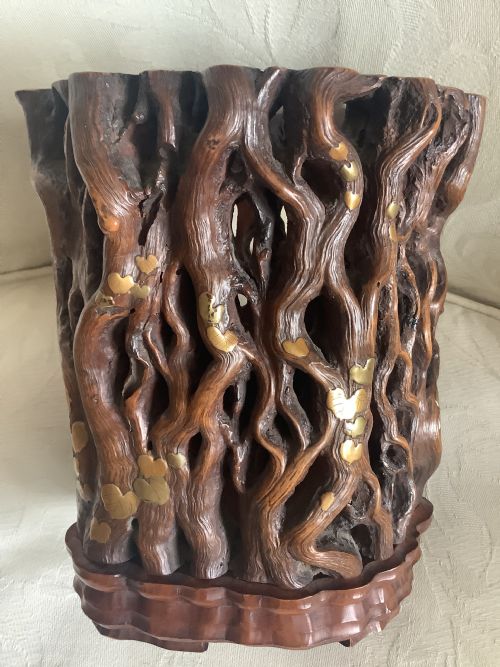
- Brush pot
- A cylindrical vessel traditionally used in a scholar's studio to hold writing brushes. These items form part of the broader desk accessory grouping.
- Padouk
- A heavy, stable tropical timber with reddish brown tones. Cabinetmakers favoured it for its resilience and ability to take a fine polish.
Qing Dynasty Writing Desk: Frequently Asked Questions
What is a qing dynasty writing desk?
It is a wooden table or fitted cabinet produced during the Qing period in China, designed for writing and study. These pieces utilise traditional hardwoods and joinery methods.
They reflect the aesthetic and functional requirements of Chinese scholars, often featuring compartments or accompanying boxes for ink and brushes.
How were these desks used?
Owners used them for calligraphy, administrative duties, and reading within the scholar's studio or office. Portable writing boxes allowed scholars to transport their writing implements safely.
Larger tables served as central workspace furniture, accommodating papers, brush pots, and ink stones during daily tasks.
How do I care for hardwood furniture?
Keep the wood away from direct heat sources and drastic humidity changes to prevent splitting. Dust regularly with a dry cloth and apply natural wax sparingly.
Avoid commercial liquid polishes, which can build up on nineteenth-century surfaces and degrade the original finish over time.
How are nineteenth-century pieces dated?
Makers relied on traditional construction methods, specific regional wood choices, and decorative styles tied to the Qing era and Victorian export periods. Comparing hardware styles provides further clues.
Documentation, physical wear patterns, and historical export stamps help narrow down the decade of manufacture.