
Chinese Carved Wooden Tables
Chinese carved wooden tables bring dense grain, deep relief and architectural form directly into a room.
Chinese Carved Wooden Tables
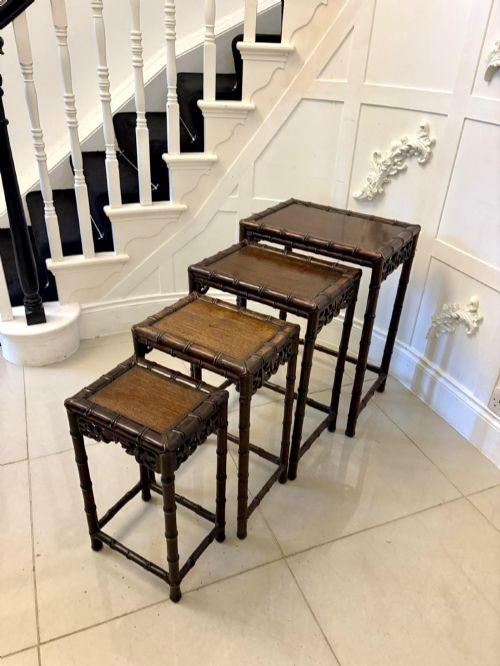
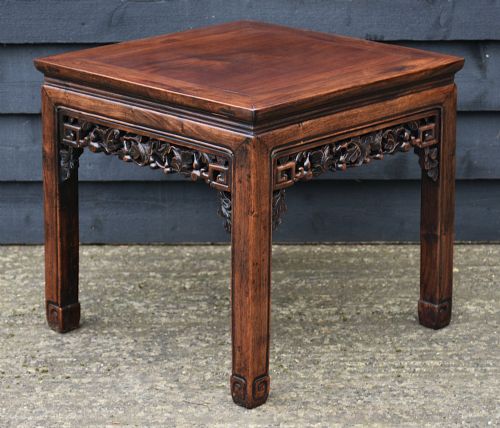
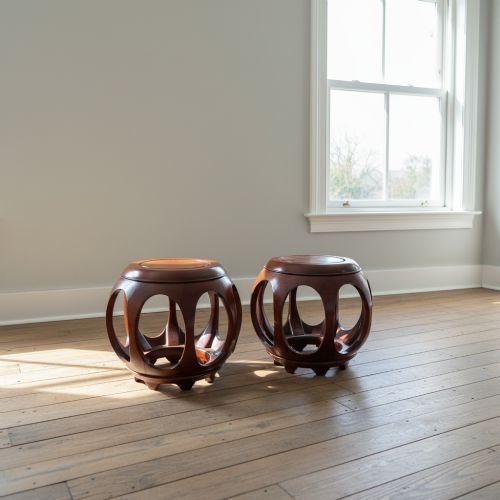
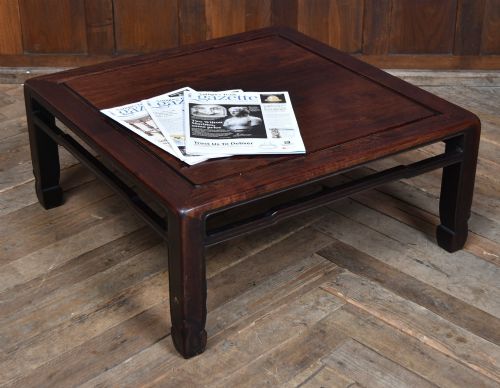
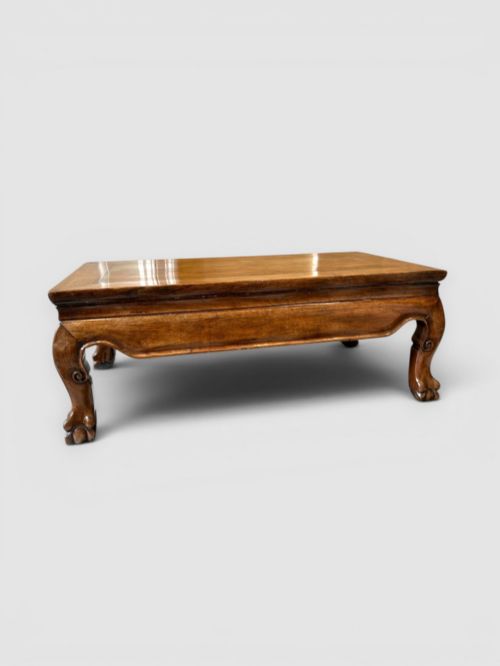
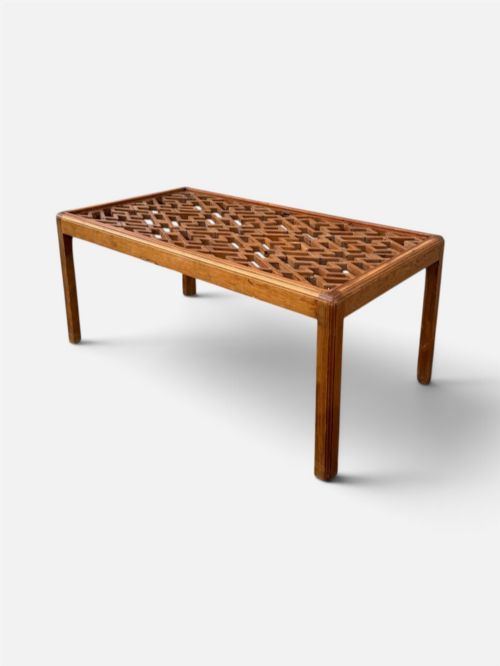
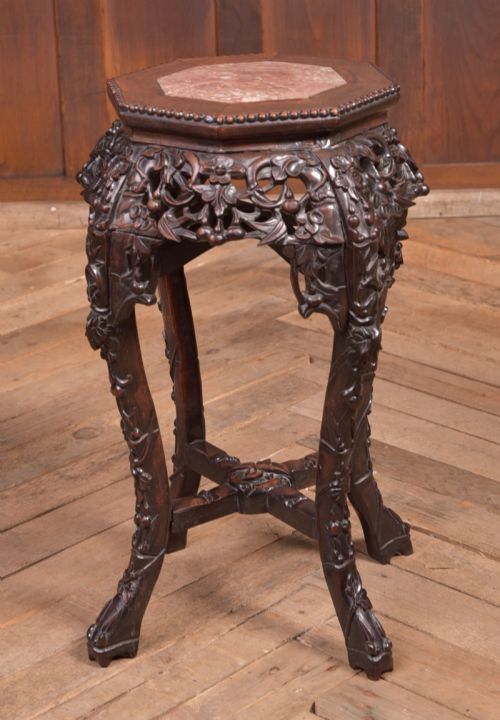
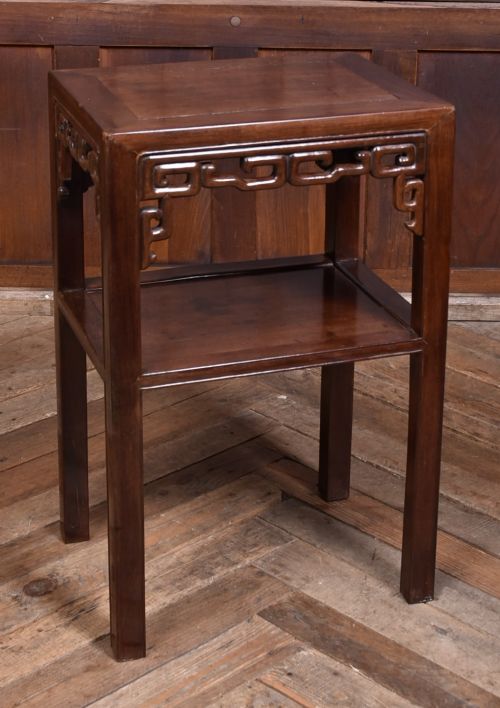
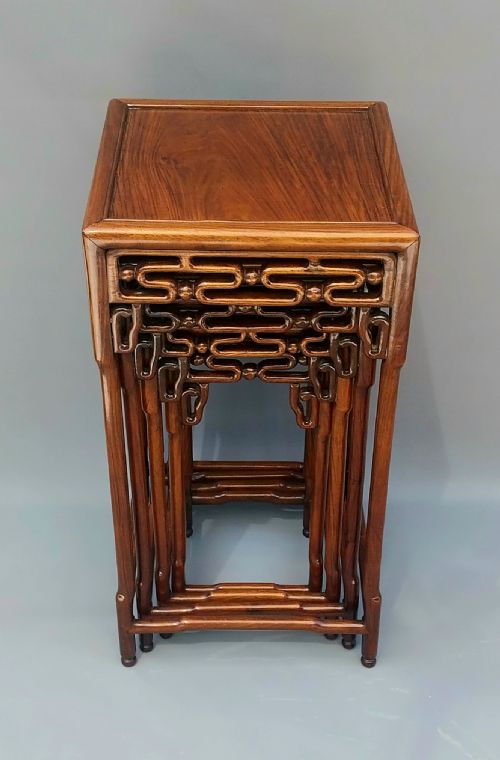
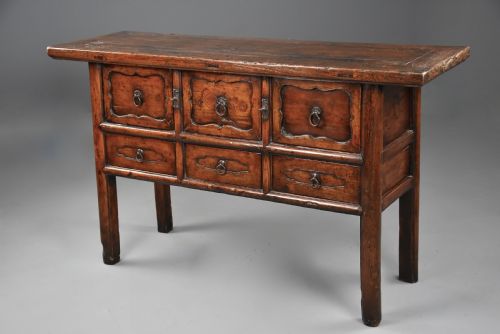
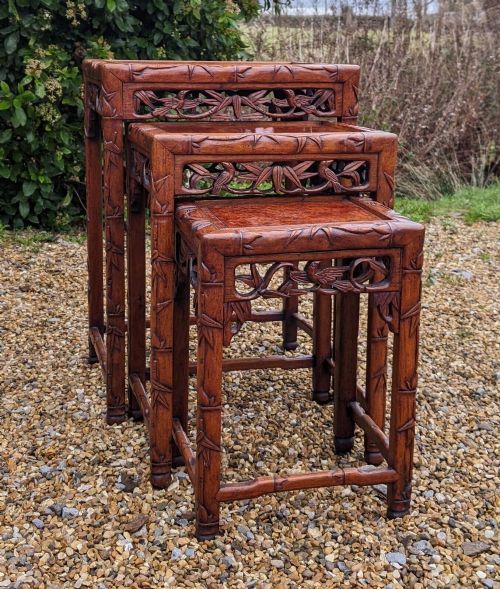
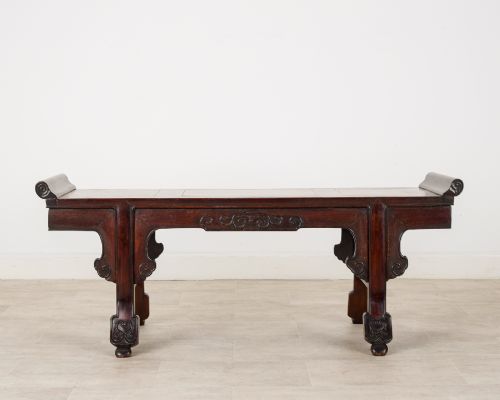
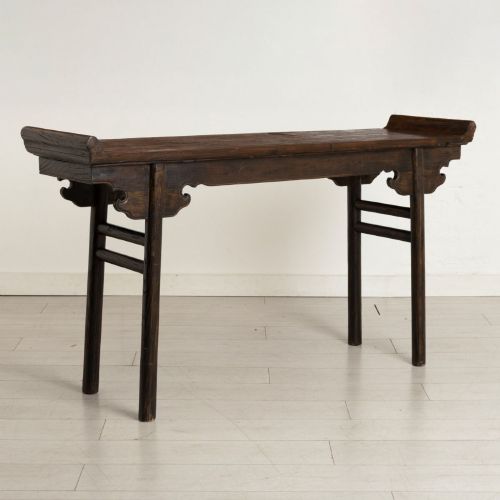
Chinese carved wooden tables include low opium tables, nests of tables, altar benches, coffee tables and tall plant stands shaped for specific domestic uses. Most pieces encountered here originate from the nineteenth century, reflecting Qing Dynasty traditions and later export periods.
The forms range from compact occasional tables and side tables to substantial console tables and partner desks. Makers utilised dense timbers and traditional joinery to construct surfaces intended for display, ceremony and daily utility.
Materials and construction methods
Construction relies heavily on dense hardwoods such as rosewood, huanghuali, padouk and elm, selected for their stability and capacity for intricate relief carving. Artisans often incorporated inset panels of marble or burr wood to create contrasting textures across table tops.
Joinery techniques dispensed with metal fixings, employing complex interlocking joints that allowed the timber to move naturally with changes in humidity. Surface finishes were polished to reveal the natural grain and deep colour of the wood.
Several tables show scars from centuries of hot teapots and Scholar's ink, recording quiet domestic histories.
Judging quality and craftsmanship
Quality rests in the crispness of the carving and the selection of the timber, where dense grain and uniform colour command attention. Superior examples exhibit fluid, deep relief work that remains sharp across intricate motifs without soft edges or careless repairs.
The integrity of the structural joinery also distinguishes finer pieces, as stable frames and tight joints indicate superior workshop standards. Heavy, well-seasoned hardwood signifies a better grade of manufacture than lighter, secondary timbers.
The Chinese Carved Wooden Tables Glossary
- Hardwood
- Dense, slow-growing timber such as rosewood or huanghuali used for durable furniture. These woods permit sharp, detailed carving.
- Opium table
- A low, domestic table traditionally used for serving tea or smoking. They feature compact proportions and understated legs.
- Altar table
- A long, narrow table originating from temple or domestic ancestral halls. They often display upturned flange ends.
- Nest of tables
- A set of graduated tables designed to slide neatly beneath one another. This form became popular during the nineteenth century for flexibility in entertaining.
- Marble top
- An inset stone surface fitted into a wooden frame, common on jardiniere stands and plant tables. The natural veining adds pattern and a cool surface.
Chinese Carved Wooden Tables: Frequently Asked Questions
How do I style a Chinese carved wooden table?
Pair low opium tables with modern seating to create a balanced focal point in a living space. Their rich grain and carved details anchor minimalist rooms.
Tall plant stands and jardiniere tables work well in corners to display ceramics or lighting. Keep surrounding decoration simple to let the craftsmanship stand out.
What is the difference between an altar table and a console table?
Altar tables derive from traditional domestic and temple settings, often featuring distinct flanged ends on the top surface. They are typically narrow and tall.
Console tables serve similar wall-mounted or freestanding hallway roles but follow more varied export and regional patterns. Both types utilise heavy hardwoods and traditional joinery.
Are nineteenth-century tables sturdy enough for daily use?
Nineteenth-century tables were built using interlocking wooden joinery designed to withstand generations of domestic service. The dense hardwoods employed provide considerable structural strength.
Check that joints remain tight and the frame sits level before using them for heavy items. Most pieces handle normal daily placement of lamps, books and drinks with ease.