




Qing Dynasty Pedestal
A qing dynasty pedestal brings sculptural weight and polished timber to a room, functioning primarily as a stand for urns, plants or vases.
Qing Dynasty Pedestal
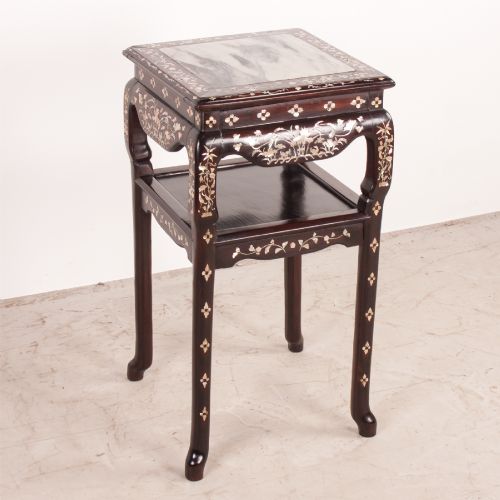
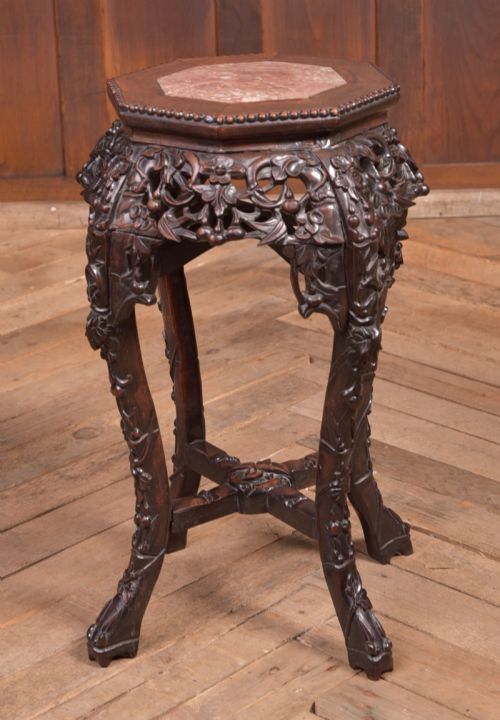
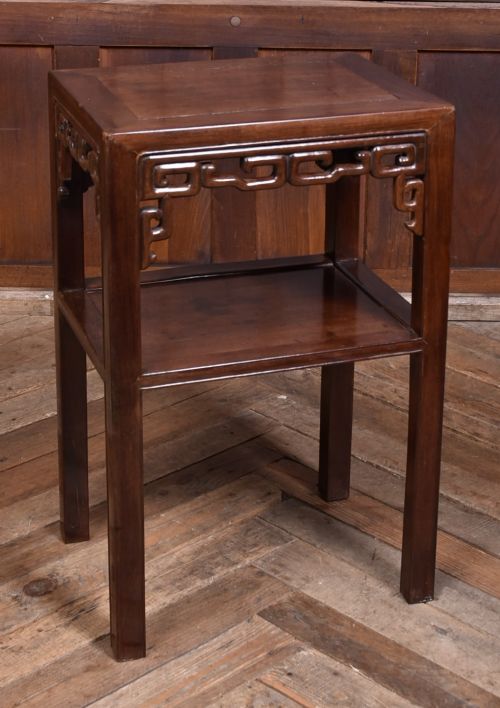
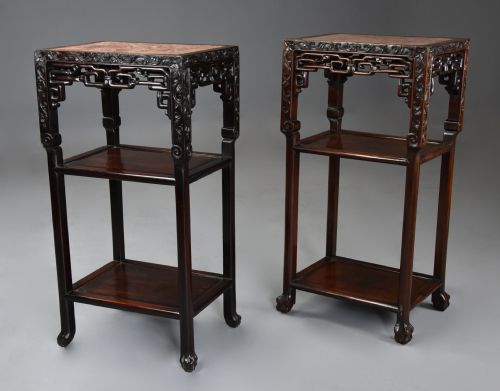
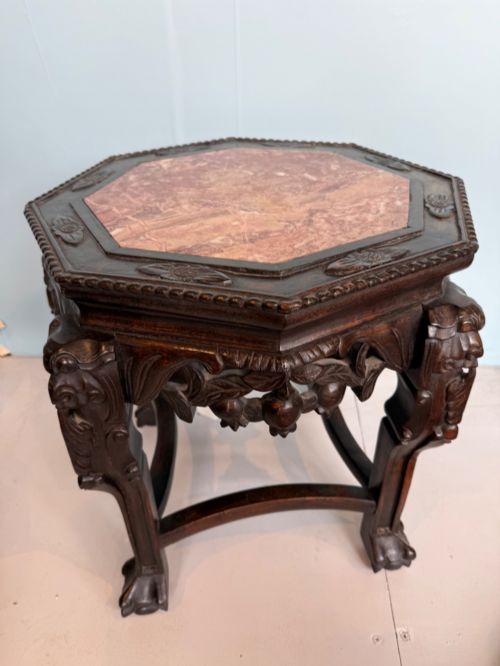
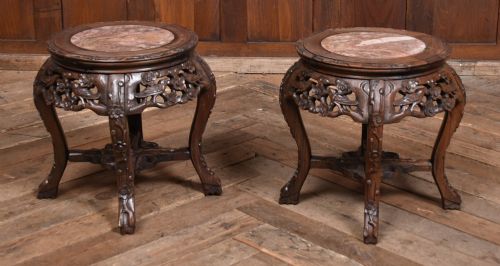
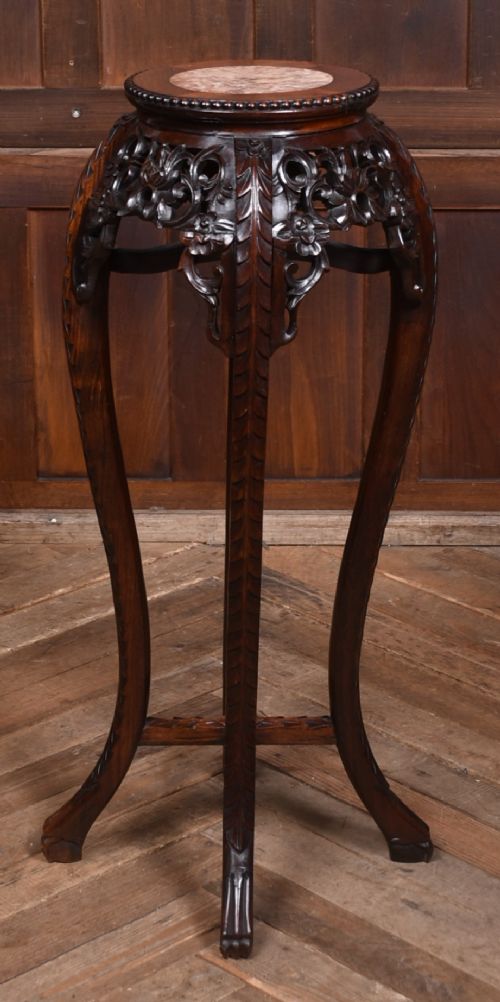
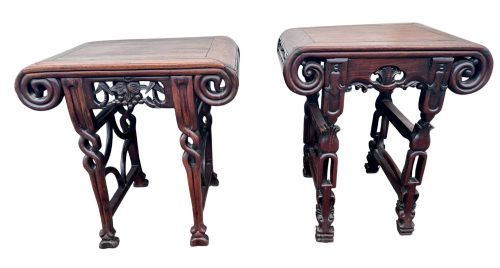
A qing dynasty pedestal appears in various guises across this selection, most frequently taking the form of a pot stand, jardiniere stand, or vase table. These pieces emerge predominantly from the nineteenth century, encompassing dates such as eighteen eighty, eighteen ninety, and nineteen hundred, alongside periods like the Victorian and Edwardian eras.
The silhouettes range from tall torcheres and two-tier urn stands to low side tables, occasional tables, and stools. Many pieces are fashioned with inset tops designed to elevate decorative objects safely above floor level.
Materials and Construction
The construction relies heavily on dense timbers such as hardwood, rosewood, padouk, huali wood, and hongmu, often paired with contrasting insets of marble, rouge marble, or pink marble. Artisans also utilised lacquer, ebonised finishes, mother of pearl inlay, and rootwood to achieve varied surface textures.
Carving serves as the primary decorative technique, shaping intricate floral or traditional Chinese motifs into the wooden frames. The integration of stone tops into timber framework requires precise joinery to support heavy ceramic vessels.
Materials across these listings span heavy tropical hardwoods like padouk and huali wood alongside contrasting rouge marble and mother of pearl.
Standard and Execution
Quality reveals itself in the crispness of the wood carving and the weight of the timber selected for the frame. Dense woods like padouk and hongmu hold sharper detail and demonstrate superior structural integrity compared to softer secondary timbers.
The integration of the marble or quartz top into the wooden surround distinguishes finer examples, alongside the depth and complexity of the relief work across the skirt and legs.
The Qing Dynasty Pedestal Glossary
- Jardiniere stand
- A tall or low table specifically designed to hold a ceramic flower pot or plant bowl. These pieces often feature water-resistant stone insets to protect the wood.
- Torchere
- A tall stand or pedestal originally intended to support a candle holder or lamp. In Asian furniture, the term describes slender elevated tables for display.
- Hongmu
- A category of dense, heavy Asian hardwoods highly prized for cabinetmaking. It translates literally to red wood and develops a deep patina over time.
- Padouk
- A durable tropical hardwood noted for its strength and rich reddish-brown colour. It provides a stable base for heavily carved decorative stands.
- Huali wood
- A fragrant and highly decorative variety of Chinese hardwood. It is frequently associated with late nineteenth-century Qing Dynasty scholar furniture and display pieces.
Qing Dynasty Pedestal: Frequently Asked Questions
What is a qing dynasty pedestal used for?
These pieces function primarily as elevated platforms for displaying heavy porcelain urns, bronze vessels, and potted plants within a room. Their sturdy construction ensures stable support for decorative objects.
Historically, they served to showcase prized possessions in reception spaces, lifting artistic items to eye level for proper appreciation.
How do I clean marble top stands?
Wipe the stone surface gently with a soft, damp cloth using mild soap if necessary, ensuring no moisture sits on the surrounding wood joinery. Avoid harsh chemical cleaners that can dull the polish of the marble.
Dry the surface thoroughly after cleaning to protect both the stone and the timber frame from water marks.
Are these stands suitable for modern lamps?
Many examples function well as lamp tables or occasional tables beside seating, provided the top diameter accommodates the base of the light fixture safely. The marble insets offer a durable surface resistant to minor heat and knocks.
Checking the height of the stand against existing furniture ensures the proportions suit daily placement in a living space.
How do I distinguish nineteenth century pieces?
Nineteenth-century items typically exhibit traditional Chinese joinery methods, dense tropical hardwoods, and hand-carved details that reflect Qing Dynasty craftsmanship. Examination of the timber underside often reveals age-related patina and tool marks.
Stylistic markers include distinct regional carving patterns and the integration of rouge or pink marble inserts typical of the period.