
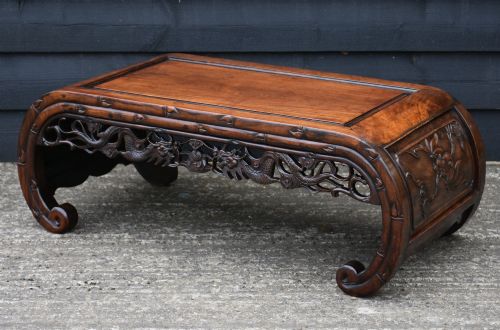


Qing Dynasty Opium Table
These qing dynasty opium table examples are low wooden furnishings designed for lounging and tea, bringing sculptural low-profile form to modern interiors.
Qing Dynasty Opium Table
When you search for a qing dynasty opium table, you examine low-slung platform furniture traditionally used for sitting, dining or smoking on platforms and kangs. The examples you meet on this page span the eighteenth century, the nineteenth century and around nineteen hundred, taking the form of low tables, coffee tables, and occasional chests.
Most items appearing here show Chinese traditional or Chinese export design, featuring low rectangular frames and scroll-end profiles. You also encounter variations in scale, from smaller pieces to larger surfaces designed for communal gathering.
Materials and construction
These pieces are built from dense timbers including hardwood, rosewood, elm, huali wood, and general timber. Craftsmen shaped these sturdy woods into low frames, often incorporating red lacquer finishes and subtle gilding.
Carving is a central technique applied to structural elements, producing dragon details and scroll-end profiles. Joinery methods secured the low frames without relying on metal fasteners, maintaining clean lines across the surfaces.
Some tables include hidden drawers for small pipes and accessories, keeping the low surface clear for tea.
Factors of quality
Quality rests upon the choice of timber and the crispness of the carved details. Hardwoods like rosewood and huali wood carry more weight and finer grain than simpler elm or general timber constructions.
The sophistication of the scroll-end forms and the preservation of original red lacquer surfaces distinguish finer pieces. Structural integrity in the low legs and joinery marks the difference between standard items and superior examples.
The Qing Dynasty Opium Table Glossary
- Kang
- A heated brick sleeping platform in traditional northern Chinese homes upon which low tables sat. These platforms served as the central domestic space for daily life.
- Huali wood
- A traditional fragrant hardwood prized in Chinese furniture making for its rich grain and durability. It takes fine carving exceptionally well.
- Scroll-end
- A furniture profile where the short ends of the table surface curl outward and upward. This design echoes traditional architectural motifs.
- Hongmu
- A category of dense, dark Chinese hardwoods translated literally as red wood. It includes various species valued for strength and deep colour.
- Red lacquer
- A natural resin coating applied in multiple layers to wood and polished to a smooth finish. It provides a durable and decorative surface.
Qing Dynasty Opium Table: Frequently Asked Questions
How were opium tables used originally?
These low tables sat upon raised platforms or sleeping kangs where household members gathered to drink tea, socialise, or smoke. Their diminutive height suited floor-level seating arrangements.
Over time, these low surfaces adapted to various domestic tasks within the home, moving from private sleeping quarters into general reception rooms.
How do I style a low table at home?
Place a low table centrally in a room as a coffee table to create a strong horizontal line against modern seating. The modest height brings a grounded feel to contemporary living spaces.
Keep the surface uncluttered to let the timber grain and carved scroll-ends remain visible. A single ceramic bowl or a stack of books works well.
How can I tell an eighteenth-century table from a nineteenth-century one?
Eighteenth-century examples often display simpler, heavier timber construction with deeper patination built up over decades of use. Carving on earlier pieces tends to be restrained and structural.
Nineteenth-century and later variants frequently introduce more elaborate dragon motifs and scroll-end details, reflecting the diverse output of the late Qing Dynasty.