


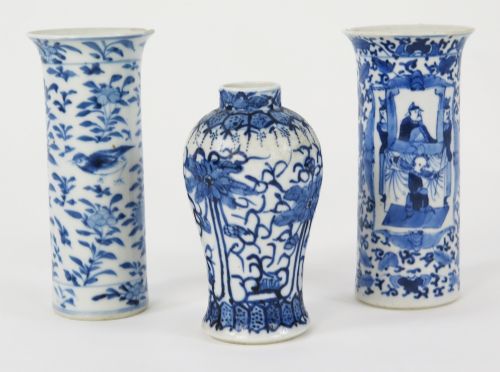
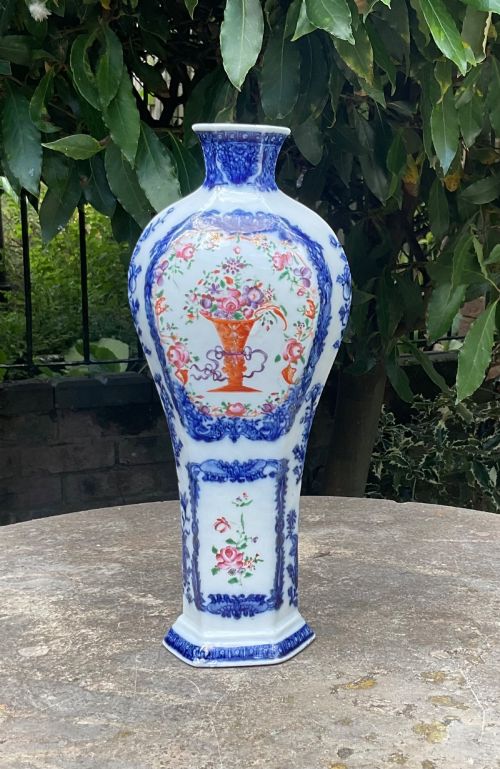
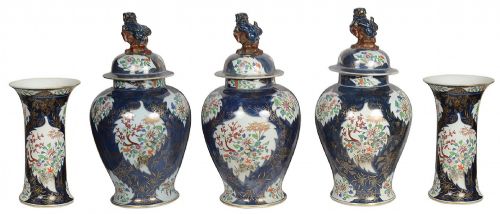
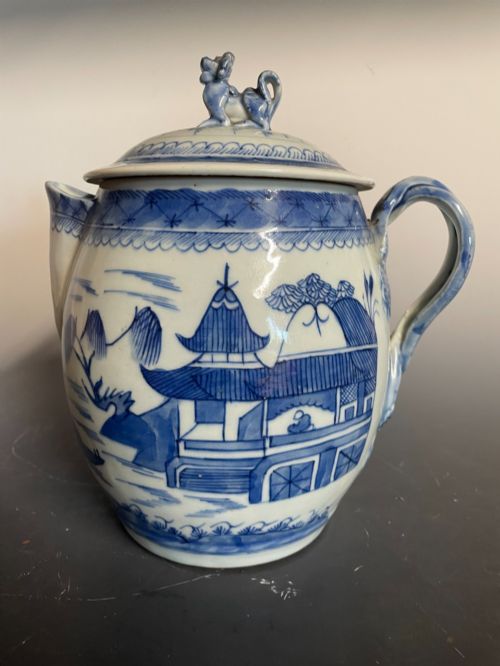





Qing Dynasty Export Jars
Qing dynasty export jars are vessels made for international trade, prized for their vibrant palettes and intricate hand-painted motifs.
Qing Dynasty Export Jars
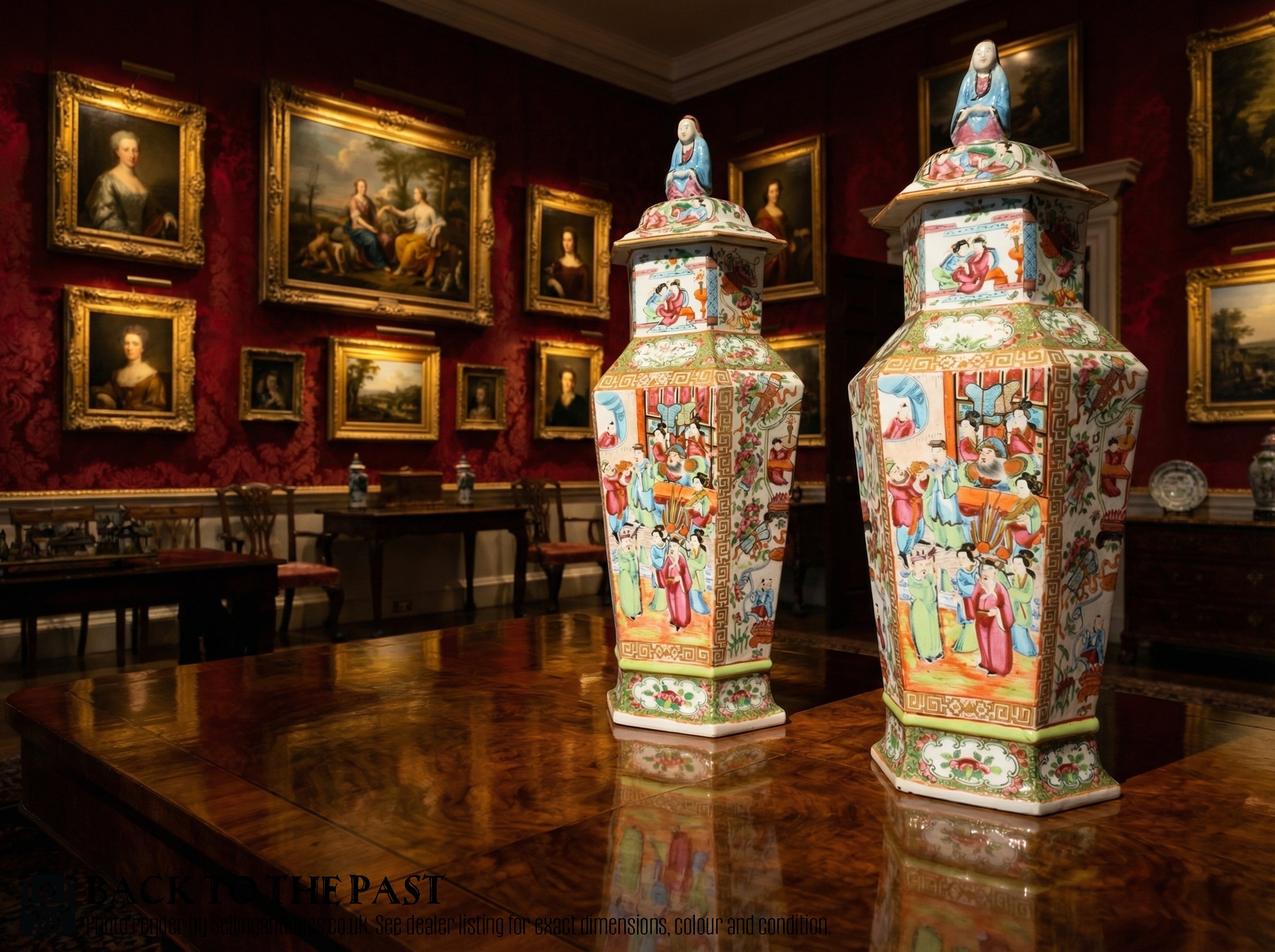
When you search for qing dynasty export jars, you encounter vessels produced primarily during the eighteenth and nineteenth centuries for overseas markets. The selection on this page centres heavily on nineteenth-century pieces, including large baluster forms and lidded ginger jars.
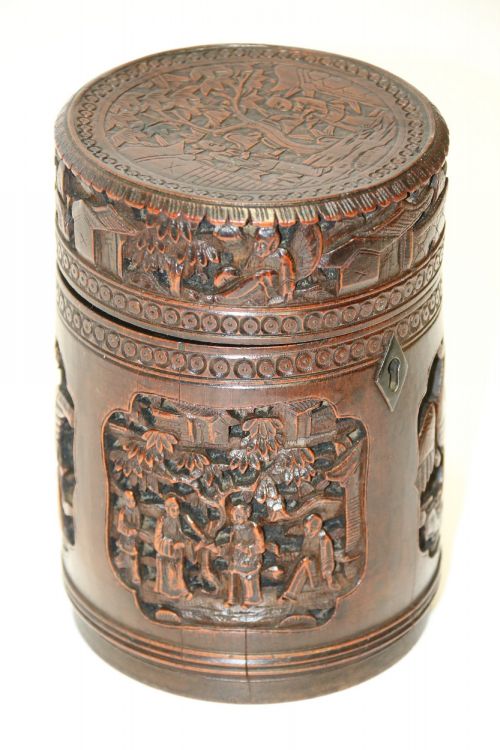
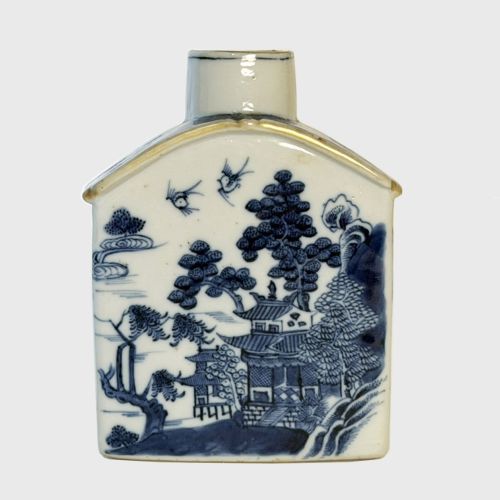
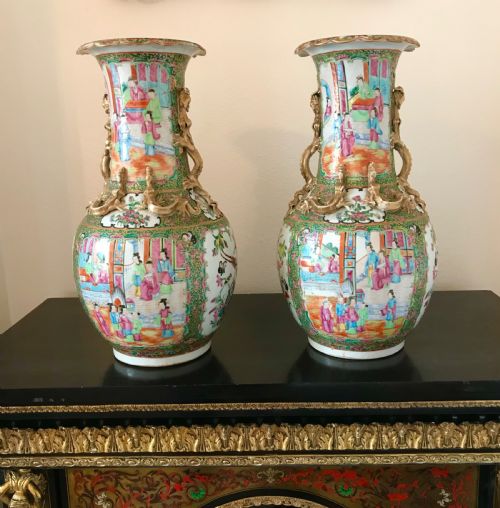
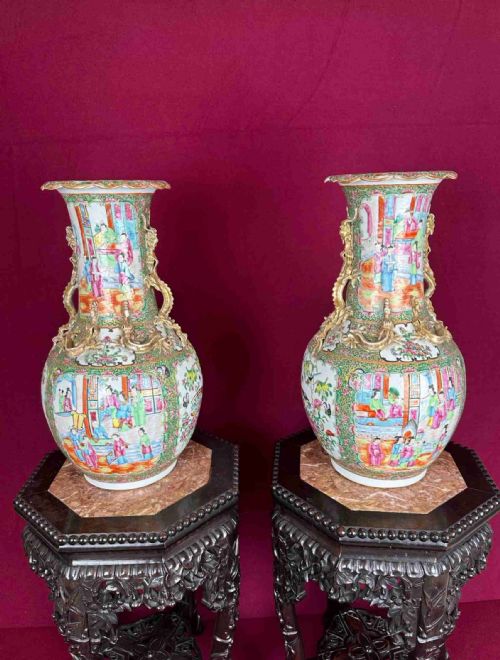
Many of these containers arrive in the form of pairs designed for decorative schemes, occasionally adapted later into table lamps. Alongside standard porcelain jars, the range includes related forms such as tea caddies and monumental vases showing distinctive Cantonese styles.
The aesthetic bridges traditional Chinese motifs and the tastes of Western buyers from the Victorian era onward. You will find both classic blue and white underglaze designs and rich polychrome enamel palettes.
How they were made
The foundation of these pieces is hard-paste porcelain or ceramic, shaped by hand or on the wheel before firing. Artisans applied cobalt blue pigments beneath the glaze for early blue and white items.
Polychrome examples utilise enamel glazes applied over the fired glaze, sometimes enriched with gold leaf details. Certain items are paired with fitted wooden or brass elements, reflecting their later adaptation and export journey.
Qing Dynasty Export Jars Retail Price Guide 2026
Typical asking prices for qing dynasty export jars among the pieces listed under this phrase on Sellingantiques today, from the lower quarter to the upper quarter. They describe what is for sale here now, not the wider market.
Some nineteenth-century jars are so enormous they require dedicated padouk tables just to keep them off the floor.
What varies in quality
Quality in these export pieces rests upon the precision and complexity of the hand-painted decoration. Finer examples display crisp detail in facial expressions, foliage, and borders, whereas simpler work appears more schematic.
The weight, throwing consistency, and brilliance of the enamel colours also distinguish superior jars from standard commercial production. Scale plays a role too, as monumental or well-matched pairs demand greater technical mastery from the kiln.
The Qing Dynasty Export Jars Glossary
- Famille rose
- A palette of opaque enamel colours dominated by pink, introduced during the Qing dynasty. It allowed for subtle shading and complex pictorial scenes.
- Famille verte
- A green-dominated enamel palette typical of earlier Qing wares. The style relies on translucent overglaze colours alongside iron red and black.
- Baluster
- A tall vessel shape with a rounded body that tapers toward the base and flares at the neck. This silhouette is common among large export vases and jars.
- Ginger jar
- A wide-shouldered storage jar with a short neck, originally used for spices. In export collections, these pieces usually include matching covers.
Qing Dynasty Export Jars: Frequently Asked Questions
Were these jars used for ginger?
Many lidded vessels referred to as ginger jars originally served to transport spices, ginger, and preserves along maritime trade routes.
Over time, collectors and interior decorators repurposed these decorative containers purely for display within European homes.
How do I tell nineteenth century pieces apart?
Nineteenth-century export ceramics often display denser enamel work, particularly the vibrant pinks and golds associated with Cantonese Rose Medallion styles.
Earlier eighteenth-century items tend to show finer potting and more restrained decorative compositions.
Can these jars be safely cleaned?
Dusting with a soft, dry cloth is the best method to maintain glazed porcelain surfaces without risking the overglaze enamels.
Avoid using water or chemical cleaners, particularly on areas where gold leaf or delicate enamel work sits on top of the glaze.
Why are some jars mounted as lamps?
During the Victorian era and the twentieth century, large export jars were frequently converted into table lamps to suit contemporary interior lighting trends.
This adaptation involved drilling or mounting the ceramic body, which alters the original vessel while preserving its decorative visual impact.