






Pink Rose Medallion Porcelain
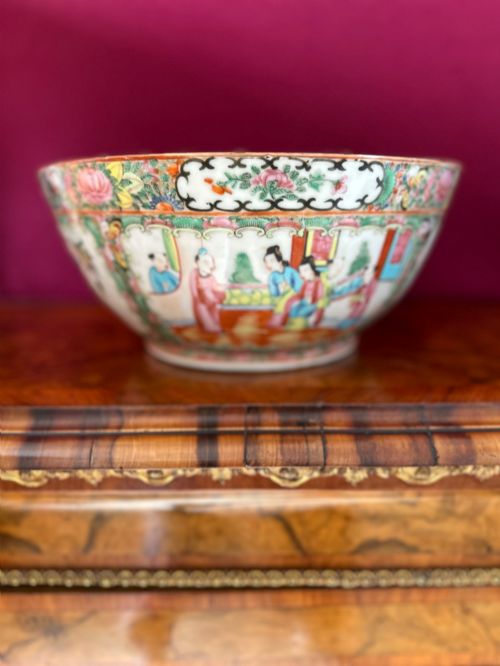
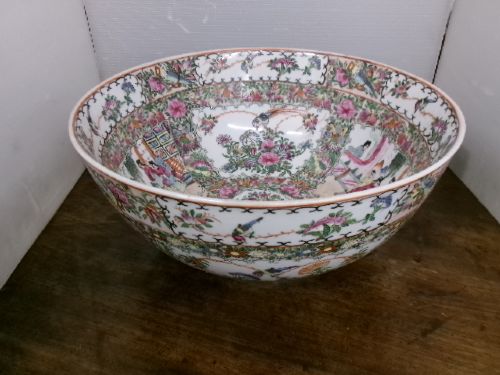
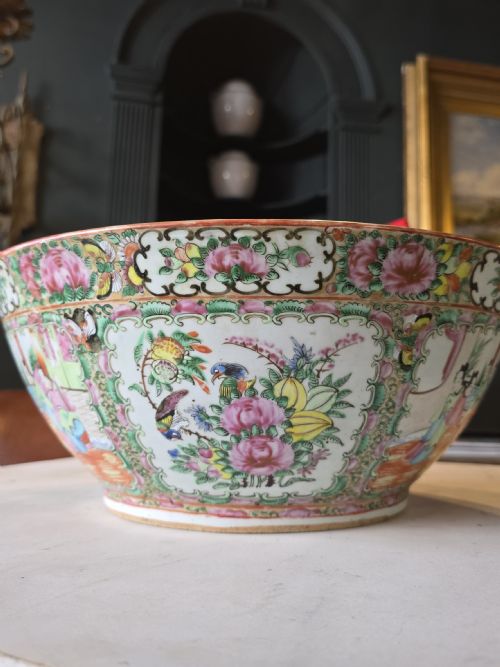
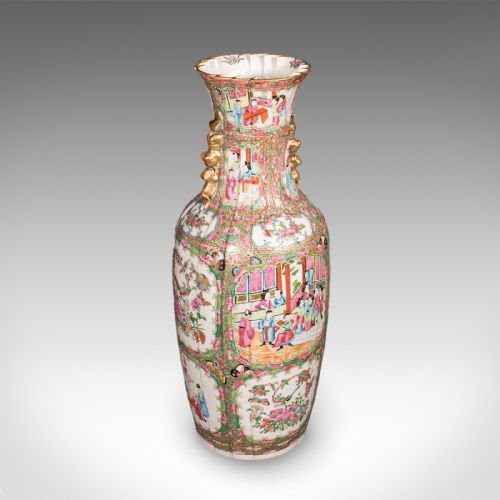
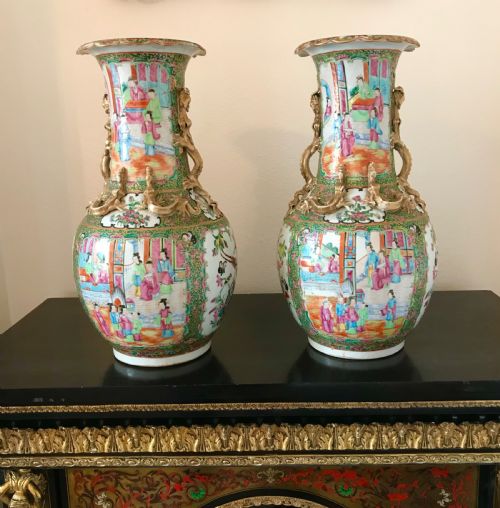
These pink rose medallion porcelain pieces are vibrant Cantonese wares that bring intricate painted panels and rich gilding straight into a room.
Pink Rose Medallion Porcelain
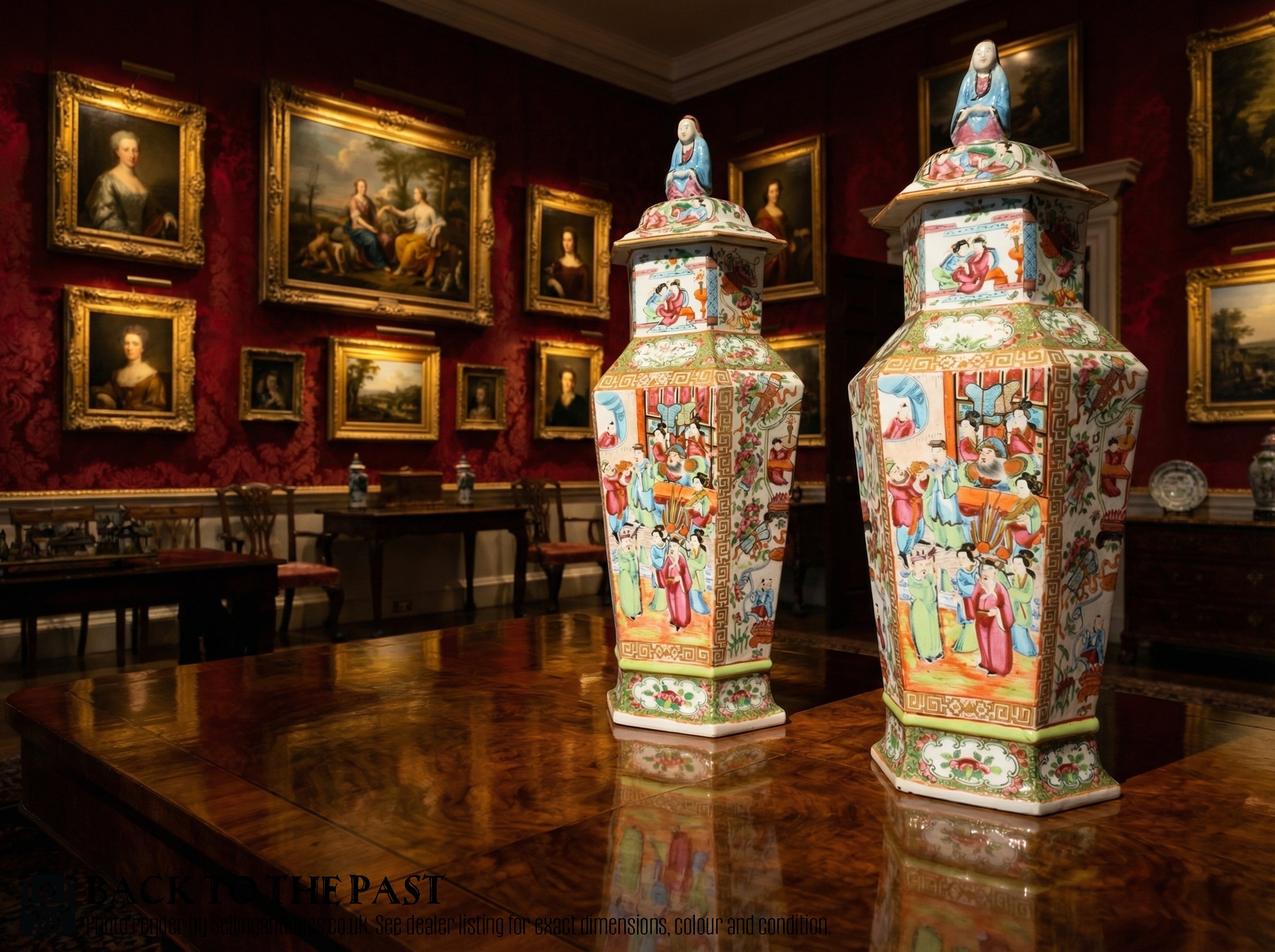
Pink rose medallion porcelain centres on traditional Chinese export wares produced during the nineteenth century and the Victorian era. These pieces appear primarily as large punch bowls, decorative plates, lidded vases, and garden seats decorated in bright enamel palettes.
Buyers seeking pink rose medallion porcelain will encounter substantial baluster vases, umbrella stands, and centrepiece bowls originating from Qing Dynasty workshops. The selection heavily represents Cantonese and Chinese Export styles featuring alternating panels of figures, birds, and flowers.
The objects combine domestic vessels with decorative items adapted over time into table lamps or mounted centrepieces. Each form displays the characteristic division of space into compartmentalised cartouches surrounded by dense floral grounds.
How they were made
The manufacture relies upon hard-paste porcelain bodies finished with hand-painted polychrome enamel decoration and gold leaf accents. Artisans applied pigments over the glaze before firing, creating raised surface textures with dense floral and figural motifs.
Craftsmen structured the designs around medallions containing distinct scenes, surrounded by complex borders of butterflies, foliage, and geometric patterns. Gilt highlights were brushed onto the rims, handles, and panel dividers to catch the light.
Pink Rose Medallion Porcelain Retail Price Guide 2026
Typical asking prices for pink rose medallion porcelain among the pieces listed under this phrase on Sellingantiques today, from the lower quarter to the upper quarter. They describe what is for sale here now, not the wider market.
Listings feature porcelain pieces spanning the nineteenth century through the Victorian period, utilising enamel, gold leaf, and hardwood stands.
What varies in quality
Quality separates ordinary export utility wares from exceptional pieces through the precision and density of the hand painting within each cartouche. Superior examples maintain crisp outlines on the figures and birds, whereas lesser items show hurried brushwork and blurred enamel boundaries.
The weight and purity of the porcelain body along with the preservation of the gold leaf gilding dictate the overall standard of a piece. Deeper, more varied enamel colours combined with intact, untarnished gilding indicate superior workshop output.
The Pink Rose Medallion Porcelain Glossary
- Famille rose
- A major palette of Chinese ceramic enamels introduced in the eighteenth century, dominated by opaque pink or rose colours derived from colloidal gold. This palette allows for subtle tonal gradations in painted flowers and garments.
- Canton porcelain
- Wares produced in the Guangdong province primarily for export to Western markets during the Qing Dynasty. These items are noted for their colourful panels and crowded decorative schemes.
- Medallion
- A distinct circular, oval, or quatrefoil panel enclosing painted scenes of figures or birds within a larger surface. It serves as the primary focal point of the decorative layout.
- Qing Dynasty
- The final imperial dynasty of China, spanning from sixteen forty-four to nineteen twelve, encompassing the primary period for these export ceramics. The era saw significant commercial production for international trade.
- Enamel
- Opaque or translucent vitreous glass compounds fused to the porcelain surface through firing to supply bright surface colours. Painters layered these materials to achieve textured relief effects.
Pink Rose Medallion Porcelain: Frequently Asked Questions
How do I date these porcelain pieces?
Dating relies upon examining the iron-red registration marks, the style of the enamel colours, and the characteristics of the porcelain body itself. Nineteenth-century examples typically display heavier potting and deeper pink enamel tones compared to later iterations.
The base finish and the nature of the hand painting provide further clues regarding the manufacturing decade. Comparing panel layouts against documented Qing Dynasty export styles helps narrow the timeframe.
Were these pieces made for export?
These ceramics were manufactured specifically in Chinese kilns for the Western export market, meeting high European and American demand for ornate oriental goods. The compartmentalised designs deliberately catered to Western tastes for busy, narrative decoration.
Merchants traded these large punch bowls, vases, and dinner services globally through ports like Canton. Consequently, the surviving pieces reflect an aesthetic fusion tailored to international buyers.
How should I clean this porcelain?
Cleaning requires only warm water, a mild soap solution, and a soft cloth to protect the delicate surface enamels and gold leaf. Harsh chemical detergents or abrasive sponges will strip the hand-applied pigments and ruin the gilding.
Careful dusting with a dry microfibre cloth suffices for routine maintenance of display items. Submerging pieces with old repairs or metal fittings should be strictly avoided.
Can I use these vases as lamps?
Many of these large vessels were converted into table lamps during the nineteenth or twentieth centuries to suit domestic interior schemes. Original porcelain bodies remain intact beneath the wiring hardware, preserving the primary form.
Collectors frequently display these converted lamps while appreciating their decorative presence in living spaces. The electrical fittings can be updated by a professional without altering the ceramic base.