
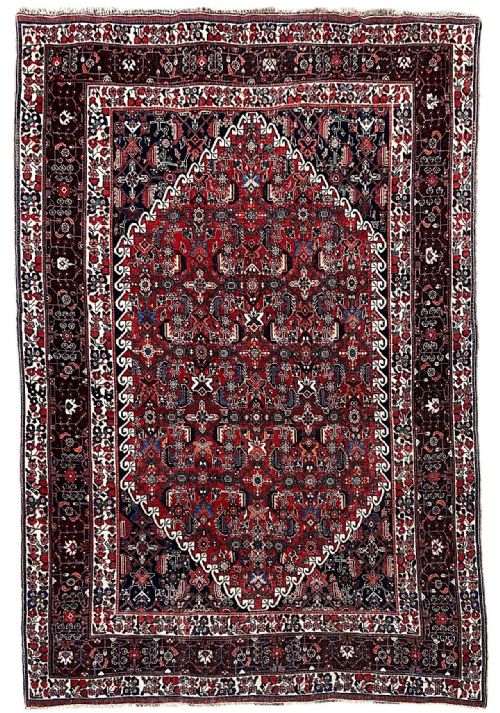
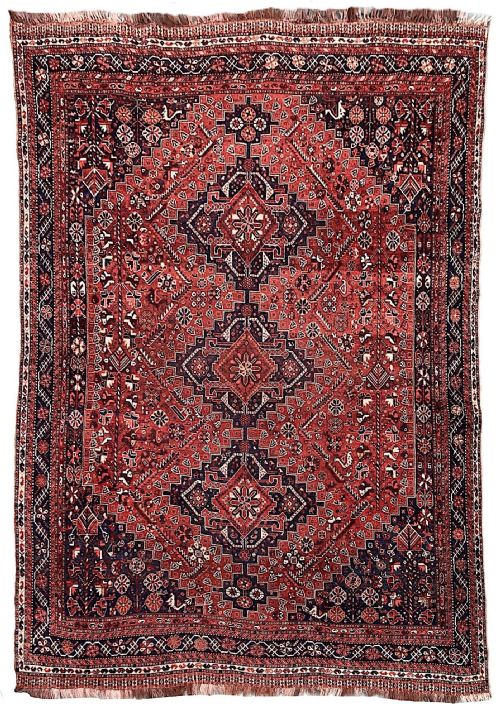


Qashqai Wool Carpet
A qashqai wool carpet brings the bold geometric patterns and rich tribal artistry of South Persia directly into a room.
Qashqai Wool Carpet
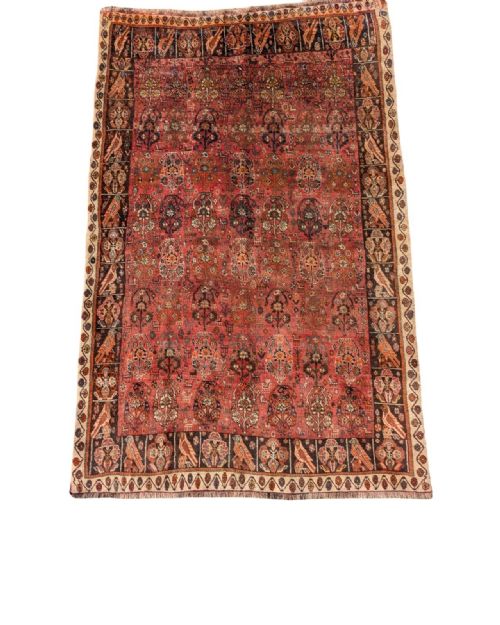
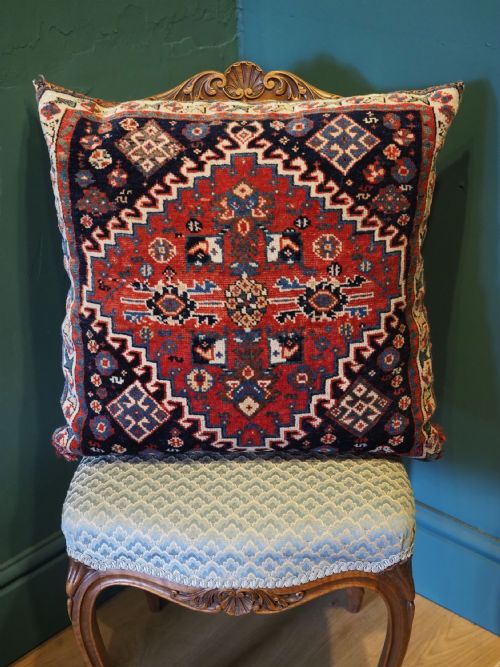
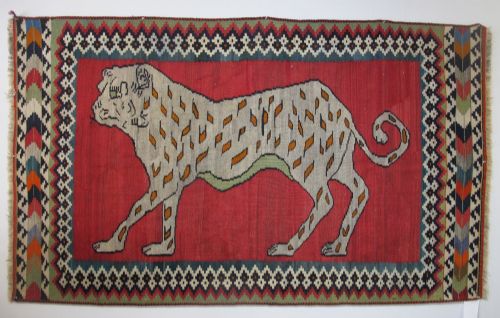
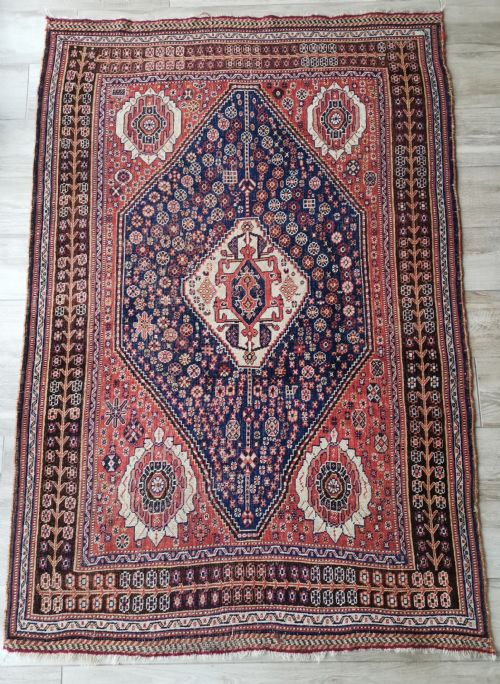
When searching for a qashqai wool carpet, buyers encounter handwoven floor coverings originating from the nomadic and village traditions of South Persia. These pieces span various formats, from full-piled carpets and long runner rugs to smaller village rugs, kilims, and cushion covers.
The most common versions met on this page belong to the Persian tribal and Qashqai styles, often dating from the late nineteenth century through to the early decades of the twentieth century. They frequently display characteristic motifs such as central medallions, tree of life designs, and stylized animal figures.
Beyond standard carpets, related tribal traditions such as Khamseh, Luri, and Shiraz weave groups appear alongside core Qashqai work. These overlapping regional styles share technical traits and design vocabularies rooted in South West Persian nomadic life.
Materials and Construction
The foundation of these textiles relies predominantly on wool, cotton, and hand-spun wool fibres gathered from regional flocks. Artisans worked these materials on horizontal or vertical looms set up within nomadic camps or village settlements.
Colour comes from natural dyes applied to the yarn, yielding deep, shifting tones that age characterfully over decades of use. The combination of hand-spun wool and traditional plant or mineral colourants gives each surface a distinct tactile depth and subtle variation.
Look closely for stray animal hairs woven directly into the wool pile by wandering nomadic workshop assistants.
Assessing Quality and Execution
Quality in these tribal textiles rests upon the fineness of the knotting and the density of the wool pile. Finer examples display crisper geometry in complex medallions and pictorial elements, requiring greater skill from the weaver.
The handling of natural dyes also dictates the visual success of a piece. Superior examples exhibit vibrant colour saturation and harmonious palettes that mellow evenly across the field without jarring contrasts.
The Qashqai Wool Carpet Glossary
- Kilim
- A flat-woven carpet or rug produced without a pile. These pieces rely on interlocking weft threads to form sharp, geometric patterns.
- Gabbeh
- A coarse, thick rug woven by tribal groups, characterised by sparse, minimalist designs and heavy hand-spun wool pile.
- Khamseh
- A confederation of tribes in South Persia producing wool rugs and carpets. Their work shares visual traits with neighbouring Qashqai weavers.
- Medallion
- A central ornamental design motif placed in the middle of the rug field. It often forms the focal point of Persian tribal compositions.
Qashqai Wool Carpet: Frequently Asked Questions
What is a qashqai wool carpet?
A qashqai wool carpet is a handwoven textile made by nomadic and village tribes in South Persia. These pieces utilise traditional wool materials and natural dyes to create durable floor coverings.
They are distinguished by geometric patterns, central medallions, and cultural motifs passed down through generations of weavers.
How do I care for an antique rug?
Antique wool rugs require gentle maintenance to preserve their natural fibres and vegetable dyes. Regular light vacuuming without a rotating brush helps remove embedded dust.
Professional cleaning should be used periodically, avoiding harsh chemical treatments that might strip the natural lanolin from the wool.
How do I identify a tribal rug?
Tribal rugs typically display asymmetrical geometric motifs, stylized animals, and repeating field patterns rather than rigid court designs. They are constructed using hand-spun wool and natural dyes on wool or cotton foundations.
Regional characteristics often point toward specific nomadic confederations like the Qashqai, Khamseh, or Luri.
Where were these carpets made?
These textiles were produced by nomadic pastoralists and settled villagers in South West Persia. The weavers travelled seasonal migration routes across mountainous and arid landscapes.
Their environment directly influenced the materials chosen and the motifs woven into each carpet.