


Navy Blue Qashqai Rug
A navy blue qashqai rug brings the rich hand-knotted tribal artistry of south-west Persia directly into your living space.
Navy Blue Qashqai Rug
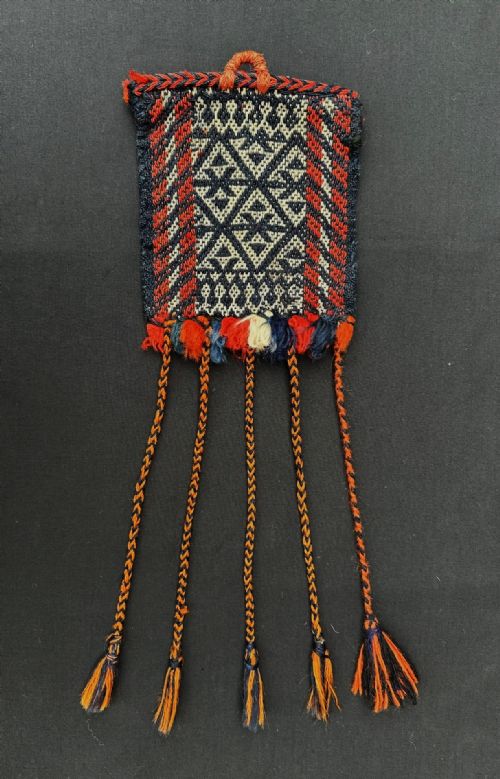
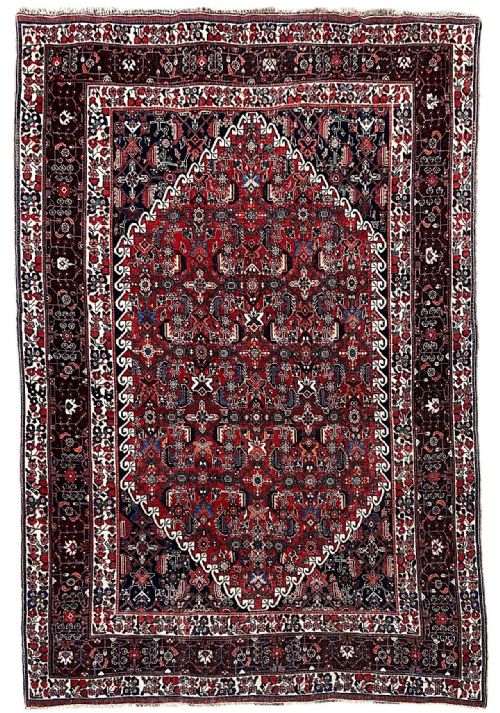
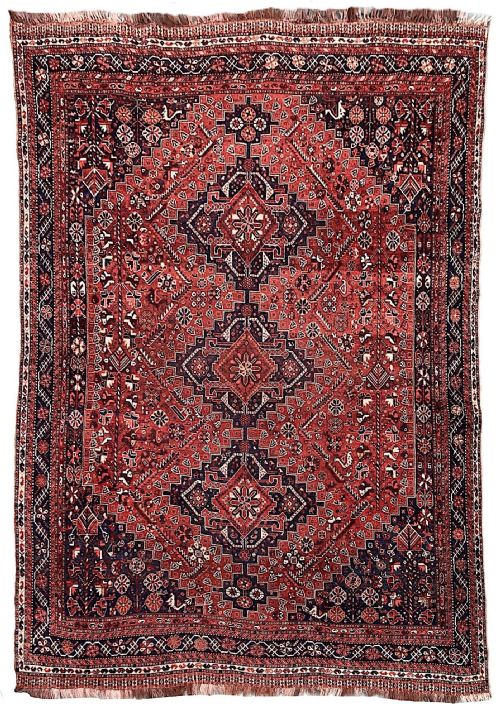
When searching for a navy blue qashqai rug, collectors encounter traditional tribal floor coverings originating from the Fars province of south-west Persia. These pieces span periods from the late nineteenth century through to the early decades of the twentieth century, encompassing formats from small saddlebag faces to large carpets.
The selection here includes specific regional subtypes and related tribal work such as Shekarlu, Kashkuli, Luri, and Khamseh pieces. Buyers most frequently meet scatter rugs and area rugs displaying distinctive geometric motifs, tree of life patterns, and bird designs like peacocks.
Each item represents nomadic or village weaving traditions, structured as rugs, kelleh carpets, and smaller square formats. They serve as functional floor coverings that double as historical textile art.
How they were made
Weavers constructed these pieces using wool for the pile and foundation, often incorporating hand-spun wool that yields varied texture and tactile depth. Cotton also appears in the structural foundations of specific carpets.
Makers utilised natural dyes to colour the wool, producing deep indigo tones alongside softer hues that define the traditional tribal palette. Artisans knotted the wool by hand onto warps and wefts, creating durable flat or pile surfaces designed for practical daily use.
Certain antique carpets feature charming depictions of peacocks and chickens woven directly into the tribal geometric fields.
What varies in quality
The fineness of the knotting and the complexity of the design separate different examples within this weaving tradition. Pieces described as extremely fine demonstrate tighter structural density and greater precision in executing intricate geometric and figurative motifs.
The quality of the wool and the depth achieved through natural dyes also distinguish individual rugs. Subtlety in colour variation across the field and the crisp preservation of specific motifs, such as boteh or peacock patterns, indicate higher grade craftsmanship.
The Navy Blue Qashqai Rug Glossary
- Khamseh
- A confederation of five tribes sharing territory in Fars province, producing tribal rugs closely related in palette and motif to Qashqai work. These often incorporate bird and animal motifs.
- Kashkuli
- A sub-tribe of the Qashqai known for producing exceptionally fine woven rugs and carpets. Their pieces frequently display delicate floral or boteh designs.
- Shekarlu
- One of the distinct subtribes of the Qashqai confederation, associated with bold tribal designs. Their rugs often showcase large-scale geometric patterns.
- Boteh
- A stylised almond or pear-shaped motif of Persian origin representing a floral spray or cypress tree. It appears frequently in tribal and village weaving.
- Kelleh
- A long, narrow format of Persian carpet traditionally used in room layouts. These pieces offer extended rectangular proportions.
Navy Blue Qashqai Rug: Frequently Asked Questions
Where were these rugs made?
These rugs were made by nomadic and village tribes in the Fars province of south-west Persia. Weavers worked within traditional tribal territories, moving seasonally across the region.
Production centres on the nomadic heritage of groups such as the Qashqai, Khamseh, and Luri peoples. Their textiles reflect the local environment and cultural symbolism of southern Persia.
How do I care for an antique rug?
Protect your rug by placing it in a low-traffic area or using a quality underlay to prevent sliding and friction. Vacuum gently with a suction-only attachment, avoiding beater bars that can damage old wool pile.
Rotate the rug periodically to ensure even exposure to light and wear. Professional cleaning by specialists in antique textiles is recommended when deep cleaning becomes necessary.
What motifs appear on these rugs?
Common motifs include geometric medallions, tree of life patterns, and stylised animal forms such as peacocks and chickens. The boteh motif, representing a floral or cypress shape, also occurs frequently.
These designs derive from traditional tribal iconography passed down through generations of weavers. Each symbol holds cultural meaning rooted in the nomadic life of south-west Persia.