
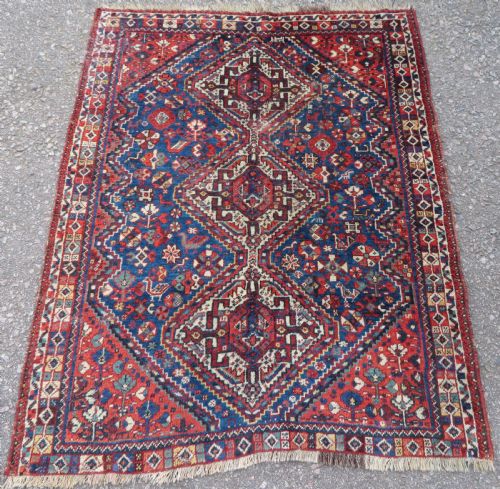
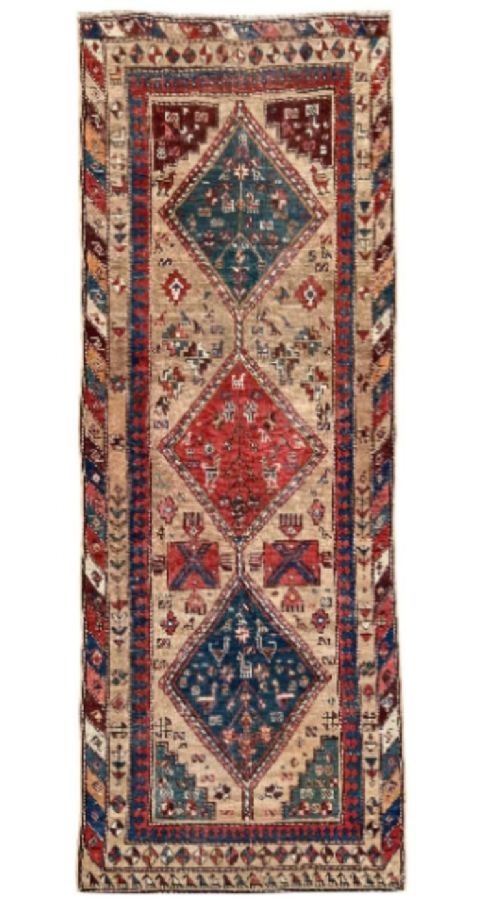
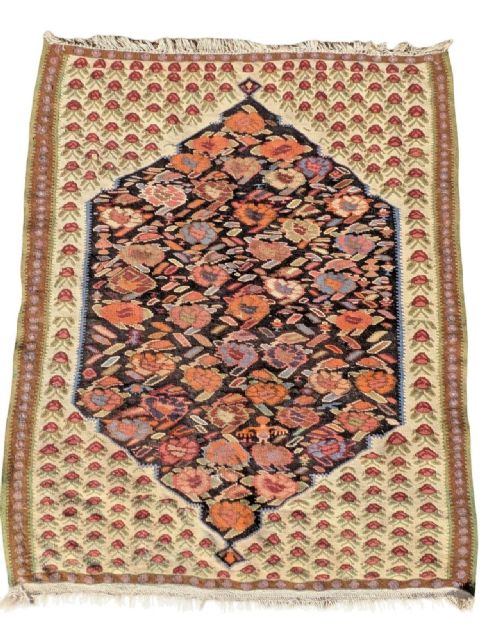
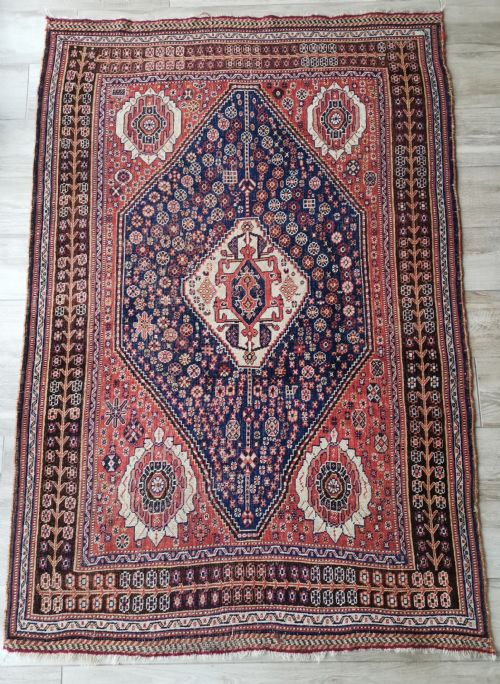
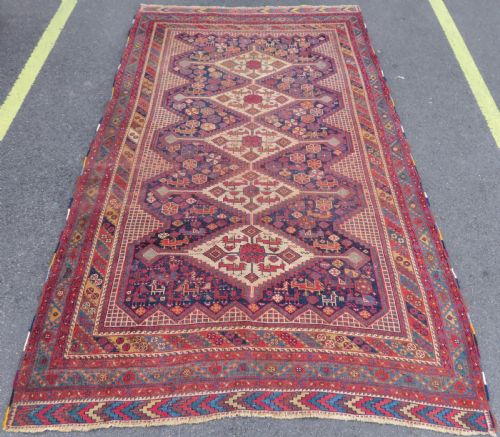
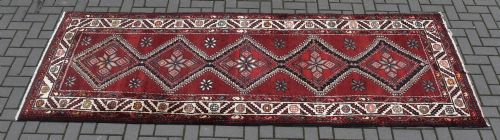


Persian Diamond Medallion Rug
A persian diamond medallion rug brings together centuries of tribal weaving traditions, offering bold geometric central motifs worked in rich wool.
Persian Diamond Medallion Rug
A persian diamond medallion rug is a handwoven textile originating from various tribal and village traditions across the region, featuring a distinct central geometric focus. These pieces emerge from historical periods spanning the late nineteenth century into the early twentieth century, reflecting distinct cultural patterns.
Buyers encounter formats ranging from compact village rugs to substantial room-sized carpets and elongated hallway runners. The inventory here draws directly upon regional tribal output including Qashqai, Khamseh, Kurdish, and Afshar traditions.
How they were made
Makers utilised hand-spun wool for the pile, providing resilience and a soft texture, paired with cotton foundations for structural stability in larger formats. Natural dyes supplied the characteristic palette, sourced from plants and minerals that aged gracefully over decades.
Weavers knotted the wool by hand onto vertical looms, employing traditional village techniques passed down through generations. These methods ensured each carpet developed individual nuances in tension, pile height, and border layout.
The listings span production dates from the nineteenth century through the 1940s, utilising hand-spun wool and natural dyes.
What varies in quality
The degree of knot density and the precision of the geometric layout distinguish standard village work from finer tribal output. Tighter knotting allows for sharper definition within the central medallion and surrounding motifs.
The complexity of the dye palette and the consistency of the wool preparation also dictate the overall character of the piece. Superior examples display harmonious colour saturation and enduring structural integrity across the entire field.
The Persian Diamond Medallion Rug Glossary
- Medallion
- A large central ornamental design, often diamond-shaped, positioned in the middle of the carpet field. This focal point anchors the surrounding geometric motifs and tribal symbols.
- Pile
- The raised surface of the rug formed by the ends of the knotted yarn. Hand-spun wool pile provides both durability and a tactile quality.
- Runner
- An elongated narrow format designed primarily for hallways, corridors, or bedside placement. These formats preserve intricate border patterns within a restricted width.
- Natural Dyes
- Colourants derived from organic sources such as plants, roots, and insects rather than synthetic compounds. These dyes yield rich, complex hues that soften gently over time.
Persian Diamond Medallion Rug: Frequently Asked Questions
How do I clean a antique rug?
Gentle surface brushing and regular light vacuuming without a rotating beater bar help maintain the wool pile safely.
Professional specialist cleaning remains essential for addressing deeper dirt accumulation without damaging natural dye structures.
Where were these tribal rugs made?
These textiles originate from diverse regions across Persia, produced by specific nomadic and village confederations.
Tribes such as the Qashqai, Khamseh, and Kurdish groups created distinct designs reflecting their local environments.
Can I place a runner in a hallway?
Elongated formats suit narrow spaces like corridors, entryways, and bedside areas perfectly.
Using a quality underlay beneath the cotton foundation prevents shifting and cushions the wool pile against heavy foot traffic.
How do I identify the age of a carpet?
Structural traits, wool preparation techniques, and specific regional dye palettes offer clues regarding the manufacturing era.
Examining the wear patterns and border motifs alongside historical production periods helps determine whether a piece dates to the nineteenth or early twentieth century.