



Putti Desk Clock
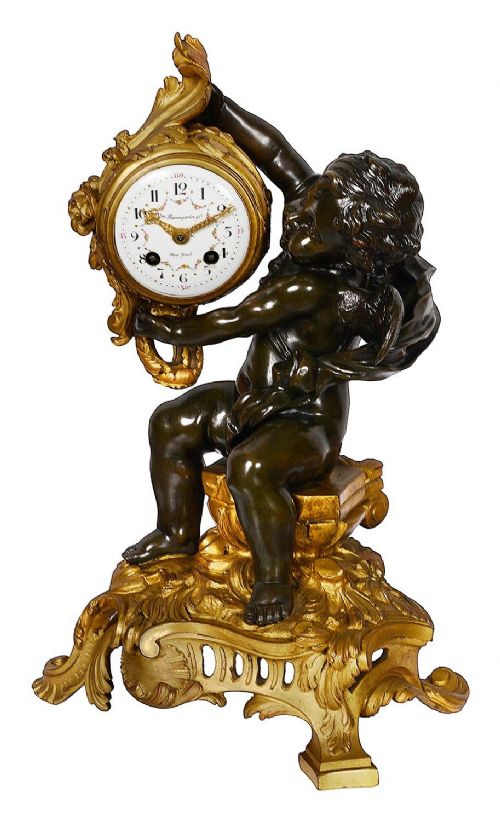
Putti desk clock designs bring together cast metalwork and figural cherub sculpture, mostly originating from French workshops of the nineteenth century.
Putti Desk Clock
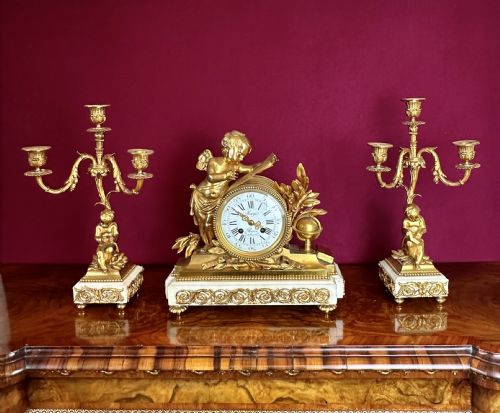
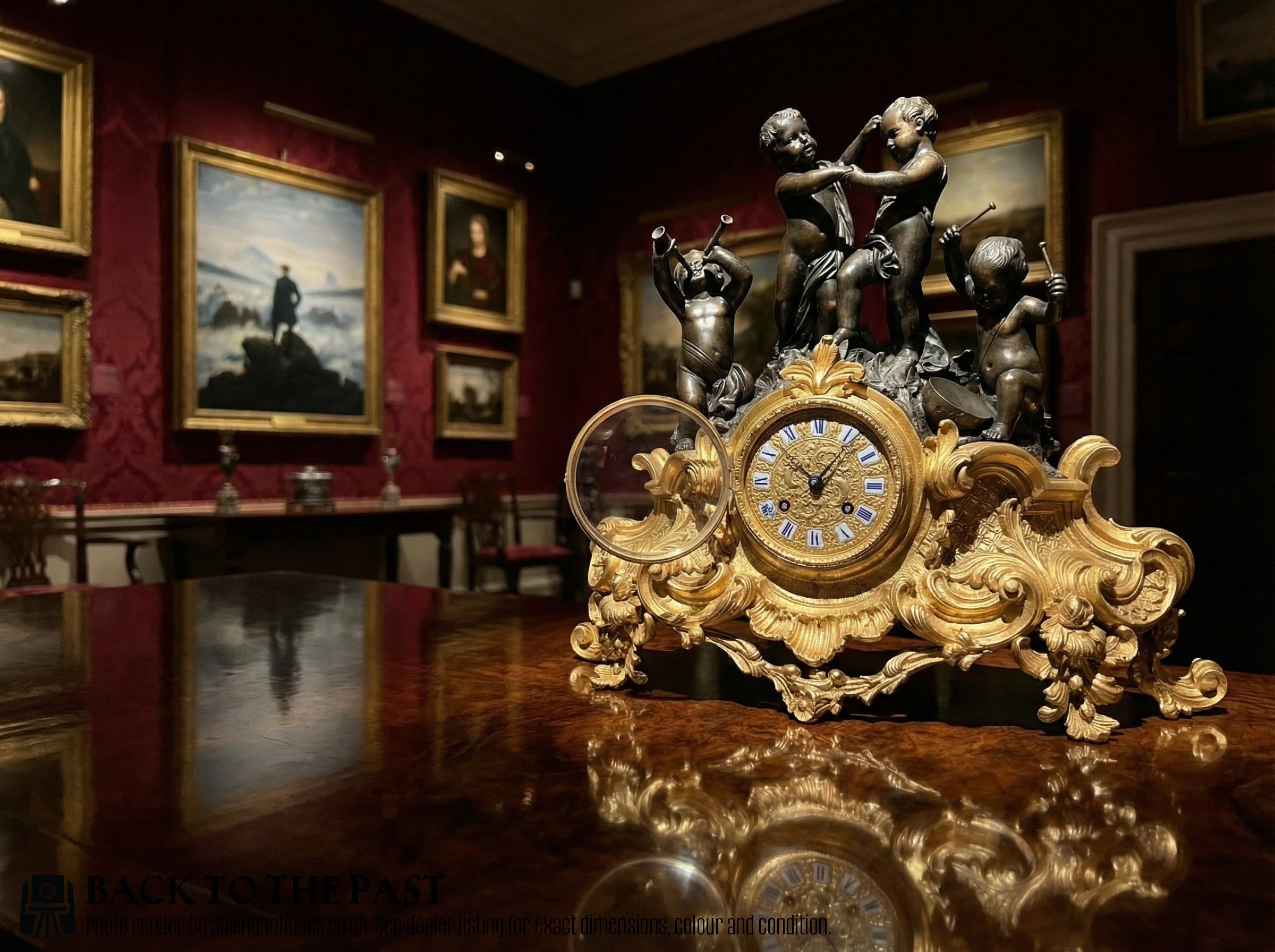
When you search for a putti desk clock, you encounter figural timepieces featuring winged cherubs cast in bronze, ormolu, and gilt metals. These pieces range from compact table models to substantial mantel pieces and clock sets accompanied by garnitures.
The pieces on this page lean heavily towards nineteenth-century French production, spanning periods from the Regency era through to the Victorian decades around 1880 and 1900. You will find styles drawing on French Rococo Revival, Louis XVI, and classical designs.
Makers recorded in the evidence include Paris and London horologists such as Le Roy, Leon Message, Jollet et Cie, Bellenot Paris, John Bennett Cheapside London, Henry Berkeley Square London, and F Marti. These horologists combined mechanical timekeeping with sculptural bronze and marble bases.
Materials and Construction
These clocks are built using cast ormolu, gilt bronze, patinated bronze, and brass, often mounted on white or variegated marble plinths. Hand-painted enamel dials and glass covers protect the clock faces, while single fusee movements regulate the time.
The figural putti, cherubs, and maidens are cast in metal and then traditionally gilded or patinated by hand. Many incorporate intricate floral or rococo scrollwork details surrounding the central clock housing.
Listings feature pieces from the nineteenth century, including Victorian examples dated 1880, 1890, and 1900, constructed from ormolu, marble, and gilt bronze.
Quality Variations
The integration of the clock case with the marble plinth and the quality of the painted enamel dial also divide standard production from exceptional work. Signed movements by named Paris or London makers elevate the standing of a piece.
Le Roy Paris·Leon Message Jollet et Cie·Bellenot Paris·John Bennett Cheapside London·Henry Berkeley Square London·F Marti
The Putti Desk Clock Glossary
- Ormolu
- Gilded bronze produced by applying a mercury and gold amalgam to a bronze base and heating it. This technique creates a rich golden finish seen on many nineteenth-century French clock cases.
- Garniture
- A set of decorative matching objects, such as a central clock flanked by matching vases or candelabra. These sets were designed to sit together on a mantelpiece or sideboard.
- Fusee
- A conical pulley used in clock movements to maintain an even drive force as the mainspring unwinds. It ensures consistent timekeeping accuracy.
- Patinated Bronze
- Bronze treated with chemicals or heat to alter its surface colour, ranging from dark brown to green tones. It creates contrast against gilt ormolu mounts.
- Sevres
- A type of porcelain associated with fine painted dial panels and decorative inserts on French clocks. It reflects the high-status ceramic production of the Sevres factory near Paris.
Putti Desk Clock: Frequently Asked Questions
Where were putti desk clocks made?
The majority of these clocks originate from French workshops in Paris during the nineteenth century, though English makers in London also produced them.
French pieces frequently utilise ormolu and marble, reflecting Rococo and Louis XVI revival styles.
How do I wind a mechanical desk clock?
Most of these timepieces rely on a key-wound movement, often utilising a single fusee or standard spring-driven mechanism.
Care should be taken not to overwind the mainspring when setting the time.
What is a clock garniture?
A clock garniture is a matched set consisting of a central timekeeper accompanied by side ornaments such as urns or candelabra.
These sets were designed to create a symmetrical decorative arrangement on a mantelpiece.
How do I identify the period of a cherub clock?
Dating relies on stylistic clues such as the severity of Neoclassical lines versus the ornate curves of the Rococo Revival, alongside materials like ormolu and variegated marble.
Signatures from makers such as F Marti or Le Roy help pinpoint the era.