


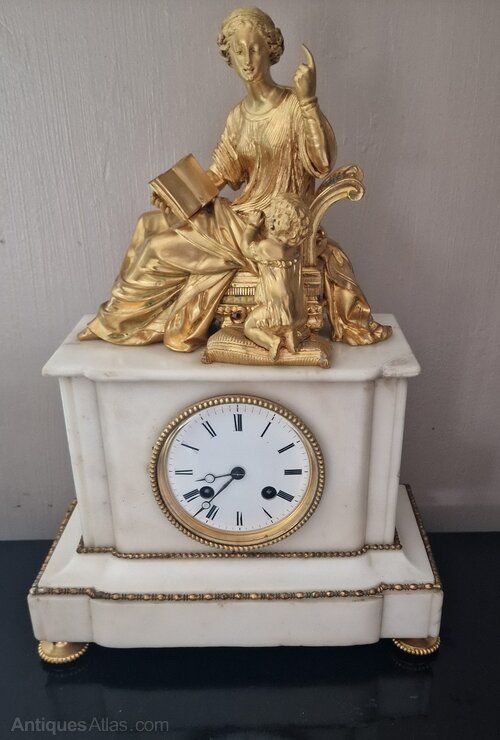


Ormolu Marble Table Clock
An ormolu marble table clock combines cast gilt metal mounts with polished stone bodies to anchor a room.
Ormolu Marble Table Clock
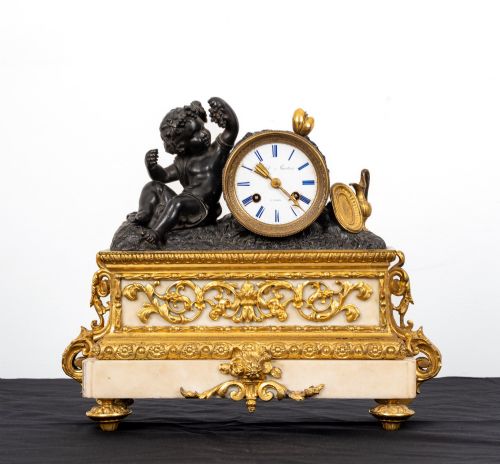
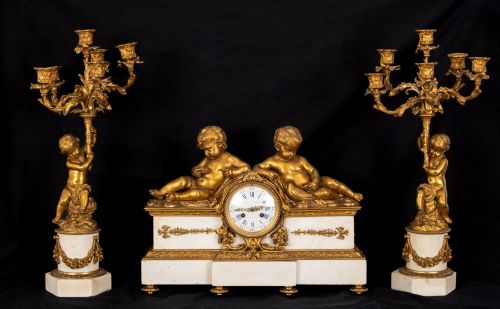
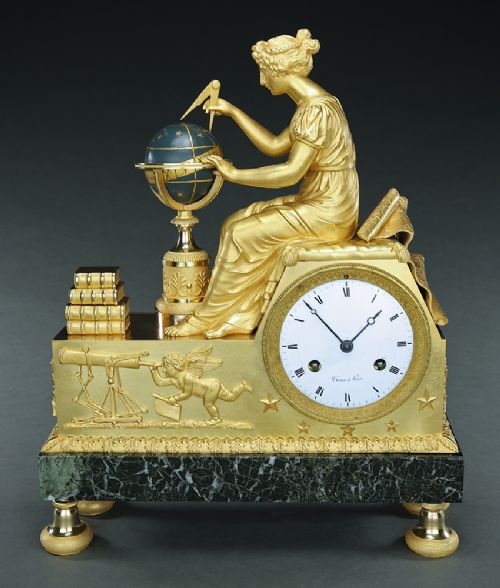
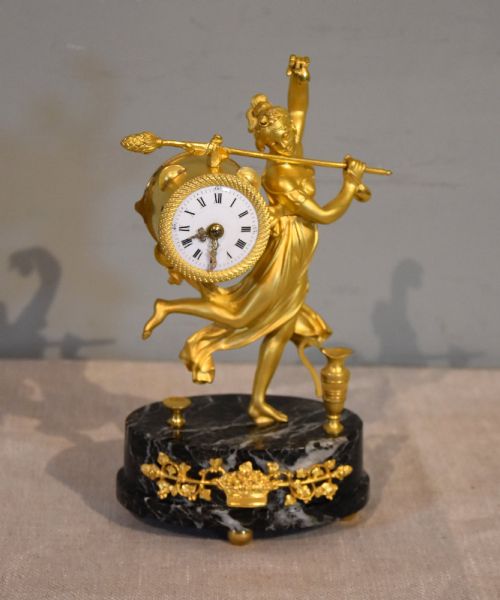
An ormolu marble table clock pairs polished stone bodies with cast gilt bronze mounts, originating mostly from French workshops during the eighteenth and nineteenth centuries. These timepieces take the form of mantel clocks, portico clocks, and larger garniture sets flanked by matching candelabra or urns.
The dominant aesthetic draws heavily on Louis XVI and French Empire vocabulary, featuring architectural symmetry, urn finials, and mythological figures. Pieces range from modest domestic timepieces to monumental decorative objects designed for prominent display on mantelpieces and side tables.
How they were made
The construction relies on the union of heavy natural stone and cast metalwork, where marble bodies in white, green, or rouge are drilled and fitted with brass clock movements. Artisans applied mercury gilding to bronze components to create the distinctive ormolu surface finish, which required precise heat treatment to bond the gold amalgam.
Enamel dials with painted numerals are fitted behind glass bezels, often protected by cast bezels decorated with bead and reel motifs. Mounts were secured to the marble chassis using threaded pins and nuts concealed within the internal cavity of the clock body.
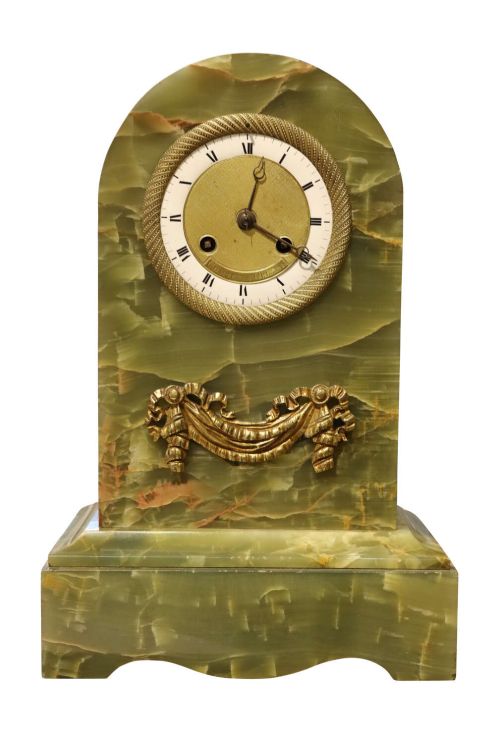
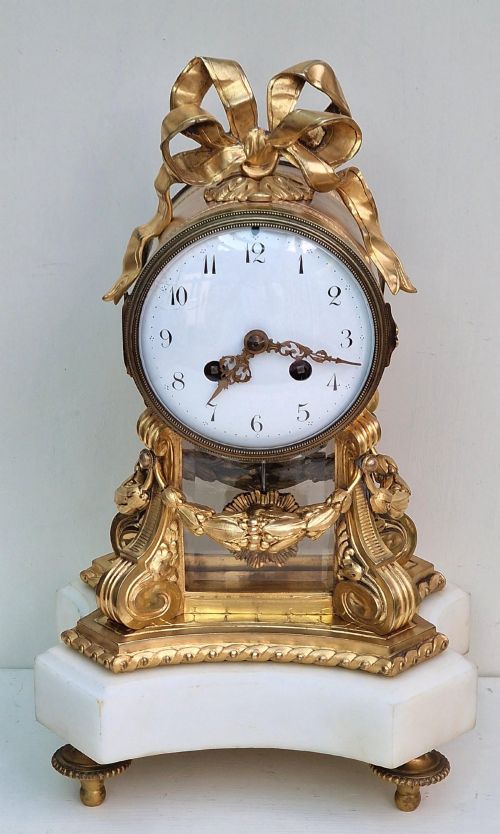
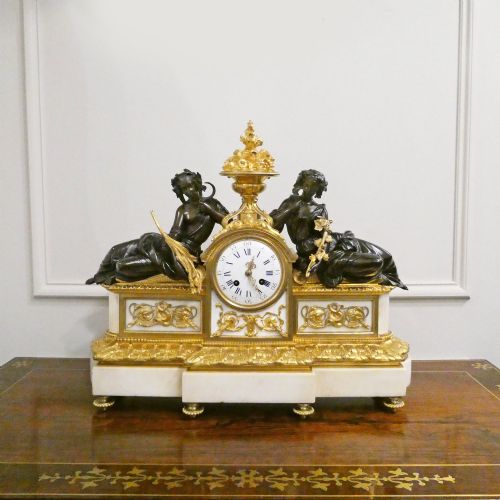
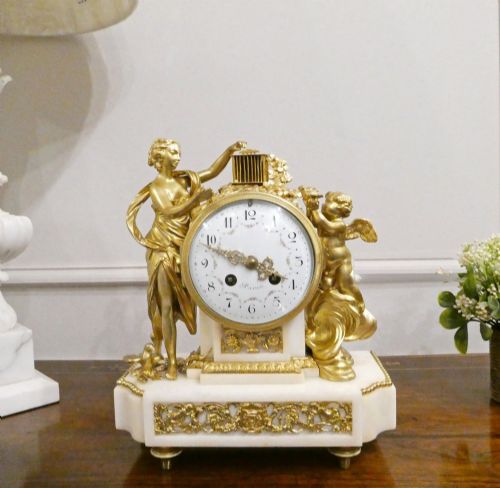
Listings feature nineteenth-century French mantel clocks incorporating white marble, green onyx, and gilt bronze mounts in Louis XVI style.
What varies in quality
The standard of an ormolu marble table clock rests upon the crispness of the bronze chasing and the depth of the mercury gilding. Superior examples exhibit hand-chiseled details on the metal mounts that survived the casting process, whereas lesser pieces show soft edges and flat surfaces.
The selection and integrity of the marble chassis also dictate worth, with solid coloured varieties and intricate portico architectures demanding higher execution skill than simple rectangular slabs. Movement quality is evident in signed backplates from established makers and the inclusion of complex striking or calendar mechanisms.
Charles à Orléans·Vincenti·Siffel & Cartier·Japy Freres·Berger Paris·Louis Goret·William Hardy London·A D Mougin
The Ormolu Marble Table Clock Glossary
- Ormolu
- Gilt bronze produced by applying a mercury and gold amalgam to a bronze base before heating. This technique creates a durable, warm golden finish characteristic of antique French decorative metalwork.
- Garniture
- A set of matching decorative objects consisting of a central clock flanked by side pieces such as urns or candelabra. These sets were designed to create a balanced display across a mantelpiece.
- Portico clock
- A clock design featuring an architectural case supported by four or more columns resembling a classical temple facade. This architectural style was popular during the late eighteenth and early nineteenth centuries.
- Fusee
- A conical pulley used in clock movements to equalize the declining power of the mainspring as it unwinds. This mechanism improves the timekeeping accuracy of the clock.
- Chasing
- The manual process of refining and detailing a metal casting using small punches and hammers after it leaves the foundry. Fine chasing separates high-end mounts from mass-produced casts.
Ormolu Marble Table Clock: Frequently Asked Questions
How do I wind the clock?
Most mechanical models utilise a key inserted into winding holes on the enamel dial to tension the internal springs. Care must be taken not to overwind the movement.
Spring-driven clocks typically run for eight days per wind, requiring a consistent routine to maintain accurate timekeeping.
Where should I place the clock?
These heavy objects require a stable, level surface such as a mantelpiece, sideboard, or sturdy table capable of supporting significant stone weight. Direct sunlight and damp environments should be avoided to protect the dial enamel and mercury gilding.
Positioning the piece away from heavy foot traffic prevents accidental vibrations that might disturb the pendulum beat.
How do I identify the period?
Stylistic cues such as neoclassical columns, cherub figures, and urn finials point toward Louis XVI or Empire origins. Movement signatures, dial typography, and the composition of the marble chassis provide further chronological markers.
Later nineteenth-century revival pieces often incorporate heavier proportions and machine-cast mounts compared to eighteenth-century originals.
What is a clock garniture?
A garniture comprises a central timepiece accompanied by a pair of matching decorative side objects, such as candelabra or covered urns. These sets were manufactured to stand together as a unified decorative scheme on a fireplace mantel.
Matching materials and identical ormolu mount styles confirm that the components were produced as a single suite.