
Provincial Chest of Drawers
A provincial chest of drawers offers sturdy utility and regional character, shaped by local timber and practical hands.
Provincial Chest of Drawers
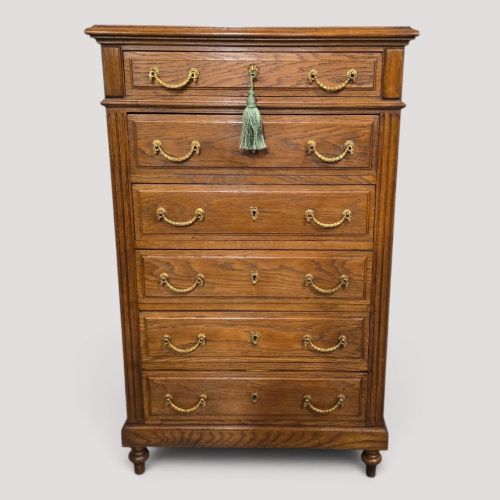
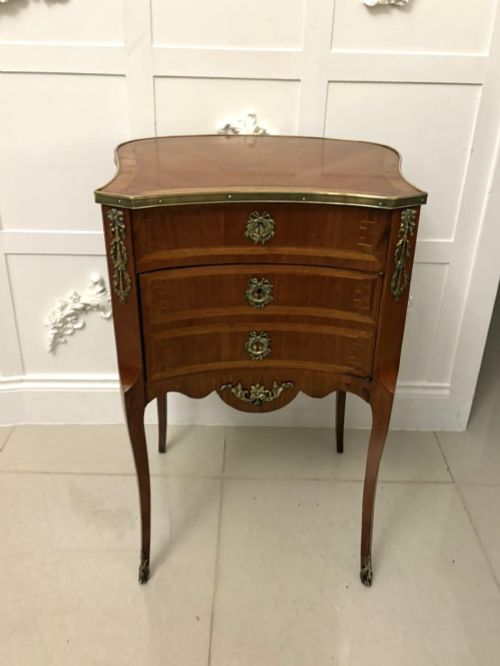
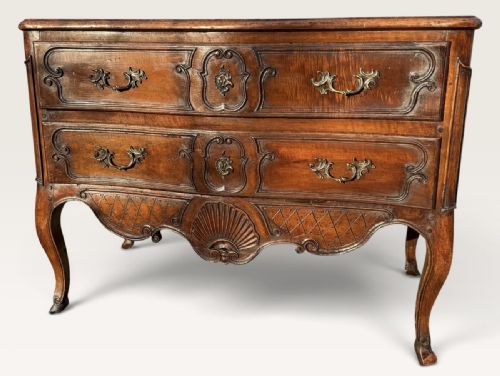
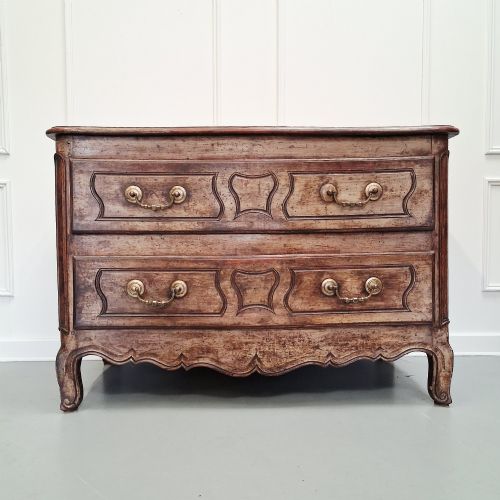
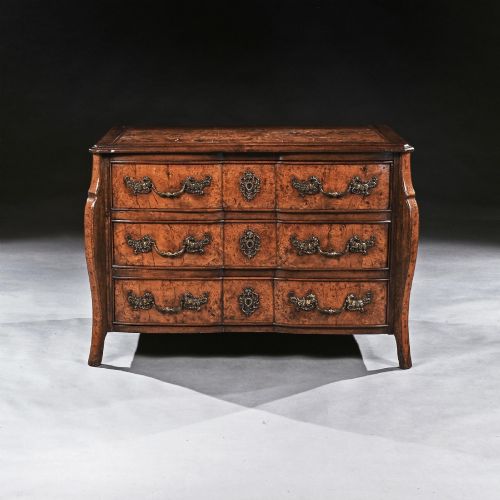
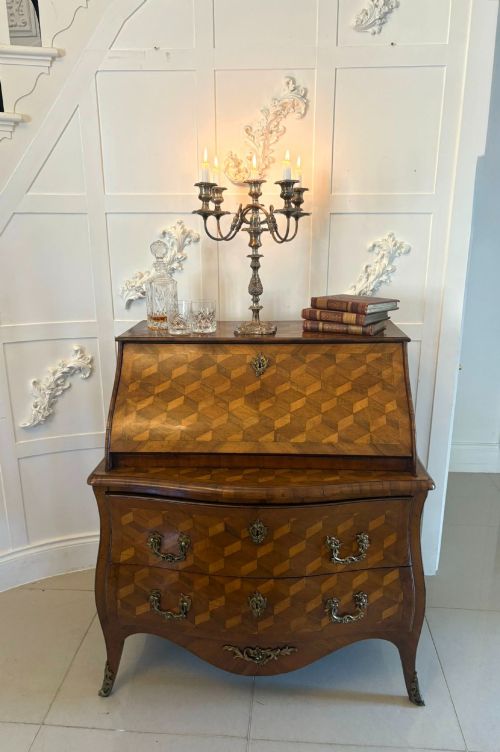
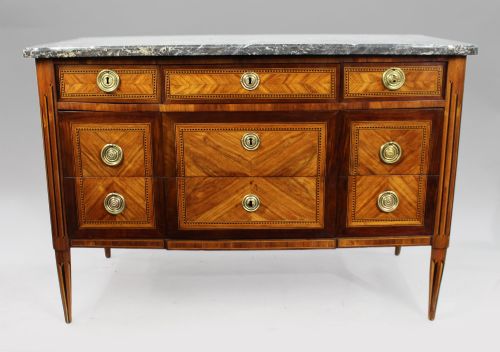
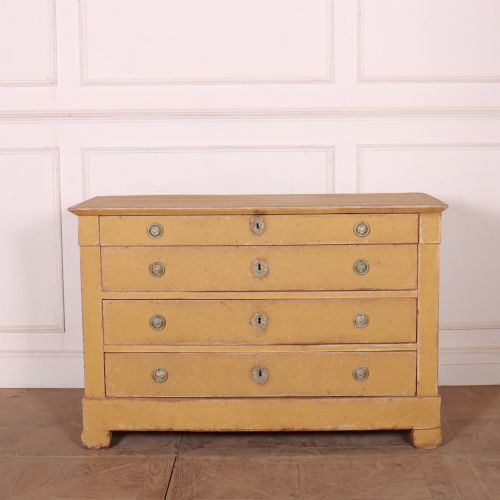
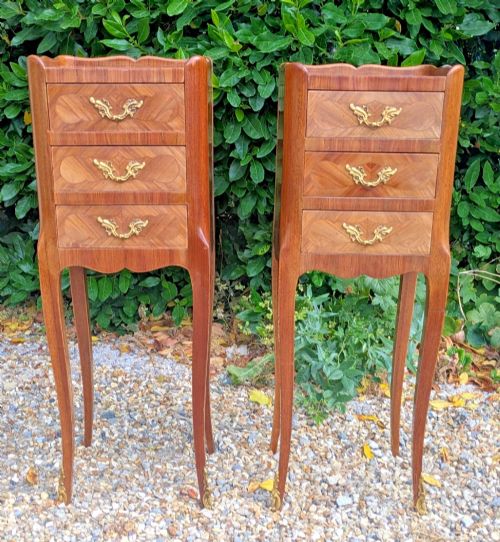
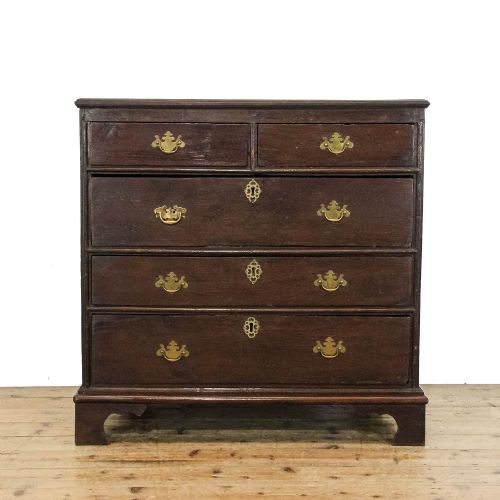
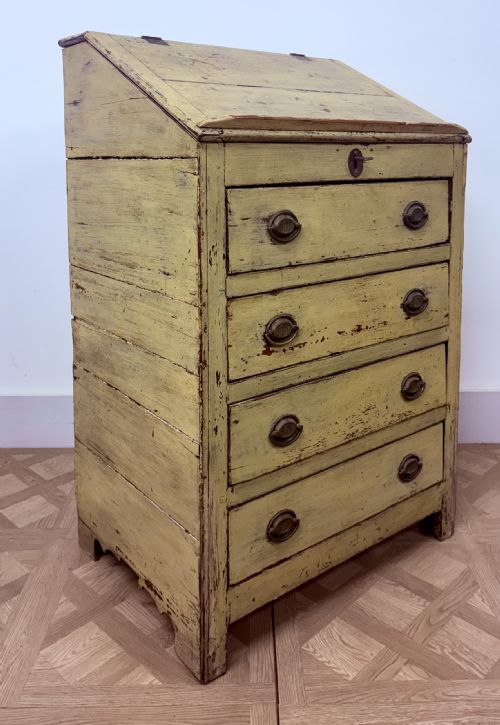
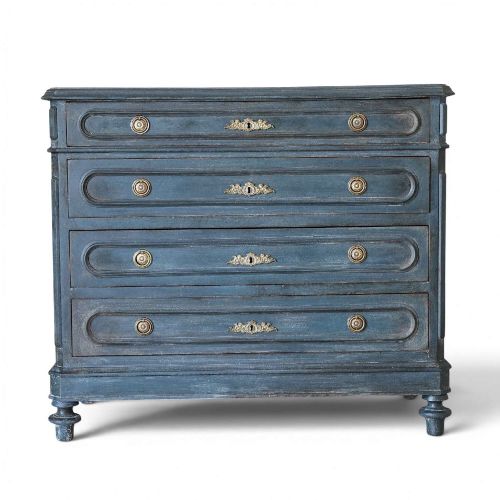
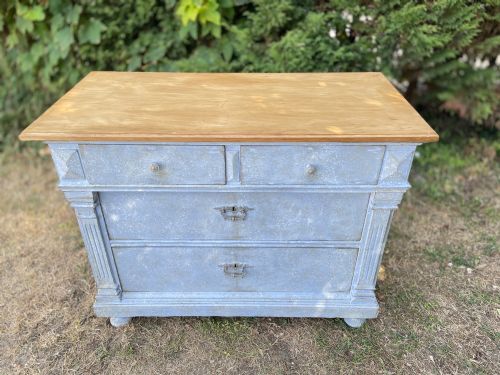
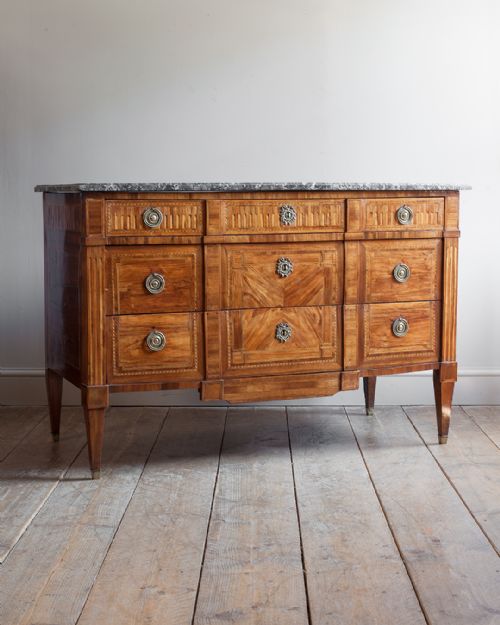
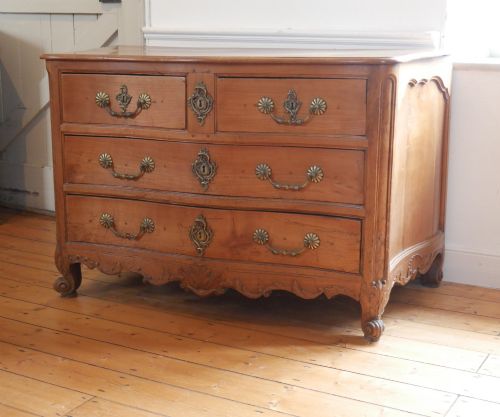
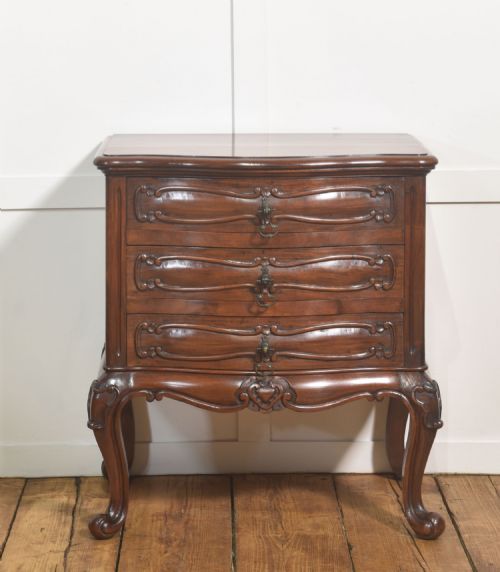
The most common examples on this page are eighteenth and nineteenth century walnut, oak and fruitwood pieces, including serpentine fronts, bombe shapes and marble top commodes. Simpler oak and pine versions from English and Swedish traditions also appear alongside French regional designs.
How provincial chests were made
Makers utilised solid regional woods such as oak, walnut, cherrywood, chestnut, fruitwood and pine, often finished with parquetry, marquetry or painted surfaces. Brass handles and mounts provide functional contrast to the timber carcases.
Construction relied on hand-cut dovetails for drawer boxes and pegged frame joinery, with marble slabs fitted to the tops of many continental commodes.
Listings feature oak, walnut, pine, cherrywood and fruitwood across eighteenth and nineteenth century periods.
What varies in quality
Quality rests in the selection of timber figure, such as burr elm or patterned walnut parquetry, and the finesse of the hand-carved mouldings or serpentine shaping. Superior examples maintain crisp lines in their bombe profiles and retain original brass hardware.
The integrity of the structural joinery and the depth of the patina separate simpler utilitarian chests from finer regional workshop production.
The Provincial Chest of Drawers Glossary
- Commode
- A low chest of drawers or cabinet, typically French in origin. These pieces often feature marble tops and decorative veneer work.
- Bombe
- A swelling, outward-curved contour found on the front and sides of certain eighteenth century case furniture. This shape requires advanced woodworking skill to execute properly.
- Parquetry
- Geometric patterns formed by fitted wood veneers laid onto a carcase. Walnut and kingwood are common timbers used for these decorative surfaces.
- Serpentine
- A furniture front curved with a convex centre flanked by concave ends. This undulating outline demands precise hand shaping.
Provincial Chest of Drawers: Frequently Asked Questions
What is a provincial chest of drawers?
A provincial chest of drawers is storage furniture made in regional workshops rather than capital cities, using locally available timbers like oak, walnut and fruitwood.
These pieces reflect local vernacular traditions and simpler interpretations of prevailing court styles.
How do I date an antique chest?
Dating relies on examining construction methods, timber species, handle types and secondary woods used inside the drawer carcases.
Hand-cut dovetails, pegged joints and regional design characteristics point towards specific eighteenth and nineteenth century periods.
How were marble tops used?
Marble slabs were fitted to the upper surface of many continental commodes to provide a durable, heat-resistant working or display counter.
This addition added weight and status to the piece while protecting the timber underneath from spills.
Where should I place a commode?
A commode works well in a hallway, bedroom or living space as a focal point that provides substantial surface display area and deep drawer storage.
Its proportions allow it to sit comfortably against plain walls or beneath large mirrors and paintings.