




Provincial Painted Furniture
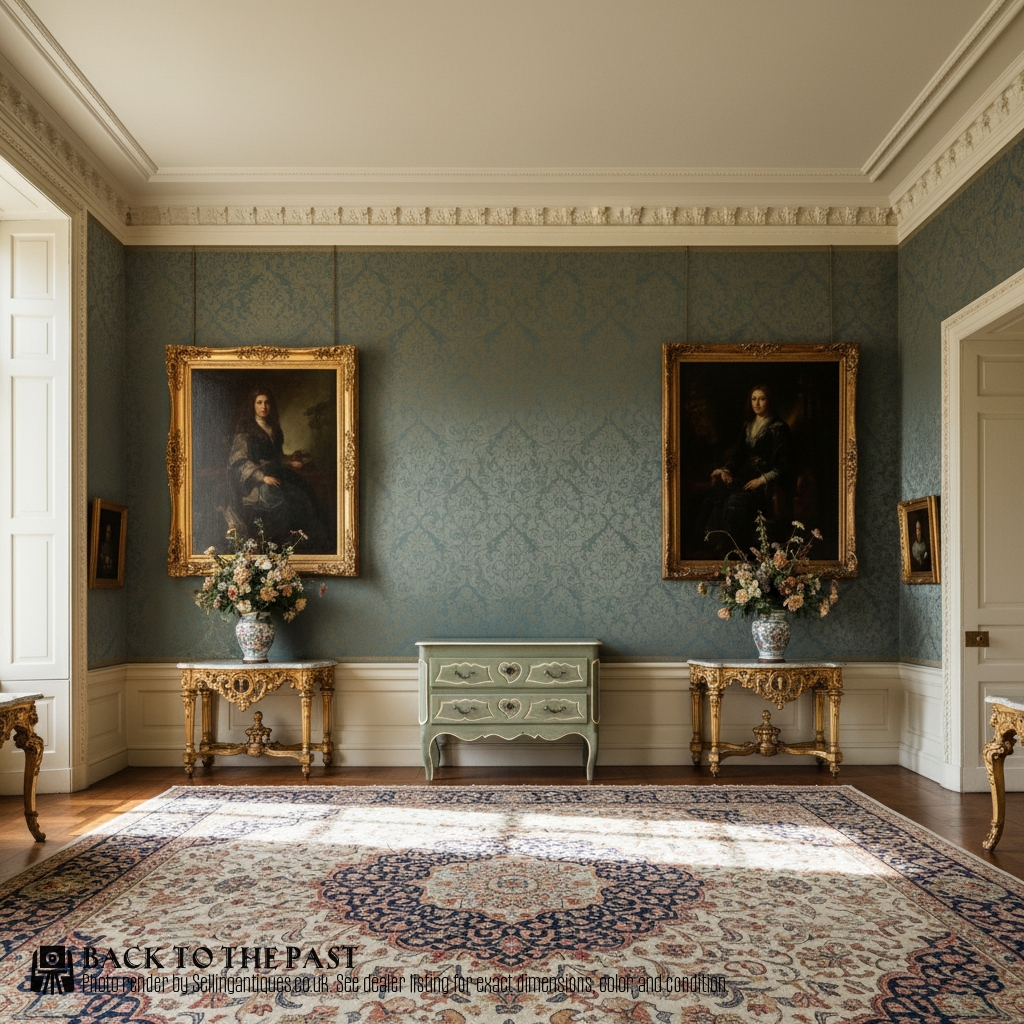
Provincial painted furniture brings regional character and worn surface colour into a room through chests, commodes, and cupboards.
Provincial Painted Furniture
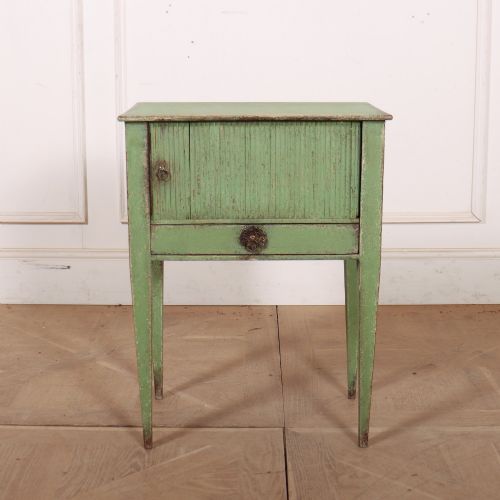
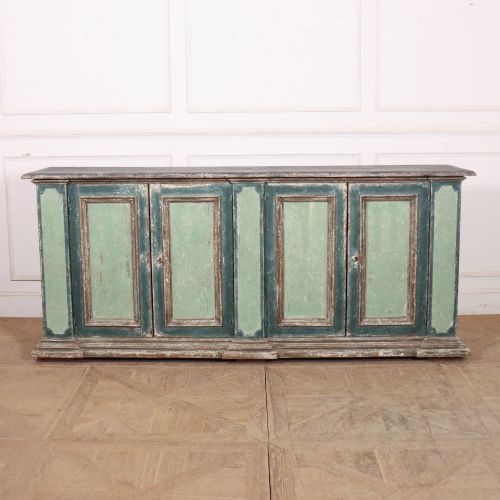
Provincial painted furniture spans practical household forms made outside capital cities, notably chests of drawers, commodes, cupboards, and benches from French, Swedish, Dutch, and Italian regions. These regional pieces reflect local tastes and domestic needs across the eighteenth and nineteenth centuries, diverging from courtly London or Paris fashions.
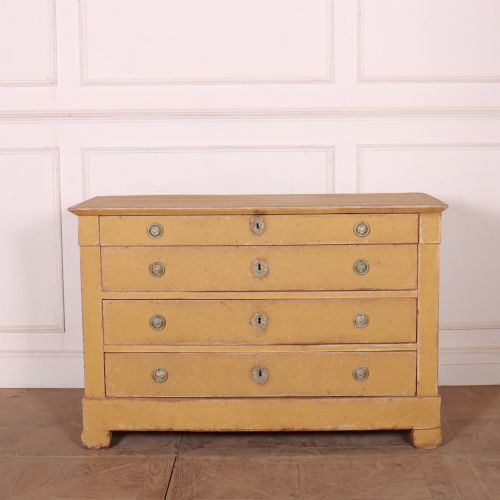
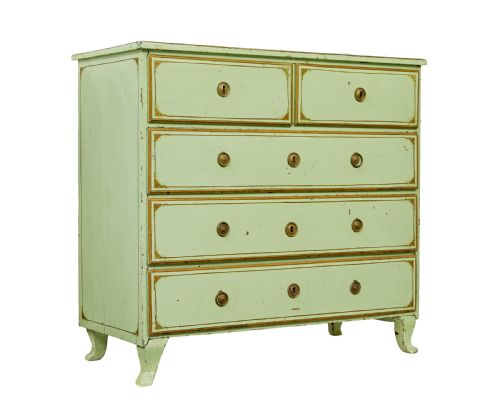
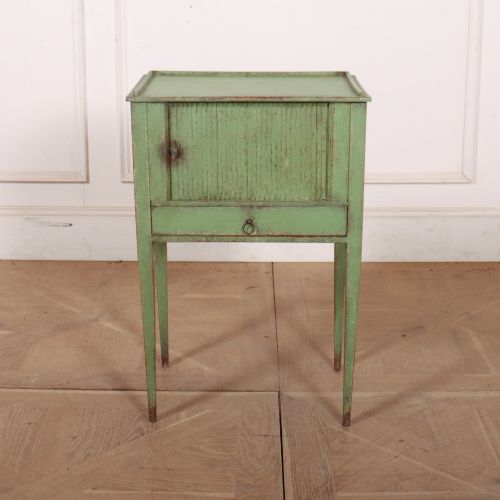
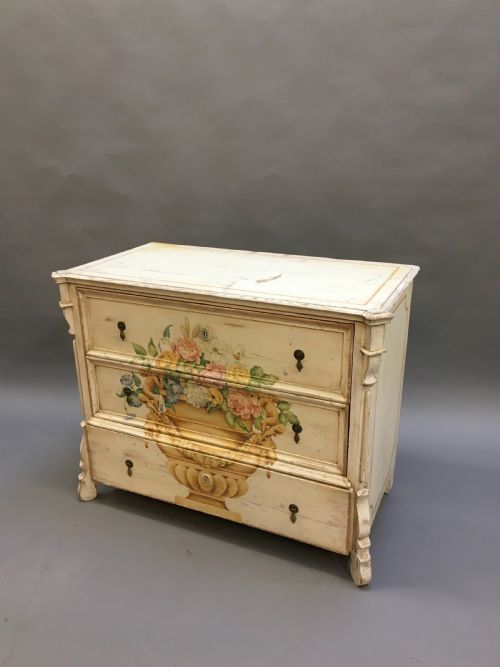
The version most commonly met on this page is the painted commode or chest of drawers, often dating from the nineteenth century with earlier eighteenth-century examples appearing periodically. Alongside these storage pieces, buyers encounter smaller items like bedside tables, side tables, and benches in regional European styles.
Makers working in provincial towns utilised local timbers and straightforward construction methods, applying decorative paint surfaces that have aged over generations. The resulting character depends entirely on the original regional workshop and the subsequent history of the painted surface.
Materials and construction
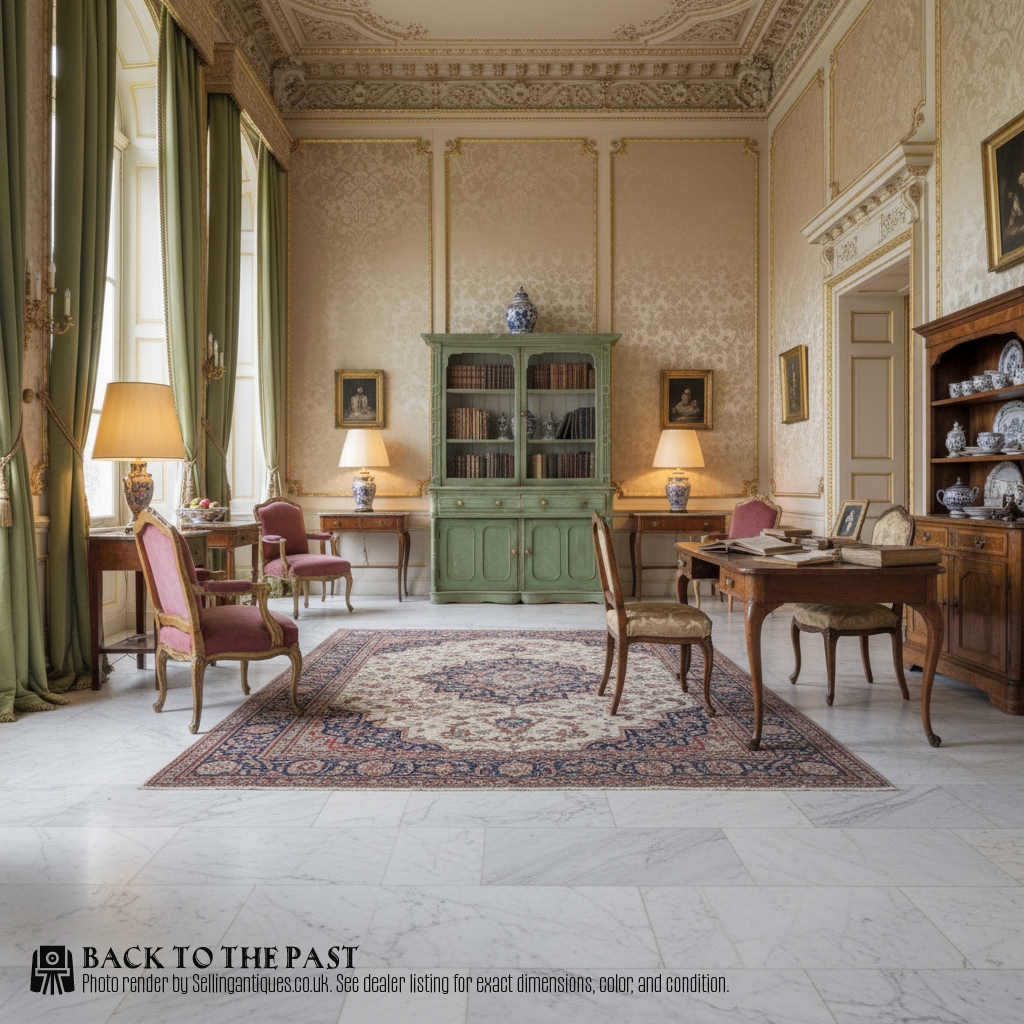
Makers relied primarily on native timbers such as pine and oak for the structural carcase, using local woods that were readily available to provincial workshops. Surfaces were then prepared and painted, sometimes incorporating iron hardware, brass fittings, and occasionally marble tops.
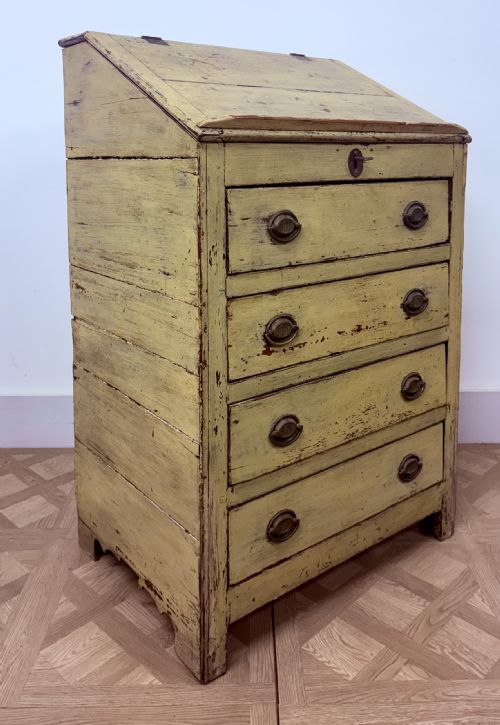
Construction methods remained straightforward and functional, ranging from scratch-built country pine benches to carved serpentine commodes and larger linen cupboards. The painted finish served both to protect the underlying timber and to provide a decorative surface that often mellowed through decades of domestic use.
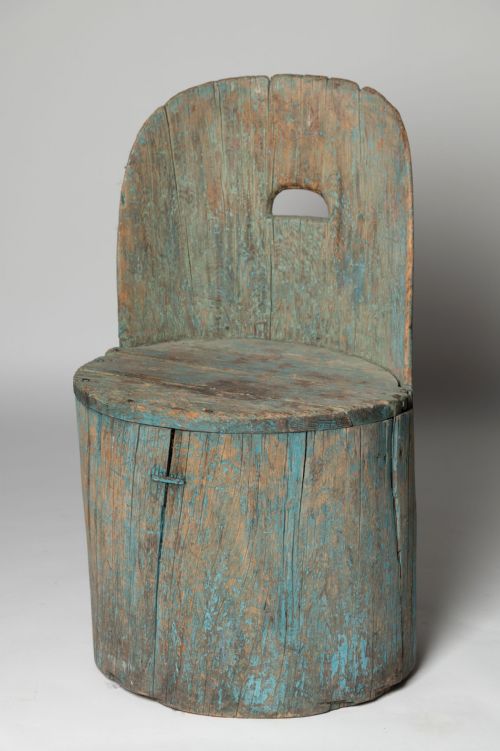
One scratch-built country pine bench waits quietly for someone to appreciate the honest toolmarks left behind by a lonely nineteenth-century woodworker.
Judging quality and surface
The distinction between tiers of quality rests upon the integrity of the original painted surface and the proportion of the piece. Untouched or early paint layers that show natural wear carry greater integrity than later repainting, while balanced proportions separate competent regional cabinet-making from crude rural joinery.
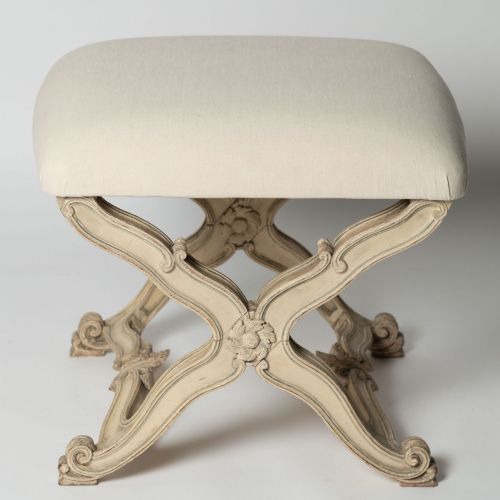
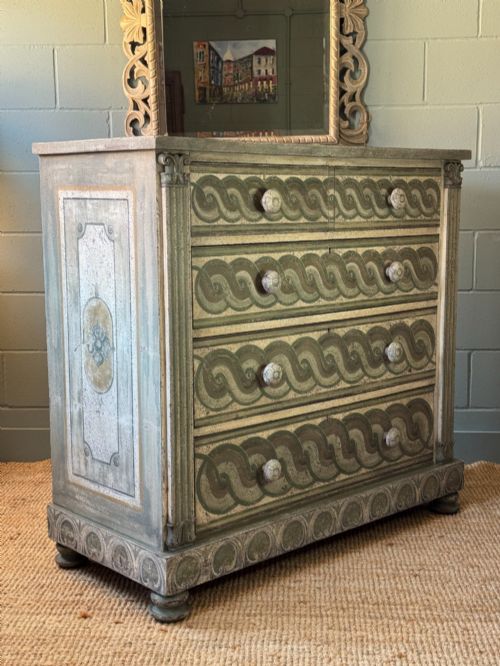
Carved detail and hardware also distinguish the range, as seen in the contrast between plain pine utility pieces and sophisticated serpentine commodes with shaped drawers or marble tops. The relationship between the structural joinery and the decorative scheme determines the overall success of each item.
Dubois of Lyon
The Provincial Painted Furniture Glossary
- Commode
- A low chest of drawers or cabinet, frequently associated with eighteenth and nineteenth-century French and Dutch provincial interiors. They often feature shaped fronts and decorative painted finishes.
- Serpentine
- A curved furniture front characterised by a concave centre flanked by convex ends. This rhythmic outline appears on finer provincial commodes and cabinets.
- Buffet à deux corps
- A tall traditional storage cabinet made in two stacked sections, common in provincial French dining rooms. These large pieces provide substantial cupboard space.
- Duchesse brisée
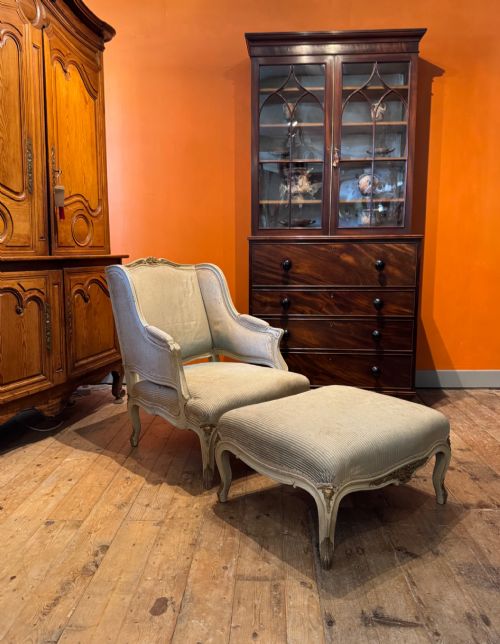
- A chaise longue split into parts, often comprising an armchair and an extended stool or a second chair. They appear in French styles with upholstered or painted frames.
- Baker's rack
- A tall open-shelved metal and wood framework originally utilised for cooling baked goods in commercial settings. Large nineteenth-century examples now serve as decorative display storage.
Provincial Painted Furniture: Frequently Asked Questions
How do I date provincial painted furniture?
Dating relies on observing construction joints, timber selection, and hardware styles alongside the characteristics of the painted finish. Eighteenth-century pieces often display hand-cut joinery and earlier pigment formulations.
Later nineteenth-century examples reflect industrial developments while maintaining regional workshop traditions. Comparing the form to dated pieces helps narrow the period of manufacture.
Are these pieces in original paint?
Many items retain their early or original paint surfaces, while others have been repainted during their long history of domestic use. Examining the surface under natural light reveals underlying layers and wear patterns.
Untouched paint shows genuine craquelure and softening around handles and edges. Surface patination provides the main visual appeal for collectors of regional painted items.
How should I care for painted wood?
Painted surfaces require gentle cleaning with a dry or barely damp soft cloth to preserve the historic finish. Avoid harsh chemical cleaners and modern polishes that can lift or soften aged paint.
Keeping pieces away from direct sunlight and excessive humidity prevents timber movement and paint flaking. Stable indoor environments protect both the structural wood and the decorative coating.
What is the difference between French and Swedish pieces?
French provincial furniture often incorporates curved lines, carved oak or walnut, and warmer painted tones inspired by regional chateaux. Pieces from this tradition favour decorative moulding and organic shapes.
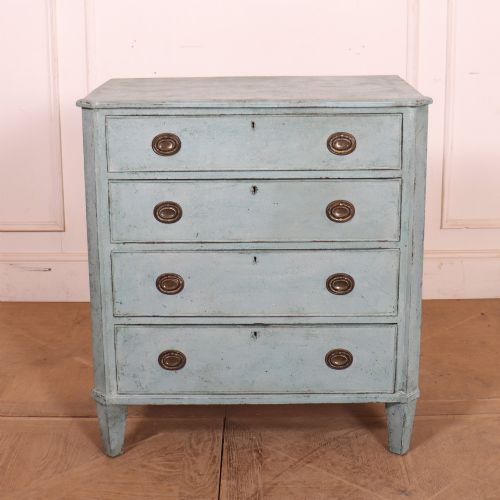
Swedish pieces tend towards pale pine construction with lighter grey, white, or soft blue paint applications designed to reflect interior light during long winters. Their forms lean towards neoclassical or Baroque revival restraint.